
April 27 is Tell A Story Day, and today on the old blogorooni is a playlist of 30 story songs.
Follow Tunes Du Jour on Facebook
Follow me on Bluesky
Follow me on Instagram
If you had to pick a single year that captured popular music at its most creatively overstuffed, 1977 would be a strong candidate. Rock was arena-sized and expensive. Disco was inescapable and, for a certain crowd, irresistible. Punk was arriving like a kicked-in door. And somewhere in between, artists were quietly making records that didn’t fit neatly into any of those categories. The year produced an almost absurd concentration of songs that people still know by heart, not because nostalgia has been kind to them, but because many of them are genuinely excellent pieces of music.
The rock side of ’77 was dominated by songs that have since become impossible to avoid. Eagles’ “Hotel California,” Fleetwood Mac’s “Dreams,” and Bob Seger’s “Night Moves” all came from the same general tradition of polished, emotionally direct rock songwriting, the kind that prioritized feel and production in equal measure. Aerosmith’s “Walk This Way” sat a little rougher and looser, and Manfred Mann’s Earth Band’s “Blinded by the Light” was genuinely strange radio fare — a Springsteen cover that became more famous than the original largely on the strength of its own eccentric energy. Meanwhile, David Bowie’s “Sound and Vision” and Peter Gabriel’s “Solsbury Hill” pointed toward something more interior and experimental, both artists having recently untethered themselves from previous identities and clearly enjoying the freedom.
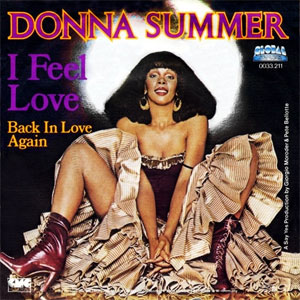
Disco in 1977 wasn’t a single sound so much as a spectrum. At one end, you had Donna Summer’s extraordinary “I Feel Love,” which Giorgio Moroder produced using almost entirely synthesized instrumentation — Brian Eno reportedly told David Bowie it had just changed the future of music, and he wasn’t wrong. Further down the dial were Thelma Houston’s “Don’t Leave Me This Way,” Marvin Gaye’s loose, joyful “Got to Give It Up,” Heatwave’s “Boogie Nights,” and KC and the Sunshine Band’s “I’m Your Boogie Man,” songs that prioritized the floor over the headphones and delivered accordingly. And then there was the Saturday Night Fever soundtrack, which arrived in late 1977 and would go on to become, for a time, the best-selling album ever released. It’s remembered as a disco landmark, but its lead single was the Bee Gees’ “How Deep Is Your Love” — a warm, unhurried ballad which doesn’t really fit the disco label. That the song was swept up into the disco phenomenon anyway says something about how powerful that cultural moment was: it absorbed everything in its vicinity, regardless of what the artists themselves thought they were making.
Punk was having none of it. The Sex Pistols’ “God Save the Queen” was banned by the BBC and still reached the top of the charts, which tells you something about both the song’s impact and the limits of official gatekeeping. Ramones’ “Sheena Is a Punk Rocker” was faster and more fun, but no less pointed. Television’s “Marquee Moon” and Elvis Costello’s “Watching the Detectives” had a punk rock spirit that suggested the genre’s real legacy might not be volume or outrage but a renewed interest in wit and directness — a correction to the perceived excesses of the rock mainstream those same artists were reacting against. These records don’t sound like novelties now. They sound like a genuine argument about what music should be doing.
What’s striking, looking at a year’s worth of this material together, is how little any of these artists seemed to be aware of, or interested in, what the others were doing. “Somebody to Love” by Queen and “Sir Duke” by Stevie Wonder share roughly the same calendar year but almost nothing else. “Solsbury Hill” and “Float On” exist in completely separate universes. That independence — each act pursuing its own idea of what a good record sounded like — might be exactly why so much of this music has held up. Nobody was chasing a trend that would have dated them. They were mostly just making the best version of the thing they already knew how to do, and 1977 happened to catch a lot of them doing it very well.
Follow Tunes Du Jour on Facebook
Follow me on Bluesky
Follow me on Instagram

To listen to a collection of Peter Gabriel’s music is to trace the path of an artist in constant evolution. Looking at a Peter Gabriel playlist, you see more than just a sequence of songs; you see a distinct artistic trajectory. The journey begins in one world—the elaborate, fantastical realm of early Genesis—and lands squarely in another, a place where personal confession, global consciousness, and pop songcraft all coexist. It’s a progression from telling epic fables to exploring the complexities of the human heart and the wider world we all inhabit.
In the beginning, Gabriel was a storyteller of the grand and mythological. As the frontman for Genesis, his role was as much theatrical director as it was a singer. Songs like “Supper’s Ready” and “The Musical Box” aren’t just tunes; they are sprawling, multi-part narratives filled with intricate characters and dramatic shifts. The sound, as heard in tracks like “Firth Of Fifth” or “Dancing With The Moonlight Knight,” is dense and ambitious, built on complex arrangements that gave progressive rock its reputation. This was a period of high concept and elaborate fantasy, setting a foundation of immense creative scope.
The departure from that world is announced with the unmistakable opening of “Solsbury Hill.” It is the sound of an artist stepping out on his own, both literally and figuratively. His early solo work shows an immediate pivot. While the ambition remains, the subject matter changes. The focus shifts from fictional lore to more grounded concerns: the anxieties of the Cold War in “Games Without Frontiers” and the stark political reality of apartheid in “Biko.” Musically, he began exploring new textures, incorporating percussive, synth-driven sounds in tracks like “Shock the Monkey” that felt urgent and intensely modern.
This exploration led Gabriel to a period of massive commercial success that also deepened his artistic identity. By the mid-1980s, he had mastered a way to blend deeply personal themes with irresistible pop hooks. The playlist is rich with these moments: the soul-infused joy of “Sledgehammer,” the raw emotional vulnerability of “Don’t Give Up” with Kate Bush, and the enduring, open-hearted plea of “In Your Eyes.” It was during this time that his interest in music from around the globe became a core part of his sound, most notably on “Shakin’ The Tree,” a collaboration with Senegalese singer Youssou N’Dour that felt both celebratory and authentic.
Later, the lens seemed to turn even further inward. Songs like “Digging In The Dirt” and “Blood of Eden” offer a raw, unflinching look at personal relationships and internal struggles. The production is polished, but the emotions are unvarnished. Even a seemingly playful track like “Kiss That Frog” is rooted in psychological exploration. This phase shows an artist less concerned with creating a spectacle and more focused on honest communication. Listening to these tracks alongside his Genesis work reveals the full arc: a journey from creating fictional worlds to bravely navigating the real one, with all its political injustices, personal heartaches, and moments of profound connection.
Follow Tunes Du Jour on Facebook
Follow me on Bluesky
Follow me on Instagram
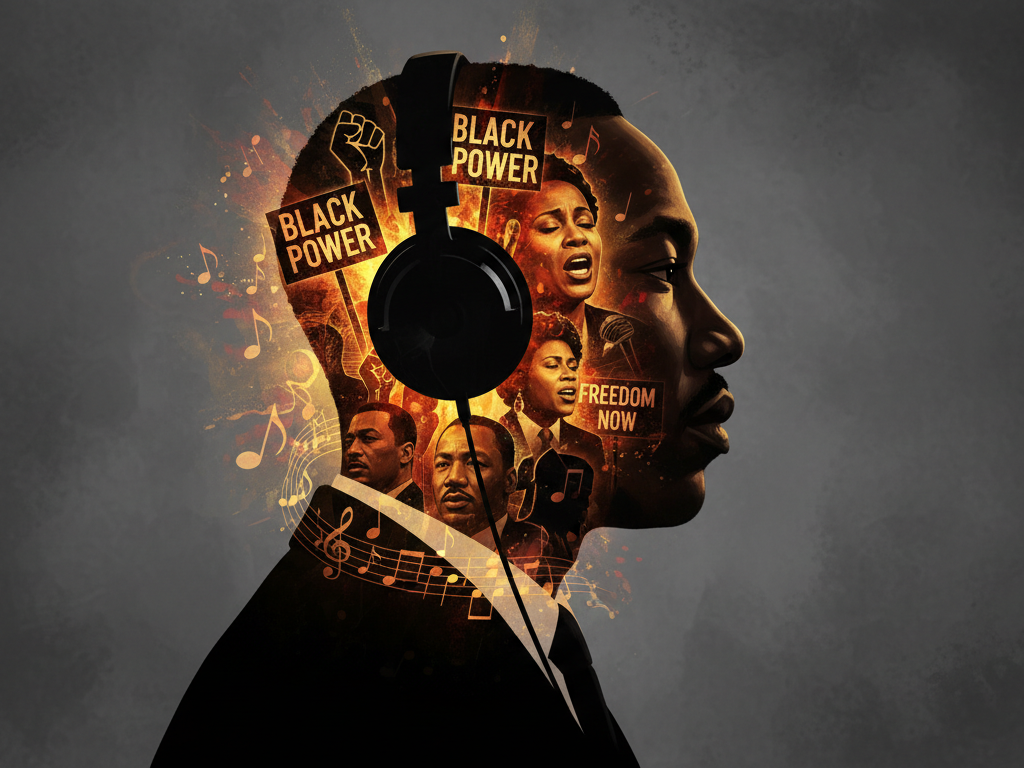
Music has always been more than just a backdrop to history; it is a living, breathing part of it. It’s the coded message in a spiritual, the roar of protest in a soul anthem, and the unshakeable pride in a hip-hop verse. This playlist was curated with that spirit in mind. It is not just a collection of songs by Black artists or about Black experiences, but a deliberate sonic journey where each track serves as a chapter in the long, complex, and powerful story of Black history. From the harrowing journey of the Middle Passage in The O’Jays’ “Ship Ahoy” to the defiant celebration of identity in Beyoncé’s “BROWN SKIN GIRL,” every song here is a direct link to a person, an event, a movement, or some combination of the three.
The running order is intentional, designed to guide the listener through a powerful emotional and historical arc. We begin in the depths of oppression, bearing witness to the brutality of slavery, the terror of Jim Crow, and the pain of foundational betrayals. From that bitter root, the playlist pivots to the fire of resistance. It chronicles the fight for Civil Rights in America and the parallel global struggle against apartheid, honoring the heroes who led the charge and the anthems that fueled their movements. The narrative then moves into the modern era, where the fight for justice continues in the face of new challenges, chronicled with unflinching honesty by artists from Bruce Springsteen to Janelle Monáe.
This journey through pain and protest ultimately leads to a place of empowerment, joy, and hard-won hope. The final act of the playlist is a celebration of contribution, a lesson in self-love for future generations, and a recognition of monumental triumphs. It culminates in the profound resilience of Aretha Franklin’s “A Change Is Gonna Come”—a final, stirring testament to an unshakeable faith in the future. This Black History Month, we invite you to not just hear these songs, but to truly listen. Follow the stories, look up the names, and feel the weight and glory of the history they carry. Let the rhythms move you, but let the histories change you.
Follow Tunes Du Jour on Facebook
Follow me on Bluesky
Follow me on Instagram

August is National Eye Exam Month in the US of A, so do yourself a favor and make an appointment to see an eye care professional. Your eyes will thank you (which is reason enough to see such a doctor, for if your eyes are talking, something is very very wrong).
Below are 30 songs with the word “eye” (or “eyes”) in the title.
Follow Tunes Du Jour on Facebook
Follow me on Bluesky
Follow me on Instagram

Looking back at 1986, what stands out isn’t just the quality of the music, but how effortlessly genres merged and boundaries dissolved. Run-D.M.C. and Aerosmith’s “Walk This Way” wasn’t just a collaboration – it was a statement about how rock and hip-hop could amplify each other’s strengths. Prince, at the height of his powers, stripped everything down to bare essentials with “Kiss,” proving his superstardom could take any form. Robert Palmer’s “Addicted to Love” became inescapable, powered by one of the era’s most iconic videos, while Peter Gabriel’s “Sledgehammer” merged art rock with soul and funk, accompanied by groundbreaking stop-motion animation.
The women of pop music wielded particular influence that year. Madonna continued pushing buttons with “Papa Don’t Preach,” tackling teenage pregnancy in a way that sparked national conversation. Whitney Houston’s “How Will I Know” showcased her extraordinary vocal range while proving dance-pop could be both sophisticated and irresistible. Janet Jackson asked “What Have You Done for Me Lately,” establishing herself as a force independent of her famous family. Cyndi Lauper’s “True Colors” transcended its moment, becoming an enduring anthem of self-acceptance that would be covered for decades to come.
The underground was rising to the surface, but keeping its edge. The Smiths’ “There Is A Light That Never Goes Out” brought literary depth to alternative rock, while New Order’s “Bizarre Love Triangle” helped blueprint the future of electronic dance music. The Pet Shop Boys’ “West End Girls” married street-smart observations with pristine synth-pop, and Public Image Ltd.’s “Rise” proved post-punk could evolve without losing its bite. Even The Cure, with “In Between Days,” found a way to make melancholy sound surprisingly radio-friendly.
Soul and R&B were experiencing their own renaissance. Anita Baker’s “Sweet Love” brought sophisticated quiet storm to the mainstream, while Cameo’s “Word Up!” demonstrated funk’s continuing vitality. Grace Jones’ “Slave to the Rhythm” showcased the artist’s commanding presence, and James Brown reminded everyone he was still the Godfather of Soul with “Living in America.” The year also saw George Michael step out of Wham!’s shadow with “A Different Corner,” proving he could hold his own as a solo artist.
The year proved fertile ground for both established and emerging voices. Bruce Springsteen’s “My Hometown” painted a portrait of a changing America, while Billy Bragg’s “Levi Stubbs’ Tears” showed how personal stories could carry political weight. Elvis Costello’s “I Want You” pushed the boundaries of what a love song could express, and R.E.M.’s “Fall on Me” managed to be both cryptic and urgently relevant. Meanwhile, LL Cool J’s “I Can’t Live Without My Radio” brought hip-hop closer to the mainstream while maintaining its street credibility. In retrospect, 1986 wasn’t just a great year for music – it was a moment when artists across the spectrum proved that innovation and accessibility weren’t mutually exclusive.
Follow Tunes du Jour on Facebook
Follow me on Bluesky
Follow me on Instagram

Today is World Kindness Day. While every day would be a great day to practice basic human decency, some people are nasty assbags with no regard for others. If you’re one of those walking masterpieces of jackholery, here’s a wild idea: try being kind for ONE WHOLE DAY and see what it does. For example, let’s say you’re the personal assistant to someone who lives in a building with other residents. When you’re walking out of the building’s front door just in front of a neighbor who is holding his 17-year-old blind dog and leading his other pupper on a leash, maybe – and I’m just spitballing here – don’t let the door slam in their face, you self-absorbed piece of human garbage. And if said neighbor thoughtfully moves your precious Tesla charging cable to prevent damage (gasp – the audacity of helping!), perhaps, don’t show up at his door and berate him for protecting your property. Wild concept: Show some gratitude for his thoughtfulness. Consider saying “thank you,” you self-important, unreasonable, entitled, high-handed weenie.
FFS people, be kind! Rewind!
(Any resemblance to persons unfortunately living is purely intentional.)
Follow Tunes Du Jour on Facebook
Follow Tunes Du Jour on Twitter
Follow me on Instagram

Lots of music from The Police on today’s playlist, as it is the birthday of their frontman Sting.

As the calendar turned to 1980, the music world stood at a fascinating crossroads. The year marked not just the dawn of a new decade, but also a pivotal moment in popular music, where established genres evolved and new sounds emerged to captivate listeners.
The influence of disco could still be felt, though its dominance was waning. Michael Jackson’s “Rock With You” showcased his exceptional vocal talents and danceable rhythms, while Diana Ross’s “Upside Down” demonstrated the sophisticated production techniques that defined the era. These tracks, along with hits like Lipps, Inc.’s “Funkytown” and The Brothers Johnson’s “Stomp!”, proved that disco’s infectious energy still had the power to fill dance floors.
Stevie Wonder’s “Master Blaster (Jammin’)” further exemplified how established artists were adapting to the changing musical landscape, infusing reggae influences into his signature soulful sound.
However, 1980 also heralded the rise of new wave and synth-pop, genres that would come to define much of the decade’s sound. Gary Numan’s “Cars” introduced many listeners to the futuristic possibilities of synthesizer-driven music, creating an atmospheric soundscape that was both innovative and influential. Blondie’s “Call Me” further exemplified the genre’s versatility, blending punk aesthetics with disco beats to create a chart-topping hit that appealed to a broad audience. Pretenders established themselves with “Brass in Pocket,” a song that showcased Chrissie Hynde’s distinctive vocals and the band’s unique blend of punk energy and pop sensibility.
Rock and punk maintained a strong presence throughout the year. Pink Floyd’s “Another Brick in the Wall, Pt. 2” dominated charts worldwide, its memorable chorus and biting social commentary resonating with listeners. The Clash’s “London Calling” and AC/DC’s “You Shook Me All Night Long” brought raw energy and rebellious spirit to the airwaves. These tracks, along with Motörhead’s aggressive “Ace of Spades,” spoke to listeners seeking music that channeled their frustrations and aspirations. In contrast, Joy Division’s haunting “Love Will Tear Us Apart” showcased a more introspective side of post-punk, its emotional depth influencing countless artists in the years to come. The Cure’s “A Forest” further expanded the boundaries of post-punk, its atmospheric sound and introspective lyrics pointing towards the gothic rock movement that would flourish in the coming years.
The year was also marked by significant releases that left an indelible mark on popular culture. John Lennon’s “(Just Like) Starting Over” served as a poignant reminder of his enduring legacy, released shortly before his untimely death. Queen’s “Another One Bites the Dust” demonstrated the band’s ability to blend rock with funk, creating an anthem that remains popular decades later. David Bowie’s “Ashes to Ashes” continued his tradition of pushing musical boundaries, seamlessly merging art rock with electronic elements.
Oh, a guy named Prince had his breakthrough hit “I Wanna Be Your Lover.” We’d hear more from him throughout the 1980s.
As the year closed, it was clear that 1980 had set the stage for the decade to come. The eclectic mix of sounds reflected a world in transition. It was a year where artists embraced both the past and the future, creating music that was as much a reflection of its time as it was a precursor to the trends that would define the 1980s.

Lots of songs by U2 on today’s playlist, as group member The Edge celebrates a birthday today.