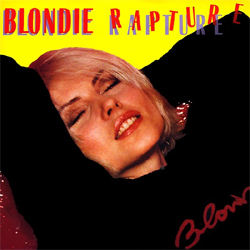
Today we’re celebrating World UFO Day with an out-of-this-world playlist of songs about beings not of Earth.
Follow Tunes Du Jour on Facebook
Follow me on Bluesky
Follow me on Instagram

Today I’m celebrating World Dream Day, which, per its official website, “serves as a powerful reminder of the potential within each person to contribute positively to the world by advancing their personal and collective aspirations.”
Follow Tunes Du Jour on Facebook
Follow me on Bluesky
Follow me on Instagram

Happy Bastille Day!
On this date in 1789, the French people stormed the Bastille Prison in Paris to shout “No More Kings!” They probably shouted that in French. I can’t say for sure as I wasn’t there that day. Anyhoo, it worked! How’ bout that? This uprising ultimately led to the birth of democracy in France.
To celebrate, I compiled a Bastille Day playlist. I’ll be the first to tell you that there are far more accurate Bastille Day playlists out there. I’m using the holiday as an excuse to compile tracks from French artists, songs sung in French, songs with French titles, and one song by Chicago-born 60s song parodist Allan Sherman. I learned more from that three-minute record, baby, than I ever learned in school about the French Revolution.
Follow Tunes Du Jour on Facebook
Follow me on Bluesky
Follow me on Instagram
Many of us grow up assuming the hit version of a song is the original. This playlist celebrates those surprising musical genealogies: well-known songs that were originally recorded by someone else, often with little fanfare. Here are the stories behind the transformations—where they started, and how they became iconic.
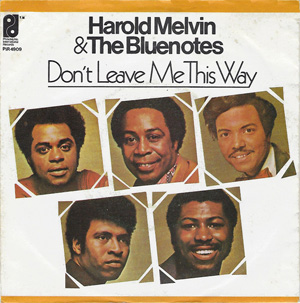
“Don’t Leave Me This Way” – Thelma Houston / Originally by Harold Melvin & the Blue Notes (1975)
Houston’s disco anthem actually began life as a Philly soul track sung by Teddy Pendergrass. Thelma took it to the dancefloor—and to #1.
“War” – Edwin Starr / Originally by The Temptations (1970)
This protest song started as an album cut by The Temptations. Starr’s rawer, angrier take made it a searing hit during the Vietnam era.
“Strawberry Letter 23” – The Brothers Johnson / Originally by Shuggie Otis (1971)
Otis’ dreamy, psychedelic original flew under the radar until producer Quincy Jones supercharged it with funk for The Brothers Johnson.
“I Feel for You” – Chaka Khan / Originally by Prince (1979)
Prince wrote it, recorded it, and released it on his 1979 self-titled album. Chaka Khan added Stevie Wonder’s harmonica and Melle Mel’s rap, creating a genre-blurring smash that gave the song a second life—and a much bigger audience.
“Louie Louie” – The Kingsmen / Originally by Richard Berry (1957)
Berry’s calypso-tinged rhythm & blues song became an unintelligible rock ‘n’ roll classic in the hands of teenage garage rockers.
“Pass The Koutchie” – Musical Youth as “Pass the Dutchie” / Originally by Mighty Diamonds (1981)
Musical Youth’s version cleaned up the ganja references but kept the groove. A British reggae hit born from a roots original.
“Tainted Love” – Soft Cell / Originally by Gloria Jones (1964)
This Northern Soul favorite was ignored in the U.S. until Soft Cell’s chilly synth-pop cover turned it into an international sensation.
“You Are So Beautiful” – Joe Cocker / Originally by Billy Preston (1974)
Preston’s gospel-inflected original was co-written with Dennis Wilson of the Beach Boys. Cocker slowed it down into a tearjerking ballad.
“The First Cut Is The Deepest” – Rod Stewart / Originally by P.P. Arnold (1967)
Before Cat Stevens, the song’s writer, sang it himself, P.P. Arnold delivered a powerful version. Stewart’s cover gave it global traction.
“Red, Red Wine” – UB40 / Originally by Neil Diamond (1967)
Diamond’s mournful original was a slow ballad. UB40’s reggae version confused even him—he didn’t recognize his own song on the radio.
“Brand New Cadillac” – The Clash / Originally by Vince Taylor and His Playboys (1959)
This rockabilly obscurity became a snarling punk track on London Calling. Vince Taylor later served as an inspiration for David Bowie’s Ziggy Stardust persona.
“Take Me To The River” – Talking Heads / Originally by Al Green (1974)
Green’s swampy soul gave way to Talking Heads’ jittery art-funk. An old-school spiritual reborn in new wave style.
“The Tide Is High” – Blondie / Originally by The Paragons (1967)
Jamaican rocksteady meets NYC cool. Blondie took this mellow gem and gave it a global pop sheen.
“Brandy” – Barry Manilow as “Mandy” / Originally by Scott English (1971)
English’s sad and simple original got a new name and new polish. Manilow’s grand version topped the charts.
“Don’t Let Me Be Misunderstood” – The Animals / Originally by Nina Simone (1964)
Simone’s pleading ballad became a snarling British Invasion hit. Her nuanced sorrow gave way to the raw edge of rock.
“Bette Davis Eyes” – Kim Carnes / Originally by Jackie DeShannon (1974)
The original was breezy and piano-driven. Carnes and her producer Val Garay turned it into new wave noir.
“Heaven Must Have Sent You” – Bonnie Pointer / Originally by The Elgins (1966)
Pointer’s disco version revived a Motown deep cut and put it back on the charts over a decade later.
“Love Buzz” – Nirvana / Originally by Shocking Blue (1969)
Nirvana turned this obscure Dutch psych-rock tune into a distorted grunge landmark. Their debut single.
“Piece Of My Heart” – Big Brother & The Holding Company / Originally by Erma Franklin (1967)
Aretha’s sister recorded it first, but Janis Joplin made it a fiery centerpiece of her legend.
“It’s Oh So Quiet” – Björk / Originally by Betty Hutton (1951)
A novelty big-band number revived by Björk into a theatrical showstopper. Old Hollywood meets Icelandic art-pop.
“China Girl” – David Bowie / Originally by Iggy Pop (1977)
Co-written with Bowie, Iggy’s version was skeletal and raw. Bowie’s version added synth gloss and MTV appeal.
“Good Lovin'” – The Young Rascals / Originally by The Olympics (1965)
The Olympics had the groove, but The Rascals turned it into a garage-rock rave-up and a #1 hit.
“Valerie” – Mark Ronson featuring Amy Winehouse / Originally by The Zutons (2006)
The Zutons wrote it as a bluesy rock song. Winehouse made it retro-soul perfection.
“Police On My Back” – The Clash / Originally by The Equals (1967)
A stomping, paranoid track from Eddy Grant’s first band. The Clash turned it into a punk fugitive anthem.
“After Midnight” – Eric Clapton / Originally by J.J. Cale (1966)
Cale’s laid-back shuffle was juiced up with guitar licks by Clapton, who kept the songwriter’s cool intact.
“On Broadway” – The Drifters / Originally by The Cookies (1962)
Songwriters Barry Mann & Cynthia Weil gave this to a girl group first, but The Drifters made it a city-slick R&B classic.
“Love Hurts” – Nazareth / Originally by The Everly Brothers (1960)
Gentle heartbreak became hard rock agony. Nazareth’s arena wail made the song a power ballad staple.
“I Love Rock ‘n’ Roll” – Joan Jett & the Blackhearts / Originally by The Arrows (1975)
Jett saw it on UK TV and recorded a fiercer, snarling version that girls (and boys) everywhere could scream along to.
“Without You” – Nilsson / Originally by Badfinger (1970)
Badfinger’s version was plaintive; Nilsson’s was operatic. He didn’t just sing it—he wailed it.
“Superman” – R.E.M. / Originally by The Clique (1969)
A psychedelic pop obscurity turned indie-rock cult classic. One of R.E.M.’s rare early tracks not written by the band.
These songs remind us that inspiration doesn’t always strike where the spotlight shines. Sometimes greatness is borrowed—and reinvented.
Follow Tunes Du Jour on Facebook
Follow me on Bluesky
Follow me on Instagram


David Bowie’s songwriting genius extends far beyond his own performances, as evidenced by this eclectic collection of covers spanning five decades. From punk pioneers to country legends, pop icons to elementary school choirs, artists across the musical spectrum have found fresh ways to interpret Bowie’s compositions. Iggy Pop’s raw, proto-punk “Lust for Life” shares space with Willie Nelson and Karen O’s unlikely but touching duet on “Under Pressure,” while Barbra Streisand’s take on “Life on Mars” contrasts with Ibibio Sound Machine’s Afrofuturistic reimagining of “Heroes.”
What’s particularly fascinating is how these songs illuminate different facets of Bowie’s writing. Some artists stay relatively faithful to the originals, while others take bold creative liberties. Together, these versions demonstrate not only Bowie’s versatility as a songwriter but also the enduring adaptability of his work across genres, generations, and cultures.
Follow Tunes Du Jour on Facebook
Follow me on Bluesky
Follow me on Instagram

The year 1979 was a vibrant time in popular music, characterized by disco’s stronghold on the charts and a rich variety of emerging and evolving genres. From dancefloor anthems to rock classics, the year’s hits reflected a dynamic musical landscape.
Disco reigned supreme in 1979, dominating the airwaves and nightclubs alike. Gloria Gaynor’s empowering “I Will Survive” became an instant classic, while Chic’s “Good Times” and Sister Sledge’s “We Are Family” kept dance floors packed. The genre’s influence extended far and wide, with Village People’s “Y.M.C.A.” becoming a cultural phenomenon, Donna Summer’s “Hot Stuff” showcasing disco’s enduring appeal, and Amii Stewart’s cover of “Knock on Wood” breathing new life into a soul classic. McFadden & Whitehead’s “Ain’t No Stoppin’ Us Now” and Sylvester’s “You Make Me Feel (Mighty Real)” further exemplified disco’s ability to blend uplifting messages with irresistible rhythms.
While disco flourished, rock music continued to evolve and diversify. AC/DC’s “Highway to Hell” solidified their status as the preeminent heavy metal band of the era, its raw energy and power chords setting a new standard for the genre. Dire Straits’ “Sultans of Swing” showcased a more refined, guitar-driven sound, while The Police emerged with “Message in a Bottle,” signaling the rise of post-punk. The new wave and power pop scenes gained momentum with Elvis Costello & the Attractions’ “Oliver’s Army,” The Jam’s “The Eton Rifles,” and Squeeze’s “Up the Junction” all making their mark. Meanwhile, M’s “Pop Muzik” and Blondie’s “Heart of Glass” demonstrated how disco influences could be merged with new wave sensibilities.
The year also saw the birth of iconic pop hits that would define the era. Michael Jackson’s “Don’t Stop ‘Til You Get Enough” hinted at the superstardom that awaited him, while The Knack’s “My Sharona” became an instant power pop classic. The Buggles’ prophetic “Video Killed the Radio Star” not only topped charts but would later make history as the first music video played on MTV. Earth, Wind & Fire’s “September” continued to showcase the enduring appeal of funk, while R&B ballads like Peaches & Herb’s “Reunited” and The Commodores’ “Still” made significant impacts on the pop charts.
As 1979 drew to a close, the musical landscape was rich and varied. While disco maintained its grip on popular culture, the seeds of change were being sown. The diversity of the year’s hits, from Charlie Daniels Band’s country crossover “The Devil Went Down to Georgia” to Rickie Lee Jones’ jazz-influenced “Chuck E’s In Love,” stood out against the backdrop of disco and straightforward pop tunes. This musical variety, along with emerging studio technologies and evolving artist expressions, set the stage for the significant shifts that would characterize the sound of the coming decade.
Follow Tunes Du Jour on Facebook
Follow Tunes du Jour on Twitter
Follow me on Instagram

This fall marks fifty years since Billboard magazine began publishing its disco chart, an acknowledgment of a genre that danced its way into the hearts of millions. Disco music, with its infectious rhythms and vibrant energy, was more than just a soundtrack for nightlife; it was a cultural phenomenon rooted in the experiences of Black, Latinx, and gay communities. The genre’s pulsating beats and soulful melodies offered an escape, a place where people could come together and express themselves freely on the dance floor.
Disco’s origins can be traced back to the dance halls of New York City, where marginalized communities created spaces for celebration and expression. Early tracks like The Trammps’ “That’s Where the Happy People Go” and Shirley & Co’s “Shame, Shame, Shame” laid the foundation for what would become a global movement. These songs, along with others from the era, were not just about the beats but also about creating a sense of community and shared experience on the dance floor, where people from all walks of life could come together and express themselves freely.
Black artists played a central role in shaping disco’s sound and message. Chic’s “Le Freak” and Sister Sledge’s “He’s the Greatest Dancer” brought sophisticated grooves that transcended race, while Marvin Gaye’s “Got to Give It Up” and Diana Ross’s “Upside Down” combined soul with danceable rhythms, pushing the genre into mainstream consciousness. The smooth yet dynamic production styles and vocals showcased a depth that went beyond the glittering surface often associated with disco.
Latinx influences also left an indelible mark on the genre. Songs like “Turn The Beat Around” by Vicki Sue Robinson and “Cherchez La Femme” by Dr. Buzzard’s Original Savannah Band infused Latin rhythms with disco beats, creating a vibrant and eclectic sound. This cross-pollination of cultures on the dance floor reflected the diversity of the communities that embraced disco, making it a genre that celebrated inclusivity long before it became a mainstream value.
As we commemorate fifty years since Billboard recognized disco’s impact, it’s important to remember that disco was more than just a moment in time. It was a movement that broke down social barriers and created a space where joy and liberation could thrive. Whether it’s the enduring appeal of “Stayin’ Alive” by the Bee Gees or the timeless groove of KC & the Sunshine Band’s “That’s the Way (I Like It),” disco’s legacy lives on, reminding us of the power of music to unite and uplift.

As the calendar turned to 1980, the music world stood at a fascinating crossroads. The year marked not just the dawn of a new decade, but also a pivotal moment in popular music, where established genres evolved and new sounds emerged to captivate listeners.
The influence of disco could still be felt, though its dominance was waning. Michael Jackson’s “Rock With You” showcased his exceptional vocal talents and danceable rhythms, while Diana Ross’s “Upside Down” demonstrated the sophisticated production techniques that defined the era. These tracks, along with hits like Lipps, Inc.’s “Funkytown” and The Brothers Johnson’s “Stomp!”, proved that disco’s infectious energy still had the power to fill dance floors.
Stevie Wonder’s “Master Blaster (Jammin’)” further exemplified how established artists were adapting to the changing musical landscape, infusing reggae influences into his signature soulful sound.
However, 1980 also heralded the rise of new wave and synth-pop, genres that would come to define much of the decade’s sound. Gary Numan’s “Cars” introduced many listeners to the futuristic possibilities of synthesizer-driven music, creating an atmospheric soundscape that was both innovative and influential. Blondie’s “Call Me” further exemplified the genre’s versatility, blending punk aesthetics with disco beats to create a chart-topping hit that appealed to a broad audience. Pretenders established themselves with “Brass in Pocket,” a song that showcased Chrissie Hynde’s distinctive vocals and the band’s unique blend of punk energy and pop sensibility.
Rock and punk maintained a strong presence throughout the year. Pink Floyd’s “Another Brick in the Wall, Pt. 2” dominated charts worldwide, its memorable chorus and biting social commentary resonating with listeners. The Clash’s “London Calling” and AC/DC’s “You Shook Me All Night Long” brought raw energy and rebellious spirit to the airwaves. These tracks, along with Motörhead’s aggressive “Ace of Spades,” spoke to listeners seeking music that channeled their frustrations and aspirations. In contrast, Joy Division’s haunting “Love Will Tear Us Apart” showcased a more introspective side of post-punk, its emotional depth influencing countless artists in the years to come. The Cure’s “A Forest” further expanded the boundaries of post-punk, its atmospheric sound and introspective lyrics pointing towards the gothic rock movement that would flourish in the coming years.
The year was also marked by significant releases that left an indelible mark on popular culture. John Lennon’s “(Just Like) Starting Over” served as a poignant reminder of his enduring legacy, released shortly before his untimely death. Queen’s “Another One Bites the Dust” demonstrated the band’s ability to blend rock with funk, creating an anthem that remains popular decades later. David Bowie’s “Ashes to Ashes” continued his tradition of pushing musical boundaries, seamlessly merging art rock with electronic elements.
Oh, a guy named Prince had his breakthrough hit “I Wanna Be Your Lover.” We’d hear more from him throughout the 1980s.
As the year closed, it was clear that 1980 had set the stage for the decade to come. The eclectic mix of sounds reflected a world in transition. It was a year where artists embraced both the past and the future, creating music that was as much a reflection of its time as it was a precursor to the trends that would define the 1980s.

Today is the birthday of The Go-Go’s’ Belinda Carlisle. Hear a few of her hits on today’s playlist.