Whilst growing up I frequently heard from teachers “There’s no such thing as a stupid question.” These teachers never met Karen from Accounting, who asked Randy if his birthday always coincided with Cinco de Mayo.
I’m thinking of Karen today, as it’s Ask A Stupid Question Day. I took some liberties with the playlist I compiled to celebrate this most important of holidays. All of the song titles ask questions. None of them are stupid questions; rather, they are questions we may not be asking often enough: What’s the frequency, Kenneth? When did you get hot? Who killed Bambi?
Check out thirty important musical questions below.
Twenty-five years ago this morning I turned on the local news channel to get the weather report.
Twenty-five years ago this morning my assistant called me at home to tell me he would be late for work. Something was going on at the World Trade Center, where his mom works.
Twenty-five years ago this morning my boss came to the door of my office, where I didn’t have a radio or television on, and told me I can go home.
Twenty-five years ago this morning my ten-minute walk home felt longer. There were plenty of people, but no sound.
Twenty-five years ago I spent a large part of the day sitting on my bed, crying.
Twenty-five years ago my former co-worker Margaret, who lived outside of New York City, called me. “Go to Grand Central Station, take the train to [whatever stop], and I’ll pick you up. You can stay here as long as you need to.” I declined her offer.
Twenty-five years ago my brother, with whom I seldom speak, called me from Pennsylvania, where his in-laws were living. “Go to Penn Station, take the train to [whatever stop], and I’ll pick you up. You can stay here.” I declined his offer.
Manhattan was my home. I love(d) the city so much and didn’t want to leave it. (It took a too-good-to-resist job offer two years later to get me to go.)
Twenty-five years later I’m choking up while I write this.
Ask someone to name a Barry Gibb song and they’ll likely hum something the Bee Gees themselves had a hit with. Fair enough — but a lot of those songs had a second life once other artists got hold of them. “To Love Somebody,” “How Can You Mend a Broken Heart,” “Words,” “I’ve Gotta Get a Message to You,” “Jive Talkin’,” “Nights on Broadway,” “Tragedy,” “How Deep Is Your Love,” “I Started a Joke,” “Stayin’ Alive” — all Bee Gees originals first, all charting under the Gibb name before anyone else touched them. Then Nina Simone found her own read on “To Love Somebody.” Al Green took “How Can You Mend a Broken Heart” to church. Elvis Presley recorded “Words.” Faith No More turned “I Started a Joke” into something colder and stranger than the 1968 version. Bruce Springsteen, in concert, made “Stayin’ Alive” sound like a different, angrier song, and Take That turned “How Deep Is Your Love” into a boy-band ballad decades on. Most of these carry a family co-writer credit, too — Robin on “To Love Somebody” and “How Can You Mend a Broken Heart,” Robin and Maurice together on “Jive Talkin’,” “Nights on Broadway,” and “How Deep Is Your Love.” A song’s writing credit stays put while its performances drift across genre and generation, and that’s the pattern running through most of this list.
But a second, smaller pile of songs on this playlist never belonged to the Bee Gees at all — Barry wrote them, sometimes with a brother, sometimes alone, expressly for someone else’s voice, and the group never had a hit version to lose. “Grease” is the cleanest example: Gibb wrote it by himself, reportedly overnight, for a movie he had no other involvement with, and handed it to Frankie Valli. Barbra Streisand’s “Woman in Love” and “Promises,” Dionne Warwick’s “Heartbreaker,” Diana Ross’s “Chain Reaction” and “Eaten Alive” (the latter co-written with Maurice and Michael Jackson, of all people), Yvonne Elliman’s “If I Can’t Have You” and “Love Me” — none of these started as Bee Gees album tracks. Neither did the three songs Barry wrote for his youngest brother: “I Just Want to Be Your Everything,” “(Love Is) Thicker Than Water,” and, with Robin and Maurice added to the credit, “Shadow Dancing.” Andy Gibb never joined the group, but he was clearly working inside the family business.
“Islands in the Stream” belongs in that second pile too — written by all three older brothers for Kenny Rogers and Dolly Parton, with no Bee Gees version to speak of — and it’s the one with the strangest afterlife on this list. In 1998, Pras Michel built “Ghetto Supastar” around a sample of it, which is how Barry Gibb ended up with a songwriting credit on a record that, on its face, shares nothing with a country duet. That’s the odd durability of a well-built song: it can outlive its original arrangement, its original audience, even its original genre, and still owe someone a check.
The pop music of 2012 was built around memorable hooks, but it did not follow a single formula. Carly Rae Jepsen’s “Call Me Maybe” made romantic uncertainty sound bright, tidy, and instantly singable, while P!nk’s “Blow Me (One Last Kiss)” gave the breakup song a sharper pop-rock edge. Psy’s “Gangnam Style” became an international sensation through its comic video, choreography, and highly recognizable refrain, showing how quickly a song could travel through YouTube and social media. Adele’s “Skyfall,” meanwhile, looked backward to the grand tradition of Bond themes, using orchestration and vocal drama rather than a dance beat. Together, these songs suggest a mainstream that could accommodate both carefully polished pop and something genuinely unexpected.
Electronic music also occupied a more visible place in the year’s popular sound. M83’s “Midnight City” paired a driving beat with glowing synthesizers and a saxophone solo, giving indie electronic music a strong pop presence. Grimes’ “Oblivion” was stranger and more intimate, using bright, sometimes uneasy production beneath an unusually light vocal. Major Lazer’s “Get Free,” featuring Amber Coffman, leaned into spacious reggae and dancehall influences, while M.I.A.’s “Bad Girls” turned a spare, bass-heavy beat into a forceful statement. Elsewhere, Todd Terje’s “Inspector Norse” offered a playful disco workout. These tracks were distinct from one another, but they shared an interest in texture, rhythm, and production as central parts of the songwriting.
R&B in 2012 often found power in restraint. Frank Ocean’s “Thinkin Bout You” is direct and emotionally exposed, yet its arrangement leaves plenty of room around his voice. Usher’s “Climax” transforms a breakup into a slow, tense electronic pulse, while Miguel’s “Adorn” draws on classic soul without sounding like a period exercise. Solange’s “Losing You” is more buoyant, using crisp percussion and layered vocals to give its sadness some movement. The year’s R&B did not always aim for a huge chorus or a crowded arrangement; many of its strongest moments came from pauses and carefully controlled atmosphere.
Hip-hop presented several different ideas about what a rap hit could do. Jay-Z and Kanye West’s “Ni**as In Paris” was built for impact, relying on repetition, forceful delivery, and dramatic samples. Nicki Minaj’s “Beez In The Trap” emphasized attitude and rhythmic precision, while Azealia Banks’ “212” moved between rap, house, and club music with restless energy. Kendrick Lamar’s “Swimming Pools (Drank)” sounded catchy enough for a party but used its verses to examine peer pressure and drinking culture. The contrast is important: 2012 rap could be boastful, dance-oriented, experimental, or reflective, sometimes within the same track.
There was also plenty of room for detailed, traditional songwriting. Taylor Swift’s “All Too Well” built its emotional force through specific memories rather than broad declarations. Fiona Apple’s “Every Single Night” turned anxious thought into something rhythmically unpredictable, and Lana Del Rey’s “Video Games” treated romance through a slow, cinematic lens. First Aid Kit’s “Emmylou,” Miranda Lambert’s “Over You,” Jessie Ware’s “Wildest Moments,” Jack White’s “Love Interruption,” Bat for Lashes’ “Laura,” Beach House’s “Myth,” and Japandroids’ “The House That Heaven Built” all drew on older forms—country, folk harmony, torch-song drama, blues, dream pop, and guitar rock—while keeping their own contemporary identities. Looking back, 2012 stands out less for one dominant style than for how comfortably these different approaches existed side by side.
The music of 1994 reflects a moment when the boundaries between underground credibility, radio success, and mainstream pop were becoming less rigid. Alternative rock was no longer a niche concern: it was a major commercial force with several distinct personalities. Green Day’s “Basket Case” and The Offspring’s “Come Out and Play” brought fast, catchy punk-informed songs to wide audiences, while Weezer’s “Undone – The Sweater Song” made awkwardness and uncertainty part of its appeal. Nirvana’s “All Apologies,” released to radio just prior to Kurt Cobain’s death, carried a quieter, more exhausted emotional weight. Elsewhere, Soundgarden’s “Black Hole Sun” and Pearl Jam’s “Daughter” showed how expansive and serious rock radio could sound.
There was also room for artists who approached alternative music from more idiosyncratic angles. Beck’s “Loser” turned thrift-store imagery, slackness, and hip-hop phrasing into an unlikely anthem. Pavement’s “Cut Your Hair” poked at the music business while delivering a compact guitar hook, and The Breeders’ “Cannonball” made distortion and loose rhythmic feel sound inviting rather than polished. Mazzy Star’s “Fade Into You” moved in the opposite direction, relying on Hope Sandoval’s hushed vocal and a slow, drifting arrangement. These songs did not share a single style, but they suggested that guitar music could be funny, disaffected, dreamy, abrasive, or deeply private.
British acts added another important strand. Blur’s “Girls & Boys” used a bright dance-pop pulse to observe holiday romance and casual social behavior with a dry sense of humor. Oasis arrived with “Supersonic,” a swaggering early statement that pointed toward the Britpop era to come. James found success in the United States with “Laid,” a song that was direct, nervy, and built around a memorable chorus. Morrissey’s “The More You Ignore Me, the Closer I Get” continued his tradition of turning discomfort and obsession into witty pop. Together, these records showed that British guitar music in 1994 could be both sharp-eyed and highly accessible.
Hip-hop and R&B were equally central to the year’s sound. Warren G and Nate Dogg’s “Regulate” was smooth and cinematic, built around a laid-back groove and Nate Dogg’s melodic hook. Snoop Doggy Dogg’s “Gin and Juice” made its relaxed party atmosphere feel effortless, while The Notorious B.I.G.’s “Juicy” offered a more personal story of ambition, hardship, and success. Salt-N-Pepa and En Vogue’s “Whatta Man” paired rap verses with powerful R&B vocals, creating a confident celebration of mutual respect. The Beastie Boys’ “Sabotage,” meanwhile, pushed rap-rock in a rougher direction, with a shouted vocal, distorted bass, and the energy of a band determined to disrupt the room.
Pop, dance, and adult-oriented songwriting rounded out the picture. Crystal Waters’ “100% Pure Love” and M People’s “Moving on Up” kept dance floors supplied with uplifting house-influenced tracks, while Björk’s “Big Time Sensuality” made electronic pop feel playful and slightly strange. Madonna’s “Secret” took a more restrained path, leaning into a soulful, understated groove. Sheryl Crow’s “All I Wanna Do” and Counting Crows’ “Mr. Jones” captured the conversational, radio-friendly side of the decade’s singer-songwriter boom. Even Bruce Springsteen’s “Streets of Philadelphia,” with its spare arrangement and compassionate perspective, fit the year’s broader interest in songs that sounded personal. Taken together, 1994 was not defined by one genre so much as by a widening sense of what popular music could hold.
August is National Water Quality Month, founded in 2005 by the Environmental Protection Agency. Per their official website, “National Water Quality Month is dedicated to making the most of the relatively small amount of fresh water we have, because having clean water is vital to our individual health, our collective agricultural needs, and the needs of our environment.”
To aid in your celebrations, below is a playlist of 30 quality songs that have the word “water” somewhere in the title.
Twenty years ago, the music industry was in the middle of a massive structural shift. The launch of the iTunes Store in April 2003 offered a legal alternative to file-sharing networks, signaling the beginning of the digital download era. Against this backdrop of technological anxiety, the music itself was remarkably self-assured and eclectic. On the radio, the lines between pop, hip-hop, and rock were softer than ever. It was a year where a listener could turn on the radio and hear the triumphant horns of Beyoncé’s solo debut “Crazy in Love,” transition to the crisp, minimalist beat of 50 Cent’s “In da Club,” and then find themselves singing along to the retro-futurist pop-funk of OutKast’s “Hey Ya!” These songs did not just dominate the charts; they defined the communal listening experience of the early 2000s.
In 2003, hip-hop and R&B were the undisputed drivers of mainstream pop culture, largely thanks to a roster of visionary producers. Pharrell Williams and Chad Hugo (The Neptunes) were seemingly everywhere, lending their signature space-funk bounce to Pharrell’s solo track “Frontin’,” Kelis’ infectious “Milkshake” and Snoop Dogg’s breezy “Beautiful.” Meanwhile, Timbaland helped Justin Timberlake transition to mature solo artistry with the icy, atmospheric “Cry Me A River,” and Lil Jon popularized the aggressive, high-energy “crunk” subgenre with “Get Low.” This era also embraced boundary-pushing rhythms, from Missy Elliott’s eccentric “Pass That Dutch” to the international crossover of Panjabi MC’s “Mundian To Bach Ke,” which brought Punjabi bhangra beats to Western dance floors with a little help from a Jay-Z guest verse.
While urban contemporary music ruled the airwaves, rock music was undergoing a gritty, back-to-basics revival. The White Stripes captured the cultural imagination with “Seven Nation Army,” built around a simple, seven-note guitar riff that has since become a global sports anthem. This raw, analog energy was shared by bands like Queens of the Stone Age, whose “No One Knows” paired heavy desert rock with a driving, danceable rhythm. Across the Atlantic, the British indie scene was revitalized by the messy, poetic punk of The Libertines’ “Time for Heroes,” while stateside, The Strokes refined their stylish garage rock on “12:51.” These bands proved that traditional guitar-bass-drums setups still had plenty of currency in a digital world.
Below the surface of the mainstream, 2003 was also a banner year for experimental subgenres that bridged the gap between indie rock and electronic music. In New York, bands like The Rapture with “House Of Jealous Lovers” and !!! with “Me and Giuliani Down By the Schoolyard” pioneered a bass-heavy dance-punk sound that brought rock fans back to the dance floor. Simultaneously, bedroom electronic pop found a definitive voice in The Postal Service’s “Such Great Heights,” a track that combined stuttering synthesizer beats with warm, melancholic indie-pop melodies. This appetite for sonic exploration extended to established giants like Radiohead, who returned to organic, guitar-driven anxiety on “There There.,” and Coldplay, whose piano-driven “Clocks” became an atmospheric stadium staple.
Looking back, the music of 2003 reflects a unique cultural moment where the monoculture was still intact, yet fractured enough to allow wildly diverse sounds to coexist. It was a year where the quiet, acoustic intimacy of Norah Jones’s “Don’t Know Why” could share space on the charts with the tongue-in-cheek power pop of Fountains of Wayne’s “Stacy’s Mom” or the left-field neo-soul of The Roots’ “The Seed (2.0).” Rather than being defined by a single dominant trend, 2003 stands out as a bridge between the physical record era and the highly personalized, algorithm-driven streaming habits of today, leaving behind a soundtrack that feels both nostalgic and surprisingly modern.
Two thousand thirteen was the year pop music stopped pretending it needed to choose a side. You could hear it in the way the year’s two biggest radio songs sat right next to each other in totally different moods: “Blurred Lines” leaned on a live-funk groove that Robin Thicke, T.I., and Pharrell built to feel effortless, while Daft Punk’s “Get Lucky,” also featuring Pharrell, reached even further back — disco basslines, Nile Rodgers on guitar, a chorus built for driving with the windows down. Both songs topped charts by looking backward, but they proved that nostalgia, done well, doesn’t feel like a costume.
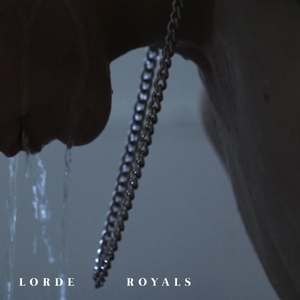
Meanwhile, a strange, private kind of pop was pushing forward. Lorde released “Royals” as a teenager from New Zealand and, without trying to sound like anyone else, wrote the year’s most quietly subversive hit — a song about not wanting the diamonds and Cadillacs everyone else was singing about. HAIM’s “The Wire” and Icona Pop’s “I Love It” (with an assist from Charli XCX) carried that same don’t-actually-care energy but louder, messier, more fun about it. Even Miley Cyrus, mid-reinvention, turned “Wrecking Ball” into something that split the difference between vulnerability and spectacle, and people couldn’t decide which one was real. Maybe that was the point.
Hip-hop and R&B spent 2013 getting weirder in the best sense. Kanye West’s “Black Skinhead” was pure confrontation — industrial drums, a vocal that sounded like it was daring you to turn it off. Kendrick Lamar’s “Bitch, Don’t Kill My Vibe” did something almost opposite: patient, meditative, letting a single idea breathe for four minutes. Frank Ocean’s “Pyramids” stretched even further, a ten-minute song that changed shape twice without losing the thread. And then there was Disclosure’s “White Noise,” which took house music — a genre that had mostly lived in clubs — and made it sound like it belonged on the radio, a preview of the decade’s growing appetite for dance music with pop bones.
Guitar music, often declared dead around this time, was mostly just changing address. Vampire Weekend’s “Diane Young” crammed baroque-pop cleverness into two frantic minutes; Arcade Fire’s “Reflektor” went the other direction, stretching out into disco-adjacent art-rock with help from James Murphy. Tame Impala’s “Elephant” and Jake Bugg’s “Lightning Bolt” both looked to classic rock without sounding retro, and on the rawer end, Courtney Barnett’s “Avant Gardener” and Deafheaven’s “Dream House” showed just how wide “guitar music” could stretch in a single year — one a deadpan, talk-sung account of a panic attack in a garden, the other a wall of blast-beats and shoegaze that somehow ended up sounding gorgeous.
What’s easy to miss, looking back, is how many of 2013’s songs were quietly about mortality and change. David Bowie’s “Where Are We Now?” arrived without warning after a decade of silence, a hushed reflection from a man looking at his own past. The Knife’s “Full of Fire” and Nick Cave’s “Jubilee Street” both dealt, in very different registers, with reckoning and transformation. Even Justin Timberlake’s “Mirrors,” a genuine pop smash, was really a song about time and commitment dressed up as a love song. None of these songs were trying to define an era — they were just being made, by people working in their own lanes, at the same time. It’s only in hindsight, with a playlist like this one, that the year starts to look like it had a shape at all.
Throughout the next however many months I’ll be counting down my 100 favorite albums, because why not. I’m up to number sixty-seven.
Cute! That’s how I looked that evening. Cuter than usual, which is saying something.
“Hot dayum!” I said as I looked in the mirror. Glenn, please—you’ve never said that in your life. “Hubba hubba!” Don’t think so. “Hot diggity dog!” Oh, hell no. “Looking fly, yo. Word.” Okay, now you’re bordering on offensive. Pipe down, conscience. Let me have this moment. For the point is, I cut a figure in my boxy black-and-white floral print silk button-down shirt, black Levi’s 501 jeans, and black Reeboks. Dark hair perfectly coiffed, not a strand out of place. Contact lenses in. And as an added bonus, it was a shaving day. Being clean-shaven made me appear even younger than I usually did. “You’re 34? Really? GTFO!”
I was a catch in the Men Under 5’11” category. Cocky? Au contraire, mon frère. I’ve never been cocky a day in my life. I’m the opposite of cocky. I’m uncocky. Acocky. The anti-cocky. But sometimes, like right this moment, and like on that September night in 1998, I could steadily walk the tightrope of self-confidence, though the slightest breeze of criticism could knock me off. In sixth grade, Ellen Baker compared my physique to a shriveled-up piece of bacon. Everything I’ve done in the last 50 years is in response. Before I get too mired in ruminations about that dark, depressing, desolate period of my life (1975 on), I’ll say that, looking back with a dispassionately objective eye, I checked off many of the boxes on the boyfriend material checklist.
Few would argue that looks are the most important quality when judging others, but attractiveness is only 90% of the equation. Blessedly, there were so many other traits to recommend me. Not only was I cute, I also was smart. I was funny. I was honest. To be honest, perhaps too honest for some. For instance, one Saturday afternoon my friend Frank and I were clothes shopping on Christopher Street. He came out of a dressing room wearing a pair of jeans and asked me, with genuine concern, whether they made his ass look big. Frank wouldn’t be mistaken for a sumo wrestler, but he was no Skinny Vinnie either. I said “Your ass is big.” He scrunched up his face like I’d personally force-fed him the carbs, harrumphed a “Fine!,” put the jeans back on the table, and headed to the cashier, limiting his purchase to just a plain white t-shirt and a red velour thong. I stand by my answer. It wasn’t intended as an insult; it was a straightforward observation in response to a direct question. I would want someone to tell me the same, should I ever have a fat ass and specifically ask about it. I miss those Saturdays with Frank. I hope he’s doing well.
Another excellent quality that I possessed? I kept my anger boxed up inside. No worries about me blowing up at you. Suppressed those feelings. Kept things cheery. Nobody wants to hang out with a Moody Rudy.
And I was a good dancer. Very good. Not Tony Manero or Fred “Rerun” Berry good, but throw on Madonna’s “Like a Prayer” and I will werq! Werq? Conscience, please! I asked you to be quiet.
“What else?” I assume you ask. Well, I liked reading. I keep all my books, except the exceptionally shitty ones received in swag bags at gay charity events, like the one about a mild-mannered deodorant tester named Jarrett who four years after his partner Sampson died in a freak lightning accident fell for circus performer Blaze, only for Sampson’s ghost to haunt him about moving on, until the conflict gets sorted when the three men become a throuple. It’s not as good as it sounds.
Sadly, I no longer have any of the books I bought before moving to my 200 sq. ft. Chelsea apartment. I was storing them at my dad’s house in New Jersey, in his garage, which itself was way larger than my apartment. Somewhere along the way, he disposed of them, along with my guitar, amp and typewriter. Perhaps he didn’t know of my interests in reading, writing and music. Or perhaps he thought I forgot about these items. I haven’t forgotten. Grrrr.
I don’t understand why people get rid of their not-exceptionally-shitty books. In the suburban neighborhood where I now reside, no fewer than seven houses in a two block radius have in front of them one of those take-a-book, leave-a-book mini libraries. Take, yes. But leave? Leaving a book you liked in one of those is akin to leaving your child there. Assuming your child isn’t exceptionally shitty.
Anyway, I’m not saying I was perfect, but like all virtuous persons, particularly those who’d been compared to a breakfast meat, I was striving to be. I didn’t have the pecs and lats to be a Chelsea 10, but on that night I was on my way to eat in Greenwich Village, and I can confidently say I was a Greenwich Village 8, if you were to round up.
For the uninformed, in the mid to late 1990s, Chelsea was Manhattan’s hot GAY GAY GAY neighborhood, while Greenwich Village—the West Village, to be precise—was more…homosexual. That’s not me being homophobic. It’s merely an observation, so don’t be all butt-hurt about it. On that Tuesday night, gay desirable me was walking in my black jeans and good hair to the West Village to meet a homosexual whose personal ad in Homo Xtra I answered. GWM, 28, Village, in shape. Into good food, bad movies, Sunday mornings. Seeking same. No hookups, no drama.I’m into good food! I’m into bad movies! I something about Sunday mornings! I answered his ad. He responded to my response, and we arranged a Tuesday night dinner meet-up, not about to give up a Friday or Saturday night for a first date.
I met up with him in front of his building on the corner of Greenwich and West 11th Streets, where I almost made the worst kind of memorable first impression by coming thisclose to falling flat on my face. I spotted who I assumed was him as I approached, and I was so busy sizing him up I didn’t notice there was a hole the size of a turkey sub in the sidewalk. I caught myself before twisting my ankle so badly it would have kept me from werqing.
“Whoa! Watch your step. Are you Glenn?”
“Yes, and I assume you’re Joel.”
“Guilty. Sorry about the crater. Supposedly they’re paving it by the end of the week.”
From there we walked south along Greenwich Street. As we got to know each other through conversation, I continued my…I wouldn’t call it judging. Evaluating. Assessing. Appraising.
Joel was slender, about an inch shorter than me, and had neatly-shorn light brown hair. He was wearing tight plaid pants that would look cool on a hipster in the East Village, where the queers resided. (The way it played out was the homosexuals rebelled against the old rules, the gays created new rules, and the queers rejected rules.) I thought it admirable that he was confident enough to wear those pants, on a first date, no less. In all the time I’d known him—ninety seconds—he didn’t strike me as the fashion forward style icon type. But earlier that evening he must have gazed in the mirror and said to himself “Looking good, Joel.” It must be noted that he didn’t have a big ass. It was compact. Efficient. It said to the pants “I won’t make you look bad. We’re in this together.”
If I had to give him a rating, I’d say he was a Greenwich Village 6. His facial features were shmushed, like a French Bulldog, which is very cute, on a French Bulldog. Not as fetching as I’d hoped, but he was well-groomed and presentable and I wasn’t embarrassed to be seen with him. As an 8 (rounding up) striving to be a 10, I wouldn’t write off someone for something so shallow, unless they were below a 5, in which case, shallow it is.
Joel was a graphic designer, which sounded cool to me. “I don’t have that kind of creativity. I wish I did!” I told him.
“What do you do?”
“I work at a record company, securing permissions for songs to be used on compilation CDs abroad. It’s great for me ‘cause I love music and in this job I get to travel. They sent me to meetings in London last month.”
“London’s at the top of my list. I’m there as soon as I finish paying off my student loans, which, if all goes according to plan, should be sometime this year.”
“I paid mine off last year,” I told him. “Such a great feeling.”
“I bet!”
“And if you can spare the time, while you’re in the area I recommend spending a couple of days in Dublin. London has the same energy as New York and there is so much to see there, while Dublin is more relaxed and compact. It’s like a vacation from your vacation.”
“Noted!”
We turned left onto Christopher Street, which was like Main Street U.S.A. as viewed through the funnest fun house mirror. Everyone walking there was homo, bi, trans, or lost. Like any Main Street, this thoroughfare had lots of stores, albeit with more leather. Joel and I strolled past the porn shop, past the Lucille Lortel Theatre,past the clothing store (What was it called? All American Boy? The Loft?) where I confirmed to Frank he has a big ass (because he asked!).
“So I love music, too. A couple of months ago I saw the Dave Matthews Band in concert. Incredible show!” Joel enthused. I nodded. “Do you like them?”
“Not really, no.”
“Why not?”
“I find them a bit pretentious and showy, and his voice is annoying. I’ve heard only maybe three of their songs, though.”
“Then you’re not giving them a fair trial. Listen to the whole albums. I think you’d hear them differently.”
Past The Leather Man (clothes and um, special interest items), past the Don’t Panic store that sold t-shirts emblazoned with “Let Me Get This Straight – I’m Not” or “You Go Girl!” or “Friend Of Dorothy”, past an Italian restaurant I’d never been to whose name I no longer recall.
“Have you answered many ads from Homo Xtra?” Joel asked.
“A few, and while I haven’t made any boyfriends—obviously—I did make a couple of friends.”
“Friends. That’s not what I’m looking for. I already have a lot of friends. I placed an ad because I want a boyfriend. If there’s no potential for that, I’d rather just move on.”
“I want a boyfriend, too, but I’m open to friends. Can never have too many.”
Joel forced a smile.
Past St. John’s Lutheran Church, past another porn shop, past the bar Boots and Saddles; then we hit Seventh Avenue.
On the opposite side of Seventh Avenue was The Duplex. “There is one of my favorite places in the city,” I said to Joel.
“The Duplex?”
“Yes. I go there at least one Saturday night a month.Have you ever been?”
“No. Piano bars are not my thing.”
“This is not a typical piano bar. It’s not older homosexuals singing Judy Garland songs while crying into their martinis. It’s very campy, and we don’t sing show tunes. It leans more toward Petula Clark and The Mamas & the Papas.”
“Still probably not for me. Say, I’m getting hungry. How about that Italian restaurant we passed?”
“Sure. I can always go for Italian.”
We walked back to whatever that place was called. Upon walking in we were greeted by the aroma of garlic. “Mmmm…I love the smell of an Italian restaurant,” I announced. “I would love this in a scented candle.”
“O…kay,” was Joel’s response.
We were seated at a table against a wall in the center the restaurant. Only three other tables were taken, all by same-gendered couples. The dim overhead lighting and battery-powered candles on each table suggested this was THE place on Christopher Street for a quiet romantic dinner.
The waiter appeared instantly. “Would the gentlemen like some wine? An appetizer? The arancini is excellent.”
“Shall we split a bottle of something?” Joel asked.
“I don’t drink, except when I’m at The Duplex, where I nurse a white Russian for three hours. But go ahead and order a glass for yourself if you like.”
“Thank you, I will.” He ordered a…I don’t know. Wine is wine to a non-wine drinker.
We enjoyed terrific food and kept the conversation going. He mentioned his love of bad movies and I told him I share that interest to the extent that every few Sundays I host bad movie screenings at my co-op. “Last week we watched one where Anna Nicole Smith portrayed an undercover CIA agent. It also starred John Travolta’s brother Joey. I think it was called To The Limit. It ends with a CD being thrown at someone. It gets lodged in their skull and they fall off the Hoover Dam. Oh, spoiler alert.” Joel looked disturbed. “I take it you haven’t seen that one yet.”
“No. Not yet.”
“What bad movies have you enjoyed?”
“That Dick Tracy movie from a few years ago stands out.”
“I didn’t think that was bad, especially for a movie starring Madonna. It’s not a must see, but it was alright.”
“It was terrible in the best way. There was barely any story. You keep waiting and waiting and…nothing. ”
He wasn’t wrong about it being light on plot. I’ll concede that some dramatic tension would have helped. It barely rose above the level of the comic strip on which it was based. For me, that wasn’t a deal breaker. “I liked the use of colors in the film.”
“O…kay. What are some good movies you liked? What is the best movie you’ve seen recently?”
“My favorite movie of the past few years was Before Sunrise. I loved it. I left the theater with the hugest smile on my face.”
“My roommate dragged me to that. I thought it was eh. Too much talking. No action.”
Just as I felt myself tiring of Joel, the waiter brought the check. “I’ll get it,” I offered.
“No. We can split it.” And so we did.
I walked him back to his apartment building. “Thanks. I had a good time,” I said, which wasn’t exactly a lie, though it wasn’t the truth either.
Joel nodded. “Good night. Good luck!”
He entered his building. I headed home.
“Not bad, Glenn. Hair looks good, that shirt is funky and fun, and so are you, tiger.” Tiger? I was preparing for another date. “This’ll be a good one,” I assured myself. It had been two weeks since I met Joel, and I hadn’t heard from since. Not that I cared. “Good luck.” What does that even mean after a date? Good luck with what? Finding someone better? Oh, I’ve had better, Joel, and there’s more where that came from. Plenty of fish in the bucket. “Good luck.” Passive-aggressive much?
Still. Joel. Grrrr. It’s not like I was into him, but the rejection stung nonetheless. It’d be like me complaining that on Halloween at the house five doors down, Mrs. Brown, a/k/a the Lush (my mother’s nickname for her), gave every kid broccoli except me. Focus, Glenn! The takeaway is that a vegetable is no longer on your plate. You’re right, conscience. Why would I want broccoli when I have a sweet tooth…for love? I think I may throw up.
I had answered another ad from Homo Xtra. GBM, 29, West Village, fit. Bookworm, artistic movies, good conversation. Looking for something real. No games. You got this, Glenn. My advice? Keep your opinions to yourself. Nobody wants to hear your takes on what’s wrong with what they like. Hey – with Joel I was careful to keep those thoughts to myself unless asked. I wasn’t about to pretend I like Dave Matthews. Give me a break, conscience. I’m just saying. This is why Michael broke up with you. He didn’t break up with me exactly. He was sleeping around with half the gay men in Manhattan, plus a few from Brooklyn and Queens, and eventually coupled with one of them. Of course he was sleeping around! He’s hot hot hot! An East Village 9. Be grateful he spent any time with you. I am! And let’s not forget about Jesse. I haven’t. We’re still friends. Friends. Yawn. That’s not what you’re looking for. Excuse me. He went off to become a sex worker with extraordinarily wealthy clients like ████ ██████████ and ████████ ███████. As someone with that facial bone structure ought. He’s hella gorgeous. At least a West Village 9. A 9.5 when he became anorexic. Glenn! Sorry, but it’s true. I’m not arguing. And before you bring him up, I broke it off with Tommy. An Upper West Side 8. And I indirectly broke it off with Dr. Leon [literally a white Russian who, as a resident of Brooklyn, doesn’t get a rating, due to the lack of a sufficient control group with whom to compare data] by starting to date Michael while Dr. Leon was on vacation in the Caribbean. You’re missing the point. It doesn’t matter who broke up with who. Whom. You’re turning 35 in a couple of weeks. That’s one step closer to death. You need to find a boyfriend.
Though I was somewhat loath to admit it, my conscience was right. You know I’m still here, don’t you? I had a couple good years left, and I was optimistic about my prospects. While we had yet to connect in person, I already liked this guy I was off to meet. Aside from what was in his ad, the only other things I knew about him, learned from the briefest of phone calls to arrange our date, were that his name was Daniel and he worked in publishing. We agreed to meet on a Wednesday evening at 6:30 in front of the Oscar Wilde Bookshop, a little further north on Christopher Street from where Joel and I strolled, as he had to drop off an advance galley to someone who worked there.
I arrived right on time (punctuality—another of my good traits) to see a GBM in front of the store. Dayum! Hubba hubba! Hot diggity dog! Looking fly, yo. Word. Oy. Oh, please, God whom I don’t believe in, let this be him. “Daniel?”
“Glenn?”
We both smiled and engaged in a three-and-a-quarter-second embrace. “Hey, it’s so good to meet you!” I said, and so help me God whom I don’t believe in I meant it. Daniel cut a figure in his pink polo shirt, collar popped, and khaki pants. Pleasurable facial bone structure, skin as smooth as an Obsidian gemstone that had been in the rock tumbler non-stop for six weeks, and a smile so bright it could have lit all of lower Manhattan, if teeth were capable of generating electricity, which, in 1998, was not yet scientifically possible, at least not on a grand scale. He wasn’t a Greenwich Village 10, but if I’m an 8, he’s at least an 8.27. As long as he’s below an 8.63, I’m not intimidated (not that intimidation stopped me from dating Michael and Jesse). The wind was calm, the scents of car fumes and the Hudson River not overwhelming, and I was with a man who lived at the intersection of cute and handsome. Let’s do this. “Shall we just walk and see where we end up?” I suggested.
“That sounds nice.”
We strolled south, past the home goods store, the jewelry store, the greeting card shop.
“So how’s the publishing world treating you?” I asked.
“I really like it. I get to spend all day around books, which suits me just fine.”
“I get that. I work at a record company, which suits me because music is my greatest passion.”
Right on cue we were in front of the landmark Stonewall Inn, considered the birthplace of the modern gay rights movement, from which was blasting Lauryn Hill. “That thing, that thing, that thi-i-i-ing.” “I love this song!” I exclaimed.
Oh my God, Glenn, really? Making sure the Black man knows you like a Black artist? Performative, much? This is a date. You’re not campaigning for an award from the NAACP.
Daniel smiled. “Have you heard the whole album? It’s really good.”
“Yes. I work for her record company.” In your face, conscience! Don’t get cocky with me, bitch. I know you better than you know yourself. My role is to protect you from screwing up. Again.
“Nice! What do you do there?”
“I secure the necessary permissions for songs owned by the company I work for to be used on compilation CDs abroad.”
“That’s got to be a fun job.”
“There certainly are worse.”
On the corner was The Duplex. Don’t talk about your nights at The Duplex. That didn’t work last time, Glenn. I think Daniel would be cool with it. Don’t chance it, tiger.
Daniel interrupted my internal debate. “Hey, I think there’s an Italian place on the next block. I’ve never been, but my roommate says it’s good. Want to give it a try?”
“I know the place you’re talking about and it is good. Let’s do it.”
We got to The Italian Restaurant Whose Name I No Longer Recall. We were greeted by the maitre’d. “Ah, signore, welcome back. May I put you at this table by the window?” Even he thought Daniel and I made a cute couple. That’s confirmation that I traded up. Instead of hiding me in the back with a Greenwich Village 6, I was put on display for all the world, or a subset thereof—people walking on Christopher Street at that time, to see. They would view us in the window and think “Let’s eat here. There’s a cute couple in the window.” We settled in and ordered drinks.
“So your ad said you like movies. What have you liked recently?” He’s already a winner in the looks and music departments. Fingers crossed he doesn’t spoil anything by answering Dr. Dolittle or Lethal Weapon 4.
The waiter arrived with a basket of Italian bread, which looked and smelled delectable, and a ginger ale for Daniel.
He took a sip of his soda. “I thought The Truman Show was great.”
Ding ding! That’s the winning answer! “Yes! I was surprised how much I liked it. I usually don’t care for Jim Carrey movies. He’s so hammy.” I held out the bread basket to him.
“Right? I admire that he stretched himself for this role.” Daniel tore off a piece of bread. “Thank you. Next thing you’ll know, we’ll be raving about an Adam Sandler movie.”
“Okay, let’s not go crazy. That seems highly unlikely.” I tore off a piece of bread for myself. It tasted even better than it looked.
“Hey, you never know,” Daniel said, followed by a chuckle. What a great smile. Sigh.
Our pasta arrived — I’d gone with the Rigatoni Bolognese, Daniel with something involving mushrooms that was so wonderfully aromatic that my mouth still waters thinking about it. Outside on Christopher Street, a small cluster of people paused at the window to look at the menu posted there, or possibly at us. Probably at us.
“So who’s your favorite author?” I asked.
Daniel didn’t hesitate. “Toni Morrison. I love how poetic she is without ever losing the story. She can say more in a page than most writers do in a chapter, and somehow it never feels like she’s trying too hard. Her books stay with me for days.”
Daniel smiled his smile. It was the longest answer he’d given me all evening. Be careful, Glenn.Don’t respond being all effusive in your praise of Toni Morrison to impress the Black man. “I’ve never read her.” Wow. That’s even worse.
He looked up from his plate. “Then we need to fix that.”
“Where shall I begin?”
“Paradise, her latest, is excellent, but I’d start with Beloved. The movie just came out, but I’d read the book first.”
I made a mental note. I also made a mental note that he said we.
We talked more of movies and music and books over bites of pasta. I could’ve kept going, but Daniel looked at his watch and said “It’s after 8 already? I didn’t realize how late it got. I need to go. Early meetings tomorrow.”
Bummer.
He signaled the waiter for the check, which showed up immediately. “I got this,” he said.
“You sure?” I asked.
“Yes. It’s my pleasure.”
I walked him home, which wasn’t too out of my way. South on Christopher Street, then a right onto Greenwich. We walked a few blocks. “This is me,” he said. “Watch out for that hole in the sidewalk. They were supposed to fix it a couple weeks ago.”
I looked at the hole. I looked at the building. I looked at Daniel. I smiled. I spoke. “Thanks again for dinner. It was great getting to know you.”
“Good night. Good luck!”
He entered his building. I headed home.
I never heard from him again.
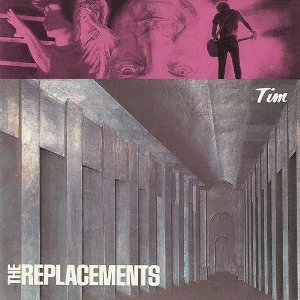
I’d forgotten about Daniel and Joel until Tim reminded me. Tim is not a person, though I’m aware there exist folks with that name. Tim Allen, who starred in a sitcom I’ve never seen and was also in a movie where he played Santa Claus, unless that was somebody else. Tim Robbins, who lived with Susan Sarandon a block over from me in Chelsea at the time this essay took place. Tim with whom I worked at Sony Music when the Lauryn Hill album came out. There probably are/were one or two other Tims in existence, though there was nobody named Tim who played on or is sung about on the album Tim by The Replacements. After considering Van Gogh’s Ear and England Schmingland as titles, the band came up with Tim, as a joke.
With all due respect to Tim Robbins and my former co-worker and the guy who may have portrayed S. Claus, the album Tim is my favorite Tim. I bought my first copy of Tim at a used vinyl record shop in the east Village in the 1980s. That’s right; I said my first copy, for like an Italian restaurant that serves fresh bread and delicious pasta, I kept going back. I ordered my second copy of Tim from the Columbia House CD Club; my third copy—an expanded 2-CD edition—came from work, a perk of being at their record label; and I purchased the single vinyl/four CD box set version from Amazon. I can confidently say I have enough copies of Tim to get me through the rest of my life, or until the next reissue.
As I held my pen over a blank page, I was ruminating on my favorite song on the album, “Waitress in the Sky.” The Replacements’ lead singer and songwriter, Paul Westerberg, assumes the role of an entitled man who flies coach and insults the airline staff with “Sanitation expert and a maintenance engineer / Garbage man, a janitor and you, my dear / A real union flight attendant, my oh my / You ain’t nothing but a waitress in the sky.” Dayum, what an asshole! The song was inspired by things Westerberg’s flight attendant sister told him about some of the fliers she encountered. I thought about some of the entitled jackasses I’ve met over the years—the music business is overflowing with them— but then decided I didn’t want to honor them with more attention. Then, from a recess of my brain that holds memories of trivial matters such as titles of Anna Nicole Smith movies, plots of shitty books I got for free, and one-time-only dates, Joel came to my mind. Like the subject of this song, he knew what he wanted, though thinking about him, the descriptor “entitled” is a bit strong, not entirely accurate or fair. He knew what he wanted and said so, but wasn’t an asshole about it. Now, though, he was top of mind.
Then I thought about my other favorite song on the album, “Here Comes a Regular,” which hits me harder than one may expect, for I, the teetotaler (except when nursing a White Russian at The Duplex), am nothing like the song’s narrator—a man who ends each day at the same bar, just out of habit. When Westerberg sings “everybody wants to be special here,” I respond with an “Amen.” When a verse later he sings “everybody wants to be someone’s here,” I respond with “Preach!” And when he delivers the metaphorical lyric “the summer’s passed, it’s too late to cut the grass, there ain’t much to rake anyway in the fall,” I thank God that I don’t believe in God, so uttering “Lord take me now, for time has moved on and there’s no fixing the past” has no bearing. I connect to this barfly who’s looking at his life choices: “here comes a regular, call out your name / Yes, now here comes a regular, am I the only one who feels ashamed?” No, you’re not alone with that feeling. And then: “Opportunity knocks once, then the door slams shut.” Those lines, and the sadness and loneliness the song evokes, danced around in my subconscious. Oh, good, I’m back. I thought you forgot about me. Did a door slam on me? Or did it close quietly? Do I have any control over the door? Enter the memory of the date with Daniel. I had plenty more dates after Daniel, so I can’t say the door was shut for good. Meanwhile, the lyric “I used to live at home, now I stay at the house” replays in my head. I want the home. Did I screw up somewhere? I’m not seeing it, but perhaps writing this out will help.
Then I thought about my other favorite song on the album, “Left of the Dial.” And then my other favorite, “Bastards of Young.” And I can’t leave out my other favorite, “Swingin’ Party.” It’s that kind of an album. A favorite song for every mood.
It was only after I wrote about my dates with Joel and Daniel that I thought about my favorite song on the album, “Kiss Me On The Bus.” Let me start with this not-to-be-underestimated observation of musical greatness: the song deploys sleigh bells with more confidence than sleigh bells have been deployed on any non-Christmas recording this side of Bonnie Tyler’s “Total Eclipse of the Heart.” An award to whomever thought of that (perhaps the record’s producer, Tommy Ramone of The Ramones). But it’s the subject matter of this song that in retrospect connects most with the subject matter of this essay. “Kiss Me…” is Westerberg yearning for a romantic moment in a public space, with the object of his affection not feeling the same way: “On the bus, that’s where we’re riding / On the bus, Okay, don’t say ‘hi,’ then.” He fantasizes that the others on the bus are rooting for him: “On the bus, everyone’s looking forward / On the bus, I am looking forward / And it really ain’t okay / I might die before Monday / They’re all watching us.”
I was that guy, sitting not on a bus but in the window of an Italian restaurant on Christopher Street, on a Wednesday evening in the fall of 1998, with someone I actually wanted to be with, absolutely certain that the maitre’d and every person walking by could see exactly what I saw. The hopeless and helpless romantic on full display, right there in the window, for anyone who cared to look.
If I knew how to play a tiny violin, I would do so right now, but the instrument I know how to play is the guitar, and your dad gave yours away. Grrrr. Was it not you—Glenn Howard Schwartz—who just moments ago proclaimed your cuteness, not to mention your cheerfulness, intelligence, honesty, sense of humor, dancing abilities, and proportionately-sized ass, or was I in someone else’s brain for a well-deserved vacation? So a breeze blew you off the self-confidence tightrope? Get back on. Because first off, if someone is too blind to see all of your amazing qualities, they’re not worthy of your time. Second off, for if there can be a first off there can surely be a second off, care not one whit about the opinions of thosein who you have no interest anyway. Whom. You may not see it right this second, but there are plenty more fish in the bucket.
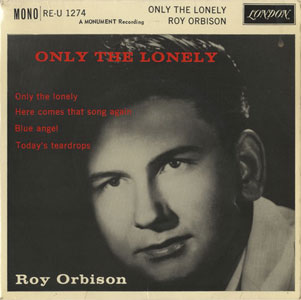
Today is Cheer Up The Lonely Day. Accordingly, I am spending it by myself, cheered up by a playlist I made of 30 songs that have the word “lonely” in the title.