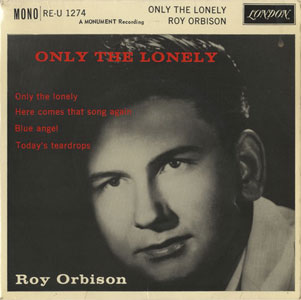
Today is Cheer Up The Lonely Day. Accordingly, I am spending it by myself, cheered up by a playlist I made of 30 songs that have the word “lonely” in the title.
Follow Tunes Du Jour on Facebook
Follow me on Bluesky
Follow me on Instagram
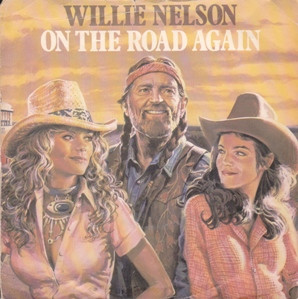
What stands out about Willie Nelson, especially in a playlist like this one, is how naturally he connects songs and audiences that do not usually live in the same lane. “Crazy” and “Night Life” point back to his early years as one of Nashville’s great songwriters. “Blue Eyes Crying in the Rain,” “On the Road Again,” and “Always On My Mind” show how fully he grew into stardom as a singer. Then the list keeps widening: pop standards like “Blue Skies” and “Moonlight in Vermont,” a gospel song like “Uncloudy Day,” a duet with Ray Charles on “Seven Spanish Angels,” a track with Snoop Dogg on “Roll Me Up,” and a Pearl Jam cover, “Just Breathe,” recorded with his son Lukas. On paper, that range looks unlikely. In practice, it feels completely coherent, which says a lot about the steadiness of Willie’s musical personality.
Part of that comes from the shape of his career. By the 1960s, Nelson was already well known in Nashville as a songwriter and recording artist. He wrote “Crazy,” which became Patsy Cline’s signature hit, and songs like “Night Life” showed how strong and distinctive his writing already was. He also had chart success of his own, but the polished Nashville system was never a perfect fit for his voice or his instincts. Around 1970, after moving back to Texas, he stepped into a different kind of scene, especially in Austin, where country crowds and younger rock audiences often overlapped. That change in setting helped turn him from a respected country figure into a much larger cultural presence. Albums and songs from the years that followed, including “Shotgun Willie,” “Bloody Mary Morning,” “Whiskey River,” and later “On the Road Again,” made him central to the outlaw movement while also expanding his audience far beyond traditional country radio.
What is especially appealing is that the outlaw image never boxed him in. Yes, this playlist has the swagger of “Me and Paul,” “Good Hearted Woman,” and “Mammas Don’t Let Your Babies Grow Up to Be Cowboys,” but it also has the gentleness of “Angel Flying Too Close to the Ground” and “Blue Eyes Crying in the Rain.” Even “My Heroes Have Always Been Cowboys” is less about posing than about longing and disappointment. Willie has always understood that country music works best when it makes room for toughness and vulnerability at the same time. That balance is one reason he has been so durable: listeners can come to him for a road song, a drinking song, a heartbreak song, or a meditation on aging, and he never sounds like he is trying on a costume.
That same openness explains why he has made sense to so many collaborators across generations and genres. His duets with Waylon Jennings and Merle Haggard feel like conversations between peers, rooted in shared history and mutual respect. “Seven Spanish Angels” with Ray Charles has the gravity of two masters meeting on common ground. “Beer for My Horses” showed that younger mainstream country stars still saw him as a living touchstone. He teamed up with Snoop Dogg (among others) on “Roll Me Up”; then three years after that covered Pearl Jam’s “Just Breathe,” and neither one of those tracks feels like a gimmick, or a cash grab, or an old man trying to stay cool. You never see the calculation with Willie. He does not care if you think he is cool. Willie has a gift for treating every song, whether it comes from country, pop, jazz, gospel, or rock, as something worth inhabiting honestly.
That may be the clearest reason Willie Nelson remains an icon after so many decades: he has never depended on one audience, one era, or one definition of authenticity. He is beloved by country traditionalists, outlaw-country fans, pop listeners, rock audiences, fellow songwriters, jazz admirers, and younger artists looking for a model of how to build a long life in music without becoming rigid. This playlist makes that case quietly but convincingly. It gives you the famous songs, the standards, the duets, the deep feeling, the wit, and the curiosity. More than anything, it shows an artist who has spent decades following good songs wherever they lead, and inviting an unusually wide range of listeners to come along.
Follow Tunes Du Jour on Facebook
Follow me on Bluesky
Follow me on Instagram
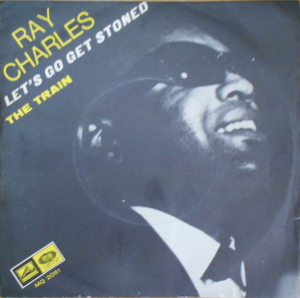

If you want to understand what American popular music sounded like at the end of the 1950s, you could do a lot worse than sitting with this playlist for an afternoon. What you’d find isn’t a single sound but something more like a conversation between styles — rock and roll, R&B, doo-wop, jazz, and pop all rubbing up against each other, sometimes within the same radio hour. Bobby Darin opened the year with “Mack the Knife,” a song adapted from a 1928 Bertolt Brecht musical that somehow became a massive pop hit, delivered with such easy confidence that nobody seemed to think it was strange. Across town, figuratively speaking, Ray Charles was recording “What’d I Say” — a raw, call-and-response number that drew on gospel and blues in a way that made some radio stations nervous enough to ban it. That both songs belonged to the same year tells you something important about how wide the tent had gotten.
Doo-wop was arguably at its commercial and artistic peak in 1959, and the playlist reflects that richly. The Flamingos’ “I Only Have Eyes for You” remains one of the most otherworldly recordings of the era — that cascading, echo-drenched arrangement makes the song feel like it’s arriving from somewhere slightly outside of time. The Drifters were charting new territory with “There Goes My Baby,” which introduced string arrangements to R&B in a way that would reshape the sound of the next decade. Meanwhile, groups like The Crests, The Skyliners, and Dion & The Belmonts were making teenage heartache sound genuinely beautiful — polished harmonies over simple, sturdy chord progressions that didn’t need much else.
The year also carried some real weight in grief. Buddy Holly, Ritchie Valens, and The Big Bopper had died in a plane crash in February, and both “It Doesn’t Matter Anymore” and “La Bamba” were essentially posthumous hits, charting after their performers were already gone. Listening to them now, knowing that, adds a layer that wasn’t entirely there before. Holly’s song, produced by Dick Jacobs with a pizzicato string arrangement, was unusually polished for rock and roll at the time — it pointed toward a sophistication that Holly never got the chance to fully explore. Valens, just seventeen when he died, had already recorded a Spanish-language folk song and turned it into something that crossed genre lines before anyone had a clean vocabulary for doing that.
Rock and roll in its more straightforward, energetic form was still very much alive. Eddie Cochran’s “C’mon Everybody” is as good a distillation of early rock enthusiasm as you’ll find — loud, fast, a little reckless, built for a generation that wanted music that belonged specifically to them. Chuck Berry’s “Memphis” showed he hadn’t lost his gift for narrative economy; the twist at the end of that song is genuinely elegant storytelling. And the Isley Brothers’ “Shout” was the kind of performance that didn’t ask for your attention politely — it just took it. These weren’t songs that required interpretation or context. They worked immediately, physically, which was more or less the point.
What makes 1959 interesting in retrospect is how much was happening simultaneously without any of it feeling like it had arrived at a conclusion. Miles Davis released Kind of Blue that year — represented here by “So What” — an album that redefined what jazz could do harmonically, and it coexisted on the charts and in the culture alongside teen pop, gospel-inflected R&B, and rockabilly without any obvious contradiction. Dinah Washington was recording “What a Diff’rence a Day Made” with full orchestration; James Brown was recording “Try Me” with raw urgency. Neither was wrong. The music of 1959 wasn’t heading toward one thing — it was several things at once, most of them worth paying attention to.
Follow Tunes Du Jour on Facebook
Follow me on Bluesky
Follow me on Instagram


Paul McCartney’s genius as a songwriter extends far beyond his work with The Beatles, revealing itself most clearly in how other artists have transformed his compositions across genres and generations. This remarkable collection of covers demonstrates McCartney’s rare ability to write songs that function as both complete artistic statements and flexible frameworks for reinterpretation. When Joe Cocker turned “With A Little Help From My Friends” into a soulful anthem, or when Guns N’ Roses gave “Live and Let Die” a hard rock edge, they weren’t just covering songs—they were unlocking different emotional possibilities that McCartney had embedded in the original compositions. The breadth of artists drawn to his work, from Aretha Franklin’s gospel-tinged “Eleanor Rigby” to Beyoncé’s contemporary reimagining of “Blackbird,” speaks to the universal resonance of his melodic and lyrical craftsmanship.
What makes McCartney particularly fascinating as a songwriter is his willingness to write specifically for other artists’ strengths while maintaining his distinctive voice. Songs like “A World Without Love” for Peter & Gordon and “Come And Get It” for Badfinger weren’t Beatles cast-offs but carefully crafted compositions that suited those acts perfectly. His collaboration with Elvis Costello on “Veronica” and his work with Michael Jackson on “Girlfriend” show an artist constantly evolving and adapting his approach to different musical contexts. Even when writing for others, McCartney’s melodic sensibility—that ability to find the hook that sticks in your mind—remains unmistakably present, whether it’s the yearning quality of “Yesterday” that En Vogue brought to R&B or the infectious rhythm of “Ob-La-Di, Ob-La-Da” that Celia Cruz infused with Latin flavor.
The lasting power of McCartney’s songwriting becomes evident when artists as diverse as Ray Charles, Stevie Wonder, and Andre 3000 find something meaningful in his catalog. These aren’t novelty covers or tribute performances—they’re genuine artistic connections where musicians recognize something in McCartney’s work that speaks to their own creative vision. From Little Richard’s rock and roll interpretation of “I Saw Her Standing There” to k.d. lang’s haunting take on “Golden Slumbers,” each cover reveals new layers in songs that seemed perfectly complete in their original form. This ongoing dialogue between McCartney’s compositions and successive generations of artists suggests something profound about his approach to songwriting: he creates musical spaces that invite inhabitation rather than mere imitation, proving that truly great songs don’t just endure—they continue to grow.
Follow Tunes Du Jour on Facebook
Follow me on Bluesky
Follow me on Instagram

The year 1960 often gets passed over in rock history—a transitional time between the first burst of rock and roll and the cultural and musical revolutions just a few years away. But to call it sleepy is to miss the point. In fact, many of the year’s hits still reverberate today, not just as nostalgic touchstones but as enduring standards. “The Twist” by Chubby Checker launched a dance phenomenon that would ripple through pop culture for years. And “Save the Last Dance for Me” by the Drifters remains a masterclass in balancing heartbreak and sweetness—still played at weddings and in soundtracks, still finding new generations of listeners.
Ballads carried a lot of weight in 1960, and few did it better than Elvis Presley’s aching “Are You Lonesome Tonight?” or Roy Orbison’s “Only the Lonely,” which showcased his operatic vulnerability. Country narratives crossed into the mainstream with Marty Robbins’ “El Paso,” a story song that unspooled like a Western in miniature. At the other end of the spectrum, Maurice Williams & the Zodiacs’ “Stay” packed teenage yearning into a lean, irresistible one minute thirty-five seconds. And “Wonderful World” by Sam Cooke, though modest in ambition compared to some of his later work, remains a model of warmth and accessibility—a song that’s managed to feel timeless for more than six decades.
The sense of genre boundaries being tested is another hallmark of the year. Ray Charles brought gospel, blues, and pop together on his definitive reading of “Georgia on My Mind,” while Barrett Strong’s “Money (That’s What I Want)” helped lay the foundation for Motown’s impending ascent. Fats Domino’s “Walking to New Orleans” fused New Orleans rhythm with a subtle orchestral flourish, and Bobby Darin’s “Beyond the Sea” added a cosmopolitan swagger to the charts. These weren’t experiments for their own sake—they were evolutions of form, often rooted in deep tradition.
Rock’s wilder edges were still alive, though not always in the spotlight. Ike and Tina Turner’s “A Fool in Love” marked Tina’s explosive debut on the national stage—raw, commanding, and impossible to ignore. Instrumentals also carved out real estate, from the cinematic calm of Percy Faith’s “Theme From ‘A Summer Place’” to the proto-surf energy of The Ventures’ “Walk Don’t Run.” And in the novelty corner, “Itsy Bitsy Teeny Weeny Yellow Polka Dot Bikini” and “Alley Oop” proved that humor and absurdity had a place in the pop ecosystem.
So while 1960 may not have produced a defining movement, it certainly produced defining songs. These weren’t just placeholders between rock and roll’s rise and the British Invasion—they were records that resonated, sometimes quietly at first, but with a staying power that’s hard to deny. Whether filtered through covers, samples, soundtracks, or simple endurance, many of these tracks are still with us. It wasn’t a year of reinvention—but it was a year of remarkable staying power.
Follow Tunes Du Jour on Facebook
Follow me on Bluesky
Follow me on Instagram

The music of 1962 wasn’t so much at a crossroads as it was following several lively paths at once. What captivated the public ranged from soul ballads to novelty records to stirrings of folk activism. Instrumentals, dance crazes, and heartfelt pop all found room on the charts. It’s this eclecticism — rather than any one dominant trend — that best characterizes the year. Yet in small ways, a few songs hinted at larger shifts to come. For example, The Tornados’ “Telstar,” the first U.S. number one by a British group, captured a sense of futuristic possibility that would soon manifest more dramatically with the Beatles and the British Invasion.
Instrumentals found their way into the spotlight in very different forms. While “Telstar” beamed into space with its shimmering, otherworldly sound, Booker T. & the MG’s grounded listeners with the earthy groove of “Green Onions.” Meanwhile, Stan Getz and Charlie Byrd’s “Desafinado” introduced many American listeners to the smoother, jazz-inflected rhythms of bossa nova — a style that would quietly influence pop and jazz recordings throughout the decade. Taken together, these instrumentals showed how musical expression could take new forms without abandoning broad popular appeal, and how lyrics weren’t always necessary to convey strong emotion.
Soul music also solidified its foundation. Sam Cooke’s “Bring It on Home to Me” and Solomon Burke’s “Cry to Me” mixed gospel roots with secular longing in ways that would help define soul music itself. Girl groups and doo-wop continued to resonate, with The Crystals’ “He’s a Rebel” and The Shirelles’ “Soldier Boy” offering different takes on devotion and defiance. Dion’s “The Wanderer” carried forward some of doo-wop’s spirit, while Gene Chandler’s “Duke of Earl” stood proudly as a bridge from doo-wop’s earlier heyday into a new era of soul and R&B. Even novelty records had staying power — Bobby “Boris” Pickett’s “Monster Mash” reached number one and, thanks to perennial Hallowe’en airplay, remains a cultural touchstone.
Folk music, too, gained traction. Peter, Paul & Mary’s debut album, featuring “If I Had a Hammer,” became one of the year’s bestsellers, spending over a month at number one. Its clean harmonies and calls for justice would help set the stage for the socially conscious folk boom led by artists like Bob Dylan, whose own debut — mostly overlooked in 1962 — was just the beginning of a rapid ascent. Meanwhile, outside the U.S., Françoise Hardy’s “Tous Les Garçons Et Les Filles” offered a moody, introspective style that would come to influence the understated emotionality of later French pop and, indirectly, certain strands of indie pop decades later.
Some of 1962’s biggest hits have proven remarkably enduring. Elvis Presley’s “Can’t Help Falling in Love,” originally from the Blue Hawaii soundtrack, has since become one of his most covered and beloved songs. The Contours’ raucous “Do You Love Me” found new life decades later with Dirty Dancing, while Carole King, years before Tapestry, scored her first chart hit as a performer with “It Might as Well Rain Until September” — even as she continued to dominate as a songwriter, co-writing Little Eva’s infectious “The Loco-Motion.” These songs from 1962 don’t just capture a moment in time; they reveal a popular music scene that was broadening and diversifying while quietly laying the groundwork for upcoming revolutions, capturing both the fleeting spirit of its moment and the lasting power of pop at its best in a year where no single trend reigned supreme.
Follow Tunes Du Jour on Facebook
Follow me on Bluesky
Follow me on Instagram

The year 1961 didn’t roar in with a musical revolution—but in hindsight, that’s part of its charm. Instead, it offered a series of small but significant steps toward what would become a much louder, wilder, and more politically charged musical landscape. If the ’50s laid the foundation for rock and R&B, then ’61 felt like a transitional hallway: not quite out of the doo-wop era, but inching toward soul, girl groups, and the unmistakable rise of youth-driven pop. Listen closely, and you can hear a generation beginning to test its voice.
The playlist for this year paints a picture of variety and crossover. Ben E. King’s “Stand by Me” combines gospel roots with a pop sensibility, creating a timeless anthem of emotional resilience. Meanwhile, The Marcels inject a doo-wop jolt into “Blue Moon,” turning a Rodgers and Hart chestnut into something utterly of the moment. And “Shop Around” by The Miracles helps define the early Motown sound—polished, melodic, and unmistakably urban—hinting at the empire Berry Gordy was quietly building in Detroit.
Pop and R&B weren’t the only sounds of 1961. The jazz world was still vibrant, and John Coltrane’s take on “My Favorite Things” stretched the familiar into something exploratory and modal, giving the Broadway tune a hypnotic new dimension. Similarly, Art Blakey’s “A Night in Tunisia” offered a fiery reminder that hard bop was far from finished. This year wasn’t just about three-minute singles on AM radio; it also made room for longer-form musical statements that spoke to listeners seeking complexity.
And then there were the voices—so many distinct, unforgettable voices. Roy Orbison’s near-operatic Crying and Patsy Cline’s aching “Crazy” each showed that vulnerability could be commercially viable. The same went for Etta James, whose rendition of “At Last” remains one of the most iconic vocal performances ever recorded. Elsewhere, the lighter side of pop was thriving with Neil Sedaka’s “Calendar Girl” and Bobby Vee’s “Take Good Care of My Baby,” songs built for teenagers who were beginning to see themselves as a cultural force.
Taken together, the music of 1961 reflects a moment in flux: the last glimmers of the 1950s still lingered, but the seeds of what would define the 1960s were clearly being planted. Whether it was Ray Charles fusing gospel and R&B on “Hit the Road Jack,” or the early stirrings of girl-group grandeur from The Marvelettes and The Shirelles, this was a year where nothing yet dominated—but everything seemed possible.
Follow Tunes Du Jour on Facebook
Follow me on Bluesky
Follow me on Instagram