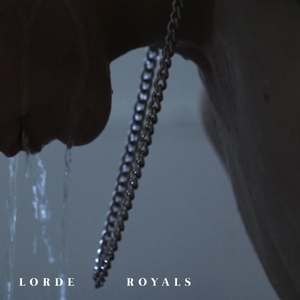
Tunes Du Jour Presents 2013

Two thousand thirteen was the year pop music stopped pretending it needed to choose a side. You could hear it in the way the year’s two biggest radio songs sat right next to each other in totally different moods: “Blurred Lines” leaned on a live-funk groove that Robin Thicke, T.I., and Pharrell built to feel effortless, while Daft Punk’s “Get Lucky,” also featuring Pharrell, reached even further back — disco basslines, Nile Rodgers on guitar, a chorus built for driving with the windows down. Both songs topped charts by looking backward, but they proved that nostalgia, done well, doesn’t feel like a costume.

Meanwhile, a strange, private kind of pop was pushing forward. Lorde released “Royals” as a teenager from New Zealand and, without trying to sound like anyone else, wrote the year’s most quietly subversive hit — a song about not wanting the diamonds and Cadillacs everyone else was singing about. HAIM’s “The Wire” and Icona Pop’s “I Love It” (with an assist from Charli XCX) carried that same don’t-actually-care energy but louder, messier, more fun about it. Even Miley Cyrus, mid-reinvention, turned “Wrecking Ball” into something that split the difference between vulnerability and spectacle, and people couldn’t decide which one was real. Maybe that was the point.

Hip-hop and R&B spent 2013 getting weirder in the best sense. Kanye West’s “Black Skinhead” was pure confrontation — industrial drums, a vocal that sounded like it was daring you to turn it off. Kendrick Lamar’s “Bitch, Don’t Kill My Vibe” did something almost opposite: patient, meditative, letting a single idea breathe for four minutes. Frank Ocean’s “Pyramids” stretched even further, a ten-minute song that changed shape twice without losing the thread. And then there was Disclosure’s “White Noise,” which took house music — a genre that had mostly lived in clubs — and made it sound like it belonged on the radio, a preview of the decade’s growing appetite for dance music with pop bones.

Guitar music, often declared dead around this time, was mostly just changing address. Vampire Weekend’s “Diane Young” crammed baroque-pop cleverness into two frantic minutes; Arcade Fire’s “Reflektor” went the other direction, stretching out into disco-adjacent art-rock with help from James Murphy. Tame Impala’s “Elephant” and Jake Bugg’s “Lightning Bolt” both looked to classic rock without sounding retro, and on the rawer end, Courtney Barnett’s “Avant Gardener” and Deafheaven’s “Dream House” showed just how wide “guitar music” could stretch in a single year — one a deadpan, talk-sung account of a panic attack in a garden, the other a wall of blast-beats and shoegaze that somehow ended up sounding gorgeous.

What’s easy to miss, looking back, is how many of 2013’s songs were quietly about mortality and change. David Bowie’s “Where Are We Now?” arrived without warning after a decade of silence, a hushed reflection from a man looking at his own past. The Knife’s “Full of Fire” and Nick Cave’s “Jubilee Street” both dealt, in very different registers, with reckoning and transformation. Even Justin Timberlake’s “Mirrors,” a genuine pop smash, was really a song about time and commitment dressed up as a love song. None of these songs were trying to define an era — they were just being made, by people working in their own lanes, at the same time. It’s only in hindsight, with a playlist like this one, that the year starts to look like it had a shape at all.

Follow Tunes Du Jour on Facebook

Follow me on Bluesky

Follow me on Instagram
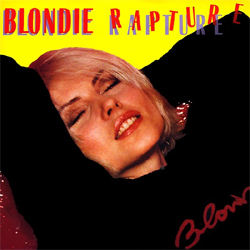
Tunes Du Jour Presents 1977

If you had to pick a single year that captured popular music at its most creatively overstuffed, 1977 would be a strong candidate. Rock was arena-sized and expensive. Disco was inescapable and, for a certain crowd, irresistible. Punk was arriving like a kicked-in door. And somewhere in between, artists were quietly making records that didn’t fit neatly into any of those categories. The year produced an almost absurd concentration of songs that people still know by heart, not because nostalgia has been kind to them, but because many of them are genuinely excellent pieces of music.

The rock side of ’77 was dominated by songs that have since become impossible to avoid. Eagles’ “Hotel California,” Fleetwood Mac’s “Dreams,” and Bob Seger’s “Night Moves” all came from the same general tradition of polished, emotionally direct rock songwriting, the kind that prioritized feel and production in equal measure. Aerosmith’s “Walk This Way” sat a little rougher and looser, and Manfred Mann’s Earth Band’s “Blinded by the Light” was genuinely strange radio fare — a Springsteen cover that became more famous than the original largely on the strength of its own eccentric energy. Meanwhile, David Bowie’s “Sound and Vision” and Peter Gabriel’s “Solsbury Hill” pointed toward something more interior and experimental, both artists having recently untethered themselves from previous identities and clearly enjoying the freedom.

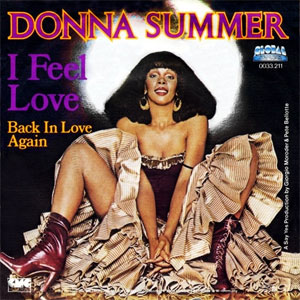
Disco in 1977 wasn’t a single sound so much as a spectrum. At one end, you had Donna Summer’s extraordinary “I Feel Love,” which Giorgio Moroder produced using almost entirely synthesized instrumentation — Brian Eno reportedly told David Bowie it had just changed the future of music, and he wasn’t wrong. Further down the dial were Thelma Houston’s “Don’t Leave Me This Way,” Marvin Gaye’s loose, joyful “Got to Give It Up,” Heatwave’s “Boogie Nights,” and KC and the Sunshine Band’s “I’m Your Boogie Man,” songs that prioritized the floor over the headphones and delivered accordingly. And then there was the Saturday Night Fever soundtrack, which arrived in late 1977 and would go on to become, for a time, the best-selling album ever released. It’s remembered as a disco landmark, but its lead single was the Bee Gees’ “How Deep Is Your Love” — a warm, unhurried ballad which doesn’t really fit the disco label. That the song was swept up into the disco phenomenon anyway says something about how powerful that cultural moment was: it absorbed everything in its vicinity, regardless of what the artists themselves thought they were making.

Punk was having none of it. The Sex Pistols’ “God Save the Queen” was banned by the BBC and still reached the top of the charts, which tells you something about both the song’s impact and the limits of official gatekeeping. Ramones’ “Sheena Is a Punk Rocker” was faster and more fun, but no less pointed. Television’s “Marquee Moon” and Elvis Costello’s “Watching the Detectives” had a punk rock spirit that suggested the genre’s real legacy might not be volume or outrage but a renewed interest in wit and directness — a correction to the perceived excesses of the rock mainstream those same artists were reacting against. These records don’t sound like novelties now. They sound like a genuine argument about what music should be doing.

What’s striking, looking at a year’s worth of this material together, is how little any of these artists seemed to be aware of, or interested in, what the others were doing. “Somebody to Love” by Queen and “Sir Duke” by Stevie Wonder share roughly the same calendar year but almost nothing else. “Solsbury Hill” and “Float On” exist in completely separate universes. That independence — each act pursuing its own idea of what a good record sounded like — might be exactly why so much of this music has held up. Nobody was chasing a trend that would have dated them. They were mostly just making the best version of the thing they already knew how to do, and 1977 happened to catch a lot of them doing it very well.

Follow Tunes Du Jour on Facebook

Follow me on Bluesky

Follow me on Instagram
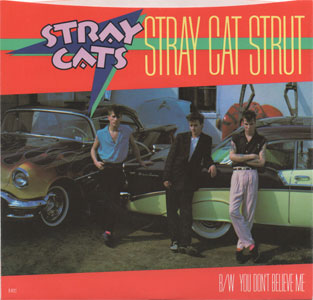
Tunes Du Jour Presents 2016

If you want to understand what 2016 felt like, you could do worse than just sitting down and listening to its music. It was a year when several of the biggest artists in the world released some of their most ambitious work, while a second tier of artists was quietly making records that would age just as well. The result is a body of music that holds up not because it captured a singular mood, but because it didn’t — it scattered in a dozen different directions at once, and that tension is exactly what makes it interesting to revisit.

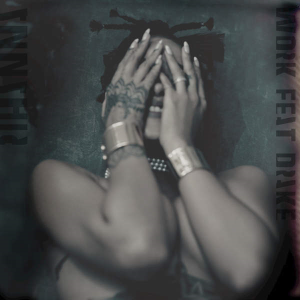
The blockbusters were genuinely good. Beyoncé’s Lemonade arrived as a cultural event, and “Formation” was its defiant opening statement — grounded in Black Southern identity, uninterested in making anyone comfortable. Rihanna and Drake’s “Work” was inescapable in the best way, a dancehall-inflected earworm that somehow felt both effortless and precise. Drake also appeared on “One Dance,” a song that helped bring Afrobeats to mainstream Western audiences in a real way, with Wizkid and Kyla doing a lot of the heavy lifting that often went uncredited. Kanye West’s “Ultralight Beam” opened The Life of Pablo with a gospel choir and a Chance the Rapper verse that became one of the most talked-about moments in rap that year. These were pop and rap operating at a high level, and they knew it.

But some of the year’s most lasting music came from artists working in a quieter register. Solange’s “Cranes in the Sky” approached anxiety and avoidance with a kind of elegant restraint that her sister’s more maximalist work doesn’t always make room for. Frank Ocean finally released Blonde after years of anticipation, and “Nights” — with its midpoint beat switch — felt like the whole album in miniature. Mitski’s “Your Best American Girl” packed more emotional complexity into three and a half minutes than most artists manage in an entire record, and Angel Olsen’s “Shut Up Kiss Me” was a shot of pure guitar-rock energy from an artist who could do pretty much anything she turned her hand to. These songs didn’t dominate the charts, but they dominated year-end lists for good reason.

2016 was also a year when the world outside the speakers kept bleeding in. A Tribe Called Quest came out of a long hiatus to release We Got It from Here, and “We The People….” was an explicit, unambiguous political statement made by veterans who had earned the right to make it. YG and Nipsey Hussle’s “FDT” was rawer and angrier, a West Coast rap track that said plainly what a lot of people were thinking during a particularly ugly election season. ANOHNI’s “Drone Bomb Me,” from her album Hopelessness, took a different approach entirely — a beautiful, devastating song sung from the perspective of a bombing victim, using the form of a love song to make its critique land harder. And then there was Leonard Cohen’s “You Want It Darker,” released just weeks before his death, which felt less like a goodbye than a reckoning. David Bowie’s “Lazarus,” similarly, arrived as part of Blackstar and took on a different weight entirely after he died in January. Not every year loses two artists of that stature within months of each other.

What ties all of this together isn’t a single sound or theme, but a kind of seriousness of purpose — even in the party songs, even in the straightforwardly fun ones. Justin Timberlake’s “CAN’T STOP THE FEELING!” was designed to be a piece of pure joy, and it succeeded. “Broccoli” by D.R.A.M. featuring Lil Yachty was loose and goofy and charming in a way that didn’t need to be anything else. Car Seat Headrest’s “Drunk Drivers/Killer Whales” captured a specific kind of young-adult exhaustion with more precision than most rock music manages. Radiohead’s “Burn the Witch” was tightly wound and anxious. The xx’s “On Hold” was cool and minimal and aching. These songs don’t belong to the same world, and yet they all came from the same twelve months. That’s not a contradiction — that’s just what a genuinely good year in music looks like.

Follow Tunes Du Jour on Facebook

Follow me on Bluesky

Follow me on Instagram
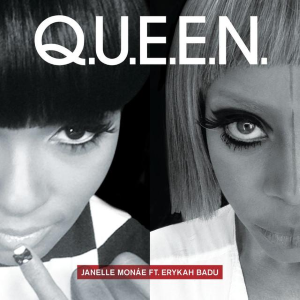
Tunes Du Jour Presents 1973

If you were flipping through radio stations in 1973, you might have been forgiven for wondering whether you’d accidentally landed on multiple stations at once. In a single week, you could hear Stevie Wonder’s “Superstition” — all nervous funk and clavinet — followed immediately by Tony Orlando & Dawn tying a yellow ribbon around an oak tree. That wasn’t a coincidence or a quirk of programming. It was just what 1973 sounded like: a year when pop music was genuinely pulling in several directions at the same time, and somehow holding together anyway.

Soul and R&B were operating at an extraordinary level. Marvin Gaye’s “Let’s Get It On,” Gladys Knight’s “Midnight Train to Georgia,” the O’Jays’ “Love Train,” and the Spinners’ “Could It Be I’m Falling In Love” all landed that year, each with its own emotional weight and personality. Curtis Mayfield’s “Superfly” brought something sharper and more cinematic to the mix, while Ann Peebles’ “I Can’t Stand the Rain” — still somewhat underappreciated in the wider cultural memory — was as raw and soulful as anything released that decade. Eddie Kendricks, fresh off his Temptations run, went solo with “Keep On Truckin’,” and it clicked immediately. The breadth of what Black artists were producing in this single calendar year is genuinely remarkable.

Rock was doing its own sprawling thing. The Rolling Stones released “Angie,” one of their more restrained and melancholy singles. Elton John’s “Goodbye Yellow Brick Road” was the title track of a double album that showed he could sustain a full artistic statement across four sides of vinyl, not just deliver three minutes at a time. Pink Floyd’s “Money” brought an odd-time signature to FM radio in a way that probably shouldn’t have worked as well as it did. And then there were the louder contingents: Deep Purple’s “Smoke on the Water” became one of the most-played riffs in guitar shop history, Grand Funk Railroad declared themselves an American band, and Slade and Sweet were doing glam rock with considerably more volume than glamour. Meanwhile, Iggy & the Stooges released “Search and Destroy” — which most of 1973’s radio audience largely ignored, though history would eventually course-correct on that.

The year also captured several artists at particularly interesting transitional moments. David Bowie’s “Space Oddity,” originally released in 1969, finally broke through in the US in 1973, reaching American audiences who were now ready for its strange, detached storytelling. Lou Reed’s “Walk on the Wild Side” had no business being as widely played as it was, given its subject matter, but here we are. Bob Dylan contributed “Knockin’ on Heaven’s Door” via his Pat Garrett & Billy The Kid soundtrack — unassuming and brief, but immediately recognizable as something that would last. T. Rex’s “20th Century Boy” and George Harrison’s “Give Me Love (Give Me Peace On Earth)” filled out a year that seemed to have room for almost anything, provided it had a decent hook.

What holds up most clearly, looking back at 1973’s output, is that the music wasn’t being made according to any unified cultural script. Some of it was deliberately commercial; some of it was confrontational; some of it was deeply personal. Carly Simon’s “You’re So Vain,” Roberta Flack’s “Killing Me Softly With His Song,” and Paul Simon’s “Loves Me Like a Rock” feel like they come from entirely different worlds, yet they all landed in the same twelve-month window. Ringo Starr had a hit with “Photograph.” The Allman Brothers were rambling. Cher was charting with “Half-Breed.” By any measure, 1973 was a disorganized, contradictory, frequently excellent year for popular music — and that’s precisely what makes it worth revisiting.

Follow Tunes Du Jour on Facebook

Follow me on Bluesky

Follow me on Instagram