Whilst growing up I frequently heard from teachers “There’s no such thing as a stupid question.” These teachers never met Karen from Accounting, who asked Randy if his birthday always coincided with Cinco de Mayo.
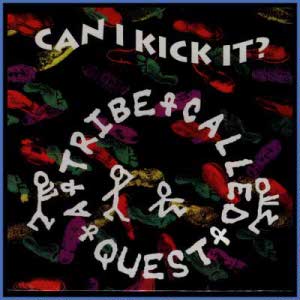
I’m thinking of Karen today, as it’s Ask A Stupid Question Day. I took some liberties with the playlist I compiled to celebrate this most important of holidays. All of the song titles ask questions. None of them are stupid questions; rather, they are questions we may not be asking often enough: What’s the frequency, Kenneth? When did you get hot? Who killed Bambi?
Check out thirty important musical questions below.
Twenty-five years ago this morning I turned on the local news channel to get the weather report.
Twenty-five years ago this morning my assistant called me at home to tell me he would be late for work. Something was going on at the World Trade Center, where his mom works.
Twenty-five years ago this morning my boss came to the door of my office, where I didn’t have a radio or television on, and told me I can go home.
Twenty-five years ago this morning my ten-minute walk home felt longer. There were plenty of people, but no sound.
Twenty-five years ago I spent a large part of the day sitting on my bed, crying.
Twenty-five years ago my former co-worker Margaret, who lived outside of New York City, called me. “Go to Grand Central Station, take the train to [whatever stop], and I’ll pick you up. You can stay here as long as you need to.” I declined her offer.
Twenty-five years ago my brother, with whom I seldom speak, called me from Pennsylvania, where his in-laws were living. “Go to Penn Station, take the train to [whatever stop], and I’ll pick you up. You can stay here.” I declined his offer.
Manhattan was my home. I love(d) the city so much and didn’t want to leave it. (It took a too-good-to-resist job offer two years later to get me to go.)
Twenty-five years later I’m choking up while I write this.
Ask someone to name a Barry Gibb song and they’ll likely hum something the Bee Gees themselves had a hit with. Fair enough — but a lot of those songs had a second life once other artists got hold of them. “To Love Somebody,” “How Can You Mend a Broken Heart,” “Words,” “I’ve Gotta Get a Message to You,” “Jive Talkin’,” “Nights on Broadway,” “Tragedy,” “How Deep Is Your Love,” “I Started a Joke,” “Stayin’ Alive” — all Bee Gees originals first, all charting under the Gibb name before anyone else touched them. Then Nina Simone found her own read on “To Love Somebody.” Al Green took “How Can You Mend a Broken Heart” to church. Elvis Presley recorded “Words.” Faith No More turned “I Started a Joke” into something colder and stranger than the 1968 version. Bruce Springsteen, in concert, made “Stayin’ Alive” sound like a different, angrier song, and Take That turned “How Deep Is Your Love” into a boy-band ballad decades on. Most of these carry a family co-writer credit, too — Robin on “To Love Somebody” and “How Can You Mend a Broken Heart,” Robin and Maurice together on “Jive Talkin’,” “Nights on Broadway,” and “How Deep Is Your Love.” A song’s writing credit stays put while its performances drift across genre and generation, and that’s the pattern running through most of this list.
But a second, smaller pile of songs on this playlist never belonged to the Bee Gees at all — Barry wrote them, sometimes with a brother, sometimes alone, expressly for someone else’s voice, and the group never had a hit version to lose. “Grease” is the cleanest example: Gibb wrote it by himself, reportedly overnight, for a movie he had no other involvement with, and handed it to Frankie Valli. Barbra Streisand’s “Woman in Love” and “Promises,” Dionne Warwick’s “Heartbreaker,” Diana Ross’s “Chain Reaction” and “Eaten Alive” (the latter co-written with Maurice and Michael Jackson, of all people), Yvonne Elliman’s “If I Can’t Have You” and “Love Me” — none of these started as Bee Gees album tracks. Neither did the three songs Barry wrote for his youngest brother: “I Just Want to Be Your Everything,” “(Love Is) Thicker Than Water,” and, with Robin and Maurice added to the credit, “Shadow Dancing.” Andy Gibb never joined the group, but he was clearly working inside the family business.
“Islands in the Stream” belongs in that second pile too — written by all three older brothers for Kenny Rogers and Dolly Parton, with no Bee Gees version to speak of — and it’s the one with the strangest afterlife on this list. In 1998, Pras Michel built “Ghetto Supastar” around a sample of it, which is how Barry Gibb ended up with a songwriting credit on a record that, on its face, shares nothing with a country duet. That’s the odd durability of a well-built song: it can outlive its original arrangement, its original audience, even its original genre, and still owe someone a check.