August is National Water Quality Month, founded in 2005 by the Environmental Protection Agency. Per their official website, “National Water Quality Month is dedicated to making the most of the relatively small amount of fresh water we have, because having clean water is vital to our individual health, our collective agricultural needs, and the needs of our environment.”
To aid in your celebrations, below is a playlist of 30 quality songs that have the word “water” somewhere in the title.
If you were paying attention to music in 1995, you probably noticed something a little odd: the word “alternative” had started to mean almost nothing, because it had come to mean almost everything. A year earlier, the death of Kurt Cobain had cast a long shadow over rock music, but rather than stalling out, the genre fractured and expanded in every direction. Weezer were writing nerdy, hook-driven power pop. Foo Fighters were delivering straightforward hard rock. Hole were confrontational and raw. Radiohead were drifting somewhere cerebral and unsettling. Garbage were threading industrial textures through pop songwriting. Veruca Salt and Elastica were sharp and guitar-driven in entirely different ways. What united all of them under one label was more a matter of attitude and distribution than any shared sound. “Alternative” had become a marketing category, and in becoming one, it quietly swallowed whole.
Across the Atlantic, British music was having one of its more confident years. In their home country the year prior, Oasis released “Live Forever” and soon carried themselves like they were already the biggest band in the world — and for a stretch, they weren’t wrong. Blur’s “Country House” was cheeky and sardonic, all music-hall bounce and art-school wink. Pulp’s “Disco 2000” was Jarvis Cocker doing what he did best: writing working-class character studies with a disco pulse underneath. Supergrass and Elastica added urgency and speed. But the British presence in 1995 wasn’t limited to guitar bands — Take That had “Back for Good,” one of the cleaner pop songs of the decade, and it charted everywhere. The UK wasn’t just making noise in rock circles; it was competitive across the board.
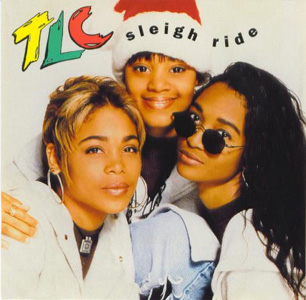
The year also belonged, in large part, to women making unambiguous statements. Alanis Morissette’s “You Oughta Know” arrived like something had finally been let out of a locked room — angry, specific, and entirely unconcerned with being likable. PJ Harvey’s “Down by the Water” was quieter but no less unsettling. Björk’s “Army of Me” was a kind of mechanical ultimatum. Des’ree brought warmth and self-possession to “You Gotta Be.” TLC’s “Waterfalls” managed to be simultaneously a pop smash and a genuine cautionary narrative, delivered with enough grace that the message landed without feeling like a lecture. These weren’t novelty moments. They were artists working at full capacity.
Hip-hop and R&B in 1995 were doing something interesting: they were crossing lanes in ways that felt natural rather than forced. Coolio’s “Gangsta’s Paradise” borrowed from Stevie Wonder and landed on a movie soundtrack, but it had weight that outlasted its context. Method Man and Mary J. Blige turned “I’ll Be There for You/You’re All I Need to Get By” into something genuinely tender. Skee-Lo’s “I Wish” was lighter — a little self-deprecating, a little funny — and it stuck anyway.
Meanwhile, Massive Attack’s “Protection” and Portishead’s “Sour Times” were doing something that didn’t fit neatly into any existing box: slow, cinematic, built more from mood than momentum. Trip-hop was the year’s most quietly influential genre, even if most listeners didn’t have a name for it yet.
Some of the year’s most lasting moments came from artists who resisted easy categorization entirely. Nick Cave and Kylie Minogue recorded “Where the Wild Roses Grow” — a murder ballad duet that shouldn’t have worked as well as it did, but did. Jeff Buckley’s “Last Goodbye” was enormous in its emotion without ever tipping into melodrama. McAlmont & Butler made “Yes” feel like a genuine declaration. Pearl Jam’s “Better Man” was a quiet story song buried in an album, yet it became one of their most-loved tracks. In 1995, the mainstream was wide enough to hold all of this at once — the bratty and the mournful, the danceable and the difficult. That’s not always true of a given year in pop music, and it’s worth noticing when it is.
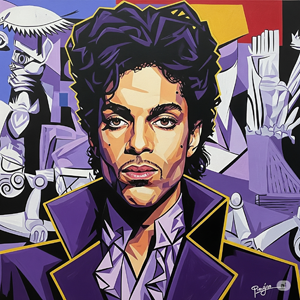
Prince’s genius as a performer is well-documented, but his legacy as a songwriter may be even more far-reaching. The songs he wrote—sometimes directly for others, sometimes borrowed or reimagined—traveled in unexpected directions, often landing in voices very different from his own. Sinéad O’Connor’s haunting version of “Nothing Compares 2 U” turned emotional restraint into a global anthem, while Chaka Khan’s take on “I Feel for You” transformed a tightly wound synth-funk track into a dancefloor juggernaut with help from Melle Mel and Stevie Wonder. The Bangles’ jangly “Manic Monday” showed his facility with classic pop forms.
Sometimes Prince gave away songs without credit. Stevie Nicks has said “Stand Back” wouldn’t exist without his impromptu help; he played the synth part that defined the track, and then slipped away, declining a formal writing credit. His fingerprints are on the Sheila E. hit “The Glamorous Life” and The Time’s “Jungle Love,” both written and produced by Prince but performed by his protégés. Even artists as distinct as Alicia Keys and Tom Jones found new depths and textures in his work, whether covering “How Come You Don’t Call Me” or reinterpreting “Kiss.” In many cases, he gave female artists some of their most complex and empowered material: see Sheena Easton’s risqué “Sugar Walls” or Martika’s spiritual “Love… Thy Will Be Done.”
What’s most remarkable is how well these songs hold up when refracted through other voices. Cyndi Lauper brought vulnerability to “When You Were Mine,” TLC made “If I Was Your Girlfriend” even more intimate, and even idiosyncratic takes like Sufjan Stevens on “Alphabet Street” or P.M. Dawn’s dreamlike “1999” as incorporated in “Fantasia’s Confidential Ghetto” show how flexible his songwriting was. Prince’s compositions had structure, hooks, and heart, but they were never rigid. That elasticity allowed other artists not just to sing his songs, but to inhabit them.
As we look back on the musical landscape of 1999, it’s hard not to be struck by the sheer diversity and quality of singles that dominated the charts and airwaves. Straddling the end of one millennium and the dawn of another, this year produced an extraordinary array of hits that continue to resonate with listeners today.
Pop music was in full force, with young stars like Britney Spears and the Backstreet Boys delivering earworms that would define the era. Spears’ debut “…Baby One More Time” and the Boys’ “I Want It That Way” became instant classics, their catchy hooks and polished productions setting a new standard for pop perfection. Meanwhile, Latin pop exploded onto the mainstream scene with Ricky Martin’s irresistible “Livin’ la Vida Loca,” a song that seemed to capture the exuberant spirit of the times.
But 1999 wasn’t just about glossy pop. Hip-hop continued its ascent, with Jay-Z’s “Hard Knock Life (Ghetto Anthem)” showcasing the genre’s growing crossover appeal. Eminem burst onto the scene with “My Name Is,” his irreverent wordplay and controversial persona signaling a new direction for rap. R&B, too, had a strong showing, with TLC’s “No Scrubs” becoming an anthem of female empowerment and Lauryn Hill’s “Ex-Factor” demonstrating the genre’s capacity for emotional depth.
Rock music, far from being overshadowed, produced some of the year’s most enduring tracks. The Red Hot Chili Peppers’ “Scar Tissue” showcased their evolving sound, while The Offspring’s “Pretty Fly (For a White Guy)” brought punk-pop humor to the masses. Alternative and indie acts like The Flaming Lips and Mercury Rev pushed boundaries with “Race for the Prize” and “Goddess on a Highway” respectively, proving that innovative songwriting could still find a place in the mainstream.
Electronic music also made significant inroads in 1999. Fatboy Slim’s “Praise You” and The Chemical Brothers’ “Hey Boy Hey Girl” brought big beat to the forefront, while Moby’s “Why Does My Heart Feel So Bad?” hinted at electronic music’s potential for emotional resonance. From the dancefloor-filling “Sing It Back” by Moloko to the avant-garde “Windowlicker” by Aphex Twin, electronic artists were expanding the sonic possibilities of popular music in exciting ways.
The singles of 1999 paint a picture of a music industry in flux, embracing new sounds and technologies while still celebrating the timeless art of the perfectly crafted pop song. It was a year that laid the groundwork for the musical landscape of the 21st century, producing hits that continue to inspire and entertain listeners a quarter-century later.
FUN FACT: Coolio is not the name on this rapper’s birth certificate. He was born Artis Leon Ivey Jr. and got his stage name from a nickname he had as a teenager: Coolio Iglesias. Of course that’s a play on singer Julio Iglesias, with whom Coolio performed a version of “Smoke Gets In Your Eyes” in 1999. So next time you listen to “Gangsta’s Paradise,” remember that there’s a little bit of Julio in Coolio 😂
The late Artis Leon Ivey Jr. was born on this date in 1963. A couple of his best-known tracks are on today’s playlist.