Tunes Du Jour Presents 1977

If you had to pick a single year that captured popular music at its most creatively overstuffed, 1977 would be a strong candidate. Rock was arena-sized and expensive. Disco was inescapable and, for a certain crowd, irresistible. Punk was arriving like a kicked-in door. And somewhere in between, artists were quietly making records that didn’t fit neatly into any of those categories. The year produced an almost absurd concentration of songs that people still know by heart, not because nostalgia has been kind to them, but because many of them are genuinely excellent pieces of music.

The rock side of ’77 was dominated by songs that have since become impossible to avoid. Eagles’ “Hotel California,” Fleetwood Mac’s “Dreams,” and Bob Seger’s “Night Moves” all came from the same general tradition of polished, emotionally direct rock songwriting, the kind that prioritized feel and production in equal measure. Aerosmith’s “Walk This Way” sat a little rougher and looser, and Manfred Mann’s Earth Band’s “Blinded by the Light” was genuinely strange radio fare — a Springsteen cover that became more famous than the original largely on the strength of its own eccentric energy. Meanwhile, David Bowie’s “Sound and Vision” and Peter Gabriel’s “Solsbury Hill” pointed toward something more interior and experimental, both artists having recently untethered themselves from previous identities and clearly enjoying the freedom.

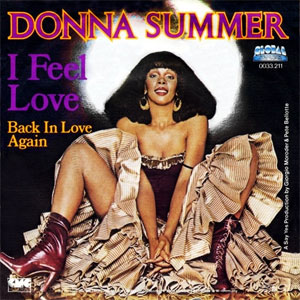
Disco in 1977 wasn’t a single sound so much as a spectrum. At one end, you had Donna Summer’s extraordinary “I Feel Love,” which Giorgio Moroder produced using almost entirely synthesized instrumentation — Brian Eno reportedly told David Bowie it had just changed the future of music, and he wasn’t wrong. Further down the dial were Thelma Houston’s “Don’t Leave Me This Way,” Marvin Gaye’s loose, joyful “Got to Give It Up,” Heatwave’s “Boogie Nights,” and KC and the Sunshine Band’s “I’m Your Boogie Man,” songs that prioritized the floor over the headphones and delivered accordingly. And then there was the Saturday Night Fever soundtrack, which arrived in late 1977 and would go on to become, for a time, the best-selling album ever released. It’s remembered as a disco landmark, but its lead single was the Bee Gees’ “How Deep Is Your Love” — a warm, unhurried ballad which doesn’t really fit the disco label. That the song was swept up into the disco phenomenon anyway says something about how powerful that cultural moment was: it absorbed everything in its vicinity, regardless of what the artists themselves thought they were making.

Punk was having none of it. The Sex Pistols’ “God Save the Queen” was banned by the BBC and still reached the top of the charts, which tells you something about both the song’s impact and the limits of official gatekeeping. Ramones’ “Sheena Is a Punk Rocker” was faster and more fun, but no less pointed. Television’s “Marquee Moon” and Elvis Costello’s “Watching the Detectives” had a punk rock spirit that suggested the genre’s real legacy might not be volume or outrage but a renewed interest in wit and directness — a correction to the perceived excesses of the rock mainstream those same artists were reacting against. These records don’t sound like novelties now. They sound like a genuine argument about what music should be doing.

What’s striking, looking at a year’s worth of this material together, is how little any of these artists seemed to be aware of, or interested in, what the others were doing. “Somebody to Love” by Queen and “Sir Duke” by Stevie Wonder share roughly the same calendar year but almost nothing else. “Solsbury Hill” and “Float On” exist in completely separate universes. That independence — each act pursuing its own idea of what a good record sounded like — might be exactly why so much of this music has held up. Nobody was chasing a trend that would have dated them. They were mostly just making the best version of the thing they already knew how to do, and 1977 happened to catch a lot of them doing it very well.

Follow Tunes Du Jour on Facebook

Follow me on Bluesky

Follow me on Instagram

Tunes Du Jour Presents Punk

Ask ten people to define punk rock, and you’re likely to get at least fifteen answers. That’s part of its charm—and its challenge. Punk has always been more than a style of music; it’s a way of questioning the status quo, pushing back against complacency, and refusing to color inside the lines. The 30 songs in this playlist represent the genre’s many branches: from the snarling minimalism of the Sex Pistols’ “God Save the Queen” to the tightly coiled fury of Black Flag’s “Rise Above,” from Patti Smith’s poetic incantations to the danceable paranoia of Talking Heads’ “Psycho Killer.”

The roots of punk go deep, even before the term existed. “I’m Waiting for the Man” by The Velvet Underground and “Kick Out the Jams” by MC5 helped pave the way with their raw sound and confrontational lyrics. By the mid-1970s, punk had taken recognizable form in both New York and London. The Ramones stripped rock to its bare essentials with “Sheena Is a Punk Rocker,” while The Clash’s London Calling album pointed to punk’s potential to absorb and reflect broader influences—including reggae, ska, and politics.

Acts like Gang of Four and Television took the energy of punk and redirected it into jagged rhythms and angular guitars. The B-52’s “Rock Lobster” and Talking Heads introduced eccentricity and art-school sensibilities, while the Dead Kennedys and Sham 69 channeled punk into direct political protest. Meanwhile, bands like The Jam and Buzzcocks added a melodic urgency, and Iggy Pop and the New York Dolls injected glam and danger into the proceedings.

In the decades that followed, punk fragmented and flourished. Rancid’s “Time Bomb” leaned into ska-punk; Blink-182’s “Dammit” helped define a generation’s version of pop-punk adolescence. Bikini Kill’s “Rebel Girl” roared from the riot grrrl movement with feminist fire, and Billy Bragg brought punk’s commitment to social critique to a solo singer-songwriter context. Even grunge touchstones like Mudhoney carried punk’s DNA—loud, unpolished, and emotionally direct.

This playlist doesn’t claim to be definitive—if anything, it’s a conversation starter. It suggests that punk isn’t a sound so much as a stance. Whether it’s The Replacements thumbing their nose at success in “Bastards of Young,” or Green Day channeling disillusionment into “American Idiot,” punk continues to reinvent itself. It may shift forms, but it never goes quietly.

Follow Tunes du Jour on Facebook

Follow me on Bluesky

Follow me on Instagram

Tunes Du Jour Presents 1976

By 1976, disco had moved from underground clubs to the top of the charts, and rock music found itself facing challenges from multiple fronts. Donna Summer’s “Love to Love You Baby” and Diana Ross’ “Love Hangover” showcased the genre’s hypnotic groove and sensuality, while Wild Cherry’s “Play That Funky Music” blurred the lines between rock and funk, proving that even guitar-driven bands weren’t immune to disco’s influence. Hits like Andrea True Connection’s “More, More, More” and Candi Staton’s “Young Hearts Run Free” reinforced that this was no passing trend—it was a movement reshaping popular music.

Mainstream rock, meanwhile, leaned into grandeur and melody. Queen’s “Bohemian Rhapsody” became a landmark in songcraft, a multi-part epic that defied conventional structure and solidified the band’s place in rock history. Boston’s “More Than a Feeling” offered a soaring, polished take on arena rock, while Blue Öyster Cult’s “(Don’t Fear) The Reaper” balanced an ethereal mood with a sinister undercurrent. Even David Bowie, ever the shape-shifter, leaned into a sleeker sound with “Golden Years.”

Yet, outside of the glossy productions and layered harmonies, a different kind of energy was brewing. The Sex Pistols’ “Anarchy in the U.K.” was a shot across the bow, rejecting the excesses of rock in favor of raw urgency. While not a punk act, Thin Lizzy’s “The Boys Are Back in Town” carried a swagger and directness that resonated with rock fans who would soon embrace punk’s stripped-down ethos. Punk’s full-blown arrival was just around the corner, but 1976 gave the first clear signs that the dominant sounds of the decade were about to face a reckoning.

Beyond disco and rock, R&B and soul continued to thrive, offering both lush ballads and infectious grooves. The Manhattans’ “Kiss and Say Goodbye” and Lou Rawls’ “You’ll Never Find Another Love Like Mine” showcased rich, emotive vocal performances, while Spinners’ “The Rubberband Man” and Boz Scaggs’ “Lowdown” leaned into rhythmic sophistication. Daryl Hall & John Oates’ “She’s Gone” marked a breakthrough for the duo, setting the stage for their string of hits in the late 1970s and early 1980s, where they refined their blend of blue-eyed soul and pop.

In a year that saw both nostalgia and forward momentum, songs like the Four Seasons’ “December, 1963 (Oh, What a Night)” and Gordon Lightfoot’s “The Wreck of the Edmund Fitzgerald” reminded listeners of storytelling’s power in song. Meanwhile, ABBA’s “Mamma Mia” and Elton John and Kiki Dee’s “Don’t Go Breaking My Heart” offered sheer pop exuberance. The music of 1976 reflected an industry in transition—disco was ascendant, rock was splintering, and a new wave of rebellion was beginning to make itself heard.

Follow Tunes Du Jour on Facebook

Follow me on Bluesky

Follow me on Instagram

Your (Almost) Daily Playlist: 2-17-24

A used unwashed black t-shirt worn by Green Day’s Billie Joe Armstrong during the promotion of the band’s American Idiot album sold for $2500 at a charity auction, with the proceeds going to the Oakland School of the Arts. I would love to dispose of my laundry pile the same way, but I doubt anybody would pay more than $400 for my sweat-stained socks.

Billie Joe Armstrong was born on this date in 1972. Tracks from his band are included on today’s playlist.

Follow Tunes du Jour on Facebook

Follow Tunes du Jour on Twitter

Follow me on Instagram

Your (Almost) Daily Playlist: 9-22-23

“I love rock ‘n roll, so put another dime in the jukebox, baby”

Would the youth of today understand those lyrics from Joan Jett & the Blackhearts’ cover of The Arrows’ “I Love Rock ‘n Roll?” “What’s a jukebox? What’s a dime?” I hear them asking. If that song were written today, how would it go?

“I love rock ‘n roll, so stream your favorite song on your smartwatch, baby”

“I love rock ‘n roll, so send payment via Venmo so you can unlock the playlist you want to hear, baby”

“I love rock ‘n roll, so tap your phone to connect to the speaker’s Bluetooth and hit play on your selection, baby”

“I love rock ‘n roll, so say ‘Hey Siri, play some rock ‘n roll and feel free to include women and Black artists because you’re not Jann Wenner, baby’”

“I love rock ‘n roll, so use your smartphone’s camera to scan the square-shaped QR code to be redirected to a website or an app where you can choose from a variety of songs and see the ratings, reviews, and popularity of each and select the song you want and it will be added to the queue and play when it’s your turn, baby / I love rock ‘n roll, so come and take some time and dance with me”

That last one just rolls off the tongue. So singalongable!

I love rock ‘n roll and I love Joan Jett, who turns 65 today. A handful of tracks by Joan Jett & the Blackhearts are on today’s playlist.

Follow Tunes du Jour on Facebook

Follow Tunes du Jour on Twitter

Follow me on Instagram

Your (Almost) Daily Playlist: 6-26-23

Upon its initial release, The Clash’s “Should I Stay Or Should I Go” reached number 17 on the UK singles chart. Following the song’s inclusion in a Levi’s commercial, the single was reissued in 1991 and this time went to number one on the UK singles chart, knocking out Bart Simpson’s “Do The Bartman.” That in a nutshell is the UK singles chart.

The Clash’s Mick Jones turns 68 today. Showing him some love on today’s playlist.

Follow Tunes du Jour on Facebook

Follow Tunes du Jour on Twitter

Follow me on Instagram