Today is July 6, so you know what that means – it’s International Kissing Day! I have nobody to kiss, but I created a soundtrack for the holiday nonetheless. And if you don’t like it, you know what you can do.
“Uptown Funk” opened 2015 by daring the rest of pop music to be as fun, and not much else quite matched it on that front — Mark Ronson and Bruno Mars had assembled something so precisely calibrated to delight that it almost didn’t seem fair. From there the year spread out in several directions at once. Drake’s “Hotline Bling” turned a mid-tempo, vaguely melancholic R&B track into a cultural event largely on the strength of its own awkwardness. The Weeknd crossed into genuine ubiquity with “Can’t Feel My Face” — a song that managed to be both a mainstream smash and, lyrically, a fairly dark piece of work. And then there was Adele, who released “Hello” in October and promptly reminded everyone that a big voice and a big melody, executed without a trace of irony, can still stop a room. The song broke streaming records almost immediately and felt, in its very straightforwardness, like a rebuke to the year’s more studied cool.
If one artist owned 2015 critically, it was Kendrick Lamar. To Pimp a Butterfly arrived in March and immediately reoriented conversations about what rap could do structurally and politically. “King Kunta” was the album’s most visceral punch — confrontational, funky, and specific in its references in ways that rewarded close listening. Elsewhere in hip-hop, Fetty Wap’s “Trap Queen” was one of the year’s most improbable success stories: a track rooted in trap music’s skeletal, skittering beats but softened by Fetty’s melodic looseness and a surprisingly affectionate lyrical premise. It peaked at number two on the Hot 100 and spent most of the year on the chart. Rihanna’s “Bitch Better Have My Money” drew from the same trap well but to a very different emotional effect — harder, more confrontational, and delivered with a precision that made the demand feel non-negotiable. Nicki Minaj, meanwhile, was doing something technically sharp on “Truffle Butter”: she announces early in her verse that she has a dozen flows, and then proceeds to demonstrate it, cycling through registers and tempos within a few bars in a way that most listeners registered as energy without necessarily clocking how much control it required.
Some of the year’s most durable music came from artists working at a slight remove from the mainstream. Carly Rae Jepsen’s Emotion became a critical darling almost in slow motion — “Run Away With Me” is the kind of opening track that makes you understand why people proselytize about a record. Tame Impala released Currents, and “Let It Happen” announced a shift toward synthesizers and a more expansive, unhurried sound that influenced a lot of what followed. Courtney Barnett’s “Pedestrian At Best” was wired and funny, running on nervous energy throughout. Grimes put out “Realiti” as a demo and it felt more fully realized than most finished records.
The year also had room for artists doing something closer to American roots music, though rarely in straightforward ways. Leon Bridges arrived with “Coming Home,” drawing on early soul so precisely that it occasionally felt like an exercise, but an extremely well-executed one. Alabama Shakes’ “Don’t Wanna Fight” was rawer and harder to categorize — Brittany Howard never let genre expectations dictate what she does, and her voice on that track does things that make those expectations feel beside the point. Father John Misty’s “Chateau Lobby #4” was a love song about his wife, filtered through deliberately bizarre imagery — satanic Christmas Eve, a wedding dress someone was probably murdered in — that somehow landed as genuinely romantic. Sufjan Stevens released Carrie & Lowell, and “Should Have Known Better” is among the most quietly devastating songs of the decade — it moves from grief into something that feels, carefully and without overselling it, like hope.
What holds this particular year together isn’t a unified sound but a productive restlessness. Run The Jewels brought Zack De La Rocha in for “Close Your Eyes (And Count to Fuck)” and made something that sounded urgently necessary. Skepta’s “Shutdown” was a reminder that grime had been building momentum for years and was finally getting its due internationally. Missy Elliott, back after a long absence, sounded exactly like herself on “WTF (Where They From)” — which is to say, like nobody else. Thundercat’s “Them Changes” and Julia Holter’s “Feel You” pointed toward where adventurous R&B and jazz-adjacent pop would head over the next several years. EL VY — the side project of National frontman Matt Berninger — closed things out with a song whose title alone (“Return to the Moon (Political Song for Didi Bloome to Sing, with Crescendo)”) tells you something about the year’s appetite for work that didn’t feel the need to make things simple.
If you had to pick one song to sum up 2006, you might reach for Gnarls Barkley’s “Crazy” — a song so omnipresent that year it practically became ambient noise. But that choice would also tell you something true about the year: it was a moment when genuinely strange, interesting ideas were landing at the top of the charts, not just surviving on the margins. Cee Lo Green and Danger Mouse made a song that was simultaneously soulful, psychedelic, and completely radio-friendly, and somehow the world went along with it. That tension — between the weird and the accessible, between art and commerce — runs through a lot of what made 2006 a particularly interesting year in music.
The mainstream pop landscape was, by any measure, stacked. Justin Timberlake’s “My Love,” with its spare Timbaland production and T.I. verse, pointed forward toward the minimalist R&B that would define the next decade. Beyoncé released “Irreplaceable,” a song so well-constructed it barely needs any production to hold your attention. Rihanna was still in her early hitmaking mode with “SOS,” and Nelly Furtado, working with Timbaland, was having a pop renaissance with “Promiscuous.” What’s notable in retrospect is how many of these tracks were built around restraint — the arrangements have room in them, the hooks don’t have to fight to be heard. It’s pop music that trusted the song.
On the rock side of things, the year had an interesting split personality. Arctic Monkeys had exploded out of Sheffield with “I Bet You Look Good on the Dancefloor,” all nervous energy and sharp elbows, while The Killers’ “When You Were Young” pushed toward something more cinematic and earnest. The Raconteurs gave Jack White a different context to work in, and “Steady, As She Goes” was proof that a riff-first approach still had plenty of life in it. Muse were somewhere in the atmosphere with “Knights of Cydonia,” a song so committed to its own grandiosity that it looped back around to being genuinely exciting. Meanwhile, Band of Horses released “The Funeral,” which occupied a completely different emotional register — slow, aching, and built to last.
Away from the obvious mainstream, 2006 had a lot happening in the spaces between genres. TV on the Radio were making rock music that felt genuinely new with “Wolf Like Me,” while Hot Chip and Junior Boys were finding the emotional depth available in electronic pop. The Knife’s “Silent Shout” was something else entirely — icy, theatrical, and slightly unsettling in the best way. Camera Obscura offered a gentler alternative with “Lloyd, I’m Ready to be Heartbroken,” a song that wore its Lloyd Cole reference as a badge of honor, and The Pipettes were busy making sharp, witty girl-group pop that felt both nostalgic and pointed. Hip-hop, meanwhile, was getting some of its most creatively ambitious work from Kanye West (“Touch the Sky”) and Lupe Fiasco, whose “Kick, Push” used skateboarding as a fully realized metaphor for outsider identity without ever feeling forced.
There were also moments in 2006 that went beyond music into something more like public conversation. The Chicks released “Not Ready to Make Nice,” a direct response to the backlash they’d faced since 2003, and the fact that it became a hit felt genuinely significant — a mainstream country-adjacent audience giving space to a song about refusing to apologize. Cat Power’s “The Greatest” was quieter but no less affecting, a meditation on loss and missed potential delivered with a stillness that made it hit harder. Morrissey was still being Morrissey (“You Have Killed Me”), which is either a comfort or an irritant depending on your history with the man. What holds all of this together isn’t a single sound or movement — it’s more that 2006 was a year when music across a lot of different genres was being made by people who seemed to be thinking carefully about what they were doing, and the results have held up.
If you want to understand what 2016 felt like, you could do worse than just sitting down and listening to its music. It was a year when several of the biggest artists in the world released some of their most ambitious work, while a second tier of artists was quietly making records that would age just as well. The result is a body of music that holds up not because it captured a singular mood, but because it didn’t — it scattered in a dozen different directions at once, and that tension is exactly what makes it interesting to revisit.
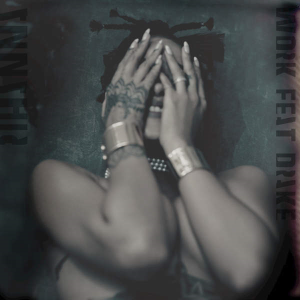
The blockbusters were genuinely good. Beyoncé’s Lemonade arrived as a cultural event, and “Formation” was its defiant opening statement — grounded in Black Southern identity, uninterested in making anyone comfortable. Rihanna and Drake’s “Work” was inescapable in the best way, a dancehall-inflected earworm that somehow felt both effortless and precise. Drake also appeared on “One Dance,” a song that helped bring Afrobeats to mainstream Western audiences in a real way, with Wizkid and Kyla doing a lot of the heavy lifting that often went uncredited. Kanye West’s “Ultralight Beam” opened The Life of Pablo with a gospel choir and a Chance the Rapper verse that became one of the most talked-about moments in rap that year. These were pop and rap operating at a high level, and they knew it.
But some of the year’s most lasting music came from artists working in a quieter register. Solange’s “Cranes in the Sky” approached anxiety and avoidance with a kind of elegant restraint that her sister’s more maximalist work doesn’t always make room for. Frank Ocean finally released Blonde after years of anticipation, and “Nights” — with its midpoint beat switch — felt like the whole album in miniature. Mitski’s “Your Best American Girl” packed more emotional complexity into three and a half minutes than most artists manage in an entire record, and Angel Olsen’s “Shut Up Kiss Me” was a shot of pure guitar-rock energy from an artist who could do pretty much anything she turned her hand to. These songs didn’t dominate the charts, but they dominated year-end lists for good reason.
2016 was also a year when the world outside the speakers kept bleeding in. A Tribe Called Quest came out of a long hiatus to release We Got It from Here, and “We The People….” was an explicit, unambiguous political statement made by veterans who had earned the right to make it. YG and Nipsey Hussle’s “FDT” was rawer and angrier, a West Coast rap track that said plainly what a lot of people were thinking during a particularly ugly election season. ANOHNI’s “Drone Bomb Me,” from her album Hopelessness, took a different approach entirely — a beautiful, devastating song sung from the perspective of a bombing victim, using the form of a love song to make its critique land harder. And then there was Leonard Cohen’s “You Want It Darker,” released just weeks before his death, which felt less like a goodbye than a reckoning. David Bowie’s “Lazarus,” similarly, arrived as part of Blackstar and took on a different weight entirely after he died in January. Not every year loses two artists of that stature within months of each other.
What ties all of this together isn’t a single sound or theme, but a kind of seriousness of purpose — even in the party songs, even in the straightforwardly fun ones. Justin Timberlake’s “CAN’T STOP THE FEELING!” was designed to be a piece of pure joy, and it succeeded. “Broccoli” by D.R.A.M. featuring Lil Yachty was loose and goofy and charming in a way that didn’t need to be anything else. Car Seat Headrest’s “Drunk Drivers/Killer Whales” captured a specific kind of young-adult exhaustion with more precision than most rock music manages. Radiohead’s “Burn the Witch” was tightly wound and anxious. The xx’s “On Hold” was cool and minimal and aching. These songs don’t belong to the same world, and yet they all came from the same twelve months. That’s not a contradiction — that’s just what a genuinely good year in music looks like.
Looking back at 2007, what stands out isn’t a single dominant sound but rather the year’s refusal to commit to any one direction. Rihanna’s “Umbrella” became the year’s unavoidable anthem, its rain-soaked hook lodging itself in collective consciousness while Jay-Z’s opening verse added hip-hop credibility to what was already a perfectly constructed pop song. Meanwhile, Amy Winehouse’s “Rehab” proved that retro-soul could feel urgent and contemporary, her defiant delivery turning personal struggle into something both devastating and oddly triumphant. These weren’t songs that simply topped charts—they were cultural moments that demonstrated pop music’s expanding possibilities.
The indie and alternative world was having its own moment of crossover success, with acts that had been bubbling under suddenly finding mainstream attention. Peter Bjorn & John’s “Young Folks” turned a whistle riff into an inescapable earworm, while Feist’s “1 2 3 4” made counting feel revolutionary, particularly after its appearance in an iPod commercial blurred the lines between advertising and artistry. LCD Soundsystem’s “Someone Great” offered something more melancholic, a dance-punk meditation on loss that proved electronic music could carry genuine emotional weight. These songs suggested that the wall between “indie” and “popular” was becoming increasingly porous, if not entirely irrelevant.
Rock music in 2007 occupied a fascinating space between theatrical ambition and raw simplicity. My Chemical Romance’s “Welcome To The Black Parade” opened with a piano line that promised—and delivered—pure arena-ready drama, a five-minute epic that wore its Queen influences proudly. On the opposite end of the spectrum, The White Stripes’ “Icky Thump” was all garage-rock aggression and Jack White’s snarling guitar work, while Kaiser Chiefs’ “Ruby” split the difference with its hooky, festival-ready energy. Even Foo Fighters’ “The Pretender” managed to sound both massive and tightly controlled, proof that straightforward rock could still command attention.
The electronic and dance music represented here reveals a year when those genres were becoming more adventurous and less confined to clubs. Justice’s “D.A.N.C.E.” filtered disco through a French electro lens, creating something that felt both nostalgic and futuristic, while Klaxons’ “Golden Skans” brought rave culture into the indie sphere with its pulsing urgency. Björk’s “Earth Intruders” and Battles’ “Atlas” pushed even further into experimental territory, the former with its martial rhythms and the latter with its stuttering, math-rock complexity. These tracks suggested that electronic music was no longer content with simply making people move—it wanted to challenge and surprise them too.
What emerges from this collection isn’t a neat narrative about where music was headed, but rather evidence of a year when multiple possibilities existed simultaneously. You had Britney Spears’ “Gimme More” and its deliberate, almost menacing production sitting alongside P!nk’s “Who Knew,” a straightforward power ballad that wouldn’t have felt out of place a decade earlier. Mims’ “This Is Why I’m Hot” represented hip-hop’s confident swagger, while Modest Mouse’s “Dashboard” showed alternative rock could still be genuinely weird and still find an audience. Two thousand and seven was a year when the music industry hadn’t yet fully figured out what the streaming era would mean, when radio still mattered but was losing its grip, and when artists could still surprise us by becoming stars without following any established playbook.
If you scroll through a playlist of Britney Spears’s greatest hits, you’re not just looking at a list of popular songs. You’re tracing a remarkable path through modern pop music, one that is often defined by its distinct chapters. The journey begins with the now-iconic “…Baby One More Time,” a song that launched a career and set a new standard for late-90s pop. Tracks like this, along with “Oops!…I Did It Again” and “(You Drive Me) Crazy,” presented a specific, highly polished image: the approachable girl next door, navigating first loves and heartbreaks. Even in these early days, however, songs like “Lucky”—a surprisingly melancholic look at a famous girl who is crying behind her smile—hinted at the complex relationship with fame that would become a recurring theme in her work.
It wasn’t long before that polished image began to intentionally crack and evolve. The shift is palpable. You can hear it in the slinky, breathless production of “I’m a Slave 4 U,” a track that signaled a clear departure from her previous sound and a confident step into a more adult persona. This era wasn’t just about a new sound; it was about a new narrative. In songs like “Overprotected” and “Stronger,” the lyrics became declarations of independence, pushing back against outside control and expectations. It was a crucial pivot, one where the artist began using her music to comment on her own public journey, a theme she would revisit with even more focus later on.
As her career progressed into the mid-2000s, Spears became a central figure in the electronic and dance-pop wave that would dominate the decade. This is perhaps her most sonically adventurous period, producing some of pop’s most enduring anthems. The frantic, string-driven beat of “Toxic,” the demanding pulse of “Gimme More,” and the robotic sneer of “Womanizer” are all masterclasses in dance floor command. This period also saw the subject matter of her songs become its most self-referential. With “Piece Of Me,” she directly addressed the media frenzy surrounding her life, turning the camera back on the audience with a defiant and clever hook. It’s a bold move that transformed her from a subject of pop culture into one of its sharpest commentators.
Of course, the story isn’t all high-energy production and defiant statements. Woven throughout this catalogue are moments of striking vulnerability that offer a different kind of insight. The simple, piano-led melody of “Everytime” stands in stark contrast to the high-octane tracks that often surrounded it, revealing a quiet fragility. This emotional range is a key part of her artistry. Similarly, her collaborations show her ability to stand alongside fellow icons, from the dance-off with Madonna in “Me Against The Music” to her graceful return on the warm, inviting duet “Hold Me Closer” with Elton John, a track that feels less like a comeback and more like a welcome continuation.
Listening back, from the earnest pop of “Sometimes” to the commanding instruction of “Work Bitch,” what emerges is the sound of an artist continuously recalibrating. Her discography tells a story of growth, defiance, and resilience, all filtered through the lens of pop music. Each song is not just a hit, but a snapshot of a specific moment, capturing a young woman defining herself, a global star navigating immense pressure, and an artist creating a body of work that has profoundly shaped the sound and style of pop for more than two decades.
Jay-Z’s musical journey is a testament to artistic evolution, entrepreneurial spirit, and the power of reinvention. Born Shawn Corey Carter in Brooklyn’s Marcy Projects, he transformed the challenges of his early life into a narrative of remarkable success that extends far beyond music. His discography reflects not just his lyrical prowess, but a strategic approach to storytelling that captures the complexities of urban experience, ambition, and personal growth.
From early tracks like “Can’t Knock the Hustle” to later, more reflective works like “The Story of O.J.,” Jay-Z has consistently demonstrated an ability to narrate his life’s trajectory with remarkable honesty and insight. His collaborations reveal another dimension of his artistry – whether trading verses with Kanye West, creating anthems with Rihanna, or exploring complex themes with artists like Justin Timberlake, he has always been more than just a solo performer. These partnerships showcase his versatility and his skill in creating music that resonates across different genres and audiences.
Beyond music, Jay-Z emerged as a cultural entrepreneur who redefined what success could look like for a hip-hop artist. His business ventures – from Roc-A-Fella Records to Tidal, and partnerships with brands like Armand de Brignac champagne – illustrate a vision that extends well beyond creating hit tracks. He transformed the traditional narrative of a rapper’s career, positioning himself not just as an artist, but as a mogul who could navigate both creative and corporate landscapes with equal finesse.
His personal life, particularly his relationship with Beyoncé, has also been a significant part of his public persona. Together, they’ve created a power couple narrative that transcends music, touching on themes of love, family, and shared ambition. Albums like EVERYTHING IS LOVE demonstrate their ability to collaborate not just as romantic partners, but as artistic collaborators who can create groundbreaking work together.
What makes Jay-Z’s journey particularly compelling is how he has continually evolved. From street narratives to introspective explorations of success, race, and personal growth, he has never allowed himself to be confined by early expectations. His music has become a form of cultural commentary, addressing systemic issues while celebrating individual achievement. Whether through tracks that become New York anthems like “Empire State of Mind” or provocative statements like “D.O.A. (Death of Auto-Tune),” he has consistently pushed musical and cultural boundaries, cementing his status as not just a hip-hop artist, but a true cultural icon.