Tunes Du Jour Presents 1977

If you had to pick a single year that captured popular music at its most creatively overstuffed, 1977 would be a strong candidate. Rock was arena-sized and expensive. Disco was inescapable and, for a certain crowd, irresistible. Punk was arriving like a kicked-in door. And somewhere in between, artists were quietly making records that didn’t fit neatly into any of those categories. The year produced an almost absurd concentration of songs that people still know by heart, not because nostalgia has been kind to them, but because many of them are genuinely excellent pieces of music.

The rock side of ’77 was dominated by songs that have since become impossible to avoid. Eagles’ “Hotel California,” Fleetwood Mac’s “Dreams,” and Bob Seger’s “Night Moves” all came from the same general tradition of polished, emotionally direct rock songwriting, the kind that prioritized feel and production in equal measure. Aerosmith’s “Walk This Way” sat a little rougher and looser, and Manfred Mann’s Earth Band’s “Blinded by the Light” was genuinely strange radio fare — a Springsteen cover that became more famous than the original largely on the strength of its own eccentric energy. Meanwhile, David Bowie’s “Sound and Vision” and Peter Gabriel’s “Solsbury Hill” pointed toward something more interior and experimental, both artists having recently untethered themselves from previous identities and clearly enjoying the freedom.

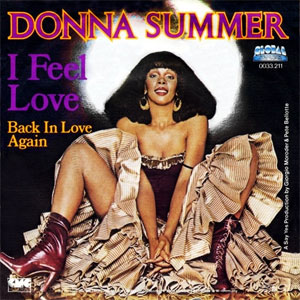
Disco in 1977 wasn’t a single sound so much as a spectrum. At one end, you had Donna Summer’s extraordinary “I Feel Love,” which Giorgio Moroder produced using almost entirely synthesized instrumentation — Brian Eno reportedly told David Bowie it had just changed the future of music, and he wasn’t wrong. Further down the dial were Thelma Houston’s “Don’t Leave Me This Way,” Marvin Gaye’s loose, joyful “Got to Give It Up,” Heatwave’s “Boogie Nights,” and KC and the Sunshine Band’s “I’m Your Boogie Man,” songs that prioritized the floor over the headphones and delivered accordingly. And then there was the Saturday Night Fever soundtrack, which arrived in late 1977 and would go on to become, for a time, the best-selling album ever released. It’s remembered as a disco landmark, but its lead single was the Bee Gees’ “How Deep Is Your Love” — a warm, unhurried ballad which doesn’t really fit the disco label. That the song was swept up into the disco phenomenon anyway says something about how powerful that cultural moment was: it absorbed everything in its vicinity, regardless of what the artists themselves thought they were making.

Punk was having none of it. The Sex Pistols’ “God Save the Queen” was banned by the BBC and still reached the top of the charts, which tells you something about both the song’s impact and the limits of official gatekeeping. Ramones’ “Sheena Is a Punk Rocker” was faster and more fun, but no less pointed. Television’s “Marquee Moon” and Elvis Costello’s “Watching the Detectives” had a punk rock spirit that suggested the genre’s real legacy might not be volume or outrage but a renewed interest in wit and directness — a correction to the perceived excesses of the rock mainstream those same artists were reacting against. These records don’t sound like novelties now. They sound like a genuine argument about what music should be doing.

What’s striking, looking at a year’s worth of this material together, is how little any of these artists seemed to be aware of, or interested in, what the others were doing. “Somebody to Love” by Queen and “Sir Duke” by Stevie Wonder share roughly the same calendar year but almost nothing else. “Solsbury Hill” and “Float On” exist in completely separate universes. That independence — each act pursuing its own idea of what a good record sounded like — might be exactly why so much of this music has held up. Nobody was chasing a trend that would have dated them. They were mostly just making the best version of the thing they already knew how to do, and 1977 happened to catch a lot of them doing it very well.

Follow Tunes Du Jour on Facebook

Follow me on Bluesky

Follow me on Instagram

Tunes Du Jour Presents Stevie Nicks

In a career that’s stretched across decades, bands, and Billboard charts, Stevie Nicks has managed a rare feat: establishing herself as both a defining voice in a group and a singular presence as a solo artist. Her work with Fleetwood Mac and on her own often feels like two sides of the same coin—distinct but inseparable. On one hand, there’s the collaborative dynamic of Fleetwood Mac, captured in songs like “Dreams,” “Rhiannon,” and “Landslide,” where her voice served not just as a sonic anchor but as a narrative thread in the band’s often-turbulent story. On the other, there’s the independence of Bella Donna and The Wild Heart, where she claimed space on her own terms with tracks like “Edge of Seventeen” and “Stand Back.”

What makes Nicks especially compelling isn’t just her voice, though that husky, otherworldly tone is unmistakable. It’s her songwriting. The stories she tells—whether personal or imagined—have a way of blurring the line between autobiography and myth. “Sara” and “Gypsy” evoke emotional landscapes more than plotlines, while “Silver Springs” is pointed and raw, its pain delivered without melodrama. Even her more radio-friendly hits like “Talk To Me” and “I Can’t Wait” retain a kind of emotional undertow that separates them from the disposable pop of their era.

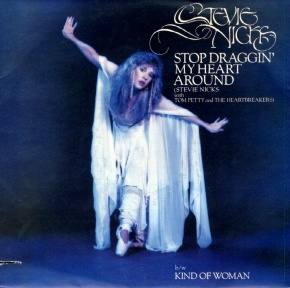
She’s also a master of collaboration, though not in the typical sense. Her duets with Tom Petty (“Stop Draggin’ My Heart Around”) and Don Henley (“Leather and Lace”) don’t just showcase vocal chemistry; they underscore how well she uses other voices to sharpen her own perspective. And while she occasionally lent her voice to projects like Kenny Loggins’ “Whenever I Call You Friend,” it’s usually within settings that still feel connected to her larger musical identity—romantic, reflective, occasionally mysterious.

Dig deeper into her solo catalog, and you find tracks like “Nightbird,” “Outside the Rain,” and “Think About It”—songs that may not have hit the top of the charts but round out the portrait. These aren’t diversions from her work with Fleetwood Mac but extensions of it, revealing a consistent worldview: introspective but not self-pitying, emotional but rarely unhinged. Even a track like “Planets of the Universe,” recorded decades after her commercial peak, holds to the same creative compass that’s guided her from the start.

Stevie Nicks isn’t just a singer or a lyricist or a performer; she’s a builder of emotional spaces. Whether she’s conjuring the vulnerability of “Storms,” the weariness of “After the Glitter Fades,” or the defiance of “The Highwayman,” there’s a sense that she’s letting listeners into her interior life—sometimes invitingly, sometimes at arm’s length. Either way, it’s a voice you don’t mistake for anyone else’s.

Follow Tunes Du Jour on Facebook

Follow me on Bluesky

Follow me on Instagram

Tunes Du Jour Presents 1979

The year 1979 was a vibrant time in popular music, characterized by disco’s stronghold on the charts and a rich variety of emerging and evolving genres. From dancefloor anthems to rock classics, the year’s hits reflected a dynamic musical landscape.

Disco reigned supreme in 1979, dominating the airwaves and nightclubs alike. Gloria Gaynor’s empowering “I Will Survive” became an instant classic, while Chic’s “Good Times” and Sister Sledge’s “We Are Family” kept dance floors packed. The genre’s influence extended far and wide, with Village People’s “Y.M.C.A.” becoming a cultural phenomenon, Donna Summer’s “Hot Stuff” showcasing disco’s enduring appeal, and Amii Stewart’s cover of “Knock on Wood” breathing new life into a soul classic. McFadden & Whitehead’s “Ain’t No Stoppin’ Us Now” and Sylvester’s “You Make Me Feel (Mighty Real)” further exemplified disco’s ability to blend uplifting messages with irresistible rhythms.

While disco flourished, rock music continued to evolve and diversify. AC/DC’s “Highway to Hell” solidified their status as the preeminent heavy metal band of the era, its raw energy and power chords setting a new standard for the genre. Dire Straits’ “Sultans of Swing” showcased a more refined, guitar-driven sound, while The Police emerged with “Message in a Bottle,” signaling the rise of post-punk. The new wave and power pop scenes gained momentum with Elvis Costello & the Attractions’ “Oliver’s Army,” The Jam’s “The Eton Rifles,” and Squeeze’s “Up the Junction” all making their mark. Meanwhile, M’s “Pop Muzik” and Blondie’s “Heart of Glass” demonstrated how disco influences could be merged with new wave sensibilities.

The year also saw the birth of iconic pop hits that would define the era. Michael Jackson’s “Don’t Stop ‘Til You Get Enough” hinted at the superstardom that awaited him, while The Knack’s “My Sharona” became an instant power pop classic. The Buggles’ prophetic “Video Killed the Radio Star” not only topped charts but would later make history as the first music video played on MTV. Earth, Wind & Fire’s “September” continued to showcase the enduring appeal of funk, while R&B ballads like Peaches & Herb’s “Reunited” and The Commodores’ “Still” made significant impacts on the pop charts.

As 1979 drew to a close, the musical landscape was rich and varied. While disco maintained its grip on popular culture, the seeds of change were being sown. The diversity of the year’s hits, from Charlie Daniels Band’s country crossover “The Devil Went Down to Georgia” to Rickie Lee Jones’ jazz-influenced “Chuck E’s In Love,” stood out against the backdrop of disco and straightforward pop tunes. This musical variety, along with emerging studio technologies and evolving artist expressions, set the stage for the significant shifts that would characterize the sound of the coming decade.

Follow Tunes Du Jour on Facebook

Follow Tunes du Jour on Twitter

Follow me on Instagram

Tunes Du Jour Presents Fleetwood Mac

Fleetwood Mac’s story is one of evolution, creativity, and enduring musical brilliance. From their humble beginnings in the British blues scene to their rise as global rock icons, this band has left an indelible mark on popular music.

The group’s journey began in 1967 when guitarist Peter Green assembled a lineup that included Mick Fleetwood and John McVie. Their early years were steeped in blues, with tracks like “Albatross” and “Oh Well” showcasing their raw talent and musical prowess. However, it was the addition of Stevie Nicks and Lindsey Buckingham in 1975 that catapulted Fleetwood Mac into the stratosphere of rock stardom.

The Buckingham-Nicks era ushered in a new sound for the band, blending pop sensibilities with rock edge and introspective lyrics. Their self-titled 1975 album featuring hits like “Rhiannon,” “Say You Love Me,” and “Over My Head” was just a taste of what was to come. In 1977, Fleetwood Mac released Rumours, an album that would define their career and cement their place in music history. Tracks like “Dreams,” “Go Your Own Way,” “Don’t Stop,” and “You Make Lovin’ Fun” not only rested at or near the top of the charts but also resonated deeply with listeners, exploring themes of love, loss, and personal struggle.

Fleetwood Mac’s willingness to experiment and evolve is evident throughout their discography. The unconventional production of “Tusk,” which incorporated the USC Trojan Marching Band, exemplifies the band’s commitment to pushing boundaries while maintaining their signature style.

The band’s impact on popular music is difficult to overstate. They’ve sold over 120 million records worldwide, making them one of the best-selling music acts of all time. Their accolades include multiple Grammy Awards, induction into the Rock and Roll Hall of Fame in 1998, and a Brit Award for Outstanding Contribution to Music. Beyond these formal recognitions, Fleetwood Mac’s influence can be heard in countless artists across various genres, a testament to their wide-ranging appeal and musical innovation.

As we look back on Fleetwood Mac’s legacy, it’s clear that their music transcends generations. Whether it’s the bluesy riffs of their early work, the pop-rock perfection of their ’70s hits, or the mature songcraft of their later albums, Fleetwood Mac continues to captivate listeners with their unique blend of melody, harmony, and raw emotion. Their journey through the decades stands as a testament to the power of music to connect, inspire, and endure.

Follow Tunes Du Jour on Facebook

Follow Tunes Du Jour on Twitter

Follow me on Instagram

Your (Almost) Daily Playlist: 2-20-24

Steely Dan’s Walter Becker was obsessed with a tiny sound glitch on the album Katy Lied and flew to a 3M factory in Minnesota to find out the cause. It turned out to be a blot of dried mustard on the tape. Duh!

The late Walter Becker was born on this date in 1950. Lots of Steely Dan on today’s playlist.

Follow Tunes du Jour on Facebook

Follow Tunes du Jour on Twitter

Follow me on Instagram

Your (Almost) Daily Playlist: 12-22-23

The first of nine US number one singles for The Bee Gees was “How Can You Mend a Broken Heart,” written for Andy Williams by the group’s three brothers (credited to Barry and Robin Gibb on its initial release but later amended to include brother Maurice). The song is from their album Trafalgar, named after where in London they stayed during the recording sessions; however, the single failed to chart in the UK. 

The Bee Gees’ twins Maurice and Robin Gibb were born on this date in 1949. Lots of Bee Gees on today’s playlist.

Follow Tunes du Jour on Facebook

Follow Tunes du Jour on Twitter

Follow me on Instagram