Today is World Bartender Day, and to celebrate, here are 30 alcohol-inspired tunes. I’ll drink to that!
Follow Tunes Du Jour on Facebook
Follow me on Bluesky
Follow me on Instagram

Looking back at 2007, what stands out isn’t a single dominant sound but rather the year’s refusal to commit to any one direction. Rihanna’s “Umbrella” became the year’s unavoidable anthem, its rain-soaked hook lodging itself in collective consciousness while Jay-Z’s opening verse added hip-hop credibility to what was already a perfectly constructed pop song. Meanwhile, Amy Winehouse’s “Rehab” proved that retro-soul could feel urgent and contemporary, her defiant delivery turning personal struggle into something both devastating and oddly triumphant. These weren’t songs that simply topped charts—they were cultural moments that demonstrated pop music’s expanding possibilities.
The indie and alternative world was having its own moment of crossover success, with acts that had been bubbling under suddenly finding mainstream attention. Peter Bjorn & John’s “Young Folks” turned a whistle riff into an inescapable earworm, while Feist’s “1 2 3 4” made counting feel revolutionary, particularly after its appearance in an iPod commercial blurred the lines between advertising and artistry. LCD Soundsystem’s “Someone Great” offered something more melancholic, a dance-punk meditation on loss that proved electronic music could carry genuine emotional weight. These songs suggested that the wall between “indie” and “popular” was becoming increasingly porous, if not entirely irrelevant.
Rock music in 2007 occupied a fascinating space between theatrical ambition and raw simplicity. My Chemical Romance’s “Welcome To The Black Parade” opened with a piano line that promised—and delivered—pure arena-ready drama, a five-minute epic that wore its Queen influences proudly. On the opposite end of the spectrum, The White Stripes’ “Icky Thump” was all garage-rock aggression and Jack White’s snarling guitar work, while Kaiser Chiefs’ “Ruby” split the difference with its hooky, festival-ready energy. Even Foo Fighters’ “The Pretender” managed to sound both massive and tightly controlled, proof that straightforward rock could still command attention.
The electronic and dance music represented here reveals a year when those genres were becoming more adventurous and less confined to clubs. Justice’s “D.A.N.C.E.” filtered disco through a French electro lens, creating something that felt both nostalgic and futuristic, while Klaxons’ “Golden Skans” brought rave culture into the indie sphere with its pulsing urgency. Björk’s “Earth Intruders” and Battles’ “Atlas” pushed even further into experimental territory, the former with its martial rhythms and the latter with its stuttering, math-rock complexity. These tracks suggested that electronic music was no longer content with simply making people move—it wanted to challenge and surprise them too.
What emerges from this collection isn’t a neat narrative about where music was headed, but rather evidence of a year when multiple possibilities existed simultaneously. You had Britney Spears’ “Gimme More” and its deliberate, almost menacing production sitting alongside P!nk’s “Who Knew,” a straightforward power ballad that wouldn’t have felt out of place a decade earlier. Mims’ “This Is Why I’m Hot” represented hip-hop’s confident swagger, while Modest Mouse’s “Dashboard” showed alternative rock could still be genuinely weird and still find an audience. Two thousand and seven was a year when the music industry hadn’t yet fully figured out what the streaming era would mean, when radio still mattered but was losing its grip, and when artists could still surprise us by becoming stars without following any established playbook.
Follow Tunes Du Jour on Facebook
Follow me on Bluesky
Follow me on Instagram
Many of us grow up assuming the hit version of a song is the original. This playlist celebrates those surprising musical genealogies: well-known songs that were originally recorded by someone else, often with little fanfare. Here are the stories behind the transformations—where they started, and how they became iconic.
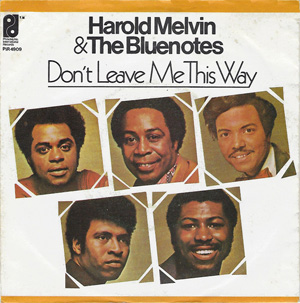
“Don’t Leave Me This Way” – Thelma Houston / Originally by Harold Melvin & the Blue Notes (1975)
Houston’s disco anthem actually began life as a Philly soul track sung by Teddy Pendergrass. Thelma took it to the dancefloor—and to #1.
“War” – Edwin Starr / Originally by The Temptations (1970)
This protest song started as an album cut by The Temptations. Starr’s rawer, angrier take made it a searing hit during the Vietnam era.
“Strawberry Letter 23” – The Brothers Johnson / Originally by Shuggie Otis (1971)
Otis’ dreamy, psychedelic original flew under the radar until producer Quincy Jones supercharged it with funk for The Brothers Johnson.
“I Feel for You” – Chaka Khan / Originally by Prince (1979)
Prince wrote it, recorded it, and released it on his 1979 self-titled album. Chaka Khan added Stevie Wonder’s harmonica and Melle Mel’s rap, creating a genre-blurring smash that gave the song a second life—and a much bigger audience.
“Louie Louie” – The Kingsmen / Originally by Richard Berry (1957)
Berry’s calypso-tinged rhythm & blues song became an unintelligible rock ‘n’ roll classic in the hands of teenage garage rockers.
“Pass The Koutchie” – Musical Youth as “Pass the Dutchie” / Originally by Mighty Diamonds (1981)
Musical Youth’s version cleaned up the ganja references but kept the groove. A British reggae hit born from a roots original.
“Tainted Love” – Soft Cell / Originally by Gloria Jones (1964)
This Northern Soul favorite was ignored in the U.S. until Soft Cell’s chilly synth-pop cover turned it into an international sensation.
“You Are So Beautiful” – Joe Cocker / Originally by Billy Preston (1974)
Preston’s gospel-inflected original was co-written with Dennis Wilson of the Beach Boys. Cocker slowed it down into a tearjerking ballad.
“The First Cut Is The Deepest” – Rod Stewart / Originally by P.P. Arnold (1967)
Before Cat Stevens, the song’s writer, sang it himself, P.P. Arnold delivered a powerful version. Stewart’s cover gave it global traction.
“Red, Red Wine” – UB40 / Originally by Neil Diamond (1967)
Diamond’s mournful original was a slow ballad. UB40’s reggae version confused even him—he didn’t recognize his own song on the radio.
“Brand New Cadillac” – The Clash / Originally by Vince Taylor and His Playboys (1959)
This rockabilly obscurity became a snarling punk track on London Calling. Vince Taylor later served as an inspiration for David Bowie’s Ziggy Stardust persona.
“Take Me To The River” – Talking Heads / Originally by Al Green (1974)
Green’s swampy soul gave way to Talking Heads’ jittery art-funk. An old-school spiritual reborn in new wave style.
“The Tide Is High” – Blondie / Originally by The Paragons (1967)
Jamaican rocksteady meets NYC cool. Blondie took this mellow gem and gave it a global pop sheen.
“Brandy” – Barry Manilow as “Mandy” / Originally by Scott English (1971)
English’s sad and simple original got a new name and new polish. Manilow’s grand version topped the charts.
“Don’t Let Me Be Misunderstood” – The Animals / Originally by Nina Simone (1964)
Simone’s pleading ballad became a snarling British Invasion hit. Her nuanced sorrow gave way to the raw edge of rock.
“Bette Davis Eyes” – Kim Carnes / Originally by Jackie DeShannon (1974)
The original was breezy and piano-driven. Carnes and her producer Val Garay turned it into new wave noir.
“Heaven Must Have Sent You” – Bonnie Pointer / Originally by The Elgins (1966)
Pointer’s disco version revived a Motown deep cut and put it back on the charts over a decade later.
“Love Buzz” – Nirvana / Originally by Shocking Blue (1969)
Nirvana turned this obscure Dutch psych-rock tune into a distorted grunge landmark. Their debut single.
“Piece Of My Heart” – Big Brother & The Holding Company / Originally by Erma Franklin (1967)
Aretha’s sister recorded it first, but Janis Joplin made it a fiery centerpiece of her legend.
“It’s Oh So Quiet” – Björk / Originally by Betty Hutton (1951)
A novelty big-band number revived by Björk into a theatrical showstopper. Old Hollywood meets Icelandic art-pop.
“China Girl” – David Bowie / Originally by Iggy Pop (1977)
Co-written with Bowie, Iggy’s version was skeletal and raw. Bowie’s version added synth gloss and MTV appeal.
“Good Lovin'” – The Young Rascals / Originally by The Olympics (1965)
The Olympics had the groove, but The Rascals turned it into a garage-rock rave-up and a #1 hit.
“Valerie” – Mark Ronson featuring Amy Winehouse / Originally by The Zutons (2006)
The Zutons wrote it as a bluesy rock song. Winehouse made it retro-soul perfection.
“Police On My Back” – The Clash / Originally by The Equals (1967)
A stomping, paranoid track from Eddy Grant’s first band. The Clash turned it into a punk fugitive anthem.
“After Midnight” – Eric Clapton / Originally by J.J. Cale (1966)
Cale’s laid-back shuffle was juiced up with guitar licks by Clapton, who kept the songwriter’s cool intact.
“On Broadway” – The Drifters / Originally by The Cookies (1962)
Songwriters Barry Mann & Cynthia Weil gave this to a girl group first, but The Drifters made it a city-slick R&B classic.
“Love Hurts” – Nazareth / Originally by The Everly Brothers (1960)
Gentle heartbreak became hard rock agony. Nazareth’s arena wail made the song a power ballad staple.
“I Love Rock ‘n’ Roll” – Joan Jett & the Blackhearts / Originally by The Arrows (1975)
Jett saw it on UK TV and recorded a fiercer, snarling version that girls (and boys) everywhere could scream along to.
“Without You” – Nilsson / Originally by Badfinger (1970)
Badfinger’s version was plaintive; Nilsson’s was operatic. He didn’t just sing it—he wailed it.
“Superman” – R.E.M. / Originally by The Clique (1969)
A psychedelic pop obscurity turned indie-rock cult classic. One of R.E.M.’s rare early tracks not written by the band.
These songs remind us that inspiration doesn’t always strike where the spotlight shines. Sometimes greatness is borrowed—and reinvented.
Follow Tunes Du Jour on Facebook
Follow me on Bluesky
Follow me on Instagram

“You ask me why we’re called Gnarls Barkley and I’m asking you ‘why not?’ The name Gnarls Barkley isn’t anchored down. It’s a drifter. A High Plains drifter, I might add.” – CeeLo Green
“There’s no story behind it. The name doesn’t have anything to do with anything.” – Danger Mouse
Gnarls Barkley’s Danger Mouse was born Brian Burton on this date in 1977. A handful of their songs are included on today’s playlist.

Adele was born on this date in 1988. Lots of songs from her on today’s playlist.
https://open.spotify.com/embed/playlist/6QfWHrSbam16XdbSxHIDGz?utm_source=generator
Follow Tunes du Jour on Facebook
Follow Tunes du Jour on Twitter
Follow me on Instagram


“I only make records when I feel I have something to say. I’m not interested in releasing music just for the sake of selling something.“ – Sade Adu
Sade’s last album came out in 2010. The album preceding that one came out in 2000.
Sade Adu, lead singer and namesake of the band Sade, was born on this date in 1959. A handful of Sade’s best tunes are included on today’s playlist.
Follow Tunes du Jour on Facebook
Follow Tunes du Jour on Twitter
Follow me on Instagram


