June is LGBTQ+ Pride Month. It’s Black Music Month. And it’s Fresh Fruit And Vegetables Month. Today’s playlist celebrates that last one.
Follow Tunes Du Jour on Facebook
Follow me on Bluesky
Follow me on Instagram

May 2 is Brothers And Sisters Day, and today on the old blogorooni is a playlist of 30 duos or groups that include siblings. I didn’t include EVERY set of brothers and sisters, as I limit these playlists to 30 songs, so apologies to the Brothers Allman, the Sisters Pointer and all the other qualifying worthwhile acts. I’ll get you next time.
Here’s what is included:
**Don’t Look Back in Anger – Oasis**
This anthem of Britpop is fueled by the volatile but brilliant creative tension between Manchester’s most famous brothers, Noel and Liam Gallagher.
**Gaslighter – The Chicks**
While Natalie Maines takes the lead, the group’s foundation is built on the masterful musicianship of sisters Martie Maguire and Emily Strayer.
**God Only Knows – The Beach Boys**
The ethereal harmonies of this masterpiece are anchored by the Wilson brothers (Brian, Dennis, and Carl), proving that “family blend” is a real sonic phenomenon.
**Let It Be Me – The Everly Brothers**
Don and Phil Everly practically invented the art of close-harmony singing, influencing every duo that followed in their footsteps.
**Mmmbop – Hanson**
Isaac, Taylor, and Zac Hanson took the world by storm as youngsters, showcasing a tight-knit musical bond that has kept them recording together for decades.
**The Rain, The Park & Other Things – The Cowsills**
The real-life inspiration for The Partridge Family, this family band featured six siblings and their mother creating pure sunshine-pop gold.
**Thank You (Falettinme Be Mice Elf Agin) – Sly & The Family Stone**
Sly, Freddie, and Rose Stone revolutionized funk and soul as a multi-talented family unit at the heart of the psychedelic era.
**She Talks To Angels – The Black Crowes**
Brothers Chris and Rich Robinson have steered the Black Crowes through decades of rock and roll, proving that sibling rivalry can be a powerful creative engine.
**Sex On Fire – Kings Of Leon**
The Followill clan—brothers Caleb, Nathan, and Jared, plus cousin Matthew—turned their Southern upbringing into global stadium-rock stardom.
**Private Idaho – The B-52’s**
The quirky genius of the B-52’s was spearheaded in part by the late Ricky Wilson and his sister Cindy, whose shared vision helped define the New Wave era.
**You Shook Me All Night Long – AC/DC**
The backbone of the “Thunder from Down Under” was the rock-solid rhythm section and songwriting partnership of brothers Angus and Malcolm Young.
**Summer Girl – HAIM**
The Haim sisters (Este, Danielle, and Alana) are the modern standard-bearers for sibling synergy, blending West Coast cool with effortless familial intuition.
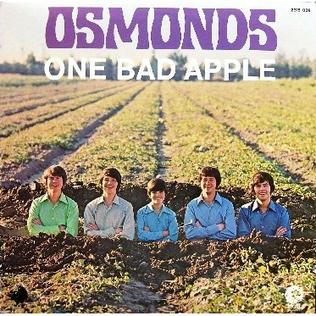
**Crazy Horses – The Osmonds**
Proving they were more than just teen idols, the Osmond brothers cranked up the fuzz pedals for this surprisingly heavy slice of 70s rock.
**Hot Line – The Sylvers**
With nine siblings in the lineup, The Sylvers brought a massive, coordinated family energy to the disco and R&B charts.
**Goodbye to Love – The Carpenters**
Richard and Karen Carpenter combined his meticulous arrangements with her once-in-a-generation voice to create some of the most enduring pop music ever made.
**Oh Carolina – Folkes Brothers**
John, Mico, and Junior Folkes helped lay the groundwork for ska and reggae with their historic collaborations in 1960s Jamaica.
**Baby, I Love You – The Ronettes**
Centered around sisters Ronnie and Estelle Bennett (and their cousin Nedra), The Ronettes defined the Girl Group sound with their powerhouse vocals.
**Eddie My Love – The Teen Queens**
Sisters Betty and Rosie Collins achieved 1950s stardom as teenagers, delivering some of the most soulful doo-wop harmonies of the era.
**I Can Never Go Home Anymore – The Shangri-Las**
This dramatic masterpiece features two sets of sisters—the Weiss siblings and the Ganser twins—who brought operatic intensity to pop music.
**My Golden Years – The Lemon Twigs**
Brian and Michael D’Addario carry the torch for baroque pop, displaying a musical shorthand that only brothers who grew up playing together could possess.
**Crazy on You – Heart**
Ann and Nancy Wilson shattered the glass ceiling of 70s rock, combining powerhouse vocals with virtuoso guitar playing in a sisterly bond that remains unbreakable.
**Hero Takes a Fall – Bangles**
Sisters Vicki and Debbi Peterson formed the core of the Bangles, blending 60s garage-rock influence with perfect sibling vocal stacks.
**I’ll Be Good To You – The Brothers Johnson**
George “Lightnin’ Licks” and Louis “Thunder Thumbs” Johnson brought a sophisticated, funk-fueled sibling energy to R&B.
**Stay Gold – First Aid Kit**
Klara and Johanna Söderberg of Sweden create folk music so intimate and harmonically precise it feels like they are sharing a single voice.
**Closer – Tegan And Sara**
Identical twins Tegan and Sara Quin have evolved from indie-folk to synth-pop icons, always maintaining the distinct perspective of their shared life experiences.
**Who’s That Lady – The Isley Brothers**
Spanning several generations of the Isley family, this legendary group turned sibling collaboration into a decades-long hit machine.
**Mama’s Pearl – Jackson 5**
The gold standard for family bands, the Jackson brothers (Jackie, Tito, Jermaine, Marlon, and Michael) displayed a level of professional polish that redefined pop music.
**Rock & Roll Fantasy – The Kinks**
Ray and Dave Davies are the definitive “battling brothers” of rock, but their lifelong collaboration resulted in one of the most influential catalogs in history.
**Full of Fire – The Knife**
Karin Dreijer and Olof Dreijer of Sweden push the boundaries of electronic music, using their sibling bond to explore avant-garde and experimental sounds.
**Saints – The Breeders**
When Kim Deal recruited her twin sister Kelley to join The Breeders, they created some of the most iconic and infectious alternative rock of the 90s.
Follow Tunes Du Jour on Facebook
Follow me on Bluesky
Follow me on Instagram
If you had to pick a single year that captured popular music at its most creatively overstuffed, 1977 would be a strong candidate. Rock was arena-sized and expensive. Disco was inescapable and, for a certain crowd, irresistible. Punk was arriving like a kicked-in door. And somewhere in between, artists were quietly making records that didn’t fit neatly into any of those categories. The year produced an almost absurd concentration of songs that people still know by heart, not because nostalgia has been kind to them, but because many of them are genuinely excellent pieces of music.
The rock side of ’77 was dominated by songs that have since become impossible to avoid. Eagles’ “Hotel California,” Fleetwood Mac’s “Dreams,” and Bob Seger’s “Night Moves” all came from the same general tradition of polished, emotionally direct rock songwriting, the kind that prioritized feel and production in equal measure. Aerosmith’s “Walk This Way” sat a little rougher and looser, and Manfred Mann’s Earth Band’s “Blinded by the Light” was genuinely strange radio fare — a Springsteen cover that became more famous than the original largely on the strength of its own eccentric energy. Meanwhile, David Bowie’s “Sound and Vision” and Peter Gabriel’s “Solsbury Hill” pointed toward something more interior and experimental, both artists having recently untethered themselves from previous identities and clearly enjoying the freedom.
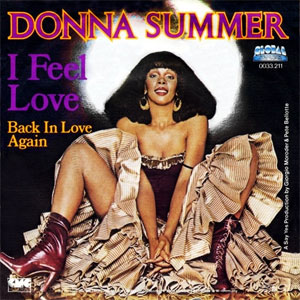
Disco in 1977 wasn’t a single sound so much as a spectrum. At one end, you had Donna Summer’s extraordinary “I Feel Love,” which Giorgio Moroder produced using almost entirely synthesized instrumentation — Brian Eno reportedly told David Bowie it had just changed the future of music, and he wasn’t wrong. Further down the dial were Thelma Houston’s “Don’t Leave Me This Way,” Marvin Gaye’s loose, joyful “Got to Give It Up,” Heatwave’s “Boogie Nights,” and KC and the Sunshine Band’s “I’m Your Boogie Man,” songs that prioritized the floor over the headphones and delivered accordingly. And then there was the Saturday Night Fever soundtrack, which arrived in late 1977 and would go on to become, for a time, the best-selling album ever released. It’s remembered as a disco landmark, but its lead single was the Bee Gees’ “How Deep Is Your Love” — a warm, unhurried ballad which doesn’t really fit the disco label. That the song was swept up into the disco phenomenon anyway says something about how powerful that cultural moment was: it absorbed everything in its vicinity, regardless of what the artists themselves thought they were making.
Punk was having none of it. The Sex Pistols’ “God Save the Queen” was banned by the BBC and still reached the top of the charts, which tells you something about both the song’s impact and the limits of official gatekeeping. Ramones’ “Sheena Is a Punk Rocker” was faster and more fun, but no less pointed. Television’s “Marquee Moon” and Elvis Costello’s “Watching the Detectives” had a punk rock spirit that suggested the genre’s real legacy might not be volume or outrage but a renewed interest in wit and directness — a correction to the perceived excesses of the rock mainstream those same artists were reacting against. These records don’t sound like novelties now. They sound like a genuine argument about what music should be doing.
What’s striking, looking at a year’s worth of this material together, is how little any of these artists seemed to be aware of, or interested in, what the others were doing. “Somebody to Love” by Queen and “Sir Duke” by Stevie Wonder share roughly the same calendar year but almost nothing else. “Solsbury Hill” and “Float On” exist in completely separate universes. That independence — each act pursuing its own idea of what a good record sounded like — might be exactly why so much of this music has held up. Nobody was chasing a trend that would have dated them. They were mostly just making the best version of the thing they already knew how to do, and 1977 happened to catch a lot of them doing it very well.
Follow Tunes Du Jour on Facebook
Follow me on Bluesky
Follow me on Instagram
Many of us grow up assuming the hit version of a song is the original. This playlist celebrates those surprising musical genealogies: well-known songs that were originally recorded by someone else, often with little fanfare. Here are the stories behind the transformations—where they started, and how they became iconic.
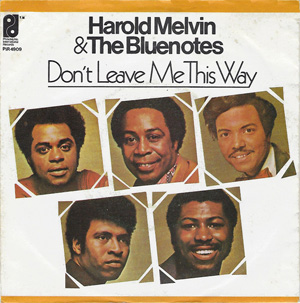
“Don’t Leave Me This Way” – Thelma Houston / Originally by Harold Melvin & the Blue Notes (1975)
Houston’s disco anthem actually began life as a Philly soul track sung by Teddy Pendergrass. Thelma took it to the dancefloor—and to #1.
“War” – Edwin Starr / Originally by The Temptations (1970)
This protest song started as an album cut by The Temptations. Starr’s rawer, angrier take made it a searing hit during the Vietnam era.
“Strawberry Letter 23” – The Brothers Johnson / Originally by Shuggie Otis (1971)
Otis’ dreamy, psychedelic original flew under the radar until producer Quincy Jones supercharged it with funk for The Brothers Johnson.
“I Feel for You” – Chaka Khan / Originally by Prince (1979)
Prince wrote it, recorded it, and released it on his 1979 self-titled album. Chaka Khan added Stevie Wonder’s harmonica and Melle Mel’s rap, creating a genre-blurring smash that gave the song a second life—and a much bigger audience.
“Louie Louie” – The Kingsmen / Originally by Richard Berry (1957)
Berry’s calypso-tinged rhythm & blues song became an unintelligible rock ‘n’ roll classic in the hands of teenage garage rockers.
“Pass The Koutchie” – Musical Youth as “Pass the Dutchie” / Originally by Mighty Diamonds (1981)
Musical Youth’s version cleaned up the ganja references but kept the groove. A British reggae hit born from a roots original.
“Tainted Love” – Soft Cell / Originally by Gloria Jones (1964)
This Northern Soul favorite was ignored in the U.S. until Soft Cell’s chilly synth-pop cover turned it into an international sensation.
“You Are So Beautiful” – Joe Cocker / Originally by Billy Preston (1974)
Preston’s gospel-inflected original was co-written with Dennis Wilson of the Beach Boys. Cocker slowed it down into a tearjerking ballad.
“The First Cut Is The Deepest” – Rod Stewart / Originally by P.P. Arnold (1967)
Before Cat Stevens, the song’s writer, sang it himself, P.P. Arnold delivered a powerful version. Stewart’s cover gave it global traction.
“Red, Red Wine” – UB40 / Originally by Neil Diamond (1967)
Diamond’s mournful original was a slow ballad. UB40’s reggae version confused even him—he didn’t recognize his own song on the radio.
“Brand New Cadillac” – The Clash / Originally by Vince Taylor and His Playboys (1959)
This rockabilly obscurity became a snarling punk track on London Calling. Vince Taylor later served as an inspiration for David Bowie’s Ziggy Stardust persona.
“Take Me To The River” – Talking Heads / Originally by Al Green (1974)
Green’s swampy soul gave way to Talking Heads’ jittery art-funk. An old-school spiritual reborn in new wave style.
“The Tide Is High” – Blondie / Originally by The Paragons (1967)
Jamaican rocksteady meets NYC cool. Blondie took this mellow gem and gave it a global pop sheen.
“Brandy” – Barry Manilow as “Mandy” / Originally by Scott English (1971)
English’s sad and simple original got a new name and new polish. Manilow’s grand version topped the charts.
“Don’t Let Me Be Misunderstood” – The Animals / Originally by Nina Simone (1964)
Simone’s pleading ballad became a snarling British Invasion hit. Her nuanced sorrow gave way to the raw edge of rock.
“Bette Davis Eyes” – Kim Carnes / Originally by Jackie DeShannon (1974)
The original was breezy and piano-driven. Carnes and her producer Val Garay turned it into new wave noir.
“Heaven Must Have Sent You” – Bonnie Pointer / Originally by The Elgins (1966)
Pointer’s disco version revived a Motown deep cut and put it back on the charts over a decade later.
“Love Buzz” – Nirvana / Originally by Shocking Blue (1969)
Nirvana turned this obscure Dutch psych-rock tune into a distorted grunge landmark. Their debut single.
“Piece Of My Heart” – Big Brother & The Holding Company / Originally by Erma Franklin (1967)
Aretha’s sister recorded it first, but Janis Joplin made it a fiery centerpiece of her legend.
“It’s Oh So Quiet” – Björk / Originally by Betty Hutton (1951)
A novelty big-band number revived by Björk into a theatrical showstopper. Old Hollywood meets Icelandic art-pop.
“China Girl” – David Bowie / Originally by Iggy Pop (1977)
Co-written with Bowie, Iggy’s version was skeletal and raw. Bowie’s version added synth gloss and MTV appeal.
“Good Lovin'” – The Young Rascals / Originally by The Olympics (1965)
The Olympics had the groove, but The Rascals turned it into a garage-rock rave-up and a #1 hit.
“Valerie” – Mark Ronson featuring Amy Winehouse / Originally by The Zutons (2006)
The Zutons wrote it as a bluesy rock song. Winehouse made it retro-soul perfection.
“Police On My Back” – The Clash / Originally by The Equals (1967)
A stomping, paranoid track from Eddy Grant’s first band. The Clash turned it into a punk fugitive anthem.
“After Midnight” – Eric Clapton / Originally by J.J. Cale (1966)
Cale’s laid-back shuffle was juiced up with guitar licks by Clapton, who kept the songwriter’s cool intact.
“On Broadway” – The Drifters / Originally by The Cookies (1962)
Songwriters Barry Mann & Cynthia Weil gave this to a girl group first, but The Drifters made it a city-slick R&B classic.
“Love Hurts” – Nazareth / Originally by The Everly Brothers (1960)
Gentle heartbreak became hard rock agony. Nazareth’s arena wail made the song a power ballad staple.
“I Love Rock ‘n’ Roll” – Joan Jett & the Blackhearts / Originally by The Arrows (1975)
Jett saw it on UK TV and recorded a fiercer, snarling version that girls (and boys) everywhere could scream along to.
“Without You” – Nilsson / Originally by Badfinger (1970)
Badfinger’s version was plaintive; Nilsson’s was operatic. He didn’t just sing it—he wailed it.
“Superman” – R.E.M. / Originally by The Clique (1969)
A psychedelic pop obscurity turned indie-rock cult classic. One of R.E.M.’s rare early tracks not written by the band.
These songs remind us that inspiration doesn’t always strike where the spotlight shines. Sometimes greatness is borrowed—and reinvented.
Follow Tunes Du Jour on Facebook
Follow me on Bluesky
Follow me on Instagram

As the calendar turned to 1980, the music world stood at a fascinating crossroads. The year marked not just the dawn of a new decade, but also a pivotal moment in popular music, where established genres evolved and new sounds emerged to captivate listeners.
The influence of disco could still be felt, though its dominance was waning. Michael Jackson’s “Rock With You” showcased his exceptional vocal talents and danceable rhythms, while Diana Ross’s “Upside Down” demonstrated the sophisticated production techniques that defined the era. These tracks, along with hits like Lipps, Inc.’s “Funkytown” and The Brothers Johnson’s “Stomp!”, proved that disco’s infectious energy still had the power to fill dance floors.
Stevie Wonder’s “Master Blaster (Jammin’)” further exemplified how established artists were adapting to the changing musical landscape, infusing reggae influences into his signature soulful sound.
However, 1980 also heralded the rise of new wave and synth-pop, genres that would come to define much of the decade’s sound. Gary Numan’s “Cars” introduced many listeners to the futuristic possibilities of synthesizer-driven music, creating an atmospheric soundscape that was both innovative and influential. Blondie’s “Call Me” further exemplified the genre’s versatility, blending punk aesthetics with disco beats to create a chart-topping hit that appealed to a broad audience. Pretenders established themselves with “Brass in Pocket,” a song that showcased Chrissie Hynde’s distinctive vocals and the band’s unique blend of punk energy and pop sensibility.
Rock and punk maintained a strong presence throughout the year. Pink Floyd’s “Another Brick in the Wall, Pt. 2” dominated charts worldwide, its memorable chorus and biting social commentary resonating with listeners. The Clash’s “London Calling” and AC/DC’s “You Shook Me All Night Long” brought raw energy and rebellious spirit to the airwaves. These tracks, along with Motörhead’s aggressive “Ace of Spades,” spoke to listeners seeking music that channeled their frustrations and aspirations. In contrast, Joy Division’s haunting “Love Will Tear Us Apart” showcased a more introspective side of post-punk, its emotional depth influencing countless artists in the years to come. The Cure’s “A Forest” further expanded the boundaries of post-punk, its atmospheric sound and introspective lyrics pointing towards the gothic rock movement that would flourish in the coming years.
The year was also marked by significant releases that left an indelible mark on popular culture. John Lennon’s “(Just Like) Starting Over” served as a poignant reminder of his enduring legacy, released shortly before his untimely death. Queen’s “Another One Bites the Dust” demonstrated the band’s ability to blend rock with funk, creating an anthem that remains popular decades later. David Bowie’s “Ashes to Ashes” continued his tradition of pushing musical boundaries, seamlessly merging art rock with electronic elements.
Oh, a guy named Prince had his breakthrough hit “I Wanna Be Your Lover.” We’d hear more from him throughout the 1980s.
As the year closed, it was clear that 1980 had set the stage for the decade to come. The eclectic mix of sounds reflected a world in transition. It was a year where artists embraced both the past and the future, creating music that was as much a reflection of its time as it was a precursor to the trends that would define the 1980s.

Quincy Delight Jones Jr., affectionately known as “Q,” is a name that resonates across the vast landscape of music. Born on March 14, 1933, in Chicago, Illinois, Quincy Jones has left an indelible mark on the world of entertainment. His multifaceted career spans seven decades, and his contributions to music, film, and humanitarian causes are nothing short of legendary. Let’s delve into the life of this remarkable artist, exploring both his creative genius and his unwavering commitment to making the world a better place.
Quincy Jones’s musical journey began with the trumpet, but it soon expanded to embrace a universe of genres. From jazz to pop, from film scores to chart-topping hits, Jones’s versatility knows no bounds. He cut his teeth working with luminaries like Ray Charles and Dizzy Gillespie, honing his skills as an arranger and composer. His compositions, such as “Stockholm Sweetnin’” and “For Lena and Lennie,” showcased his innate ability to blend sophistication with soulful melodies.
However, it’s impossible to discuss Quincy Jones without mentioning his groundbreaking collaborations with Michael Jackson. As the producer of Jackson’s iconic albums—Off the Wall, Thriller, and Bad—Jones elevated pop music to new heights. The pulsating basslines of “Billie Jean,” the electrifying energy of “Don’t Stop ‘Til You Get Enough,” and the haunting introspection of “Man in the Mirror” all bear his unmistakable imprint. And let’s not forget the global anthem “We Are the World,” which Jones orchestrated to raise funds for famine relief in Ethiopia—a testament to his unwavering commitment to humanity.
Beyond the studio, Quincy Jones’s heart beats for social causes. In the 1970s, he stood shoulder-to-shoulder with Martin Luther King Jr. as a founding member of Jesse Jackson’s Operation PUSH. His belief in the transformative power of music led him to create the Quincy Jones Listen Up Foundation. Through this nonprofit, he connects underserved youth with technology and music education. From South Central Los Angeles to South Africa, Jones’s foundation builds bridges, providing instruments and broadening music curricula to include American jazz greats alongside European classics.
But his philanthropic endeavors extend beyond borders. In partnership with Emirati social entrepreneur Badr Jafar, Jones launched the Global Gumbo Group. Their charity single “Tomorrow/Bokra,” featuring Middle Eastern singers, raised funds for children’s charities. This No. 1 hit in the Middle East garnered over 7 million views on YouTube, proving that music can heal and uplift even in the most challenging times.
And let’s not forget Hurricane Katrina. Jones stepped in to save the homes and properties of elderly jazz musicians affected by the devastating storm. His magic touch—what some call the “Quincy dust”—transforms lives, one act of kindness at a time.
Quincy Jones, now in his 90s, remains an unstoppable force. Whether he’s conducting an orchestra, mentoring young artists, or advocating for social justice, his legacy reverberates across generations. As we listen to the soulful strains of “Soul Bossa Nova” or groove to “Razzamatazz,” let’s remember that behind every note lies a man who believes in the power of love, music, and compassion. Quincy Jones—the maestro, the philanthropist, and the eternal groove-maker—continues to inspire us all.
Q produced all of the recordings on today’s playlist except the ones performed by Ray Charles, Frank Sinatra and Big Maybelle; on those he’s credited as the arranger.
Follow Tunes Du Jour on Facebook
Follow Tunes Du Jour on Twitter
Follow me on Instagram

“Will It Go Round In Circles,” Billy Preston’s second US number one single, was borne from a comment Preston made to his songwriting partner, Bruce Fisher, about having a song but no melody. From there the pair came up with lyrics about having a dance with no steps and added to those words a very catchy melody. A session that included pre-stardom guitar and bass players The Brothers Johnson brought the groove and the funk.
Billy Preston’s first time having his name appear at the top spot of the Hot 100 was in 1969 with “Get Back,” credited to The Beatles With Billy Preston. Following The Beatles’ breakup, Preston continued working with its members, including playing with George Harrison at the Concert for Bangladesh. Preston was the first artist to record Harrison’s My Sweet Lord,” which Harrison co-produced and later recorded himself.
“Will It Go Round In Circles” entered the Hot 100 at number 99. It reached the top ten eleven weeks later, at which time the number one song was Paul McCartney and Wings’ “My Love.” “My Love” was knocked from the top spot by George Harrison’s “Give Me Love (Give Me Peace On Earth),” which was knocked from the top spot by “Will it Go Round In Circles.” The b-side of the Preston single was his cover of The Beatles’ song “Blackbird.”
The late Billy Preston was born on this date in 1946. A handful of his songs feature on today’s playlist.
Follow Tunes du Jour on Facebook
Follow Tunes du Jour on Twitter
Follow me on Instagram

Back in 2016, when Donald Trump was a candidate for president of the United States of America without impeachments and indictments on his resume, the classic song “Love Train” was played at the Republican National Convention. The O’Jays were not supportive of this use of their hit. Group member Walter Williams said “Our music, and most especially ‘Love Train,’ is about bringing people together, not building walls. I don’t appreciate being associated with Mr. Trump and his usage of our music without permission.” Added group member Eddie Levert, “I don’t agree, whatsoever, with Trump’s politics to the point where I think he just may be the anti-Christ.”
The O’Jays’ Eddie Levert turns 81 today. A few of his group’s hits are included on today’s playlist.
Follow Tunes du Jour on Facebook
Follow Tunes du Jour on Twitter
Follow me on Instagram
