Tunes Du Jour Presents 1994

The music of 1994 reflects a moment when the boundaries between underground credibility, radio success, and mainstream pop were becoming less rigid. Alternative rock was no longer a niche concern: it was a major commercial force with several distinct personalities. Green Day’s “Basket Case” and The Offspring’s “Come Out and Play” brought fast, catchy punk-informed songs to wide audiences, while Weezer’s “Undone – The Sweater Song” made awkwardness and uncertainty part of its appeal. Nirvana’s “All Apologies,” released to radio just prior to Kurt Cobain’s death, carried a quieter, more exhausted emotional weight. Elsewhere, Soundgarden’s “Black Hole Sun” and Pearl Jam’s “Daughter” showed how expansive and serious rock radio could sound.

There was also room for artists who approached alternative music from more idiosyncratic angles. Beck’s “Loser” turned thrift-store imagery, slackness, and hip-hop phrasing into an unlikely anthem. Pavement’s “Cut Your Hair” poked at the music business while delivering a compact guitar hook, and The Breeders’ “Cannonball” made distortion and loose rhythmic feel sound inviting rather than polished. Mazzy Star’s “Fade Into You” moved in the opposite direction, relying on Hope Sandoval’s hushed vocal and a slow, drifting arrangement. These songs did not share a single style, but they suggested that guitar music could be funny, disaffected, dreamy, abrasive, or deeply private.

British acts added another important strand. Blur’s “Girls & Boys” used a bright dance-pop pulse to observe holiday romance and casual social behavior with a dry sense of humor. Oasis arrived with “Supersonic,” a swaggering early statement that pointed toward the Britpop era to come. James found success in the United States with “Laid,” a song that was direct, nervy, and built around a memorable chorus. Morrissey’s “The More You Ignore Me, the Closer I Get” continued his tradition of turning discomfort and obsession into witty pop. Together, these records showed that British guitar music in 1994 could be both sharp-eyed and highly accessible.

Hip-hop and R&B were equally central to the year’s sound. Warren G and Nate Dogg’s “Regulate” was smooth and cinematic, built around a laid-back groove and Nate Dogg’s melodic hook. Snoop Doggy Dogg’s “Gin and Juice” made its relaxed party atmosphere feel effortless, while The Notorious B.I.G.’s “Juicy” offered a more personal story of ambition, hardship, and success. Salt-N-Pepa and En Vogue’s “Whatta Man” paired rap verses with powerful R&B vocals, creating a confident celebration of mutual respect. The Beastie Boys’ “Sabotage,” meanwhile, pushed rap-rock in a rougher direction, with a shouted vocal, distorted bass, and the energy of a band determined to disrupt the room.

Pop, dance, and adult-oriented songwriting rounded out the picture. Crystal Waters’ “100% Pure Love” and M People’s “Moving on Up” kept dance floors supplied with uplifting house-influenced tracks, while Björk’s “Big Time Sensuality” made electronic pop feel playful and slightly strange. Madonna’s “Secret” took a more restrained path, leaning into a soulful, understated groove. Sheryl Crow’s “All I Wanna Do” and Counting Crows’ “Mr. Jones” captured the conversational, radio-friendly side of the decade’s singer-songwriter boom. Even Bruce Springsteen’s “Streets of Philadelphia,” with its spare arrangement and compassionate perspective, fit the year’s broader interest in songs that sounded personal. Taken together, 1994 was not defined by one genre so much as by a widening sense of what popular music could hold.

Follow Tunes Du Jour on Facebook

Follow me on Bluesky

Follow me on Instagram

Tunes Du Jour Presents 2003

Twenty years ago, the music industry was in the middle of a massive structural shift. The launch of the iTunes Store in April 2003 offered a legal alternative to file-sharing networks, signaling the beginning of the digital download era. Against this backdrop of technological anxiety, the music itself was remarkably self-assured and eclectic. On the radio, the lines between pop, hip-hop, and rock were softer than ever. It was a year where a listener could turn on the radio and hear the triumphant horns of Beyoncé’s solo debut “Crazy in Love,” transition to the crisp, minimalist beat of 50 Cent’s “In da Club,” and then find themselves singing along to the retro-futurist pop-funk of OutKast’s “Hey Ya!” These songs did not just dominate the charts; they defined the communal listening experience of the early 2000s.

In 2003, hip-hop and R&B were the undisputed drivers of mainstream pop culture, largely thanks to a roster of visionary producers. Pharrell Williams and Chad Hugo (The Neptunes) were seemingly everywhere, lending their signature space-funk bounce to Pharrell’s solo track “Frontin’,” Kelis’ infectious “Milkshake” and Snoop Dogg’s breezy “Beautiful.” Meanwhile, Timbaland helped Justin Timberlake transition to mature solo artistry with the icy, atmospheric “Cry Me A River,” and Lil Jon popularized the aggressive, high-energy “crunk” subgenre with “Get Low.” This era also embraced boundary-pushing rhythms, from Missy Elliott’s eccentric “Pass That Dutch” to the international crossover of Panjabi MC’s “Mundian To Bach Ke,” which brought Punjabi bhangra beats to Western dance floors with a little help from a Jay-Z guest verse.

While urban contemporary music ruled the airwaves, rock music was undergoing a gritty, back-to-basics revival. The White Stripes captured the cultural imagination with “Seven Nation Army,” built around a simple, seven-note guitar riff that has since become a global sports anthem. This raw, analog energy was shared by bands like Queens of the Stone Age, whose “No One Knows” paired heavy desert rock with a driving, danceable rhythm. Across the Atlantic, the British indie scene was revitalized by the messy, poetic punk of The Libertines’ “Time for Heroes,” while stateside, The Strokes refined their stylish garage rock on “12:51.” These bands proved that traditional guitar-bass-drums setups still had plenty of currency in a digital world.

Below the surface of the mainstream, 2003 was also a banner year for experimental subgenres that bridged the gap between indie rock and electronic music. In New York, bands like The Rapture with “House Of Jealous Lovers” and !!! with “Me and Giuliani Down By the Schoolyard” pioneered a bass-heavy dance-punk sound that brought rock fans back to the dance floor. Simultaneously, bedroom electronic pop found a definitive voice in The Postal Service’s “Such Great Heights,” a track that combined stuttering synthesizer beats with warm, melancholic indie-pop melodies. This appetite for sonic exploration extended to established giants like Radiohead, who returned to organic, guitar-driven anxiety on “There There.,” and Coldplay, whose piano-driven “Clocks” became an atmospheric stadium staple.

Looking back, the music of 2003 reflects a unique cultural moment where the monoculture was still intact, yet fractured enough to allow wildly diverse sounds to coexist. It was a year where the quiet, acoustic intimacy of Norah Jones’s “Don’t Know Why” could share space on the charts with the tongue-in-cheek power pop of Fountains of Wayne’s “Stacy’s Mom” or the left-field neo-soul of The Roots’ “The Seed (2.0).” Rather than being defined by a single dominant trend, 2003 stands out as a bridge between the physical record era and the highly personalized, algorithm-driven streaming habits of today, leaving behind a soundtrack that feels both nostalgic and surprisingly modern.

Follow Tunes du Jour on Facebook

Follow me on Bluesky

Follow me on Instagram
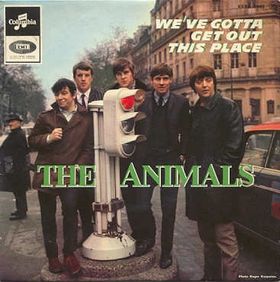
Tunes Du Jour Celebrates Be Kind To Animals Week

In 1915, the American Humane Society designated the first full week in May as Be Kind To Animals Week. Its intent was to combat the widespread cruelty that animals—particularly workhorses—faced at the time. The goal was to build a “national culture of compassion” and bring issues of animal welfare to the public consciousness.

While the specific challenges animals face have evolved, the core mission of the week remains the same: to encourage kindness, compassion, and better treatment for all animals, including pets, wildlife, and farm animals.

The need for kindness is as relevant today as it was over a century ago. Some ways to practice this, per the AHS, are to adopt a pet from a local animal shelter or rescue group; ensure your pets are spayed or neutered, have proper identification (like microchips and ID tags), and are given plenty of love and exercise; support companies that are committed to animal welfare; protect wild animals by respecting their habitats, observing them from a safe distance and never feeding them; and educate children about the importance of being kind and gentle with all living creatures.

Celebrate Be Kind To Animals Week by being kind to animals (including your fellow humans) this week and every week. To accompany your celebration here is a playlist of music made by some very talented animals:

Follow Tunes Du Jour on Facebook

Follow me on Bluesky

Follow me on Instagram
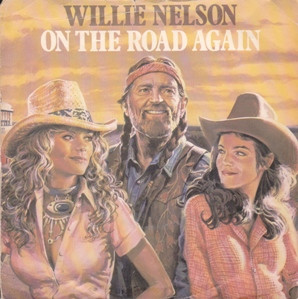
Tunes Du Jour Presents Willie Nelson

What stands out about Willie Nelson, especially in a playlist like this one, is how naturally he connects songs and audiences that do not usually live in the same lane. “Crazy” and “Night Life” point back to his early years as one of Nashville’s great songwriters. “Blue Eyes Crying in the Rain,” “On the Road Again,” and “Always On My Mind” show how fully he grew into stardom as a singer. Then the list keeps widening: pop standards like “Blue Skies” and “Moonlight in Vermont,” a gospel song like “Uncloudy Day,” a duet with Ray Charles on “Seven Spanish Angels,” a track with Snoop Dogg on “Roll Me Up,” and a Pearl Jam cover, “Just Breathe,” recorded with his son Lukas. On paper, that range looks unlikely. In practice, it feels completely coherent, which says a lot about the steadiness of Willie’s musical personality.

Part of that comes from the shape of his career. By the 1960s, Nelson was already well known in Nashville as a songwriter and recording artist. He wrote “Crazy,” which became Patsy Cline’s signature hit, and songs like “Night Life” showed how strong and distinctive his writing already was. He also had chart success of his own, but the polished Nashville system was never a perfect fit for his voice or his instincts. Around 1970, after moving back to Texas, he stepped into a different kind of scene, especially in Austin, where country crowds and younger rock audiences often overlapped. That change in setting helped turn him from a respected country figure into a much larger cultural presence. Albums and songs from the years that followed, including “Shotgun Willie,” “Bloody Mary Morning,” “Whiskey River,” and later “On the Road Again,” made him central to the outlaw movement while also expanding his audience far beyond traditional country radio.

What is especially appealing is that the outlaw image never boxed him in. Yes, this playlist has the swagger of “Me and Paul,” “Good Hearted Woman,” and “Mammas Don’t Let Your Babies Grow Up to Be Cowboys,” but it also has the gentleness of “Angel Flying Too Close to the Ground” and “Blue Eyes Crying in the Rain.” Even “My Heroes Have Always Been Cowboys” is less about posing than about longing and disappointment. Willie has always understood that country music works best when it makes room for toughness and vulnerability at the same time. That balance is one reason he has been so durable: listeners can come to him for a road song, a drinking song, a heartbreak song, or a meditation on aging, and he never sounds like he is trying on a costume.

That same openness explains why he has made sense to so many collaborators across generations and genres. His duets with Waylon Jennings and Merle Haggard feel like conversations between peers, rooted in shared history and mutual respect. “Seven Spanish Angels” with Ray Charles has the gravity of two masters meeting on common ground. “Beer for My Horses” showed that younger mainstream country stars still saw him as a living touchstone. He teamed up with Snoop Dogg (among others) on “Roll Me Up”; then three years after that covered Pearl Jam’s “Just Breathe,” and neither one of those tracks feels like a gimmick, or a cash grab, or an old man trying to stay cool. You never see the calculation with Willie. He does not care if you think he is cool. Willie has a gift for treating every song, whether it comes from country, pop, jazz, gospel, or rock, as something worth inhabiting honestly.

That may be the clearest reason Willie Nelson remains an icon after so many decades: he has never depended on one audience, one era, or one definition of authenticity. He is beloved by country traditionalists, outlaw-country fans, pop listeners, rock audiences, fellow songwriters, jazz admirers, and younger artists looking for a model of how to build a long life in music without becoming rigid. This playlist makes that case quietly but convincingly. It gives you the famous songs, the standards, the duets, the deep feeling, the wit, and the curiosity. More than anything, it shows an artist who has spent decades following good songs wherever they lead, and inviting an unusually wide range of listeners to come along.

Follow Tunes Du Jour on Facebook

Follow me on Bluesky

Follow me on Instagram
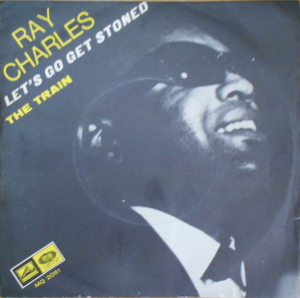
Tunes Du Jour Celebrates International Be Kind To Lawyers Day

It started, as these things often do, with a law.

Or more accurately, with three: “Law of the Land” (Temptations), “The Laws Have Changed” (New Pornographers), and “You Can’t Rule Me” (Lucinda Williams). A trifecta of declarations, all suggesting that whether you’re enforcing the law or dodging it, someone’s about to get into trouble.

This playlist is my musical tribute to International Be Kind To Lawyers Day — a real holiday, celebrated annually on the second Tuesday in April, for reasons that are presumably legal. It’s not just about lawyers, though. This 30-track journey follows the trajectory of a full-blown legal drama: rules are established, rules are broken, crimes are committed, time is served, lawyers are called, and justice is… complicated.

We meet a few Fun Lovin’ Criminals, some Smooth Criminals, and even those who insist they’re just Criminal Minded. The lawbreakers get caught — there’s fighting, testifying, jail time, and at least one unfortunate visit to the Court of the Crimson King (which, I suspect, is not a traffic violation court).

And let’s not forget the lawyers themselves. They’re gun-toting in one song, love-struck in another, and altogether overburdened. But in honor of their service — and in defense of their billable hours — we end on a note of redemption: “Return to Innocence” by Enigma. Because if music has taught us anything, it’s that legal complications can always be resolved in just over four minutes.

So, whether you’re in the mood to break the law, beat the rap, or rap to the beat of the Fat Boys (or Snoop, Freddie Gibbs, Boogie Down Productions…), press play and pass the gavel. And if you happen to know a lawyer, consider saying something nice. After all, they know where all the paperwork is buried.

Follow Tunes du Jour on Facebook

Follow me on Bluesky

Follow me on Instagram
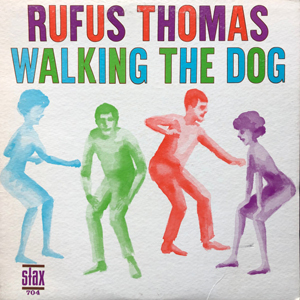
Tunes Du Jour Presents 1993

The music of 1993 was a vibrant mix of genres and styles that reflected the diverse cultural landscape of the early ’90s. This year saw the continued dominance of hip-hop, the rise of alternative rock, and the evolution of pop music, all while established artists pushed their creative boundaries.

Hip-hop was undeniably a driving force in 1993’s musical landscape. Dr. Dre featuring Snoop Dogg’s “Nuthin’ but a G Thang,” with its laid-back groove, epitomized the G-funk sound that defined West Coast rap. Ice Cube’s “It Was a Good Day” painted a vivid picture of a perfect day in the hood, showcasing the humor and storytelling skills that made him a beloved figure in the rap world. Meanwhile, East Coast artists like Wu-Tang Clan made their mark with the gritty “Protect Ya Neck.” The genre’s influence extended beyond coastal rivalry, with Naughty By Nature’s “Hip Hop Hooray” and Tag Team’s “Whoomp! (There It Is)” becoming nationwide party anthems.

Alternative rock continued its ascent into the mainstream. Radiohead’s “Creep” showcased the band’s angsty beginnings, its melancholic melody and introspective lyrics striking a chord with those struggling with feelings of inadequacy, while Rage Against the Machine’s “Killing in the Name,” a powerful anthem of rebellion, its aggressive sound and socially conscious lyrics that captured the angst and disillusionment of a generation, sparking protests and inspiring a generation of activists, brought politically charged rap-rock to the forefront. R.E.M., already established icons, delivered an anthem for those seeking comfort through emotional vulnerability with the poignant “Everybody Hurts.” Blind Melon’s “No Rain” became an iconic track with its unforgettable music video, featuring the “bee girl” that resonated with audiences worldwide. The year also saw the emergence of Britpop with Blur’s “For Tomorrow” and Suede’s “Animal Nitrate” hinting at the UK’s impending musical revolution.

Pop music in 1993 was anything but one-note. Janet Jackson’s “That’s the Way Love Goes” exemplified smooth R&B-infused pop, while Madonna continued to push boundaries with “Deeper and Deeper,” blending house music with her signature pop style. Whitney Houston’s cover of “I’m Every Woman” breathed new life into a classic, and Prince continued to defy categorization with “7.”

Nineteen ninety-three also saw female artists making bold statements across genres. PJ Harvey’s raw “Rid of Me,” Björk’s ethereal “Venus as a Boy,” and Liz Phair’s unapologetic “Fuck and Run” challenged conventions and expanded the scope of women’s voices in rock. In the realm of hip-hop, Salt-N-Pepa’s “Shoop” showcased women owning their sexuality, while Bikini Kill’s “Rebel Girl” became an anthem for the riot grrrl movement.

The year also highlighted the genre-blending creativity that would come to define the decade. Digable Planets’ “Rebirth Of Slick (Cool Like Dat)” brought jazz-rap into the mainstream, showcasing hip-hop’s versatility and its ability to incorporate sophisticated musical elements. This fusion of styles demonstrated how artists were increasingly willing to experiment and push the boundaries of their respective genres, setting the stage for the eclectic musical landscape that would unfold throughout the rest of the 1990s.

From the gritty sounds of West Coast hip-hop to the introspective lyrics of alternative rock, from the bold statements of female artists across genres to the genre-bending experiments that defied classification, the music scene of 1993 was bursting with creativity. This rich variety not only reflected the cultural zeitgeist of the early ’90s but also laid the groundwork for the musical evolution that would define the rest of the decade and beyond.