Twenty twenty-six has not been the easiest year for those with a heart, brain and soul. Music helps us make sense of the world, or at least escape it for a few minutes at a time. Below, in no particular order, are 30 songs that got me through the first half of 2026.
What makes a year in music stick with you? Sometimes it’s a single, dominant sound, but more often, it’s the feeling of multiple, vibrant conversations happening all at once. Looking back at 2018 through a playlist of its key songs, it becomes clear it was a year defined less by a unified trend and more by the strength of its distinct, parallel movements. From event-level releases that captured the cultural zeitgeist to deeply personal songwriting that quietly demanded our attention, the year offered a compelling range of expressions.
It’s impossible to talk about 2018 without acknowledging the sheer creative and commercial force of hip-hop. The genre was the site of some of the year’s most ambitious projects. Childish Gambino’s “This Is America” and The Carters’ “APESHIT” used the music video as a powerful medium for commentary, creating moments that were analyzed far beyond music blogs. At the same time, the genre showcased its sonic breadth. You had the elaborate, multi-part production of Travis Scott’s “SICKO MODE,” the classic, sample-heavy precision of Pusha T’s “If You Know You Know,” and the New Orleans bounce of Drake’s “Nice For What.” With Kendrick Lamar lending his acclaimed lyricism to artists as different as Anderson .Paak, Lil Wayne, and SZA, his presence served as a throughline of quality, underscoring the genre’s central role.
While hip-hop drove many conversations, pop music was busy broadening its own definition. Artists delivered hits by looking outward for inspiration. Janelle Monáe’s “Make Me Feel” was a masterclass in taut, Prince-indebted funk, while Kacey Musgraves blended country sensibilities with a disco beat on the delightfully sly “High Horse.” This spirit of connection was also felt on a global scale. The massive success of Cardi B’s “I Like It” and Camila Cabello’s “Havana” cemented the power of Latin rhythms in the mainstream, and ROSALÍA’s “MALAMENTE” introduced her modern take on flamenco to a worldwide audience, proving that a compelling sound needs no translation.
Alongside these high-energy sounds, a potent strain of rock and indie music thrived on sharp, unflinching songwriting. This was the year of the specific, personal narrative. Artists like Mitski (“Nobody”), Lucy Dacus (“Night Shift”), Phoebe Bridgers (“Motion Sickness”), and Snail Mail (“Pristine”) earned devoted followings by writing with startling clarity about anxiety, heartbreak, and identity. Their work wasn’t about grand statements but about the power of a perfectly articulated observation. In a similar vein, Courtney Barnett’s “Nameless, Faceless” turned everyday frustrations into a pointed critique, showing that even the most direct rock song could carry a vital message.
Ultimately, 2018 wasn’t a year where everything blended together. Instead, it was a year of powerful, coexisting identities. The charts were filled with innovative pop and globally-influenced hits, hip-hop continued to be a space for both blockbuster production and sharp social critique, and a wave of songwriters made their mark with profoundly personal work. From the confident breakup anthem of Ariana Grande’s “thank u, next” to the cathartic release of Robyn’s “Honey,” the music of 2018 offered a rich and varied landscape, setting the stage for many of the sounds and artists we’re still listening to today.
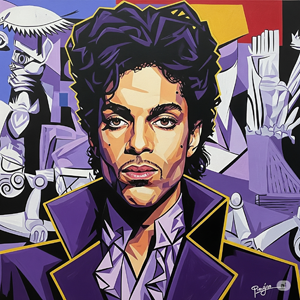
Prince’s genius as a performer is well-documented, but his legacy as a songwriter may be even more far-reaching. The songs he wrote—sometimes directly for others, sometimes borrowed or reimagined—traveled in unexpected directions, often landing in voices very different from his own. Sinéad O’Connor’s haunting version of “Nothing Compares 2 U” turned emotional restraint into a global anthem, while Chaka Khan’s take on “I Feel for You” transformed a tightly wound synth-funk track into a dancefloor juggernaut with help from Melle Mel and Stevie Wonder. The Bangles’ jangly “Manic Monday” showed his facility with classic pop forms.
Sometimes Prince gave away songs without credit. Stevie Nicks has said “Stand Back” wouldn’t exist without his impromptu help; he played the synth part that defined the track, and then slipped away, declining a formal writing credit. His fingerprints are on the Sheila E. hit “The Glamorous Life” and The Time’s “Jungle Love,” both written and produced by Prince but performed by his protégés. Even artists as distinct as Alicia Keys and Tom Jones found new depths and textures in his work, whether covering “How Come You Don’t Call Me” or reinterpreting “Kiss.” In many cases, he gave female artists some of their most complex and empowered material: see Sheena Easton’s risqué “Sugar Walls” or Martika’s spiritual “Love… Thy Will Be Done.”
What’s most remarkable is how well these songs hold up when refracted through other voices. Cyndi Lauper brought vulnerability to “When You Were Mine,” TLC made “If I Was Your Girlfriend” even more intimate, and even idiosyncratic takes like Sufjan Stevens on “Alphabet Street” or P.M. Dawn’s dreamlike “1999” as incorporated in “Fantasia’s Confidential Ghetto” show how flexible his songwriting was. Prince’s compositions had structure, hooks, and heart, but they were never rigid. That elasticity allowed other artists not just to sing his songs, but to inhabit them.
Here’s something I just learned about Daft Punk’s Guy-Manuel de Homem-Christo, born on this date in 1974: His great-grandfather, Francisco Manuel Homem Cristo Filho, was a writer, described by present-day historians as “the first authentic and indisputable Portuguese fascist” and a personal friend of Benito Mussolini’s. “I know him only from photographs, of course,” de Homem-Christo says. (from Rolling Stone, May 21, 2013)