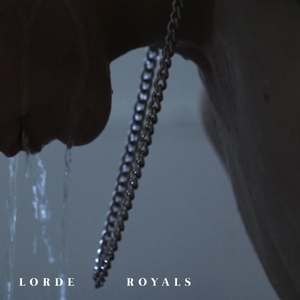
Tunes Du Jour Presents 2013

Two thousand thirteen was the year pop music stopped pretending it needed to choose a side. You could hear it in the way the year’s two biggest radio songs sat right next to each other in totally different moods: “Blurred Lines” leaned on a live-funk groove that Robin Thicke, T.I., and Pharrell built to feel effortless, while Daft Punk’s “Get Lucky,” also featuring Pharrell, reached even further back — disco basslines, Nile Rodgers on guitar, a chorus built for driving with the windows down. Both songs topped charts by looking backward, but they proved that nostalgia, done well, doesn’t feel like a costume.

Meanwhile, a strange, private kind of pop was pushing forward. Lorde released “Royals” as a teenager from New Zealand and, without trying to sound like anyone else, wrote the year’s most quietly subversive hit — a song about not wanting the diamonds and Cadillacs everyone else was singing about. HAIM’s “The Wire” and Icona Pop’s “I Love It” (with an assist from Charli XCX) carried that same don’t-actually-care energy but louder, messier, more fun about it. Even Miley Cyrus, mid-reinvention, turned “Wrecking Ball” into something that split the difference between vulnerability and spectacle, and people couldn’t decide which one was real. Maybe that was the point.

Hip-hop and R&B spent 2013 getting weirder in the best sense. Kanye West’s “Black Skinhead” was pure confrontation — industrial drums, a vocal that sounded like it was daring you to turn it off. Kendrick Lamar’s “Bitch, Don’t Kill My Vibe” did something almost opposite: patient, meditative, letting a single idea breathe for four minutes. Frank Ocean’s “Pyramids” stretched even further, a ten-minute song that changed shape twice without losing the thread. And then there was Disclosure’s “White Noise,” which took house music — a genre that had mostly lived in clubs — and made it sound like it belonged on the radio, a preview of the decade’s growing appetite for dance music with pop bones.

Guitar music, often declared dead around this time, was mostly just changing address. Vampire Weekend’s “Diane Young” crammed baroque-pop cleverness into two frantic minutes; Arcade Fire’s “Reflektor” went the other direction, stretching out into disco-adjacent art-rock with help from James Murphy. Tame Impala’s “Elephant” and Jake Bugg’s “Lightning Bolt” both looked to classic rock without sounding retro, and on the rawer end, Courtney Barnett’s “Avant Gardener” and Deafheaven’s “Dream House” showed just how wide “guitar music” could stretch in a single year — one a deadpan, talk-sung account of a panic attack in a garden, the other a wall of blast-beats and shoegaze that somehow ended up sounding gorgeous.

What’s easy to miss, looking back, is how many of 2013’s songs were quietly about mortality and change. David Bowie’s “Where Are We Now?” arrived without warning after a decade of silence, a hushed reflection from a man looking at his own past. The Knife’s “Full of Fire” and Nick Cave’s “Jubilee Street” both dealt, in very different registers, with reckoning and transformation. Even Justin Timberlake’s “Mirrors,” a genuine pop smash, was really a song about time and commitment dressed up as a love song. None of these songs were trying to define an era — they were just being made, by people working in their own lanes, at the same time. It’s only in hindsight, with a playlist like this one, that the year starts to look like it had a shape at all.

Follow Tunes Du Jour on Facebook

Follow me on Bluesky

Follow me on Instagram
Tunes Du Jour Celebrates Water A Flower Day

Can you believe it’s already Water A Flower Day? This totally real holiday (I swear! Google it!) reminds us to water our plants, and while I think one should water their plants more than once per year, what do I know? I don’t have a green thumb. I’ll celebrate the holiday by tossing out the dried out houseplant sitting on my balcony and by listening to my playlist of songs with flowery words in their title.

Follow Tunes Du Jour on Facebook

Follow me on Bluesky

Follow me on Instagram

Tunes Du Jour Presents 1995

If you were paying attention to music in 1995, you probably noticed something a little odd: the word “alternative” had started to mean almost nothing, because it had come to mean almost everything. A year earlier, the death of Kurt Cobain had cast a long shadow over rock music, but rather than stalling out, the genre fractured and expanded in every direction. Weezer were writing nerdy, hook-driven power pop. Foo Fighters were delivering straightforward hard rock. Hole were confrontational and raw. Radiohead were drifting somewhere cerebral and unsettling. Garbage were threading industrial textures through pop songwriting. Veruca Salt and Elastica were sharp and guitar-driven in entirely different ways. What united all of them under one label was more a matter of attitude and distribution than any shared sound. “Alternative” had become a marketing category, and in becoming one, it quietly swallowed whole.

Across the Atlantic, British music was having one of its more confident years. In their home country the year prior, Oasis released “Live Forever” and soon carried themselves like they were already the biggest band in the world — and for a stretch, they weren’t wrong. Blur’s “Country House” was cheeky and sardonic, all music-hall bounce and art-school wink. Pulp’s “Disco 2000” was Jarvis Cocker doing what he did best: writing working-class character studies with a disco pulse underneath. Supergrass and Elastica added urgency and speed. But the British presence in 1995 wasn’t limited to guitar bands — Take That had “Back for Good,” one of the cleaner pop songs of the decade, and it charted everywhere. The UK wasn’t just making noise in rock circles; it was competitive across the board.

The year also belonged, in large part, to women making unambiguous statements. Alanis Morissette’s “You Oughta Know” arrived like something had finally been let out of a locked room — angry, specific, and entirely unconcerned with being likable. PJ Harvey’s “Down by the Water” was quieter but no less unsettling. Björk’s “Army of Me” was a kind of mechanical ultimatum. Des’ree brought warmth and self-possession to “You Gotta Be.” TLC’s “Waterfalls” managed to be simultaneously a pop smash and a genuine cautionary narrative, delivered with enough grace that the message landed without feeling like a lecture. These weren’t novelty moments. They were artists working at full capacity.

Hip-hop and R&B in 1995 were doing something interesting: they were crossing lanes in ways that felt natural rather than forced. Coolio’s “Gangsta’s Paradise” borrowed from Stevie Wonder and landed on a movie soundtrack, but it had weight that outlasted its context. Method Man and Mary J. Blige turned “I’ll Be There for You/You’re All I Need to Get By” into something genuinely tender. Skee-Lo’s “I Wish” was lighter — a little self-deprecating, a little funny — and it stuck anyway.

Meanwhile, Massive Attack’s “Protection” and Portishead’s “Sour Times” were doing something that didn’t fit neatly into any existing box: slow, cinematic, built more from mood than momentum. Trip-hop was the year’s most quietly influential genre, even if most listeners didn’t have a name for it yet.

Some of the year’s most lasting moments came from artists who resisted easy categorization entirely. Nick Cave and Kylie Minogue recorded “Where the Wild Roses Grow” — a murder ballad duet that shouldn’t have worked as well as it did, but did. Jeff Buckley’s “Last Goodbye” was enormous in its emotion without ever tipping into melodrama. McAlmont & Butler made “Yes” feel like a genuine declaration. Pearl Jam’s “Better Man” was a quiet story song buried in an album, yet it became one of their most-loved tracks. In 1995, the mainstream was wide enough to hold all of this at once — the bratty and the mournful, the danceable and the difficult. That’s not always true of a given year in pop music, and it’s worth noticing when it is.

Follow Tunes Du Jour on Facebook

Follow me on Bluesky

Follow me on Instagram

Tunes Du Jour Presents 1988

In 1988, hip-hop didn’t just make noise; it made history. Rob Base & DJ E-Z Rock’s “It Takes Two” lit up clubs and car stereos alike, while Eric B. & Rakim’s “Paid in Full (Seven Minutes of Madness)” remix turned the genre into a playground for sonic experimentation. Public Enemy’s “Bring the Noise” brought urgent political commentary to the mix, and LL Cool J’s “Going Back to Cali” offered a sleek, stylized West Coast daydream. Among them, Salt-N-Pepa’s “Push It” stood as a genuine milestone—a breakthrough for women in rap and, at the time, the biggest-selling hip-hop single to date. Though not on the playlist due to its hit version being unavailable on Spotify, its absence in no way reflects its cultural weight.

Elsewhere, 1988 was rich in songs that combined sincerity with staying power. Tracy Chapman’s “Fast Car” offered social commentary through intimate storytelling, and Michael Jackson’s “Man in the Mirror” turned self-reflection into an anthem. “Wishing Well,” performed by the artist then known as Terence Trent D’Arby, brought soul swagger to the top of the charts, while Prince’s “Alphabet St.” reminded listeners he was still capable of keeping them on their toes. Songs like Kylie Minogue’s “I Should Be So Lucky” and Rick Astley’s “Never Gonna Give You Up,” both produced by the UK’s Stock Aitken Waterman, were pure pop that have endured far beyond their original chart runs, largely due to their catchiness and an occasional boost from internet-era rediscovery.

Dance floors were equally alive with invention. M/A/R/R/S’s “Pump Up the Volume” and S’Express’s “Theme from S’Express,” the latter missing from the playlist due to its unavailability on Spotify, helped define a new frontier of UK club music that was steeped in sampling and shaped by emerging house and techno scenes.

INXS’s “Need You Tonight” merged rock and funk with a modern sheen, while The Cure’s “Just Like Heaven” and Morrissey’s “Everyday Is Like Sunday” balanced emotion with pop craftsmanship. The Pixies’ “Where Is My Mind?” and Dinosaur Jr.’s “Freak Scene” would prove even more influential in hindsight, while Mudhoney’s “Touch Me I’m Sick” gave an early signal of what would soon be called grunge.

Both the UK and Australia contributed standout tracks that reflected their national scenes’ strength. From the UK, Depeche Mode’s “Never Let Me Down Again” and Erasure’s “Chains of Love” explored emotional depth through electronic textures, while Pet Shop Boys teamed with Dusty Springfield on “What Have I Done to Deserve This?” to bridge classic and contemporary pop. Australia’s Midnight Oil brought urgency and political purpose with “Beds Are Burning,” The Church crafted dreamlike melancholy in “Under the Milky Way,” and Nick Cave & The Bad Seeds delivered stark intensity with “The Mercy Seat.” All three pointed to a vibrant and diverse Australian presence in global music that year.

The year also held room for collaboration, reinvention, and the unexpected. Traveling Wilburys’ “Handle With Care” saw rock legends joining forces without sounding self-indulgent. my bloody valentine’s “You Made Me Realise” hinted at the hazy swirl of shoegaze to come. The Bangles’ cover of “Hazy Shade of Winter” showed that ‘60s source material could thrive in a late-’80s rock context, and Anita Baker’s “Giving You the Best That I Got” offered polished, grown-up soul amid the noisier trends. Nineteen wighty-eight wasn’t about any one genre dominating the conversation; it was about cross-pollination, with club tracks rubbing shoulders with indie rock, hip-hop expanding its reach, and pop songs finding new ways to stick.

Follow Tunes Du Jour on Facebook

Follow me on Bluesky

Follow me on Instagram