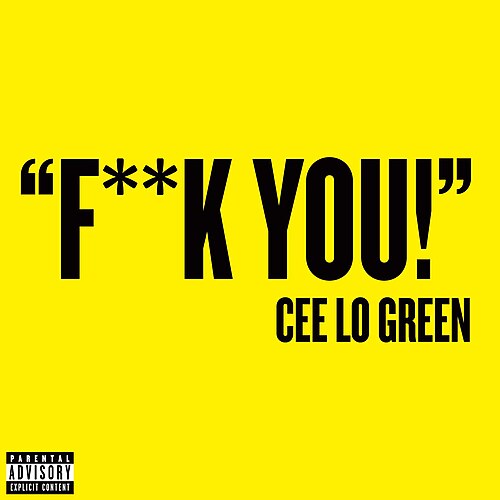
Tunes Du Jour Presents 2006

If you had to pick one song to sum up 2006, you might reach for Gnarls Barkley’s “Crazy” — a song so omnipresent that year it practically became ambient noise. But that choice would also tell you something true about the year: it was a moment when genuinely strange, interesting ideas were landing at the top of the charts, not just surviving on the margins. Cee Lo Green and Danger Mouse made a song that was simultaneously soulful, psychedelic, and completely radio-friendly, and somehow the world went along with it. That tension — between the weird and the accessible, between art and commerce — runs through a lot of what made 2006 a particularly interesting year in music.

The mainstream pop landscape was, by any measure, stacked. Justin Timberlake’s “My Love,” with its spare Timbaland production and T.I. verse, pointed forward toward the minimalist R&B that would define the next decade. Beyoncé released “Irreplaceable,” a song so well-constructed it barely needs any production to hold your attention. Rihanna was still in her early hitmaking mode with “SOS,” and Nelly Furtado, working with Timbaland, was having a pop renaissance with “Promiscuous.” What’s notable in retrospect is how many of these tracks were built around restraint — the arrangements have room in them, the hooks don’t have to fight to be heard. It’s pop music that trusted the song.

On the rock side of things, the year had an interesting split personality. Arctic Monkeys had exploded out of Sheffield with “I Bet You Look Good on the Dancefloor,” all nervous energy and sharp elbows, while The Killers’ “When You Were Young” pushed toward something more cinematic and earnest. The Raconteurs gave Jack White a different context to work in, and “Steady, As She Goes” was proof that a riff-first approach still had plenty of life in it. Muse were somewhere in the atmosphere with “Knights of Cydonia,” a song so committed to its own grandiosity that it looped back around to being genuinely exciting. Meanwhile, Band of Horses released “The Funeral,” which occupied a completely different emotional register — slow, aching, and built to last.

Away from the obvious mainstream, 2006 had a lot happening in the spaces between genres. TV on the Radio were making rock music that felt genuinely new with “Wolf Like Me,” while Hot Chip and Junior Boys were finding the emotional depth available in electronic pop. The Knife’s “Silent Shout” was something else entirely — icy, theatrical, and slightly unsettling in the best way. Camera Obscura offered a gentler alternative with “Lloyd, I’m Ready to be Heartbroken,” a song that wore its Lloyd Cole reference as a badge of honor, and The Pipettes were busy making sharp, witty girl-group pop that felt both nostalgic and pointed. Hip-hop, meanwhile, was getting some of its most creatively ambitious work from Kanye West (“Touch the Sky”) and Lupe Fiasco, whose “Kick, Push” used skateboarding as a fully realized metaphor for outsider identity without ever feeling forced.

There were also moments in 2006 that went beyond music into something more like public conversation. The Chicks released “Not Ready to Make Nice,” a direct response to the backlash they’d faced since 2003, and the fact that it became a hit felt genuinely significant — a mainstream country-adjacent audience giving space to a song about refusing to apologize. Cat Power’s “The Greatest” was quieter but no less affecting, a meditation on loss and missed potential delivered with a stillness that made it hit harder. Morrissey was still being Morrissey (“You Have Killed Me”), which is either a comfort or an irritant depending on your history with the man. What holds all of this together isn’t a single sound or movement — it’s more that 2006 was a year when music across a lot of different genres was being made by people who seemed to be thinking carefully about what they were doing, and the results have held up.

Follow Tunes Du Jour on Facebook

Follow me on Instagram

Follow me on Bluesky

Tunes Du Jour Presents 2016

If you want to understand what 2016 felt like, you could do worse than just sitting down and listening to its music. It was a year when several of the biggest artists in the world released some of their most ambitious work, while a second tier of artists was quietly making records that would age just as well. The result is a body of music that holds up not because it captured a singular mood, but because it didn’t — it scattered in a dozen different directions at once, and that tension is exactly what makes it interesting to revisit.

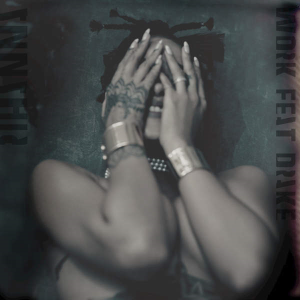
The blockbusters were genuinely good. Beyoncé’s Lemonade arrived as a cultural event, and “Formation” was its defiant opening statement — grounded in Black Southern identity, uninterested in making anyone comfortable. Rihanna and Drake’s “Work” was inescapable in the best way, a dancehall-inflected earworm that somehow felt both effortless and precise. Drake also appeared on “One Dance,” a song that helped bring Afrobeats to mainstream Western audiences in a real way, with Wizkid and Kyla doing a lot of the heavy lifting that often went uncredited. Kanye West’s “Ultralight Beam” opened The Life of Pablo with a gospel choir and a Chance the Rapper verse that became one of the most talked-about moments in rap that year. These were pop and rap operating at a high level, and they knew it.

But some of the year’s most lasting music came from artists working in a quieter register. Solange’s “Cranes in the Sky” approached anxiety and avoidance with a kind of elegant restraint that her sister’s more maximalist work doesn’t always make room for. Frank Ocean finally released Blonde after years of anticipation, and “Nights” — with its midpoint beat switch — felt like the whole album in miniature. Mitski’s “Your Best American Girl” packed more emotional complexity into three and a half minutes than most artists manage in an entire record, and Angel Olsen’s “Shut Up Kiss Me” was a shot of pure guitar-rock energy from an artist who could do pretty much anything she turned her hand to. These songs didn’t dominate the charts, but they dominated year-end lists for good reason.

2016 was also a year when the world outside the speakers kept bleeding in. A Tribe Called Quest came out of a long hiatus to release We Got It from Here, and “We The People….” was an explicit, unambiguous political statement made by veterans who had earned the right to make it. YG and Nipsey Hussle’s “FDT” was rawer and angrier, a West Coast rap track that said plainly what a lot of people were thinking during a particularly ugly election season. ANOHNI’s “Drone Bomb Me,” from her album Hopelessness, took a different approach entirely — a beautiful, devastating song sung from the perspective of a bombing victim, using the form of a love song to make its critique land harder. And then there was Leonard Cohen’s “You Want It Darker,” released just weeks before his death, which felt less like a goodbye than a reckoning. David Bowie’s “Lazarus,” similarly, arrived as part of Blackstar and took on a different weight entirely after he died in January. Not every year loses two artists of that stature within months of each other.

What ties all of this together isn’t a single sound or theme, but a kind of seriousness of purpose — even in the party songs, even in the straightforwardly fun ones. Justin Timberlake’s “CAN’T STOP THE FEELING!” was designed to be a piece of pure joy, and it succeeded. “Broccoli” by D.R.A.M. featuring Lil Yachty was loose and goofy and charming in a way that didn’t need to be anything else. Car Seat Headrest’s “Drunk Drivers/Killer Whales” captured a specific kind of young-adult exhaustion with more precision than most rock music manages. Radiohead’s “Burn the Witch” was tightly wound and anxious. The xx’s “On Hold” was cool and minimal and aching. These songs don’t belong to the same world, and yet they all came from the same twelve months. That’s not a contradiction — that’s just what a genuinely good year in music looks like.

Follow Tunes Du Jour on Facebook

Follow me on Bluesky

Follow me on Instagram
Tunes Du Jour Presents 2009

Looking at a list of songs from 2009 feels a bit like opening a time capsule. It’s a year that feels both incredibly recent and like a completely different era. The internet had firmly established itself as the primary engine of music discovery, yet the monoculture of massive, universally-known hits was still holding on. It was a year of distinct, confident sounds, where different genres weren’t just blending together, but thriving in their own parallel lanes. From stadium-sized anthems to bedroom-born electronic experiments, the music of 2009 was defined by a remarkable breadth of creativity.

One of the most prominent stories of the year was the flourishing of indie rock. This wasn’t the scrappy, underground sound of years past; this was indie at its most ambitious and critically adored. You had the intricate, harmony-drenched compositions of Grizzly Bear on “Two Weeks” and the hypnotic, looping bliss of Animal Collective’s “My Girls.” These were songs that rewarded close listening. Elsewhere, artists like Bat For Lashes (“Daniel”) and Dirty Projectors (“Stillness Is The Move”) were crafting their own unique sonic worlds, while bands like the Yeah Yeah Yeahs (“Zero”) and Japandroids (“Young Hearts Spark Fire”) delivered pure, cathartic energy. It was a moment where “alternative” music felt like it was setting the cultural agenda.

Meanwhile, the top of the charts was being shaped by bold new directions in pop and hip-hop. Lady Gaga’s “Bad Romance” wasn’t just a song; it was a high-concept art project, signaling a new level of theatricality in pop music. This stood alongside the effortless, feel-good charm of Miley Cyrus’s “Party in the U.S.A.” and Kelly Clarkson’s powerhouse hit-making on “My Life Would Suck Without You.” In hip-hop, the genre’s emotional palette was expanding dramatically. You had Jay-Z and Alicia Keys delivering a timeless, triumphant anthem with “Empire State Of Mind,” while at the same time, Kanye West’s auto-tuned melancholy on “Heartless” and Kid Cudi’s spacey introspection on “Day ‘N’ Nite” were paving the way for a more vulnerable sound. The arrival of Drake with “Best I Ever Had” confirmed this shift toward melody and emotional openness was here to stay.

This wasn’t to say that straightforward rock and roll had been left behind. On the contrary, it was a year of massive, unifying rock anthems. Kings Of Leon reached their popular peak with “Use Somebody,” a song that seemed to be playing in every stadium and on every radio station in the world. The UK, meanwhile, was providing its own distinct contributions, from the grand, theatrical rebellion of Muse’s “Uprising” and the clever songwriting of Arctic Monkeys on “Cornerstone” to the dance-floor-ready energy of Franz Ferdinand’s “Ulysses.”

Looking back at this collection of songs, what’s most striking is the confidence of it all. It was a year where artists were creating fully realized worlds for listeners to step into. Whether it was the raw nerve of The Ting Tings, the grime-infused electro of Dizzee Rascal’s “Bonkers,” or the classic synth-pop of Pet Shop Boys, each track feels like a distinct statement. It was a time when you could have a playlist that jumped from an introspective indie ballad to a global pop phenomenon, and the whole thing made perfect sense. It was the sound of several different musical futures all happening at once.

Follow Tunes Du Jour on Facebook

Follow me on Bluesky

Follow me on Instagram

Tunes Du Jour Celebrates Have A Bad Day Day

Today is Have A Bad Day Day. Per holidayinsights.com, as a greeting today, you are encouraged people to wish people a lousy or terrible day.

I think wishing a terrible day to someone to their face might put you in danger. Instead, I choose to celebrate with song. If someone were to hear one of the songs on my Have A Bad Day Day playlist, they’d know that somebody out there wants their day to suck.

Follow Tunes Du Jour on Facebook

Follow me on Bluesky

Follow me on Instagram
Tunes Du Jour Presents Jay-Z

Jay-Z’s musical journey is a testament to artistic evolution, entrepreneurial spirit, and the power of reinvention. Born Shawn Corey Carter in Brooklyn’s Marcy Projects, he transformed the challenges of his early life into a narrative of remarkable success that extends far beyond music. His discography reflects not just his lyrical prowess, but a strategic approach to storytelling that captures the complexities of urban experience, ambition, and personal growth.

From early tracks like “Can’t Knock the Hustle” to later, more reflective works like “The Story of O.J.,” Jay-Z has consistently demonstrated an ability to narrate his life’s trajectory with remarkable honesty and insight. His collaborations reveal another dimension of his artistry – whether trading verses with Kanye West, creating anthems with Rihanna, or exploring complex themes with artists like Justin Timberlake, he has always been more than just a solo performer. These partnerships showcase his versatility and his skill in creating music that resonates across different genres and audiences.

Beyond music, Jay-Z emerged as a cultural entrepreneur who redefined what success could look like for a hip-hop artist. His business ventures – from Roc-A-Fella Records to Tidal, and partnerships with brands like Armand de Brignac champagne – illustrate a vision that extends well beyond creating hit tracks. He transformed the traditional narrative of a rapper’s career, positioning himself not just as an artist, but as a mogul who could navigate both creative and corporate landscapes with equal finesse.

His personal life, particularly his relationship with Beyoncé, has also been a significant part of his public persona. Together, they’ve created a power couple narrative that transcends music, touching on themes of love, family, and shared ambition. Albums like EVERYTHING IS LOVE demonstrate their ability to collaborate not just as romantic partners, but as artistic collaborators who can create groundbreaking work together.

What makes Jay-Z’s journey particularly compelling is how he has continually evolved. From street narratives to introspective explorations of success, race, and personal growth, he has never allowed himself to be confined by early expectations. His music has become a form of cultural commentary, addressing systemic issues while celebrating individual achievement. Whether through tracks that become New York anthems like “Empire State of Mind” or provocative statements like “D.O.A. (Death of Auto-Tune),” he has consistently pushed musical and cultural boundaries, cementing his status as not just a hip-hop artist, but a true cultural icon.

Follow Tunes du Jour on Facebook

Follow me on Bluesky

Follow me on Instagram

Tunes Du Jour Presents Madonna

Madonna’s career spans decades, evolving alongside the landscape of pop music and culture. From her early days as a dance-pop sensation to her later role as a global philanthropist, Madonna has consistently pushed boundaries and redefined what it means to be a pop star.

Her musical journey began in the 1980s with infectious hits like “Holiday” and “Like a Virgin,” which quickly established her as a pop icon. As her career progressed, Madonna’s music tackled more serious subjects, as evidenced by songs like “Papa Don’t Preach” and “Live to Tell.” Her ability to reinvent herself musically is exemplified by tracks such as “Vogue,” which brought underground ballroom culture into the mainstream, and “Frozen,” which showcased a more ethereal side to her artistry.

But Madonna’s impact extends far beyond the realm of music. She has been a vocal advocate for various social causes throughout her career. In the 1980s, she was one of the first mainstream artists to speak out about the HIV/AIDS epidemic, using her platform to raise awareness and funds for research. Her commitment to social justice also encompasses support for LGBTQ+ rights, gender equality, and education for girls.

In 1998, Madonna established the Ray of Light Foundation to promote peace, equality, and education worldwide. Her philanthropic efforts expanded further in 2006 with the founding of Raising Malawi, a nonprofit organization dedicated to supporting orphans and vulnerable children in Malawi. This initiative focuses on providing essential resources and emphasizing the importance of education and empowerment for young girls.

Madonna’s work in Malawi also includes partnering with BuildOn to fund the construction of several schools, ensuring that children from underprivileged backgrounds have access to quality education. Her efforts in global health, particularly in areas such as maternal health, orphan care, and HIV/AIDS prevention, demonstrate a deep-rooted concern for marginalized communities.

Throughout her career, Madonna has used her music and public persona to challenge societal norms and advocate for diversity and inclusion. Songs like “Express Yourself” and “Vogue” are not just pop anthems but cultural statements that celebrate self-expression in its most authentic form.

While her artistic choices and outspoken nature have sometimes been met with criticism, there’s no denying Madonna’s impact on popular culture. Her music has empowered generations, and her philanthropic work has inspired countless individuals to become agents of change.

As Madonna continues to evolve as an artist and humanitarian, her legacy as a cultural icon who has used her influence to create positive change and support marginalized communities remains undeniable. Her journey through music and philanthropy serves as a powerful example of how artists can use their platform to make a tangible difference in the world.