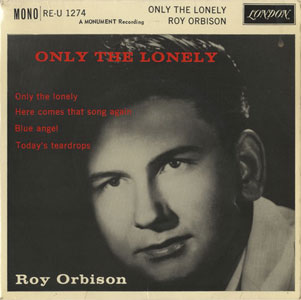
Today is Cheer Up The Lonely Day. Accordingly, I am spending it by myself, cheered up by a playlist I made of 30 songs that have the word “lonely” in the title.
Follow Tunes Du Jour on Facebook
Follow me on Bluesky
Follow me on Instagram

If you want to understand what American popular music sounded like at the end of the 1950s, you could do a lot worse than sitting with this playlist for an afternoon. What you’d find isn’t a single sound but something more like a conversation between styles — rock and roll, R&B, doo-wop, jazz, and pop all rubbing up against each other, sometimes within the same radio hour. Bobby Darin opened the year with “Mack the Knife,” a song adapted from a 1928 Bertolt Brecht musical that somehow became a massive pop hit, delivered with such easy confidence that nobody seemed to think it was strange. Across town, figuratively speaking, Ray Charles was recording “What’d I Say” — a raw, call-and-response number that drew on gospel and blues in a way that made some radio stations nervous enough to ban it. That both songs belonged to the same year tells you something important about how wide the tent had gotten.
Doo-wop was arguably at its commercial and artistic peak in 1959, and the playlist reflects that richly. The Flamingos’ “I Only Have Eyes for You” remains one of the most otherworldly recordings of the era — that cascading, echo-drenched arrangement makes the song feel like it’s arriving from somewhere slightly outside of time. The Drifters were charting new territory with “There Goes My Baby,” which introduced string arrangements to R&B in a way that would reshape the sound of the next decade. Meanwhile, groups like The Crests, The Skyliners, and Dion & The Belmonts were making teenage heartache sound genuinely beautiful — polished harmonies over simple, sturdy chord progressions that didn’t need much else.
The year also carried some real weight in grief. Buddy Holly, Ritchie Valens, and The Big Bopper had died in a plane crash in February, and both “It Doesn’t Matter Anymore” and “La Bamba” were essentially posthumous hits, charting after their performers were already gone. Listening to them now, knowing that, adds a layer that wasn’t entirely there before. Holly’s song, produced by Dick Jacobs with a pizzicato string arrangement, was unusually polished for rock and roll at the time — it pointed toward a sophistication that Holly never got the chance to fully explore. Valens, just seventeen when he died, had already recorded a Spanish-language folk song and turned it into something that crossed genre lines before anyone had a clean vocabulary for doing that.
Rock and roll in its more straightforward, energetic form was still very much alive. Eddie Cochran’s “C’mon Everybody” is as good a distillation of early rock enthusiasm as you’ll find — loud, fast, a little reckless, built for a generation that wanted music that belonged specifically to them. Chuck Berry’s “Memphis” showed he hadn’t lost his gift for narrative economy; the twist at the end of that song is genuinely elegant storytelling. And the Isley Brothers’ “Shout” was the kind of performance that didn’t ask for your attention politely — it just took it. These weren’t songs that required interpretation or context. They worked immediately, physically, which was more or less the point.
What makes 1959 interesting in retrospect is how much was happening simultaneously without any of it feeling like it had arrived at a conclusion. Miles Davis released Kind of Blue that year — represented here by “So What” — an album that redefined what jazz could do harmonically, and it coexisted on the charts and in the culture alongside teen pop, gospel-inflected R&B, and rockabilly without any obvious contradiction. Dinah Washington was recording “What a Diff’rence a Day Made” with full orchestration; James Brown was recording “Try Me” with raw urgency. Neither was wrong. The music of 1959 wasn’t heading toward one thing — it was several things at once, most of them worth paying attention to.
Follow Tunes Du Jour on Facebook
Follow me on Bluesky
Follow me on Instagram
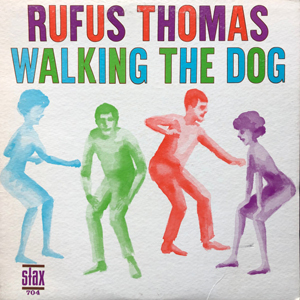
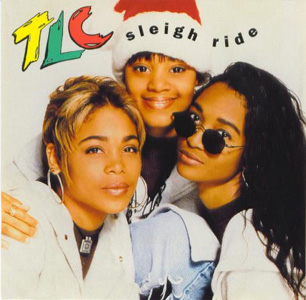

The year 1960 often gets passed over in rock history—a transitional time between the first burst of rock and roll and the cultural and musical revolutions just a few years away. But to call it sleepy is to miss the point. In fact, many of the year’s hits still reverberate today, not just as nostalgic touchstones but as enduring standards. “The Twist” by Chubby Checker launched a dance phenomenon that would ripple through pop culture for years. And “Save the Last Dance for Me” by the Drifters remains a masterclass in balancing heartbreak and sweetness—still played at weddings and in soundtracks, still finding new generations of listeners.
Ballads carried a lot of weight in 1960, and few did it better than Elvis Presley’s aching “Are You Lonesome Tonight?” or Roy Orbison’s “Only the Lonely,” which showcased his operatic vulnerability. Country narratives crossed into the mainstream with Marty Robbins’ “El Paso,” a story song that unspooled like a Western in miniature. At the other end of the spectrum, Maurice Williams & the Zodiacs’ “Stay” packed teenage yearning into a lean, irresistible one minute thirty-five seconds. And “Wonderful World” by Sam Cooke, though modest in ambition compared to some of his later work, remains a model of warmth and accessibility—a song that’s managed to feel timeless for more than six decades.
The sense of genre boundaries being tested is another hallmark of the year. Ray Charles brought gospel, blues, and pop together on his definitive reading of “Georgia on My Mind,” while Barrett Strong’s “Money (That’s What I Want)” helped lay the foundation for Motown’s impending ascent. Fats Domino’s “Walking to New Orleans” fused New Orleans rhythm with a subtle orchestral flourish, and Bobby Darin’s “Beyond the Sea” added a cosmopolitan swagger to the charts. These weren’t experiments for their own sake—they were evolutions of form, often rooted in deep tradition.
Rock’s wilder edges were still alive, though not always in the spotlight. Ike and Tina Turner’s “A Fool in Love” marked Tina’s explosive debut on the national stage—raw, commanding, and impossible to ignore. Instrumentals also carved out real estate, from the cinematic calm of Percy Faith’s “Theme From ‘A Summer Place’” to the proto-surf energy of The Ventures’ “Walk Don’t Run.” And in the novelty corner, “Itsy Bitsy Teeny Weeny Yellow Polka Dot Bikini” and “Alley Oop” proved that humor and absurdity had a place in the pop ecosystem.
So while 1960 may not have produced a defining movement, it certainly produced defining songs. These weren’t just placeholders between rock and roll’s rise and the British Invasion—they were records that resonated, sometimes quietly at first, but with a staying power that’s hard to deny. Whether filtered through covers, samples, soundtracks, or simple endurance, many of these tracks are still with us. It wasn’t a year of reinvention—but it was a year of remarkable staying power.
Follow Tunes Du Jour on Facebook
Follow me on Bluesky
Follow me on Instagram

Nineteen sixty-seven stands as a pivotal moment in the evolution of popular music, a year when artistic boundaries expanded dramatically across multiple genres. The musical landscape was transformed by groundbreaking releases from established artists and remarkable debuts from newcomers who would become legends. From Aretha Franklin’s powerful rendition of “Respect” to Pink Floyd’s psychedelic “See Emily Play,” the year produced an extraordinary collection of songs that continue to resonate decades later.
Soul music experienced a remarkable surge, with Aretha Franklin’s definitive version of “Respect” establishing her as the genre’s preeminent female voice. The raw emotion of Otis Redding’s “Try a Little Tenderness,” the exuberance of Jackie Wilson’s “(Your Love Keeps Lifting Me) Higher and Higher,” and the groove-driven “Soul Man” by Sam & Dave showcased the genre’s diversity and emotional range. Motown continued its dominance with several more hits for Diana Ross & the Supremes, including “The Happening,” while Smokey Robinson & the Miracles added “I Second That Emotion” to their growing catalog of hits. Marvin Gaye enjoyed multiple chart successes in 1967, with “Your Precious Love” being just one of several duets with Tammi Terrell that would define this productive period.
Meanwhile, rock music underwent seismic shifts as experimentation became the norm. The Beatles had an astonishingly prolific year, releasing the landmark album Sgt. Pepper’s Lonely Hearts Club Band while also producing standalone singles of remarkable quality like “Strawberry Fields Forever” and “Penny Lane.” The Doors’ extended opus “Light My Fire” and The Jimi Hendrix Experience’s revolutionary “Purple Haze” redefined what electric guitars could accomplish. The Rolling Stones contributed the melancholic beauty of “Ruby Tuesday,” which ironically became the bigger hit after radio stations deemed its intended A-side, “Let’s Spend the Night Together,” too controversial for airplay. The Who’s powerhouse “I Can See for Miles” and Buffalo Springfield’s protest anthem “For What It’s Worth” reflected rock’s increasing social consciousness. Perhaps most radical was The Velvet Underground’s “Heroin,” which brought an unprecedented rawness to discussions of addiction.
The year’s diversity extended far beyond these genres. The Monkees transcended their manufactured origins with the wistful “Daydream Believer,” while Van Morrison crafted the timeless “Brown Eyed Girl.” Bobbie Gentry’s Southern Gothic narrative “Ode to Billie Joe” demonstrated songwriting’s storytelling potential, and Procol Harum’s “A Whiter Shade of Pale” merged classical influences with rock sensibilities. Jefferson Airplane’s “White Rabbit” and Pink Floyd’s “See Emily Play” pushed psychedelic music further into the mainstream, establishing both bands as significant forces in the burgeoning psychedelic scene.
What made 1967 truly remarkable was how these diverse sounds coexisted and influenced each other, creating a musical conversation that crossed genre lines. This was the year when album-oriented rock solidified, soul music reached new emotional depths, and psychedelia flowered into mainstream consciousness. The thirty songs listed here barely scratch the surface of a year that saw popular music mature into an art form capable of expressing the full spectrum of human experience. Many artists were at their creative peaks, producing multiple hit singles and groundbreaking albums within this single exceptional year. These recordings capture a moment when musical innovation accelerated at an unprecedented pace, leaving an enduring legacy that continues to inspire and influence musicians more than half a century later.
Follow Tunes Du Jour on Facebook
Follow me on Instagram
Follow me on Bluesky


The year 1957 stands as a pivotal moment in the evolution of popular music, where rock ‘n’ roll, rhythm and blues, and even a touch of jazz converged to create a soundtrack that would resonate for decades. The hits of the year showcase not only the diverse range of genres but also the rise of some of the most influential voices in music history. A prime example is The Crickets’ “That’ll Be the Day,” a track that embodies the early rock ‘n’ roll spirit, blending Buddy Holly’s unmistakable vocal delivery with a catchy, driving beat. It’s a song that helped shape the sound of the era.
Elvis Presley’s “Jailhouse Rock” is another cornerstone of 1957, with its infectious energy and rebellious attitude. Presley was at the height of his powers, blending rock, blues, and a hint of swagger that would influence generations of performers. Meanwhile, Fats Domino’s “Blueberry Hill” offered a smoother, more melodic contrast. Domino’s effortless combination of rhythm and blues with pop sensibility helped bridge the gap between different audiences, securing his place as one of the genre’s pioneers.
But 1957 wasn’t just about rock ‘n’ roll—it was a year that embraced the full spectrum of American music. Take Harry Belafonte’s “Day-O (Banana Boat Song),” a calypso tune that brought Caribbean sounds to mainstream audiences. Similarly, the soulful ballad “You Send Me” by Sam Cooke introduced a voice that would soon come to define soul music. Cooke’s ability to combine gospel roots with pop elegance opened the doors for future R&B artists.
The variety of sounds continued with tracks like “Whole Lotta Shakin’ Goin’ On” by Jerry Lee Lewis and “Lucille” by Little Richard, both of which pushed the boundaries of what rock music could be with their raw energy and wild performances. On the other end of the spectrum, Ella Fitzgerald and Louis Armstrong’s rendition of “Summertime” added a jazzy sophistication to the year’s musical offerings, reminding listeners that timeless standards still had a place in the changing musical landscape.
Ninety fifty-seven was a year when rock ‘n’ roll solidified its place in popular culture, while artists from various genres continued to innovate and inspire. Whether through the heartfelt croon of Johnny Mathis on “Chances Are” or the rough-edged blues of Muddy Waters’ “Got My Mojo Working,” the music of this year still echoes today as a testament to a time when creativity flourished across musical boundaries.

