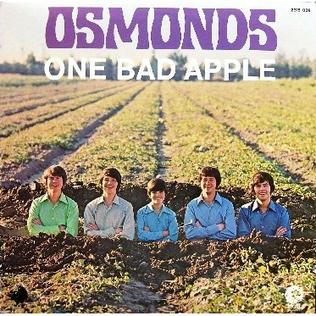
June is LGBTQ+ Pride Month. It’s Black Music Month. And it’s Fresh Fruit And Vegetables Month. Today’s playlist celebrates that last one.
Follow Tunes Du Jour on Facebook
Follow me on Bluesky
Follow me on Instagram

“Uptown Funk” opened 2015 by daring the rest of pop music to be as fun, and not much else quite matched it on that front — Mark Ronson and Bruno Mars had assembled something so precisely calibrated to delight that it almost didn’t seem fair. From there the year spread out in several directions at once. Drake’s “Hotline Bling” turned a mid-tempo, vaguely melancholic R&B track into a cultural event largely on the strength of its own awkwardness. The Weeknd crossed into genuine ubiquity with “Can’t Feel My Face” — a song that managed to be both a mainstream smash and, lyrically, a fairly dark piece of work. And then there was Adele, who released “Hello” in October and promptly reminded everyone that a big voice and a big melody, executed without a trace of irony, can still stop a room. The song broke streaming records almost immediately and felt, in its very straightforwardness, like a rebuke to the year’s more studied cool.
If one artist owned 2015 critically, it was Kendrick Lamar. To Pimp a Butterfly arrived in March and immediately reoriented conversations about what rap could do structurally and politically. “King Kunta” was the album’s most visceral punch — confrontational, funky, and specific in its references in ways that rewarded close listening. Elsewhere in hip-hop, Fetty Wap’s “Trap Queen” was one of the year’s most improbable success stories: a track rooted in trap music’s skeletal, skittering beats but softened by Fetty’s melodic looseness and a surprisingly affectionate lyrical premise. It peaked at number two on the Hot 100 and spent most of the year on the chart. Rihanna’s “Bitch Better Have My Money” drew from the same trap well but to a very different emotional effect — harder, more confrontational, and delivered with a precision that made the demand feel non-negotiable. Nicki Minaj, meanwhile, was doing something technically sharp on “Truffle Butter”: she announces early in her verse that she has a dozen flows, and then proceeds to demonstrate it, cycling through registers and tempos within a few bars in a way that most listeners registered as energy without necessarily clocking how much control it required.
Some of the year’s most durable music came from artists working at a slight remove from the mainstream. Carly Rae Jepsen’s Emotion became a critical darling almost in slow motion — “Run Away With Me” is the kind of opening track that makes you understand why people proselytize about a record. Tame Impala released Currents, and “Let It Happen” announced a shift toward synthesizers and a more expansive, unhurried sound that influenced a lot of what followed. Courtney Barnett’s “Pedestrian At Best” was wired and funny, running on nervous energy throughout. Grimes put out “Realiti” as a demo and it felt more fully realized than most finished records.
The year also had room for artists doing something closer to American roots music, though rarely in straightforward ways. Leon Bridges arrived with “Coming Home,” drawing on early soul so precisely that it occasionally felt like an exercise, but an extremely well-executed one. Alabama Shakes’ “Don’t Wanna Fight” was rawer and harder to categorize — Brittany Howard never let genre expectations dictate what she does, and her voice on that track does things that make those expectations feel beside the point. Father John Misty’s “Chateau Lobby #4” was a love song about his wife, filtered through deliberately bizarre imagery — satanic Christmas Eve, a wedding dress someone was probably murdered in — that somehow landed as genuinely romantic. Sufjan Stevens released Carrie & Lowell, and “Should Have Known Better” is among the most quietly devastating songs of the decade — it moves from grief into something that feels, carefully and without overselling it, like hope.
What holds this particular year together isn’t a unified sound but a productive restlessness. Run The Jewels brought Zack De La Rocha in for “Close Your Eyes (And Count to Fuck)” and made something that sounded urgently necessary. Skepta’s “Shutdown” was a reminder that grime had been building momentum for years and was finally getting its due internationally. Missy Elliott, back after a long absence, sounded exactly like herself on “WTF (Where They From)” — which is to say, like nobody else. Thundercat’s “Them Changes” and Julia Holter’s “Feel You” pointed toward where adventurous R&B and jazz-adjacent pop would head over the next several years. EL VY — the side project of National frontman Matt Berninger — closed things out with a song whose title alone (“Return to the Moon (Political Song for Didi Bloome to Sing, with Crescendo)”) tells you something about the year’s appetite for work that didn’t feel the need to make things simple.
Dig into thirty of the best offerings from 2015.
Follow Tunes Du Jour on Facebook
Follow me on Bluesky
Follow me on Instagram
Can you believe it’s already Water A Flower Day? This totally real holiday (I swear! Google it!) reminds us to water our plants, and while I think one should water their plants more than once per year, what do I know? I don’t have a green thumb. I’ll celebrate the holiday by tossing out the dried out houseplant sitting on my balcony and by listening to my playlist of songs with flowery words in their title.
Follow Tunes Du Jour on Facebook
Follow me on Bluesky
Follow me on Instagram
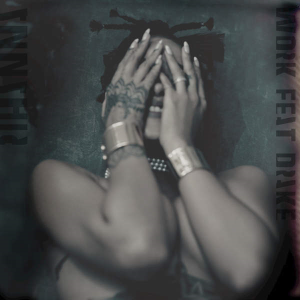
If you want to understand what 2016 felt like, you could do worse than just sitting down and listening to its music. It was a year when several of the biggest artists in the world released some of their most ambitious work, while a second tier of artists was quietly making records that would age just as well. The result is a body of music that holds up not because it captured a singular mood, but because it didn’t — it scattered in a dozen different directions at once, and that tension is exactly what makes it interesting to revisit.
The blockbusters were genuinely good. Beyoncé’s Lemonade arrived as a cultural event, and “Formation” was its defiant opening statement — grounded in Black Southern identity, uninterested in making anyone comfortable. Rihanna and Drake’s “Work” was inescapable in the best way, a dancehall-inflected earworm that somehow felt both effortless and precise. Drake also appeared on “One Dance,” a song that helped bring Afrobeats to mainstream Western audiences in a real way, with Wizkid and Kyla doing a lot of the heavy lifting that often went uncredited. Kanye West’s “Ultralight Beam” opened The Life of Pablo with a gospel choir and a Chance the Rapper verse that became one of the most talked-about moments in rap that year. These were pop and rap operating at a high level, and they knew it.
But some of the year’s most lasting music came from artists working in a quieter register. Solange’s “Cranes in the Sky” approached anxiety and avoidance with a kind of elegant restraint that her sister’s more maximalist work doesn’t always make room for. Frank Ocean finally released Blonde after years of anticipation, and “Nights” — with its midpoint beat switch — felt like the whole album in miniature. Mitski’s “Your Best American Girl” packed more emotional complexity into three and a half minutes than most artists manage in an entire record, and Angel Olsen’s “Shut Up Kiss Me” was a shot of pure guitar-rock energy from an artist who could do pretty much anything she turned her hand to. These songs didn’t dominate the charts, but they dominated year-end lists for good reason.
2016 was also a year when the world outside the speakers kept bleeding in. A Tribe Called Quest came out of a long hiatus to release We Got It from Here, and “We The People….” was an explicit, unambiguous political statement made by veterans who had earned the right to make it. YG and Nipsey Hussle’s “FDT” was rawer and angrier, a West Coast rap track that said plainly what a lot of people were thinking during a particularly ugly election season. ANOHNI’s “Drone Bomb Me,” from her album Hopelessness, took a different approach entirely — a beautiful, devastating song sung from the perspective of a bombing victim, using the form of a love song to make its critique land harder. And then there was Leonard Cohen’s “You Want It Darker,” released just weeks before his death, which felt less like a goodbye than a reckoning. David Bowie’s “Lazarus,” similarly, arrived as part of Blackstar and took on a different weight entirely after he died in January. Not every year loses two artists of that stature within months of each other.
What ties all of this together isn’t a single sound or theme, but a kind of seriousness of purpose — even in the party songs, even in the straightforwardly fun ones. Justin Timberlake’s “CAN’T STOP THE FEELING!” was designed to be a piece of pure joy, and it succeeded. “Broccoli” by D.R.A.M. featuring Lil Yachty was loose and goofy and charming in a way that didn’t need to be anything else. Car Seat Headrest’s “Drunk Drivers/Killer Whales” captured a specific kind of young-adult exhaustion with more precision than most rock music manages. Radiohead’s “Burn the Witch” was tightly wound and anxious. The xx’s “On Hold” was cool and minimal and aching. These songs don’t belong to the same world, and yet they all came from the same twelve months. That’s not a contradiction — that’s just what a genuinely good year in music looks like.
Follow Tunes Du Jour on Facebook
Follow me on Bluesky
Follow me on Instagram
Follow Tunes Du Jour on Facebook
Follow me on Bluesky
Follow me on Instagram

Looking at a list of songs from 2009 feels a bit like opening a time capsule. It’s a year that feels both incredibly recent and like a completely different era. The internet had firmly established itself as the primary engine of music discovery, yet the monoculture of massive, universally-known hits was still holding on. It was a year of distinct, confident sounds, where different genres weren’t just blending together, but thriving in their own parallel lanes. From stadium-sized anthems to bedroom-born electronic experiments, the music of 2009 was defined by a remarkable breadth of creativity.
One of the most prominent stories of the year was the flourishing of indie rock. This wasn’t the scrappy, underground sound of years past; this was indie at its most ambitious and critically adored. You had the intricate, harmony-drenched compositions of Grizzly Bear on “Two Weeks” and the hypnotic, looping bliss of Animal Collective’s “My Girls.” These were songs that rewarded close listening. Elsewhere, artists like Bat For Lashes (“Daniel”) and Dirty Projectors (“Stillness Is The Move”) were crafting their own unique sonic worlds, while bands like the Yeah Yeah Yeahs (“Zero”) and Japandroids (“Young Hearts Spark Fire”) delivered pure, cathartic energy. It was a moment where “alternative” music felt like it was setting the cultural agenda.
Meanwhile, the top of the charts was being shaped by bold new directions in pop and hip-hop. Lady Gaga’s “Bad Romance” wasn’t just a song; it was a high-concept art project, signaling a new level of theatricality in pop music. This stood alongside the effortless, feel-good charm of Miley Cyrus’s “Party in the U.S.A.” and Kelly Clarkson’s powerhouse hit-making on “My Life Would Suck Without You.” In hip-hop, the genre’s emotional palette was expanding dramatically. You had Jay-Z and Alicia Keys delivering a timeless, triumphant anthem with “Empire State Of Mind,” while at the same time, Kanye West’s auto-tuned melancholy on “Heartless” and Kid Cudi’s spacey introspection on “Day ‘N’ Nite” were paving the way for a more vulnerable sound. The arrival of Drake with “Best I Ever Had” confirmed this shift toward melody and emotional openness was here to stay.
This wasn’t to say that straightforward rock and roll had been left behind. On the contrary, it was a year of massive, unifying rock anthems. Kings Of Leon reached their popular peak with “Use Somebody,” a song that seemed to be playing in every stadium and on every radio station in the world. The UK, meanwhile, was providing its own distinct contributions, from the grand, theatrical rebellion of Muse’s “Uprising” and the clever songwriting of Arctic Monkeys on “Cornerstone” to the dance-floor-ready energy of Franz Ferdinand’s “Ulysses.”
Looking back at this collection of songs, what’s most striking is the confidence of it all. It was a year where artists were creating fully realized worlds for listeners to step into. Whether it was the raw nerve of The Ting Tings, the grime-infused electro of Dizzee Rascal’s “Bonkers,” or the classic synth-pop of Pet Shop Boys, each track feels like a distinct statement. It was a time when you could have a playlist that jumped from an introspective indie ballad to a global pop phenomenon, and the whole thing made perfect sense. It was the sound of several different musical futures all happening at once.
Follow Tunes Du Jour on Facebook
Follow me on Bluesky
Follow me on Instagram

What makes a year in music stick with you? Sometimes it’s a single, dominant sound, but more often, it’s the feeling of multiple, vibrant conversations happening all at once. Looking back at 2018 through a playlist of its key songs, it becomes clear it was a year defined less by a unified trend and more by the strength of its distinct, parallel movements. From event-level releases that captured the cultural zeitgeist to deeply personal songwriting that quietly demanded our attention, the year offered a compelling range of expressions.
It’s impossible to talk about 2018 without acknowledging the sheer creative and commercial force of hip-hop. The genre was the site of some of the year’s most ambitious projects. Childish Gambino’s “This Is America” and The Carters’ “APESHIT” used the music video as a powerful medium for commentary, creating moments that were analyzed far beyond music blogs. At the same time, the genre showcased its sonic breadth. You had the elaborate, multi-part production of Travis Scott’s “SICKO MODE,” the classic, sample-heavy precision of Pusha T’s “If You Know You Know,” and the New Orleans bounce of Drake’s “Nice For What.” With Kendrick Lamar lending his acclaimed lyricism to artists as different as Anderson .Paak, Lil Wayne, and SZA, his presence served as a throughline of quality, underscoring the genre’s central role.
While hip-hop drove many conversations, pop music was busy broadening its own definition. Artists delivered hits by looking outward for inspiration. Janelle Monáe’s “Make Me Feel” was a masterclass in taut, Prince-indebted funk, while Kacey Musgraves blended country sensibilities with a disco beat on the delightfully sly “High Horse.” This spirit of connection was also felt on a global scale. The massive success of Cardi B’s “I Like It” and Camila Cabello’s “Havana” cemented the power of Latin rhythms in the mainstream, and ROSALÍA’s “MALAMENTE” introduced her modern take on flamenco to a worldwide audience, proving that a compelling sound needs no translation.
Alongside these high-energy sounds, a potent strain of rock and indie music thrived on sharp, unflinching songwriting. This was the year of the specific, personal narrative. Artists like Mitski (“Nobody”), Lucy Dacus (“Night Shift”), Phoebe Bridgers (“Motion Sickness”), and Snail Mail (“Pristine”) earned devoted followings by writing with startling clarity about anxiety, heartbreak, and identity. Their work wasn’t about grand statements but about the power of a perfectly articulated observation. In a similar vein, Courtney Barnett’s “Nameless, Faceless” turned everyday frustrations into a pointed critique, showing that even the most direct rock song could carry a vital message.
Ultimately, 2018 wasn’t a year where everything blended together. Instead, it was a year of powerful, coexisting identities. The charts were filled with innovative pop and globally-influenced hits, hip-hop continued to be a space for both blockbuster production and sharp social critique, and a wave of songwriters made their mark with profoundly personal work. From the confident breakup anthem of Ariana Grande’s “thank u, next” to the cathartic release of Robyn’s “Honey,” the music of 2018 offered a rich and varied landscape, setting the stage for many of the sounds and artists we’re still listening to today.
Follow Tunes Du Jour on Facebook
Follow me on Bluesky
Follow me on Instagram

Today’s playlist includes a few tracks from Janelle Monáe, who celebrates a birthday today.

Eminem, born Marshall Mathers, has been a dominant force in hip-hop for over two decades. Rising to fame in the late 1990s with his major-label debut The Slim Shady LP, Eminem quickly became known for his rapid-fire delivery, complex rhyme schemes, and controversial lyrics. His subsequent albums, including The Marshall Mathers LP and The Eminem Show, solidified his status as one of the best-selling artists of the 21st century.
Throughout his career, Eminem has produced numerous chart-topping hits. Tracks like “Lose Yourself,” “The Real Slim Shady,” and “Without Me” showcased his ability to blend catchy hooks with sharp lyricism. His storytelling abilities, evident in songs like “Stan” and “Mockingbird,” have set a high bar for narrative rap. Eminem’s impact on the genre extends beyond his solo work. His collaborations have often resulted in memorable tracks, from “Forgot About Dre” with Dr. Dre to “Forever” alongside Drake, Kanye West, and Lil Wayne. His work with D12 on songs like “Purple Pills” and “My Band” demonstrates his ability to work within a group dynamic.
Despite his undeniable success and influence, Eminem’s career has been marked by persistent controversy and criticism. Many critics point to the misogynistic and homophobic content in some of his lyrics. Songs such as “Guilty Conscience” and “97′ Bonnie & Clyde” have been criticized for their graphic depictions of violence against women.
The problematic aspects of Eminem’s work extend beyond specific themes. Some listeners find his humor juvenile and distasteful, citing songs like “Just Lose It” as examples. Critics argue that despite his technical prowess, Eminem’s core themes and style have remained largely unchanged over the years, suggesting a lack of artistic growth.
These ongoing debates around Eminem’s content raise important questions about artistic expression, social responsibility, and the expectations placed on artists as they progress in their careers. Despite the criticisms, Eminem maintains a significant fanbase and continues to be a prominent figure in hip-hop. Whether Eminem can continue to evolve and remain relevant in a rapidly changing music industry remains a topic of discussion among fans and critics alike.