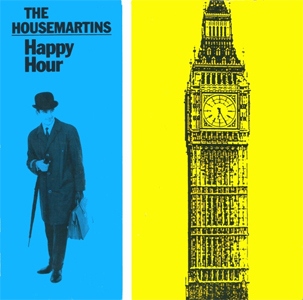
Today is World Bartender Day, and to celebrate, here are 30 alcohol-inspired tunes. I’ll drink to that!
Follow Tunes Du Jour on Facebook
Follow me on Bluesky
Follow me on Instagram

Looking at a list of songs from 2009 feels a bit like opening a time capsule. It’s a year that feels both incredibly recent and like a completely different era. The internet had firmly established itself as the primary engine of music discovery, yet the monoculture of massive, universally-known hits was still holding on. It was a year of distinct, confident sounds, where different genres weren’t just blending together, but thriving in their own parallel lanes. From stadium-sized anthems to bedroom-born electronic experiments, the music of 2009 was defined by a remarkable breadth of creativity.
One of the most prominent stories of the year was the flourishing of indie rock. This wasn’t the scrappy, underground sound of years past; this was indie at its most ambitious and critically adored. You had the intricate, harmony-drenched compositions of Grizzly Bear on “Two Weeks” and the hypnotic, looping bliss of Animal Collective’s “My Girls.” These were songs that rewarded close listening. Elsewhere, artists like Bat For Lashes (“Daniel”) and Dirty Projectors (“Stillness Is The Move”) were crafting their own unique sonic worlds, while bands like the Yeah Yeah Yeahs (“Zero”) and Japandroids (“Young Hearts Spark Fire”) delivered pure, cathartic energy. It was a moment where “alternative” music felt like it was setting the cultural agenda.
Meanwhile, the top of the charts was being shaped by bold new directions in pop and hip-hop. Lady Gaga’s “Bad Romance” wasn’t just a song; it was a high-concept art project, signaling a new level of theatricality in pop music. This stood alongside the effortless, feel-good charm of Miley Cyrus’s “Party in the U.S.A.” and Kelly Clarkson’s powerhouse hit-making on “My Life Would Suck Without You.” In hip-hop, the genre’s emotional palette was expanding dramatically. You had Jay-Z and Alicia Keys delivering a timeless, triumphant anthem with “Empire State Of Mind,” while at the same time, Kanye West’s auto-tuned melancholy on “Heartless” and Kid Cudi’s spacey introspection on “Day ‘N’ Nite” were paving the way for a more vulnerable sound. The arrival of Drake with “Best I Ever Had” confirmed this shift toward melody and emotional openness was here to stay.
This wasn’t to say that straightforward rock and roll had been left behind. On the contrary, it was a year of massive, unifying rock anthems. Kings Of Leon reached their popular peak with “Use Somebody,” a song that seemed to be playing in every stadium and on every radio station in the world. The UK, meanwhile, was providing its own distinct contributions, from the grand, theatrical rebellion of Muse’s “Uprising” and the clever songwriting of Arctic Monkeys on “Cornerstone” to the dance-floor-ready energy of Franz Ferdinand’s “Ulysses.”
Looking back at this collection of songs, what’s most striking is the confidence of it all. It was a year where artists were creating fully realized worlds for listeners to step into. Whether it was the raw nerve of The Ting Tings, the grime-infused electro of Dizzee Rascal’s “Bonkers,” or the classic synth-pop of Pet Shop Boys, each track feels like a distinct statement. It was a time when you could have a playlist that jumped from an introspective indie ballad to a global pop phenomenon, and the whole thing made perfect sense. It was the sound of several different musical futures all happening at once.
Follow Tunes Du Jour on Facebook
Follow me on Bluesky
Follow me on Instagram
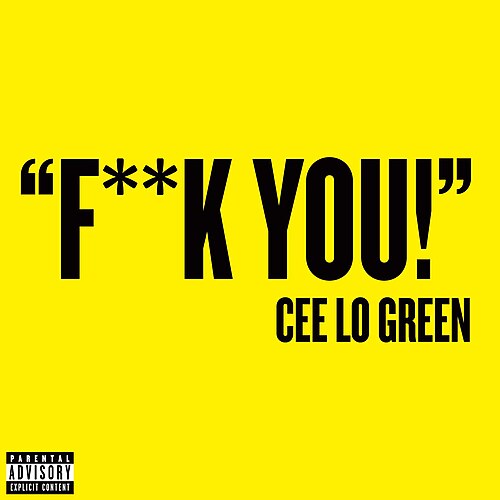
Today is Have A Bad Day Day. Per holidayinsights.com, as a greeting today, you are encouraged people to wish people a lousy or terrible day.
I think wishing a terrible day to someone to their face might put you in danger. Instead, I choose to celebrate with song. If someone were to hear one of the songs on my Have A Bad Day Day playlist, they’d know that somebody out there wants their day to suck.
Follow Tunes Du Jour on Facebook
Follow me on Bluesky
Follow me on Instagram
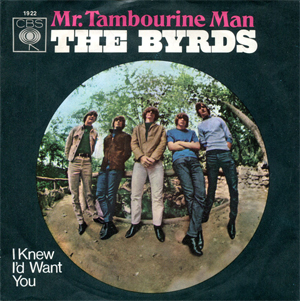
One way to measure a songwriter’s reach is not by how often their work is covered, but how widely. The playlist below spans decades, genres, and sensibilities—from Adele to The Dead Weather, from Johnny Cash to the Neville Brothers—and all roads lead back to Bob Dylan. This is not just a reflection of his prominence; it’s a testament to the adaptability of his writing. Dylan’s lyrics aren’t locked into one style or moment—they hold up when filtered through gospel, punk, glam, folk, or soul. His songs invite reimagining because they’re grounded in strong narrative bones and emotional honesty, not ornamental frills.
Consider the different shades of “All Along the Watchtower.” Dylan’s original version is stark and cryptic; Hendrix turned it into an electrified storm. Likewise, “I Shall Be Released,” rendered with hushed reverence by The Band, has the structure of a gospel hymn but the ambiguity of a fable. “Make You Feel My Love,” one of Dylan’s later compositions, found new life in Adele’s version—proof that his songwriting didn’t peak in the ’60s, but simply evolved. His voice as a writer has always been the constant: a blend of plainspoken wisdom, sly humor, and a deep sense of historical and emotional context.
It’s notable, too, how Dylan’s songs seem to absorb the character of the performer. When Elvis Presley sings “Tomorrow Is a Long Time,” it feels like a Southern ballad. When PJ Harvey takes on “Highway 61 Revisited,” it becomes something raw and jagged. Nina Simone’s version of “Just Like Tom Thumb’s Blues” brings out a haunted intensity not present in Dylan’s own delivery. That elasticity points to a rare kind of craftsmanship—songs written with enough specificity to be meaningful, but enough openness to be inhabited.
Even in unexpected settings, Dylan’s words linger. Tom Petty co-wrote the lyrics to “Jammin’ Me” with him, a pointed pop-rock critique of media saturation. Patti Smith’s “Changing of the Guards” channels the mystical imagery and layered storytelling that Dylan deployed throughout the ’70s. And when The Specials tear into “Maggie’s Farm,” it becomes a statement of punk-era defiance. These aren’t nostalgia pieces—they’re songs that meet each era on its own terms.
Dylan’s catalog isn’t just influential; it’s usable. His songs function as cultural currency, endlessly exchangeable yet retaining value. Whether you hear him through Joan Osborne’s gothic reading of “Man in the Long Black Coat” or the crystalline harmonies of Peter, Paul and Mary’s “Blowin’ in the Wind,” what’s most striking is not just who sings Dylan—but what his songs reveal when they do.
Follow Tunes Du Jour on Facebook
Follow me on Bluesky
Follow me on Instagram
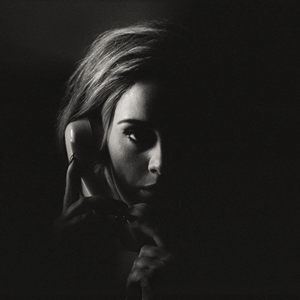
Few artists in the 21st century have managed to make vulnerability feel as commanding as Adele does. Emerging from North London with her debut album 19 in 2008, she quickly distinguished herself with a voice that carried both technical precision and emotional depth. The songs weren’t flashy or heavily produced; instead, they leaned on classic soul and singer-songwriter traditions, framing heartbreak in ways that felt both timeless and personal.
What’s notable about Adele’s rise is how she has consistently succeeded on her own terms. At a time when pop music was increasingly leaning into EDM and maximalist production, she held firm with piano ballads and slow-burning anthems. Her second album, 21, became a global phenomenon not because it chased trends, but because it tapped into something universal—loss, regret, and the ache of moving on. “Someone Like You” and “Rolling in the Deep” didn’t just climb charts; they lingered, prompting singalongs in arenas and solo tears in bedrooms alike.
Over the course of her career, Adele has kept a relatively low profile between releases, letting the music—not a nonstop media presence—do the heavy lifting. Each album (25, and more recently, 30) has arrived as a kind of chapter marker, reflecting not just shifts in her personal life but broader changes in how we listen and connect with music. Her songwriting has grown more introspective with time, more willing to sit with ambiguity rather than resolve it neatly.
Despite the accolades and massive sales, Adele has remained surprisingly unvarnished in public. There’s a candor to her interviews and a grounded quality to her stage presence that seem to resonate just as strongly as her lyrics. In an industry often defined by reinvention, Adele’s appeal may lie in her consistency—both in her sound and in her refusal to be anything but herself.
Follow Tunes Du Jour on Facebook
Follow me on Bluesky
Follow me on Instagram

Adele was born on this date in 1988. Lots of songs from her on today’s playlist.
https://open.spotify.com/embed/playlist/6QfWHrSbam16XdbSxHIDGz?utm_source=generator
Follow Tunes du Jour on Facebook
Follow Tunes du Jour on Twitter
Follow me on Instagram


Congratulations to Megan Thee Stallion, who has placed a song in my year end top five every year since 2019. Her “Her” is my number two song of ’22, kept from number one by Beyoncé, who guested on the remix of MTS’s “Savage,” my number 4 song of 2020. 2022 was a year that left me wanting, so my top 100 has 92 songs. Here they are:
Follow Tunes du Jour on Facebook
Follow Tunes du Jour on Twitter
Follow me on Instagram
