Tunes Du Jour Celebrates Presidents’ Day

From folk protest to funk, punk rock to hip-hop, this eclectic Presidents’ Day playlist spans decades of American political commentary through the lens of popular music. Not every commander-in-chief makes an appearance—some presidencies inspired little musical response, while others (particularly Kennedy, Reagan, and George W. Bush) sparked entire catalogs of artistic reaction. The collection moves chronologically through the office holders, though the songs themselves range from contemporary responses to retrospective reflections, capturing how each president’s legacy resonated with musicians of different eras and genres. Whether celebratory, satirical, or scathing, these tracks remind us that popular music has always served as a vital form of political discourse, holding power accountable and giving voice to the frustrations, hopes, and criticisms of the American people.


James K. Polk – They Might Be Giants
An infectiously catchy history lesson that chronicles Polk’s ambitious single-term presidency and his campaign promises to expand American territory.

Abie Baby – Hair Original Cast
This number from the groundbreaking musical Hair celebrates Abraham Lincoln’s legacy of emancipation with psychedelic 1960s exuberance.

Louisiana 1927 – Randy Newman
Newman’s haunting ballad captures the devastating Mississippi River flood during Calvin Coolidge’s administration and the government’s inadequate response.

We’d Like To Thank You Herbert Hoover – Annie Original Broadway Cast
A Depression-era shantytown chorus sarcastically thanks Hoover for the economic catastrophe that left Americans destitute and homeless.

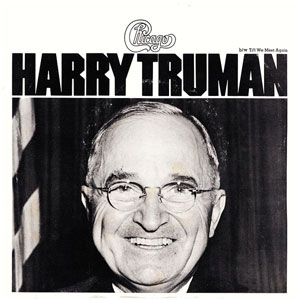
Harry Truman – Chicago
This gentle rock ballad uses Truman as a symbol of simpler times and American authenticity before the cynicism of later decades.

Eisenhower Blues – The Costello Show Feat. The Attractions & Confederates
Costello’s cheeky cover plays with 1950s nostalgia while questioning the era’s conformity and Cold War anxieties.

Murder Most Foul – Bob Dylan
Dylan’s seventeen-minute meditation on the Kennedy assassination weaves together American mythology, cultural memory, and the loss of innocence.

President Kennedy – Eddie Izzard
The British comedian takes on the misunderstanding that President Kennedy declared himself to be a doughnut.

The Day John Kennedy Died – Lou Reed
Reed’s stark, melancholic reflection places Kennedy’s death in the context of personal memory and national trauma.

Lyndon Johnson Told The Nation – Tom Paxton
Paxton’s folk protest song sardonically captures LBJ’s escalation of the Vietnam War and the duplicity of official statements.

You Haven’t Done Nothin’ – Stevie Wonder
Wonder’s funky, cutting critique of Nixon’s broken promises and political corruption became an anthem of Watergate-era disillusionment.

Impeach the President – Honey Drippers
This funk instrumental’s famous drum break refers to Nixon, though it’s become better known as one of hip-hop’s most sampled beats.

Funky President (People It’s Bad) – James Brown
The Godfather of Soul delivers hard-hitting social commentary on economic hardship during the Ford administration.

(We Don’t Need This) Fascist Groove Thang – Heaven 17
British synth-pop warriors take aim at Reagan’s cowboy diplomacy and the early 1980s conservative political climate.

Ronnie, Talk to Russia – Prince
Prince’s Cold War plea urges Reagan to pursue diplomacy and nuclear disarmament before it’s too late.

Bonzo Goes to Bitburg – Ramones
The punk legends blast Reagan’s controversial visit to a German cemetery containing SS graves, delivered with their signature three-chord fury.

Old Mother Reagan – Violent Femmes
The Femmes’ acoustic punk assault critiques Reagan’s policies with youthful anger and folk-punk energy.

Reagan – Killer Mike
The Atlanta rapper delivers a scathing indictment of Reagan’s policies on race, drugs, and economics decades after leaving office.

5 Minutes (B-B-B Bombing Mix) – Bonzo Goes To Washington
This mashup satirizes Reagan’s notorious hot-mic joke about bombing Russia by splicing it with dance beats.

If Reagan Played Disco – Minutemen
The iconoclastic punk band imagines an absurdist alternate reality with their typically angular, political edge.

Fuck You – Lily Allen
Allen’s chipper, profanity-laced dismissal of George W. Bush was initially posted on her MySpace page under the title “Guess Who Batman.”

When the President Talks to God – Bright Eyes
Conor Oberst’s devastating critique questions Bush’s certainty and religious justifications during the Iraq War.

Mosh – Eminem
Eminem’s urgent call to political action rallied young voters against Bush’s policies in the 2004 election.

Let’s Impeach the President – Neil Young
Young’s protest rocker methodically lists grievances against Bush with straightforward outrage and rock-and-roll directness.

I’m With Stupid – Pet Shop Boys
The synth-pop duo skewers Tony Blair’s subservience to Bush’s foreign policy agenda with biting British wit.

Dear Mr. President – P!nk featuring Indigo Girls
P!nk’s open letter challenges Bush to walk in others’ shoes and confront the human cost of his decisions.

Obama – ANOHNI
This haunting piece wrestles with disappointment in Obama’s continuation of drone warfare despite his hopeful campaign promises.

Fuck Donald Trump – YG & Nipsey Hussle
The West Coast rappers deliver an unfiltered denunciation of Trump’s rhetoric and policies with raw urgency.

The President Can’t Read – Amy Rigby
Rigby’s folk-rock takedown questions Trump’s competence and intellectual curiosity with pointed observations.

Streets of Minneapolis – Bruce Springsteen
The Boss’s response to the killings of American citizens by US Immigration and Customs Enforcement under directions from President Trump.

Follow Tunes Du Jour on Facebook

Follow me on Bluesky

Follow me on Instagram
Tunes Du Jour Presents Peter Gabriel

To listen to a collection of Peter Gabriel’s music is to trace the path of an artist in constant evolution. Looking at a Peter Gabriel playlist, you see more than just a sequence of songs; you see a distinct artistic trajectory. The journey begins in one world—the elaborate, fantastical realm of early Genesis—and lands squarely in another, a place where personal confession, global consciousness, and pop songcraft all coexist. It’s a progression from telling epic fables to exploring the complexities of the human heart and the wider world we all inhabit.

In the beginning, Gabriel was a storyteller of the grand and mythological. As the frontman for Genesis, his role was as much theatrical director as it was a singer. Songs like “Supper’s Ready” and “The Musical Box” aren’t just tunes; they are sprawling, multi-part narratives filled with intricate characters and dramatic shifts. The sound, as heard in tracks like “Firth Of Fifth” or “Dancing With The Moonlight Knight,” is dense and ambitious, built on complex arrangements that gave progressive rock its reputation. This was a period of high concept and elaborate fantasy, setting a foundation of immense creative scope.

The departure from that world is announced with the unmistakable opening of “Solsbury Hill.” It is the sound of an artist stepping out on his own, both literally and figuratively. His early solo work shows an immediate pivot. While the ambition remains, the subject matter changes. The focus shifts from fictional lore to more grounded concerns: the anxieties of the Cold War in “Games Without Frontiers” and the stark political reality of apartheid in “Biko.” Musically, he began exploring new textures, incorporating percussive, synth-driven sounds in tracks like “Shock the Monkey” that felt urgent and intensely modern.

This exploration led Gabriel to a period of massive commercial success that also deepened his artistic identity. By the mid-1980s, he had mastered a way to blend deeply personal themes with irresistible pop hooks. The playlist is rich with these moments: the soul-infused joy of “Sledgehammer,” the raw emotional vulnerability of “Don’t Give Up” with Kate Bush, and the enduring, open-hearted plea of “In Your Eyes.” It was during this time that his interest in music from around the globe became a core part of his sound, most notably on “Shakin’ The Tree,” a collaboration with Senegalese singer Youssou N’Dour that felt both celebratory and authentic.

Later, the lens seemed to turn even further inward. Songs like “Digging In The Dirt” and “Blood of Eden” offer a raw, unflinching look at personal relationships and internal struggles. The production is polished, but the emotions are unvarnished. Even a seemingly playful track like “Kiss That Frog” is rooted in psychological exploration. This phase shows an artist less concerned with creating a spectacle and more focused on honest communication. Listening to these tracks alongside his Genesis work reveals the full arc: a journey from creating fictional worlds to bravely navigating the real one, with all its political injustices, personal heartaches, and moments of profound connection.

Follow Tunes Du Jour on Facebook

Follow me on Bluesky

Follow me on Instagram
Tunes Du Jour Presents Carole King

If you were to press play on a random selection of American pop hits from the 1960s and 70s, you’d have a surprisingly high chance of landing on a song written by Carole King. What’s more remarkable is that you might not even realize it. For many, her name is synonymous with the landmark 1971 album Tapestry, a defining work of the singer-songwriter era. But listening to a broader collection of her work reveals a fascinating story—not of one career, but of two distinct, equally influential chapters in music history.

The first chapter begins in the fast-paced world of New York’s Brill Building, where King, alongside her then-husband and lyricist Gerry Goffin, became a hit-making powerhouse for other artists. This wasn’t about personal expression; it was about craftsmanship. A quick look at the playlist shows the sheer range of their output. They penned the earnest plea of The Shirelles’ “Will You Love Me Tomorrow,” the youthful optimism of Bobby Vee’s “Take Good Care Of My Baby,” and the sophisticated yearning of The Drifters’ “Up on the Roof.” They could deliver dance crazes like Little Eva’s “The Loco-Motion” and even provide grittier material for bands like The Animals with “Don’t Bring Me Down,” proving their ability to adapt to nearly any voice or style.

But then, something shifted. As the 60s gave way to the 70s, the focus in popular music turned inward, favoring a more personal and authentic voice. This cultural change set the stage for King’s second career: stepping out from behind the curtain and into the spotlight. The playlist captures this transformation perfectly. Suddenly, we hear King’s own warm, unadorned voice on tracks like “It’s Too Late” and “So Far Away.” The songs, now with her own lyrics, feel more intimate and reflective. The production is stripped back, centering on her expressive piano playing, creating a direct connection with the listener that felt entirely new.

Perhaps nothing demonstrates the unique strength of her songwriting better than the way her compositions became signature anthems for other legends. Aretha Franklin’s definitive 1967 performance of “(You Make Me Feel Like) A Natural Woman” had already cemented the song as a timeless classic years before King would record her own version for Tapestry. Then, in the very same year her solo album became a phenomenon, James Taylor’s comforting rendition of “You’ve Got A Friend” became an equally iconic, chart-topping hit. It’s a rare artist who can not only define an era with their own voice but also provide the material for other great artists to do the same.

Exploring this collection of songs is like walking through a gallery where the same artist is responsible for both the grand, public murals and the quiet, personal portraits. From the effervescent pop of The Chiffons’ “One Fine Day” to the introspective mood of her own title track, “Tapestry,” the common thread is an undeniable gift for melody and a deep understanding of human feeling. Carole King wasn’t just a singer who wrote her own material; she was a foundational architect of pop music who, when the time was right, simply decided to build a home for herself.

Follow Tunes Du Jour on Facebook

Follow me on Bluesky

Follow me on Instagram
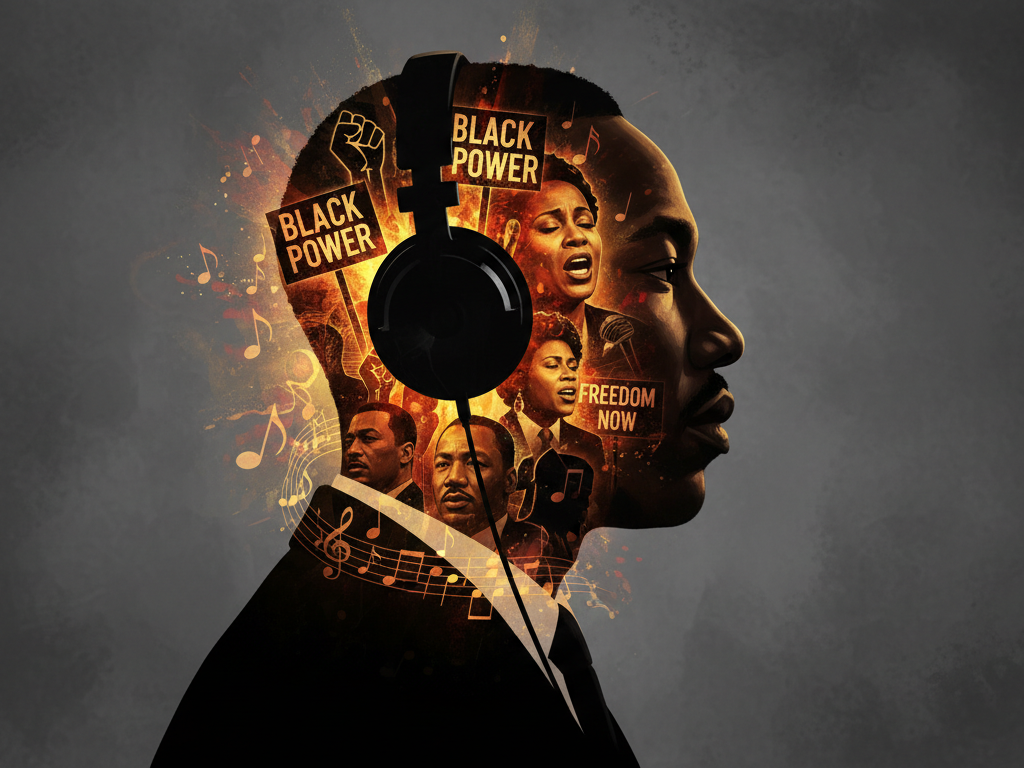
Tunes Du Jour Celebrates Black History Month

Music has always been more than just a backdrop to history; it is a living, breathing part of it. It’s the coded message in a spiritual, the roar of protest in a soul anthem, and the unshakeable pride in a hip-hop verse. This playlist was curated with that spirit in mind. It is not just a collection of songs by Black artists or about Black experiences, but a deliberate sonic journey where each track serves as a chapter in the long, complex, and powerful story of Black history. From the harrowing journey of the Middle Passage in The O’Jays’ “Ship Ahoy” to the defiant celebration of identity in Beyoncé’s “BROWN SKIN GIRL,” every song here is a direct link to a person, an event, a movement, or some combination of the three.

The running order is intentional, designed to guide the listener through a powerful emotional and historical arc. We begin in the depths of oppression, bearing witness to the brutality of slavery, the terror of Jim Crow, and the pain of foundational betrayals. From that bitter root, the playlist pivots to the fire of resistance. It chronicles the fight for Civil Rights in America and the parallel global struggle against apartheid, honoring the heroes who led the charge and the anthems that fueled their movements. The narrative then moves into the modern era, where the fight for justice continues in the face of new challenges, chronicled with unflinching honesty by artists from Bruce Springsteen to Janelle Monáe.

This journey through pain and protest ultimately leads to a place of empowerment, joy, and hard-won hope. The final act of the playlist is a celebration of contribution, a lesson in self-love for future generations, and a recognition of monumental triumphs. It culminates in the profound resilience of Aretha Franklin’s “A Change Is Gonna Come”—a final, stirring testament to an unshakeable faith in the future. This Black History Month, we invite you to not just hear these songs, but to truly listen. Follow the stories, look up the names, and feel the weight and glory of the history they carry. Let the rhythms move you, but let the histories change you.

Follow Tunes Du Jour on Facebook
Follow me on Bluesky
Follow me on Instagram
Tunes Du Jour Presents Crosby, Stills & Nash

The term “supergroup” gets thrown around a lot, often describing a short-lived project more notable for its lineup than its output. But with Crosby, Stills & Nash, the label felt different. This wasn’t just a collection of famous musicians; it was a genuine fusion of distinct, fully-formed artistic voices. Listening to a playlist of their work is like tracing a map back to its origins. To truly understand a song like “Suite: Judy Blue Eyes,” you first have to appreciate where its creators came from: David Crosby’s expansive, harmony-rich work with The Byrds, Stephen Stills’s fiery folk-rock with Buffalo Springfield, and Graham Nash’s pristine pop sensibility with The Hollies.

Before they ever sang a note together, each member had already left an indelible mark on the 1960s. The playlist gives us a clear picture of the ingredients they brought to the table. From The Byrds, you can hear Crosby pushing boundaries with the psychedelic exploration of “Eight Miles High” and the moody, jazz-inflected atmosphere of “Everybody’s Been Burned.” From Buffalo Springfield, Stills emerges as a formidable guitarist and a writer of anthems, penning the definitive protest song “For What It’s Worth” and the intricate, multi-part “Bluebird.” And from The Hollies, Nash provided the soaring high harmony and pop craftsmanship evident on tracks like “Carrie Anne” and “On A Carousel,” a perfect, bright counterpoint to the others’ more rugged styles.

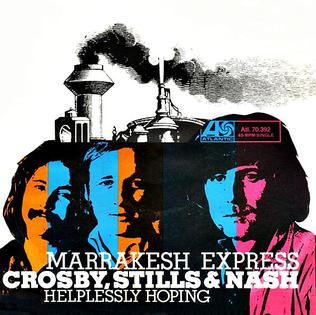
When these three voices first combined, the result was an entirely new chemical reaction in popular music. The intricate vocal arrangements became their signature. A song like “Suite: Judy Blue Eyes” isn’t just a long track; it’s an ambitious, multi-movement piece that relies entirely on the interplay of their voices. This new entity could accommodate Nash’s breezy travelogue “Marrakesh Express” on the same album as the haunting, allegorical “Wooden Ships,” a song that feels heavier and more complex. It was this ability to contain different perspectives within one cohesive sound that defined their initial success.

Of course, the story soon expanded. The addition of Neil Young, Stills’s former bandmate, added a darker, more unpredictable edge to the group, a change you can hear immediately in the raw vulnerability of “Almost Cut My Hair” or the generational power of “Woodstock.” Yet even as a quartet, they could produce moments of profound gentleness, like Nash’s portrait of domestic bliss in “Our House” or the timeless advice of “Teach Your Children.” The solo efforts included on the playlist further highlight their individuality: Stills’s direct, blues-rock command to “Love The One You’re With,” Crosby’s ethereal musings in “Laughing,” and Nash’s political rallying cry in “Chicago.”

Decades later, what endures is the sound of those voices. It’s a sound that could carry later hits like the reflective “Wasted on the Way” and the nautical, evocative “Southern Cross.” Crosby, Stills & Nash—with or without Young—was a remarkable convergence. It was a project born from friendship and a shared desire to create something that none of them could have achieved alone. Their legacy isn’t just in the hit singles, but in the creation of a sound so specific and intricately constructed that it remains instantly recognizable from the very first note.

Follow Tunes Du Jour on Facebook

Follow me on Bluesky

Follow me on Instagram

Tunes Du Jour Presents 1996

Looking back at the music of 1996, what stands out isn’t just the diversity of sounds, but how confidently artists were breaking free from the constraints that had defined their predecessors. This was the year Oasis gave us “Wonderwall,” a song that somehow managed to be both anthemic and intimate, while across the Atlantic, The Smashing Pumpkins stripped away the grunge aggression for the wistful nostalgia of “1979.” The rock landscape was splintering in fascinating ways—Radiohead’s “High and Dry” hinted at the experimental evolution to come, Garbage fused electronic production with alternative rock attitude on “Stupid Girl,” and Marilyn Manson pushed industrial metal into the mainstream with “The Beautiful People.” These weren’t artists following a template; they were actively rewriting what their genres could be.

Hip-hop in 1996 was experiencing one of its most creative and commercially successful periods. 2Pac’s “California Love” brought West Coast rap to peak visibility, while Busta Rhymes announced himself as a force with the frenetic energy of “Woo Hah!! Got You All in Check.” Fugees demonstrated how hip-hop could incorporate soul, reggae, and pop sensibilities on “Ready Or Not,” and Blackstreet’s “No Diggity” created a template for R&B-rap fusion that would influence the genre for years to come. Even Coolio, riding high from previous success, was experimenting with different flows and production approaches. The genre wasn’t monolithic—it was a conversation between different regional scenes, production styles, and lyrical approaches.

The year also belonged to artists who defied easy categorization. Björk’s “Hyper-Ballad” merged electronic experimentation with raw emotional vulnerability in ways few pop artists would dare attempt. Beck’s “Where It’s At” was a postmodern collage that treated genre itself as raw material to be sampled and reassembled. Underworld’s “Born Slippy [Nuxx]” became an unlikely anthem, a nine-minute electronic track that captured something essential about late-night urban experience. These weren’t novelties—they were artists working at the boundaries of what popular music could accomplish, proving that experimental ambition and accessibility weren’t mutually exclusive.

Meanwhile, more traditional songcraft was producing some of its finest work. No Doubt’s “Don’t Speak” turned heartbreak into a massive pop-rock moment, while Mary J. Blige brought gospel-inflected power to “Not Gon’ Cry.” George Michael’s “Jesus To a Child” showed a mature artist at the height of his powers, and Tracy Chapman’s “Give Me One Reason” proved that blues-based simplicity could still cut through the noise. Even as production techniques grew more sophisticated and genre experimentation accelerated, these songs reminded listeners that a strong melody and honest emotion would never go out of style.

What makes 1996 particularly interesting is that it captured music in transition without feeling unstable. You had Britpop (Pulp’s class-conscious “Common People,” Manic Street Preachers’ working-class anthem “A Design For Life”), the evolution of alternative rock into more diverse forms, hip-hop’s golden age in full swing, and electronic music beginning to infiltrate the mainstream. The playlist of 1996 didn’t cohere into a single statement about where music was headed—and that was precisely the point. It was a year when artists had permission to explore, when audiences were willing to follow them into unexpected territory, and when the charts reflected genuine creative restlessness rather than calculated trends.

Follow Tunes Du Jour on Facebook

Follow me on Bluesky

Follow me on Instagram

Tunes Du Jour Presents 2007

Looking back at 2007, what stands out isn’t a single dominant sound but rather the year’s refusal to commit to any one direction. Rihanna’s “Umbrella” became the year’s unavoidable anthem, its rain-soaked hook lodging itself in collective consciousness while Jay-Z’s opening verse added hip-hop credibility to what was already a perfectly constructed pop song. Meanwhile, Amy Winehouse’s “Rehab” proved that retro-soul could feel urgent and contemporary, her defiant delivery turning personal struggle into something both devastating and oddly triumphant. These weren’t songs that simply topped charts—they were cultural moments that demonstrated pop music’s expanding possibilities.

The indie and alternative world was having its own moment of crossover success, with acts that had been bubbling under suddenly finding mainstream attention. Peter Bjorn & John’s “Young Folks” turned a whistle riff into an inescapable earworm, while Feist’s “1 2 3 4” made counting feel revolutionary, particularly after its appearance in an iPod commercial blurred the lines between advertising and artistry. LCD Soundsystem’s “Someone Great” offered something more melancholic, a dance-punk meditation on loss that proved electronic music could carry genuine emotional weight. These songs suggested that the wall between “indie” and “popular” was becoming increasingly porous, if not entirely irrelevant.

Rock music in 2007 occupied a fascinating space between theatrical ambition and raw simplicity. My Chemical Romance’s “Welcome To The Black Parade” opened with a piano line that promised—and delivered—pure arena-ready drama, a five-minute epic that wore its Queen influences proudly. On the opposite end of the spectrum, The White Stripes’ “Icky Thump” was all garage-rock aggression and Jack White’s snarling guitar work, while Kaiser Chiefs’ “Ruby” split the difference with its hooky, festival-ready energy. Even Foo Fighters’ “The Pretender” managed to sound both massive and tightly controlled, proof that straightforward rock could still command attention.

The electronic and dance music represented here reveals a year when those genres were becoming more adventurous and less confined to clubs. Justice’s “D.A.N.C.E.” filtered disco through a French electro lens, creating something that felt both nostalgic and futuristic, while Klaxons’ “Golden Skans” brought rave culture into the indie sphere with its pulsing urgency. Björk’s “Earth Intruders” and Battles’ “Atlas” pushed even further into experimental territory, the former with its martial rhythms and the latter with its stuttering, math-rock complexity. These tracks suggested that electronic music was no longer content with simply making people move—it wanted to challenge and surprise them too.

What emerges from this collection isn’t a neat narrative about where music was headed, but rather evidence of a year when multiple possibilities existed simultaneously. You had Britney Spears’ “Gimme More” and its deliberate, almost menacing production sitting alongside P!nk’s “Who Knew,” a straightforward power ballad that wouldn’t have felt out of place a decade earlier. Mims’ “This Is Why I’m Hot” represented hip-hop’s confident swagger, while Modest Mouse’s “Dashboard” showed alternative rock could still be genuinely weird and still find an audience. Two thousand and seven was a year when the music industry hadn’t yet fully figured out what the streaming era would mean, when radio still mattered but was losing its grip, and when artists could still surprise us by becoming stars without following any established playbook.

Follow Tunes Du Jour on Facebook

Follow me on Bluesky

Follow me on Instagram