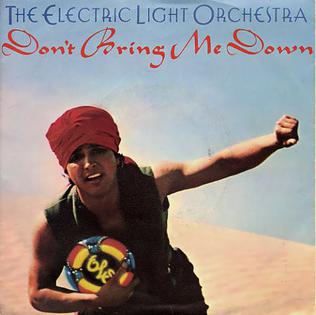
Tunes Du Jour Presents Jeff Lynne & Electric Light Orchestra

Of all the bands that filled the airwaves in the 1970s, perhaps none had a sound as instantly recognizable as Electric Light Orchestra. You know it the moment you hear it: the soaring strings, the stacked vocal harmonies, the crisp, thumping drum beat, and a rock and roll foundation holding it all together. A glance at a playlist of their work, with hits like “Mr. Blue Sky,” “Livin’ Thing,” and “Don’t Bring Me Down,” reveals a remarkable consistency. This wasn’t the sound of a band finding its way; it was the execution of a singular, ambitious vision. That vision belonged to one man: Jeff Lynne.

To understand ELO is to understand Lynne’s role not just as a songwriter and frontman, but as a master producer and arranger. He aimed to create a band that would, as the initial concept went, “pick up where The Beatles left off.” Listening to early tracks like “10538 Overture” or their grand re-imagining of “Roll Over Beethoven,” you can hear that idea taking shape. The music is a deliberate fusion of rock band energy and classical grandeur. Songs like “Telephone Line” and “Can’t Get It Out of My Head” aren’t just pop tunes with strings layered on top; the orchestral elements are woven directly into the song’s emotional core, as essential as the guitar or bass.

What’s particularly interesting is how this sound evolved while remaining unmistakably “ELO.” The band could deliver a straightforward, string-less rocker like “Don’t Bring Me Down,” then pivot to the disco-infused pulse of “Shine a Little Love” or “Last Train to London.” They could craft elaborate, charming narratives in songs like “The Diary of Horace Wimp” or deliver the operatic flair of “Rockaria!” Through it all, Lynne’s production—those tightly harmonized backing vocals, the precise layering of instruments, and an impeccable sense of melody—acts as the common thread, giving the entire catalog a sense of cohesion.

The true scope of Jeff Lynne’s influence, however, becomes clear when you look at the songs on this playlist that aren’t by ELO. Listen to Roy Orbison’s “You Got It” or Tom Petty’s “I Won’t Back Down.” The sonic fingerprints are all there: the clean acoustic guitars, the punchy rhythm section, and the rich vocal arrangements are pure Lynne. His sound became so respected that when The Beatles needed a producer to help them complete “Free as a Bird” for their Anthology project, they called him. George Harrison not only enlisted him for his own solo work, like the affectionate “When We Was Fab,” but also made him a bandmate.

That brings us to the Traveling Wilburys. Hearing songs like “End Of The Line” alongside ELO tracks feels less like a departure and more like a family reunion. In this supergroup, Jeff Lynne wasn’t just a producer for his heroes—George Harrison, Tom Petty, Roy Orbison, and Bob Dylan—he was their musical partner, an equal architect of their sound. The playlist, taken as a whole, tells a story not just of a great band, but of a distinct musical creator whose unique approach to record-making left a lasting mark on the work of his peers and the sound of popular music itself.

Follow Tunes Du Jour on Facebook

Follow me on Bluesky

Follow me on Instagram
Tunes Du Jour Presents Stevie Nicks

In a career that’s stretched across decades, bands, and Billboard charts, Stevie Nicks has managed a rare feat: establishing herself as both a defining voice in a group and a singular presence as a solo artist. Her work with Fleetwood Mac and on her own often feels like two sides of the same coin—distinct but inseparable. On one hand, there’s the collaborative dynamic of Fleetwood Mac, captured in songs like “Dreams,” “Rhiannon,” and “Landslide,” where her voice served not just as a sonic anchor but as a narrative thread in the band’s often-turbulent story. On the other, there’s the independence of Bella Donna and The Wild Heart, where she claimed space on her own terms with tracks like “Edge of Seventeen” and “Stand Back.”

What makes Nicks especially compelling isn’t just her voice, though that husky, otherworldly tone is unmistakable. It’s her songwriting. The stories she tells—whether personal or imagined—have a way of blurring the line between autobiography and myth. “Sara” and “Gypsy” evoke emotional landscapes more than plotlines, while “Silver Springs” is pointed and raw, its pain delivered without melodrama. Even her more radio-friendly hits like “Talk To Me” and “I Can’t Wait” retain a kind of emotional undertow that separates them from the disposable pop of their era.

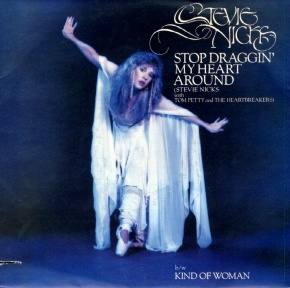
She’s also a master of collaboration, though not in the typical sense. Her duets with Tom Petty (“Stop Draggin’ My Heart Around”) and Don Henley (“Leather and Lace”) don’t just showcase vocal chemistry; they underscore how well she uses other voices to sharpen her own perspective. And while she occasionally lent her voice to projects like Kenny Loggins’ “Whenever I Call You Friend,” it’s usually within settings that still feel connected to her larger musical identity—romantic, reflective, occasionally mysterious.

Dig deeper into her solo catalog, and you find tracks like “Nightbird,” “Outside the Rain,” and “Think About It”—songs that may not have hit the top of the charts but round out the portrait. These aren’t diversions from her work with Fleetwood Mac but extensions of it, revealing a consistent worldview: introspective but not self-pitying, emotional but rarely unhinged. Even a track like “Planets of the Universe,” recorded decades after her commercial peak, holds to the same creative compass that’s guided her from the start.

Stevie Nicks isn’t just a singer or a lyricist or a performer; she’s a builder of emotional spaces. Whether she’s conjuring the vulnerability of “Storms,” the weariness of “After the Glitter Fades,” or the defiance of “The Highwayman,” there’s a sense that she’s letting listeners into her interior life—sometimes invitingly, sometimes at arm’s length. Either way, it’s a voice you don’t mistake for anyone else’s.

Follow Tunes Du Jour on Facebook

Follow me on Bluesky

Follow me on Instagram

Tunes Du Jour Presents The Bob Dylan Songbook

One way to measure a songwriter’s reach is not by how often their work is covered, but how widely. The playlist below spans decades, genres, and sensibilities—from Adele to The Dead Weather, from Johnny Cash to the Neville Brothers—and all roads lead back to Bob Dylan. This is not just a reflection of his prominence; it’s a testament to the adaptability of his writing. Dylan’s lyrics aren’t locked into one style or moment—they hold up when filtered through gospel, punk, glam, folk, or soul. His songs invite reimagining because they’re grounded in strong narrative bones and emotional honesty, not ornamental frills.

Consider the different shades of “All Along the Watchtower.” Dylan’s original version is stark and cryptic; Hendrix turned it into an electrified storm. Likewise, “I Shall Be Released,” rendered with hushed reverence by The Band, has the structure of a gospel hymn but the ambiguity of a fable. “Make You Feel My Love,” one of Dylan’s later compositions, found new life in Adele’s version—proof that his songwriting didn’t peak in the ’60s, but simply evolved. His voice as a writer has always been the constant: a blend of plainspoken wisdom, sly humor, and a deep sense of historical and emotional context.

It’s notable, too, how Dylan’s songs seem to absorb the character of the performer. When Elvis Presley sings “Tomorrow Is a Long Time,” it feels like a Southern ballad. When PJ Harvey takes on “Highway 61 Revisited,” it becomes something raw and jagged. Nina Simone’s version of “Just Like Tom Thumb’s Blues” brings out a haunted intensity not present in Dylan’s own delivery. That elasticity points to a rare kind of craftsmanship—songs written with enough specificity to be meaningful, but enough openness to be inhabited.

Even in unexpected settings, Dylan’s words linger. Tom Petty co-wrote the lyrics to “Jammin’ Me” with him, a pointed pop-rock critique of media saturation. Patti Smith’s “Changing of the Guards” channels the mystical imagery and layered storytelling that Dylan deployed throughout the ’70s. And when The Specials tear into “Maggie’s Farm,” it becomes a statement of punk-era defiance. These aren’t nostalgia pieces—they’re songs that meet each era on its own terms.

Dylan’s catalog isn’t just influential; it’s usable. His songs function as cultural currency, endlessly exchangeable yet retaining value. Whether you hear him through Joan Osborne’s gothic reading of “Man in the Long Black Coat” or the crystalline harmonies of Peter, Paul and Mary’s “Blowin’ in the Wind,” what’s most striking is not just who sings Dylan—but what his songs reveal when they do.

Follow Tunes Du Jour on Facebook

Follow me on Bluesky

Follow me on Instagram
Tunes Du Jour Presents 1990

By 1990, pop music was as fragmented as ever, with the charts reflecting a mix of dancefloor anthems, alternative breakthroughs, and genre-defying oddities. Hip-hop’s mainstream ascent was well underway, electronic music was taking shape in new and exciting forms, and rock music was shifting toward something grittier. The year’s defining hits weren’t just about big hooks—they were about movement, whether physical, emotional, or cultural.

Dance music thrived in 1990, blurring the lines between house, hip-hop, and pop. Madonna’s “Vogue” channeled the underground ballroom culture into a global phenomenon, while Deee-Lite’s “Groove Is in the Heart” mixed funk, rap, and psychedelic whimsy into a club classic. Elsewhere, Snap! (“The Power”) and Black Box (“Everybody Everybody”) brought European dance music into the mainstream, and 808 State’s “Pacific (707)” hinted at a future where electronic beats would dominate pop music. Even hip-hop joined the party, with M.C. Hammer’s “U Can’t Touch This” and Digital Underground’s “The Humpty Dance” bringing humor and flamboyance to the genre.

Meanwhile, alternative rock was carving out a larger space. Jane’s Addiction’s “Been Caught Stealing” and Faith No More’s “Epic” merged funk, metal, and punk into something unpredictable. The UK’s Madchester scene, fueled by dance rhythms and psychedelic guitars, produced The Stone Roses’ “Fools Gold,” Happy Mondays’ “Step On,” and Primal Scream’s “Loaded,” while The Charlatans’ “The Only One I Know” signaled Britpop’s coming rise. Across the Atlantic, Tom Petty’s “Free Fallin’” offered a more traditional take on rock, while Aerosmith’s “Janie’s Got a Gun” tackled dark subject matter with arena-sized drama.

Elsewhere, pop and R&B pushed forward with innovation. En Vogue’s “Hold On” showcased impeccable vocal group harmonies, Lisa Stansfield’s “All Around the World” delivered a fresh take on blue-eyed soul, and George Michael’s “Freedom ’90” turned self-reinvention into an art form. Janet Jackson’s “Escapade” and Prince’s “Thieves in the Temple” kept their respective streaks of forward-thinking pop hits alive. And then there was Sinéad O’Connor’s “Nothing Compares 2 U”—a Prince-penned ballad that, in her hands, became one of the most emotionally raw performances of the era.

Yet 1990 also had space for the delightfully weird. They Might Be Giants’ “Birdhouse in Your Soul” was an offbeat yet catchy rock song that felt beamed in from another world, while Pet Shop Boys’ “So Hard” continued their sophisticated synth-pop explorations. Biz Markie’s “Just a Friend” made earnest goofiness into a virtue, and DNA’s remix of Suzanne Vega’s “Tom’s Diner” pioneered a new wave of genre-hopping, blending folk with electronic beats. Even the global phenomenon of “Lambada” proved that music was becoming more borderless. Whether through innovation, reinvention, or sheer force of personality, 1990’s music remains as compelling as ever.

Follow Tunes Du Jour on Facebook

Follow me on Bluesky

Follow me on Instagram
Tunes Du Jour Presents Tom Petty

Tom Petty’s impact on rock music is undeniable, as evidenced by this impressive playlist of his work. Petty crafted a sound that resonated with millions of fans across generations.

The playlist showcases Petty’s versatility as an artist. Songs like “Free Fallin'” and “I Won’t Back Down” highlight his ability to write catchy, radio-friendly hits that still maintain depth and authenticity. Meanwhile, tracks such as “Refugee” and “American Girl” demonstrate the raw energy and guitar-driven rock that defined much of his work with the Heartbreakers.

Petty’s collaborations were also a significant part of his career. His duet with Stevie Nicks on “Stop Draggin’ My Heart Around” became an instant classic, blending their distinctive voices to create something truly special. His work with the Traveling Wilburys, featuring tracks like “Last Night,” showed his ability to mesh with other legendary musicians seamlessly.

Throughout his career, Petty addressed various themes in his music. Songs like “The Waiting” and “Learning to Fly” speak to universal experiences of hope and perseverance, while “Mary Jane’s Last Dance” and “Into the Great Wide Open” showcase his knack for storytelling and creating vivid characters within his lyrics.

As we look back on Tom Petty’s discography, it’s clear that his music has stood the test of time. From early tracks like “Breakdown” to later works such as “The Last DJ,” Petty’s commitment to authentic, heartfelt rock and roll never wavered. His legacy continues to influence new generations of musicians and music lovers alike, cementing his place as one of rock’s true icons.

Follow Tunes Du Jour on Facebook

Follow Tunes Du Jour on Twitter

Follow me on Instagram

Tunes Du Jour Presents 1981

As the new decade dawned, 1981 emerged as a year of significant musical transformation. The eclectic mix of songs that defined this period reflected a music industry in flux, with established genres evolving and new sounds emerging to captivate listeners across the globe.

Rock music continued to hold its ground, adapting to the changing times. The Rolling Stones proved their enduring relevance with the gritty “Start Me Up,” while Journey’s “Don’t Stop Believin'” became an arena rock anthem that would stand the test of time. Bruce Springsteen’s “The River” showcased his storytelling prowess, and Phil Collins’ “In The Air Tonight” introduced a new dimension of atmospheric rock with its iconic drum break. George Harrison’s “All Those Years Ago,” a touching tribute to John Lennon, marked Harrison’s first U.S. top ten single in eight years, demonstrating the lasting appeal of the former Beatles.

New Wave and post-punk sounds flourished in 1981, pushing boundaries and incorporating electronic elements. Talking Heads’ “Once in a Lifetime” demonstrated the genre’s art-rock leanings, while The Go-Go’s brought a pop sensibility to new wave with “Our Lips Are Sealed.” Duran Duran’s “Girls on Film” hinted at the new romantic movement that was gaining traction. The Psychedelic Furs’ “Pretty in Pink,” with its blend of post-punk edge and pop accessibility, showcased Richard Butler’s distinctive vocals and would later inspire and lend its name to a defining film of the ’80s.

The year also saw the emergence of hip-hop as a force in popular music. Blondie’s “Rapture” became the first song featuring rap vocals to reach number one on the U.S. Billboard Hot 100, fusing new wave with hip-hop influences. Meanwhile, Grandmaster Flash’s innovative “The Adventures of Grandmaster Flash on the Wheels of Steel” was one of the first records to extensively use sampling, laying the groundwork for hip-hop’s future.

Dance music was evolving beyond disco into new, exciting forms. Grace Jones’ “Pull Up to the Bumper” blended funk, new wave, and reggae influences, pointing towards a more eclectic and experimental future for club music. Taana Gardner’s “Heartbeat” helped define the emerging genre of garage house with its stripped-down beat and soulful vocals. Kool & the Gang’s “Celebration” remains a party staple, bridging the gap between disco and contemporary R&B.

In the realm of R&B and funk, Luther Vandross’ “Never Too Much” marked the acclaimed background vocalist’s first hit under his own name, showcasing his smooth, sophisticated style. Rick James pushed funk to new heights with “Super Freak,” incorporating rock elements and a memorable synth line that would be sampled for years to come. The Pointer Sisters’ “Slow Hand” kept R&B smooth and soulful.

1981 also witnessed the continued rise of synth-pop and electronic music. Heaven 17’s politically charged “(We Don’t Need This) Fascist Groove Thang” and New Order’s “Ceremony” showcased the genre’s range from danceable pop to moody post-punk.

As some artists embraced new sounds, others used music to comment on social issues. The Specials’ “Ghost Town” reflected the urban decay and racial tensions in Britain, while Black Flag’s hardcore punk anthem “Rise Above” railed against societal norms. Prince’s “Controversy” challenged listeners both musically and lyrically, blending funk, rock, and new wave while tackling taboo subjects and questioning social norms, hinting at the boundary-pushing artist he would become.

From the chart-topping pop of Kim Carnes’ “Bette Davis Eyes” and Olivia Newton-John’s “Physical” to ABBA’s emotionally charged ballad “The Winner Takes It All,” 1981 was a year of contrasts and transitions. It was a time when established stars adapted to new trends, emerging artists made their mark, and genres blended in exciting ways. This rich musical landscape set the stage for the diverse and innovative sounds that would define the rest of the decade, making 1981 a pivotal year in the evolution of popular music.

Follow Tunes Du Jour on Facebook

Follow Tunes Du Jour on Twitter

Follow me on Instagram