Tunes Du Jour Presents 2006

If you had to pick one song to sum up 2006, you might reach for Gnarls Barkley’s “Crazy” — a song so omnipresent that year it practically became ambient noise. But that choice would also tell you something true about the year: it was a moment when genuinely strange, interesting ideas were landing at the top of the charts, not just surviving on the margins. Cee Lo Green and Danger Mouse made a song that was simultaneously soulful, psychedelic, and completely radio-friendly, and somehow the world went along with it. That tension — between the weird and the accessible, between art and commerce — runs through a lot of what made 2006 a particularly interesting year in music.

The mainstream pop landscape was, by any measure, stacked. Justin Timberlake’s “My Love,” with its spare Timbaland production and T.I. verse, pointed forward toward the minimalist R&B that would define the next decade. Beyoncé released “Irreplaceable,” a song so well-constructed it barely needs any production to hold your attention. Rihanna was still in her early hitmaking mode with “SOS,” and Nelly Furtado, working with Timbaland, was having a pop renaissance with “Promiscuous.” What’s notable in retrospect is how many of these tracks were built around restraint — the arrangements have room in them, the hooks don’t have to fight to be heard. It’s pop music that trusted the song.

On the rock side of things, the year had an interesting split personality. Arctic Monkeys had exploded out of Sheffield with “I Bet You Look Good on the Dancefloor,” all nervous energy and sharp elbows, while The Killers’ “When You Were Young” pushed toward something more cinematic and earnest. The Raconteurs gave Jack White a different context to work in, and “Steady, As She Goes” was proof that a riff-first approach still had plenty of life in it. Muse were somewhere in the atmosphere with “Knights of Cydonia,” a song so committed to its own grandiosity that it looped back around to being genuinely exciting. Meanwhile, Band of Horses released “The Funeral,” which occupied a completely different emotional register — slow, aching, and built to last.

Away from the obvious mainstream, 2006 had a lot happening in the spaces between genres. TV on the Radio were making rock music that felt genuinely new with “Wolf Like Me,” while Hot Chip and Junior Boys were finding the emotional depth available in electronic pop. The Knife’s “Silent Shout” was something else entirely — icy, theatrical, and slightly unsettling in the best way. Camera Obscura offered a gentler alternative with “Lloyd, I’m Ready to be Heartbroken,” a song that wore its Lloyd Cole reference as a badge of honor, and The Pipettes were busy making sharp, witty girl-group pop that felt both nostalgic and pointed. Hip-hop, meanwhile, was getting some of its most creatively ambitious work from Kanye West (“Touch the Sky”) and Lupe Fiasco, whose “Kick, Push” used skateboarding as a fully realized metaphor for outsider identity without ever feeling forced.

There were also moments in 2006 that went beyond music into something more like public conversation. The Chicks released “Not Ready to Make Nice,” a direct response to the backlash they’d faced since 2003, and the fact that it became a hit felt genuinely significant — a mainstream country-adjacent audience giving space to a song about refusing to apologize. Cat Power’s “The Greatest” was quieter but no less affecting, a meditation on loss and missed potential delivered with a stillness that made it hit harder. Morrissey was still being Morrissey (“You Have Killed Me”), which is either a comfort or an irritant depending on your history with the man. What holds all of this together isn’t a single sound or movement — it’s more that 2006 was a year when music across a lot of different genres was being made by people who seemed to be thinking carefully about what they were doing, and the results have held up.

Follow Tunes Du Jour on Facebook

Follow me on Instagram

Follow me on Bluesky
Tunes Du Jour Presents 2000

The year 2000 arrived with a collective sigh of relief. The much-hyped Y2K bug turned out to be a non-event, and the new millennium stretched out before us, feeling both futuristic and strangely familiar. Looking back at the music from that year, you can hear a similar dynamic at play. It wasn’t a time of radical genre fusion or crossover; instead, it felt like several distinct musical movements were all cresting at the exact same time, each one confident and fully-formed. It was a year where you could switch the radio station and feel like you were jumping between entirely different worlds—from the polished pop of Britney Spears to the raw energy of DMX.

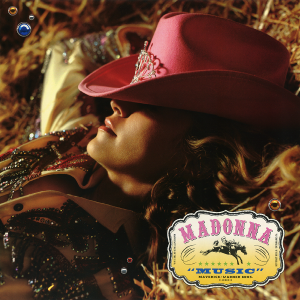
On one hand, pop and R&B were operating at peak performance, dominating the charts with precision-engineered hits. This was the era of the blockbuster music video, and artists delivered. Madonna reinvented herself yet again with the electro-thump of “Music,” while Britney Spears’s “Oops!…I Did It Again” perfected the formula she had established just a year prior. At the same time, R&B was in a period of remarkable innovation. You had the staccato, futuristic production of Timbaland on Aaliyah’s “Try Again,” the iconic, conversational flow of Destiny’s Child on “Say My Name,” and the deep, simmering soul of D’Angelo’s “Untitled (How Does It Feel).” These weren’t just great songs; they were statements of intent from artists at the top of their game.

Meanwhile, rock music was pulling in several different directions at once. Pop-punk had fully broken through to the mainstream, and blink-182’s “All the Small Things” was its endlessly catchy, stadium-sized anthem. More established acts like Foo Fighters and Red Hot Chili Peppers were delivering some of their most memorable melodic rock with “Learn to Fly” and “Californication,” respectively. Yet, on the fringes, things were getting much stranger and more interesting. Radiohead completely abandoned guitar-rock expectations with the anxious, electronic pulse of “Idioteque,” while Queens of the Stone Age offered a taste of heavy, hypnotic desert rock with “Feel Good Hit Of The Summer.” There was no single, unified “sound of rock” in 2000; there were several.

Hip-hop was arguably the most creatively vibrant and commercially powerful force of the year. The genre’s expansion was on full display, from the confrontational wit of Eminem’s “The Real Slim Shady” to the pure, unbridled velocity of OutKast’s “B.O.B.” which still sounds like it was beamed in from the future. The clubs were fueled by the aggression of DMX’s “Party Up (Up in Here)” and M.O.P.’s “Ante Up,” while Jay-Z’s “Big Pimpin’” projected an image of untouchable cool. And of course, you can’t talk about 2000 without acknowledging the songs that were simply inescapable. The unabashedly goofy charm of Sisqó’s “Thong Song” and the perhaps baffling, universal appeal of “Who Let the Dogs Out” added a unique and memorable flavor to the year’s sonic identity.

Listening back to this collection of songs now, what’s most striking is how separate but equal everything feels. This was one of the last moments before the digital revolution would completely flatten the music landscape, encouraging artists to borrow from everywhere at once. The year 2000 wasn’t about blending; it was a snapshot of distinct scenes, each with its own definitive soundtrack. From the raw scream of Kelis on “Caught Out There” to the quiet contemplation of Moby’s “Porcelain,” it was a year of powerful, parallel streams, a final, confident roar from the 20th-century music industry before everything changed.

Follow Tunes Du Jour on Facebook

Follow me on Bluesky

Follow me on Instagram

Tunes Du Jour Presents 2001

The music of 2001 offered listeners a diverse array of sounds, reflecting the eclectic tastes and creative experimentation prevalent at the turn of the millennium. From hip-hop’s continued evolution to electronic music’s broader appeal, the year’s musical landscape was characterized by a spirit of innovation and cross-genre pollination. While not necessarily revolutionary, 2001’s musical offerings showcased artists pushing boundaries and audiences embracing fresh sounds across multiple genres.

At the forefront of this sonic revolution was Missy Elliott’s “Get Ur Freak On,” a track that redefined hip-hop with its bold beats and futuristic soundscapes. Elliott’s unique style blended traditional hip-hop with global influences, introducing a raw, hyper-sexualized energy that was both provocative and empowering. This era also saw the rise of Jay-Z with “Izzo (H.O.V.A.),” a masterclass in braggadocio that solidified his status as one of rap’s most influential figures. Meanwhile, newcomer Alicia Keys made her mark with the soulful “Fallin’,” combining classical piano with soulful vocals to create a fresh voice in R&B that earned her critical acclaim and multiple awards.

Electronic music found its way into the mainstream consciousness with Daft Punk’s “One More Time,” a euphoric dance anthem that transcended the dance floor, bridging the gap between underground rave culture and pop sensibilities. This electronic influence seeped into other genres as well, with acts like Gorillaz blending hip-hop, rock, and electronica on their debut hit “Clint Eastwood.” The cross-pollination of genres was further exemplified by Eve and Gwen Stefani’s collaboration on “Let Me Blow Ya Mind,” a standout track that seamlessly merged rap and pop elements.

Rock music in 2001 was marked by both innovation and nostalgia. Radiohead continued to push boundaries with the haunting “Pyramid Song,” a complex composition that resonated with fans and critics alike. Meanwhile, bands like The Strokes and The White Stripes led a garage rock revival with “The Modern Age” and “Hotel Yorba” respectively, influencing a new generation of bands. System of a Down’s “Chop Suey!” delivered a powerful mix of metal and alternative rock, addressing themes of life and death with intense energy. Veterans weren’t left behind, as evidenced by Bob Dylan’s “Mississippi” and R.E.M.’s “Imitation of Life,” both of which showcased the enduring relevance of established artists.

The pop landscape of 2001 was equally dynamic, with artists like Britney Spears (“I’m a Slave 4 U”) and P!nk (“Get The Party Started”) dominating the airwaves with infectious hooks and undeniable energy. Janet Jackson’s “All for You” brought a feel-good vibe with its upbeat tempo and catchy chorus. This era also saw the last major hit from Michael Jackson during his lifetime, “You Rock My World.” From the reggae-pop fusion of Shaggy’s “It Wasn’t Me” to the unexpected success of Afroman’s “Because I Got High,” 2001 offered a rich and varied soundtrack that balanced humor with storytelling, demonstrating that sometimes a catchy hook and a good story are all you need to make a hit. In retrospect, 2001 was a pivotal year that saw the emergence of new stars, the redefinition of established genres, and a time when music felt refreshingly unpredictable, with artists boldly experimenting and audiences eagerly embracing the new and unfamiliar.