Tunes Du Jour Presents Carole King

If you were to press play on a random selection of American pop hits from the 1960s and 70s, you’d have a surprisingly high chance of landing on a song written by Carole King. What’s more remarkable is that you might not even realize it. For many, her name is synonymous with the landmark 1971 album Tapestry, a defining work of the singer-songwriter era. But listening to a broader collection of her work reveals a fascinating story—not of one career, but of two distinct, equally influential chapters in music history.

The first chapter begins in the fast-paced world of New York’s Brill Building, where King, alongside her then-husband and lyricist Gerry Goffin, became a hit-making powerhouse for other artists. This wasn’t about personal expression; it was about craftsmanship. A quick look at the playlist shows the sheer range of their output. They penned the earnest plea of The Shirelles’ “Will You Love Me Tomorrow,” the youthful optimism of Bobby Vee’s “Take Good Care Of My Baby,” and the sophisticated yearning of The Drifters’ “Up on the Roof.” They could deliver dance crazes like Little Eva’s “The Loco-Motion” and even provide grittier material for bands like The Animals with “Don’t Bring Me Down,” proving their ability to adapt to nearly any voice or style.

But then, something shifted. As the 60s gave way to the 70s, the focus in popular music turned inward, favoring a more personal and authentic voice. This cultural change set the stage for King’s second career: stepping out from behind the curtain and into the spotlight. The playlist captures this transformation perfectly. Suddenly, we hear King’s own warm, unadorned voice on tracks like “It’s Too Late” and “So Far Away.” The songs, now with her own lyrics, feel more intimate and reflective. The production is stripped back, centering on her expressive piano playing, creating a direct connection with the listener that felt entirely new.

Perhaps nothing demonstrates the unique strength of her songwriting better than the way her compositions became signature anthems for other legends. Aretha Franklin’s definitive 1967 performance of “(You Make Me Feel Like) A Natural Woman” had already cemented the song as a timeless classic years before King would record her own version for Tapestry. Then, in the very same year her solo album became a phenomenon, James Taylor’s comforting rendition of “You’ve Got A Friend” became an equally iconic, chart-topping hit. It’s a rare artist who can not only define an era with their own voice but also provide the material for other great artists to do the same.

Exploring this collection of songs is like walking through a gallery where the same artist is responsible for both the grand, public murals and the quiet, personal portraits. From the effervescent pop of The Chiffons’ “One Fine Day” to the introspective mood of her own title track, “Tapestry,” the common thread is an undeniable gift for melody and a deep understanding of human feeling. Carole King wasn’t just a singer who wrote her own material; she was a foundational architect of pop music who, when the time was right, simply decided to build a home for herself.

Follow Tunes Du Jour on Facebook

Follow me on Bluesky

Follow me on Instagram
Tunes Du Jour Presents 1963

If you could travel back in time and turn on a car radio in 1963, what would you hear? It was a year poised on the brink of profound change, both culturally and musically. Listening to the pop charts from that year is like opening a time capsule of a specific American moment, one just before the British Invasion, led by The Beatles, would arrive on our shores in January 1964 and rearrange the entire landscape. Using a playlist of the year’s biggest hits, we can get a clear picture of the sounds that defined the last year of this particular pop era.

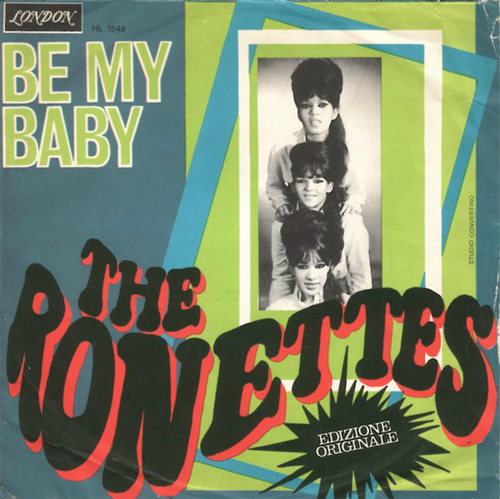
Two major sounds seemed to rule the airwaves, both born from a distinctly American, youthful energy. From the West Coast came the sun-drenched anthems of surf rock. The Beach Boys offered a national invitation with “Surfin’ U.S.A.,” while their friendly rivals Jan & Dean created the idyllic “Surf City.” This wasn’t just a vocal trend; the raw, driving energy of instrumental hits like The Surfaris’ “Wipe Out” and The Chantays’ “Pipeline” provided a visceral, drum-and-guitar-heavy soundtrack for a generation. Complementing this was the sound of the girl groups, often channeling teenage drama through the ambitious production of Phil Spector’s “Wall of Sound” on tracks like The Ronettes’ “Be My Baby” and The Crystals’ “Da Doo Ron Ron.” From the defiant fun of Lesley Gore’s “It’s My Party” to the tough-girl stance of The Angels’ “My Boyfriend’s Back,” these songs were miniature soap operas set to a 4/4 beat.

At the same time, a different kind of sound was solidifying its place at the heart of American music, broadcasting from Detroit and other soul music hubs. Motown was hitting its stride, producing hits that were both commercially successful and artistically sophisticated. You could feel the undeniable energy of Martha Reeves & The Vandellas on “(Love Is Like A) Heat Wave” or get lost in the smooth, clever plea of Smokey Robinson & the Miracles’ “You’ve Really Got a Hold on Me.” A teenage prodigy named Stevie Wonder even captured the explosive energy of his live performances on “Fingertips, Pts. 1 & 2.” It wasn’t just Motown, either. The soulful storytelling of groups like The Drifters on “Up on the Roof” and the raw, emotional performance of Garnet Mimms on “Cry Baby” showed the depth and variety within R&B and soul music.

Beyond these dominant movements, the Top 40 of 1963 was remarkably eclectic. The folk revival crashed onto the pop charts with Peter, Paul and Mary’s earnest version of Bob Dylan’s “Blowin’ In The Wind,” introducing a new layer of social consciousness to mainstream radio. Unclassifiable artists with singular visions also found massive success. Roy Orbison’s haunting, operatic ballad “In Dreams” and Johnny Cash’s iconic, mariachi-inflected “Ring of Fire” were worlds unto themselves. The charts even made room for the wonderfully unexpected: Kyu Sakamoto’s “Sukiyaki,” a beautiful Japanese-language ballad that became a number-one hit, and “Dominique” by The Singing Nun, also a number-one hit, proved that a great melody could transcend any language barrier. And in a class all its own was the wonderfully raw and raucous “Louie, Louie” by The Kingsmen, a garage-rock precursor that parents hated and kids loved.

Looking back, the collection of hits from 1963 represents a high point for a certain kind of American-made pop music. It was a world of surf guitars, dramatic girl-group harmonies, sophisticated soul, and a surprising number of unique one-offs. Every song on the radio, from Andy Williams’ smooth crooning to the gritty simplicity of “Louie, Louie,” was part of the same popular conversation. It was a vibrant and diverse scene, but one operating on its own terms. It had no idea that four young men from Liverpool were about to board a plane, bringing with them a sound that would change the rules for everyone.

Follow Tunes Du Jour on Facebook

Follow me on Bluesky

Follow me on Instagram

Your (Almost) Daily Playlist: 8-6-23

Judy Craig, the lead singer of The Chiffons, was a senior in high school when “He’s So Fine” hit number one. Written by the group’s manager, Ronnie Mack, the song was recorded with the band The Tokens providing the instrumentation. The Tokens brought the recording to their record label, Capitol, to see if they’d be interested in releasing it, but the label president thought it “too trite.” Laurie Records signed the group and made “He’s So Fine” one of the biggest hits of 1963. The group hit the top ten twice more, with “One Fine Day” and “Sweet Talkin’ Guy.” Judy Craig, who turns 79 today, still tours with The Chiffons, now comprised of her, her daughter and her niece.

Follow Tunes du Jour on Facebook

Follow Tunes du Jour on X

Follow me on Instagram

Your (Almost) Daily Playlist: 8-2-23

Though Shirley Owens usually sang lead on recordings by The Shirelles, on the group’s cover of The 5 Royales’ “Dedicated to the One I Love,” member Doris Coley sings the lead vocals. Though Cass Elliot is the Mama that usually sang lead on recordings by The Mamas and the Papas, on the group’s cover of The Shirelles’ cover of The 5 Royales’ “Dedicated to the One I Love,” member Michelle Phillips sings the lead vocals. Something about this song….

The late Doris Coley was born on this date in 1941. On today’s playlist are several hits from The Shirelles that feature Coley’s lead vocals.

Follow Tunes du Jour on Facebook

Follow Tunes du Jour on X

Follow me on Instagram

Your (Almost) Daily Playlist: 8-6-22

Today’s playlist celebrates the August 6 birthdays of The Chiffons’ Judy Craig, Elliott Smith, Leftfield’s Neil Barnes, Spice Girls’ Geri Halliwell, Yaeji, Timbuk 3’s Pat McDonald, Joyce Sims, and Andy Warhol; and the August 7 birthdays of Iron Maiden’s Bruce Dickinson, Throwing Muses’ Kristen Hersh, B.J. Thomas, Positive K, and Stan Freberg.

Follow Tunes du Jour on Facebook

Follow Tunes du Jour on Twitter

Follow me on Instagram

A Carole King Playlist

Here’s a fun fact (or three): In the history of the Billboard Hot 100, nine songs have hit #1 performed by different artists. The first two songs to achieve this feat were “Go Away Little Girl” (Steve Lawrence in 1963 and Donny Osmond in 1971) and “The Loco-motion” (Little Eva in 1962 and Grand Funk in 1974). Both of those were written by Carole King (b. February 9, 1942) and the late Gerry Goffin, who she married. To date Carole King has a writing credit on 118 Hot 100 hits. 118. One hundred eighteen.

Here are 30 of those 118 songs Carole co-wrote.

Follow Tunes du Jour on Facebook.

Follow Tunes du Jour on Twitter.

Follow me on Instagram.

Girl Power! Forty Of The Best Girl Group Songs

The girl group sound was a genre of pop music that flourished on the charts between 1958 and 1966. Most records that fall into this category were made by all-female trios or quartets. However, some girl group hits were performed by solo women, and some by groups that featured a cisgender male. Per girl-groups.com, more than 750 girl groups cracked the US or UK charts between 1960 and 1966.

Tunes du Jour commemorates International Women’s Day with a playlist of forty of the best examples of the girl group sound.


Click here to like Tunes du Jour on Facebook!
Follow me on Twitter: @tunesdujour
Follow me on Instagram: @glenschwartz