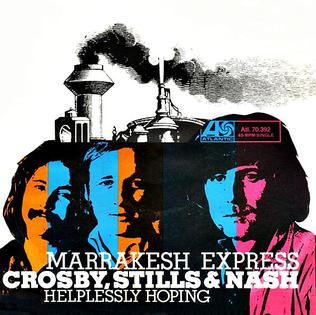
Tunes Du Jour Presents Crosby, Stills & Nash

The term “supergroup” gets thrown around a lot, often describing a short-lived project more notable for its lineup than its output. But with Crosby, Stills & Nash, the label felt different. This wasn’t just a collection of famous musicians; it was a genuine fusion of distinct, fully-formed artistic voices. Listening to a playlist of their work is like tracing a map back to its origins. To truly understand a song like “Suite: Judy Blue Eyes,” you first have to appreciate where its creators came from: David Crosby’s expansive, harmony-rich work with The Byrds, Stephen Stills’s fiery folk-rock with Buffalo Springfield, and Graham Nash’s pristine pop sensibility with The Hollies.

Before they ever sang a note together, each member had already left an indelible mark on the 1960s. The playlist gives us a clear picture of the ingredients they brought to the table. From The Byrds, you can hear Crosby pushing boundaries with the psychedelic exploration of “Eight Miles High” and the moody, jazz-inflected atmosphere of “Everybody’s Been Burned.” From Buffalo Springfield, Stills emerges as a formidable guitarist and a writer of anthems, penning the definitive protest song “For What It’s Worth” and the intricate, multi-part “Bluebird.” And from The Hollies, Nash provided the soaring high harmony and pop craftsmanship evident on tracks like “Carrie Anne” and “On A Carousel,” a perfect, bright counterpoint to the others’ more rugged styles.

When these three voices first combined, the result was an entirely new chemical reaction in popular music. The intricate vocal arrangements became their signature. A song like “Suite: Judy Blue Eyes” isn’t just a long track; it’s an ambitious, multi-movement piece that relies entirely on the interplay of their voices. This new entity could accommodate Nash’s breezy travelogue “Marrakesh Express” on the same album as the haunting, allegorical “Wooden Ships,” a song that feels heavier and more complex. It was this ability to contain different perspectives within one cohesive sound that defined their initial success.

Of course, the story soon expanded. The addition of Neil Young, Stills’s former bandmate, added a darker, more unpredictable edge to the group, a change you can hear immediately in the raw vulnerability of “Almost Cut My Hair” or the generational power of “Woodstock.” Yet even as a quartet, they could produce moments of profound gentleness, like Nash’s portrait of domestic bliss in “Our House” or the timeless advice of “Teach Your Children.” The solo efforts included on the playlist further highlight their individuality: Stills’s direct, blues-rock command to “Love The One You’re With,” Crosby’s ethereal musings in “Laughing,” and Nash’s political rallying cry in “Chicago.”

Decades later, what endures is the sound of those voices. It’s a sound that could carry later hits like the reflective “Wasted on the Way” and the nautical, evocative “Southern Cross.” Crosby, Stills & Nash—with or without Young—was a remarkable convergence. It was a project born from friendship and a shared desire to create something that none of them could have achieved alone. Their legacy isn’t just in the hit singles, but in the creation of a sound so specific and intricately constructed that it remains instantly recognizable from the very first note.

Follow Tunes Du Jour on Facebook

Follow me on Bluesky

Follow me on Instagram

Tunes Du Jour Presents 1965

Have you ever looked at a playlist from a single year and felt a sense of disbelief? It’s one thing for a year to produce a few memorable hits, but it’s another for it to feel like a highlight reel of music history. Looking at the charts from 1965 is exactly that kind of experience. It wasn’t just a year of good songs; it was a pivotal moment when popular music seemed to mature in several different directions at once, producing an astonishing collection of classics that still resonate today.

On one hand, 1965 saw the art of the immaculately produced pop song reach a new peak. The Motown machine was in full, glorious swing, giving us the suave romance of The Temptations’ “My Girl” and the intricate heartbreak of Smokey Robinson’s “The Tracks of My Tears.” The Supremes demanded attention with the dramatic plea of “Stop! In the Name of Love,” a perfect example of studio craftsmanship meeting raw emotion. Across the Atlantic, Petula Clark’s “Downtown” offered a sweeping, cinematic vision of city life. These weren’t just catchy tunes; they were impeccably arranged, powerfully sung, and emotionally direct pieces of art that defined a certain kind of pop perfection.

At the very same time, a grittier, more defiant sound was taking hold. The Rolling Stones’ “(I Can’t Get No) Satisfaction” wasn’t just a hit song; it was a statement of intent, built around a fuzzy, unforgettable guitar riff that sounded like pure frustration. This raw energy was a common thread. From the garage-rock howl of Them’s “Gloria” to the stuttering, youthful angst of The Who’s “I Can’t Explain,” rock music was shedding its cleaner-cut image. This wasn’t the polished sound of the studio; it was the restless sound of the rehearsal room, and it was connecting with an entire generation.

Beyond the evolving sounds, the lyrical substance of popular music was deepening profoundly. Bob Dylan completely rewrote the rules with “Like a Rolling Stone,” a six-minute epic of poetic scorn that proved a hit single could be complex, challenging, and literary. That same year, The Byrds took Dylan’s words and electrified them, creating a new genre overnight with their shimmering version of “Mr. Tambourine Man.” This new lyrical consciousness also carried immense social weight. Sam Cooke’s posthumously released “A Change Is Gonna Come” and The Impressions’ hopeful “People Get Ready” became enduring anthems of the Civil Rights Movement, demonstrating that music could be both a comfort and a powerful call for progress.

What makes 1965 so striking is that none of these developments happened in isolation. It was a year of convergence, where you could hear the sweet soul of Marvin Gaye’s “How Sweet It Is (To Be Loved By You)” on the radio right next to the birth of funk in James Brown’s “Papa’s Got a Brand New Bag.” The carefree optimism of The Beach Boys’ “California Girls” shared the airwaves with the deep, aching soul of Otis Redding’s “I’ve Been Loving You Too Long.” The sheer volume of landmark recordings from this single 12-month period is a testament to a unique moment in time—a year when the boundaries of pop music were expanding in every direction, leaving us with a collection of songs that feel less like relics and more like foundation stones.

Follow Tunes Du Jour on Facebook

Follow me on Bluesky

Follow me on Instagram
Tunes Du Jour Presents The Bob Dylan Songbook

One way to measure a songwriter’s reach is not by how often their work is covered, but how widely. The playlist below spans decades, genres, and sensibilities—from Adele to The Dead Weather, from Johnny Cash to the Neville Brothers—and all roads lead back to Bob Dylan. This is not just a reflection of his prominence; it’s a testament to the adaptability of his writing. Dylan’s lyrics aren’t locked into one style or moment—they hold up when filtered through gospel, punk, glam, folk, or soul. His songs invite reimagining because they’re grounded in strong narrative bones and emotional honesty, not ornamental frills.

Consider the different shades of “All Along the Watchtower.” Dylan’s original version is stark and cryptic; Hendrix turned it into an electrified storm. Likewise, “I Shall Be Released,” rendered with hushed reverence by The Band, has the structure of a gospel hymn but the ambiguity of a fable. “Make You Feel My Love,” one of Dylan’s later compositions, found new life in Adele’s version—proof that his songwriting didn’t peak in the ’60s, but simply evolved. His voice as a writer has always been the constant: a blend of plainspoken wisdom, sly humor, and a deep sense of historical and emotional context.

It’s notable, too, how Dylan’s songs seem to absorb the character of the performer. When Elvis Presley sings “Tomorrow Is a Long Time,” it feels like a Southern ballad. When PJ Harvey takes on “Highway 61 Revisited,” it becomes something raw and jagged. Nina Simone’s version of “Just Like Tom Thumb’s Blues” brings out a haunted intensity not present in Dylan’s own delivery. That elasticity points to a rare kind of craftsmanship—songs written with enough specificity to be meaningful, but enough openness to be inhabited.

Even in unexpected settings, Dylan’s words linger. Tom Petty co-wrote the lyrics to “Jammin’ Me” with him, a pointed pop-rock critique of media saturation. Patti Smith’s “Changing of the Guards” channels the mystical imagery and layered storytelling that Dylan deployed throughout the ’70s. And when The Specials tear into “Maggie’s Farm,” it becomes a statement of punk-era defiance. These aren’t nostalgia pieces—they’re songs that meet each era on its own terms.

Dylan’s catalog isn’t just influential; it’s usable. His songs function as cultural currency, endlessly exchangeable yet retaining value. Whether you hear him through Joan Osborne’s gothic reading of “Man in the Long Black Coat” or the crystalline harmonies of Peter, Paul and Mary’s “Blowin’ in the Wind,” what’s most striking is not just who sings Dylan—but what his songs reveal when they do.

Follow Tunes Du Jour on Facebook

Follow me on Bluesky

Follow me on Instagram

Tunes Du Jour Presents 1966

By 1966, rock and pop music had reached a critical turning point. The early, relatively simple sounds of rock and roll were giving way to a more experimental, ambitious approach, yet the airwaves were still filled with instantly memorable melodies. The year saw the release of songs that would go on to define entire careers—The Beach Boys’ “Good Vibrations” took pop production to new heights, The Four Tops’ “Reach Out (I’ll Be There)” solidified Motown’s dominance, and The Rolling Stones’ “Paint It Black” pushed rock into darker, more dramatic territory. Meanwhile, The Monkees burst onto the scene with “I’m a Believer,” adding a dose of manufactured but undeniably catchy charm to the mix.

Psychedelia was creeping into mainstream music, foreshadowing the sonic explorations that would fully take hold in the coming years. The Byrds’ “Eight Miles High” and The 13th Floor Elevators’ “You’re Gonna Miss Me” hinted at a new, mind-expanding direction for rock, while The Beatles’ “Paperback Writer” and its B-side, “Rain,” found the band toying with the limits of studio technology. The Who’s “My Generation,” released in late 1965 but peaking on the US charts in ’66, captured the rebellious energy of youth culture, while ? and the Mysterians’ “96 Tears” gave garage rock one of its most enduring anthems.

Soul music was also in full bloom, delivering some of its most powerful and enduring records. Percy Sledge’s “When a Man Loves a Woman” became an instant classic, dripping with raw emotion. Jimmy Ruffin’s “What Becomes of the Brokenhearted” and The Supremes’ “You Can’t Hurry Love” showcased Motown’s knack for blending heartache and joy in equal measure. Meanwhile, James Brown’s “It’s a Man’s Man’s Man’s World” was a testament to his singular ability to infuse deep soul with commentary. Over in the R&B realm, Ike & Tina Turner’s “River Deep – Mountain High”—though not a hit in the U.S. at the time—demonstrated producer Phil Spector’s bombastic “Wall of Sound” approach at its most overwhelming.

The year also had its share of songs that were simply too infectious to ignore. The Lovin’ Spoonful’s “Summer in the City” painted a sweltering urban landscape with its mix of laid-back verses and explosive choruses. Nancy Sinatra’s “These Boots Are Made for Walkin’” turned a simple, stomping beat into a statement of defiant cool. The Walker Brothers’ “The Sun Ain’t Gonna Shine Anymore” and The Left Banke’s “Walk Away Renée” delivered lush, baroque pop melancholy, while Eddie Floyd’s “Knock on Wood” became one of the defining records of Stax-style Southern soul.

Perhaps what’s most striking about 1966 in retrospect is just how many of these songs have endured. Whether through original recordings, countless covers, or their presence in film and television, these records still resonate. From the garage rock sneer of The Bobby Fuller Four’s “I Fought the Law” to the hypnotic stomp of The Troggs’ “Wild Thing,” the music of 1966 wasn’t just a snapshot of its time—it was the foundation for what was to come.

Follow Tunes Du Jour on Facebook

Follow me on Bluesky

Follow me on Instagram

Your (Almost) Daily Playlist: 5-11-24

Eric Burdon rose to fame as the lead vocalist of the rock band The Animals, which was part of the British Invasion that took the music world by storm in the 1960s. With his powerful and distinctive vocals, Burdon helped the band achieve international success with hits like “House of the Rising Sun” and “Don’t Let Me Be Misunderstood.”

In the late 1960s, with a new set of Animals, Burdon embraced the psychedelic sound that was popular during that era. This incarnation of the band showcased Burdon’s ability to evolve with the changing times, as they incorporated elements of funk, soul, and psychedelic rock into their music.

In 1970, Burdon introduced the world to the band War. Their collaboration resulted in the hit song “Spill the Wine,” which fused elements of rock, funk, and Latin music. I’m impressed by Burdon’s versatility and willingness to explore new musical territories.

Eric Burdon was born on this date in 1941. A few songs from him are included on today’s playlist.

Follow Tunes Du Jour on Facebook

Follow Tunes Du Jour on Twitter

Follow me on Instagram

Your (Almost) Daily Playlist: 4-19-24

Elenore
Gee, I think you’re swell
And you really do me well 
You’re my pride and joy, et cetera…

After the huge success of their “Happy Together,” The Turtles’ record label asked them for another love song in a similar vein. Jokingly, they turned in “Elenore.” It became their eighth US top 40 hit, reaching number 6 on the Billboard Hot 100.

The Turtles’ Mark Volman was born on this date in 1947. A few songs from his band are included on today’s playlist.

Follow Tunes du Jour on Facebook

Follow Tunes du Jour on Twitter

Follow me on Instagram