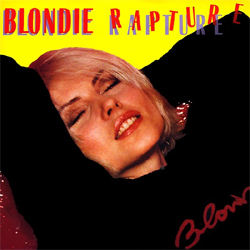
Today we’re celebrating World UFO Day with an out-of-this-world playlist of songs about beings not of Earth.
Follow Tunes Du Jour on Facebook
Follow me on Bluesky
Follow me on Instagram

May 2 is Brothers And Sisters Day, and today on the old blogorooni is a playlist of 30 duos or groups that include siblings. I didn’t include EVERY set of brothers and sisters, as I limit these playlists to 30 songs, so apologies to the Brothers Allman, the Sisters Pointer and all the other qualifying worthwhile acts. I’ll get you next time.
Here’s what is included:
**Don’t Look Back in Anger – Oasis**
This anthem of Britpop is fueled by the volatile but brilliant creative tension between Manchester’s most famous brothers, Noel and Liam Gallagher.
**Gaslighter – The Chicks**
While Natalie Maines takes the lead, the group’s foundation is built on the masterful musicianship of sisters Martie Maguire and Emily Strayer.
**God Only Knows – The Beach Boys**
The ethereal harmonies of this masterpiece are anchored by the Wilson brothers (Brian, Dennis, and Carl), proving that “family blend” is a real sonic phenomenon.
**Let It Be Me – The Everly Brothers**
Don and Phil Everly practically invented the art of close-harmony singing, influencing every duo that followed in their footsteps.
**Mmmbop – Hanson**
Isaac, Taylor, and Zac Hanson took the world by storm as youngsters, showcasing a tight-knit musical bond that has kept them recording together for decades.
**The Rain, The Park & Other Things – The Cowsills**
The real-life inspiration for The Partridge Family, this family band featured six siblings and their mother creating pure sunshine-pop gold.
**Thank You (Falettinme Be Mice Elf Agin) – Sly & The Family Stone**
Sly, Freddie, and Rose Stone revolutionized funk and soul as a multi-talented family unit at the heart of the psychedelic era.
**She Talks To Angels – The Black Crowes**
Brothers Chris and Rich Robinson have steered the Black Crowes through decades of rock and roll, proving that sibling rivalry can be a powerful creative engine.
**Sex On Fire – Kings Of Leon**
The Followill clan—brothers Caleb, Nathan, and Jared, plus cousin Matthew—turned their Southern upbringing into global stadium-rock stardom.
**Private Idaho – The B-52’s**
The quirky genius of the B-52’s was spearheaded in part by the late Ricky Wilson and his sister Cindy, whose shared vision helped define the New Wave era.
**You Shook Me All Night Long – AC/DC**
The backbone of the “Thunder from Down Under” was the rock-solid rhythm section and songwriting partnership of brothers Angus and Malcolm Young.
**Summer Girl – HAIM**
The Haim sisters (Este, Danielle, and Alana) are the modern standard-bearers for sibling synergy, blending West Coast cool with effortless familial intuition.
**Crazy Horses – The Osmonds**
Proving they were more than just teen idols, the Osmond brothers cranked up the fuzz pedals for this surprisingly heavy slice of 70s rock.
**Hot Line – The Sylvers**
With nine siblings in the lineup, The Sylvers brought a massive, coordinated family energy to the disco and R&B charts.
**Goodbye to Love – The Carpenters**
Richard and Karen Carpenter combined his meticulous arrangements with her once-in-a-generation voice to create some of the most enduring pop music ever made.
**Oh Carolina – Folkes Brothers**
John, Mico, and Junior Folkes helped lay the groundwork for ska and reggae with their historic collaborations in 1960s Jamaica.
**Baby, I Love You – The Ronettes**
Centered around sisters Ronnie and Estelle Bennett (and their cousin Nedra), The Ronettes defined the Girl Group sound with their powerhouse vocals.
**Eddie My Love – The Teen Queens**
Sisters Betty and Rosie Collins achieved 1950s stardom as teenagers, delivering some of the most soulful doo-wop harmonies of the era.
**I Can Never Go Home Anymore – The Shangri-Las**
This dramatic masterpiece features two sets of sisters—the Weiss siblings and the Ganser twins—who brought operatic intensity to pop music.
**My Golden Years – The Lemon Twigs**
Brian and Michael D’Addario carry the torch for baroque pop, displaying a musical shorthand that only brothers who grew up playing together could possess.
**Crazy on You – Heart**
Ann and Nancy Wilson shattered the glass ceiling of 70s rock, combining powerhouse vocals with virtuoso guitar playing in a sisterly bond that remains unbreakable.
**Hero Takes a Fall – Bangles**
Sisters Vicki and Debbi Peterson formed the core of the Bangles, blending 60s garage-rock influence with perfect sibling vocal stacks.
**I’ll Be Good To You – The Brothers Johnson**
George “Lightnin’ Licks” and Louis “Thunder Thumbs” Johnson brought a sophisticated, funk-fueled sibling energy to R&B.
**Stay Gold – First Aid Kit**
Klara and Johanna Söderberg of Sweden create folk music so intimate and harmonically precise it feels like they are sharing a single voice.
**Closer – Tegan And Sara**
Identical twins Tegan and Sara Quin have evolved from indie-folk to synth-pop icons, always maintaining the distinct perspective of their shared life experiences.
**Who’s That Lady – The Isley Brothers**
Spanning several generations of the Isley family, this legendary group turned sibling collaboration into a decades-long hit machine.
**Mama’s Pearl – Jackson 5**
The gold standard for family bands, the Jackson brothers (Jackie, Tito, Jermaine, Marlon, and Michael) displayed a level of professional polish that redefined pop music.
**Rock & Roll Fantasy – The Kinks**
Ray and Dave Davies are the definitive “battling brothers” of rock, but their lifelong collaboration resulted in one of the most influential catalogs in history.
**Full of Fire – The Knife**
Karin Dreijer and Olof Dreijer of Sweden push the boundaries of electronic music, using their sibling bond to explore avant-garde and experimental sounds.
**Saints – The Breeders**
When Kim Deal recruited her twin sister Kelley to join The Breeders, they created some of the most iconic and infectious alternative rock of the 90s.
Follow Tunes Du Jour on Facebook
Follow me on Bluesky
Follow me on Instagram
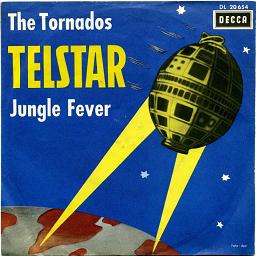
April 28 is International Astronomy Day, and today on the old blogorooni is a playlist of 30 kick-asteroid songs. Songs with titles mentioning the moon, planets, stars, and all that other scientific jargon. Hope you find it out of this world!
Follow Tunes du Jour on Facebook
Follow me on Bluesky
Follow me on Instagram

If you’ve ever found yourself on a dance floor, there’s a very high probability you’ve been moving to the work of Nile Rodgers. While his name might not be as instantly recognizable as the superstars he’s worked with, his sound is an undeniable part of modern music history. Looking at a playlist of his work is like taking a tour through the last five decades of pop, funk, and rock. He’s the common thread, the secret ingredient, and the architect behind countless hits, often armed with his signature 1960 Fender “Hitmaker” Stratocaster.
It all starts with Chic, the band he co-founded with the brilliant bassist Bernard Edwards. On tracks like “Good Times,” “Le Freak,” “I Want Your Love,” “Everybody Dance,” and the rest of the Chic songs on this list, Rodgers served as co-writer, guitarist, and co-producer. This partnership, known as The Chic Organization, became a powerhouse production unit. They took their signature blend of sophisticated funk, propulsive rhythms, and string-laden elegance and applied it to other artists. For Sister Sledge, they wrote, produced, and performed on “We Are Family,” “He’s the Greatest Dancer,” and “Lost In Music,” transforming the family group into global sensations. They did the same for Diana Ross, delivering her iconic hits “Upside Down” and “I’m Coming Out,” where Rodgers once again handled co-writing, guitar, and co-production duties.
As the 1980s dawned, Rodgers stepped into a new role as a solo super-producer, shaping the sound of the decade. He produced David Bowie’s blockbuster album Let’s Dance, playing his distinct, chiming guitar on the title track, “Modern Love,” and “China Girl.” While he didn’t write those songs, his production and arrangements are largely responsible for making them monumental hits. He did the same for Madonna, producing her album Like a Virgin. On tracks like the title song, “Material Girl,” “Dress You Up,” and “Angel,” Rodgers was the producer and a key guitarist, helping to craft the clean, sharp, and irresistibly danceable sound that defined her early career. He also brought his Midas touch to the world of New Wave, producing the hit single version of Duran Duran’s “The Reflex” and co-producing their smash, “Wild Boys.”
Beyond these marquee names, Rodgers’s discography reveals an incredible range. He was the producer who helped The B-52’s craft the polished and joyful sound of “Roam.” He produced the sleek, funk-rock of INXS’s “Original Sin” and the anthemic “Lay Your Hands On Me” for the Thompson Twins. His work with female vocalists continued to shine, from co-writing and co-producing the criminally underrated groove of Carly Simon’s “Why” to lending that same full-service treatment to Debbie Harry’s solo track “Backfired,” Grace Jones’ “I’m Not Perfect,” and Sheila & B. Devotion’s European disco classic, “Spacer.” On each of these, he was not just behind the board but was an active writer and musician.
Decades later, that same unmistakable guitar and rhythmic sensibility are as relevant as ever. His re-emergence into the mainstream wasn’t a comeback, but simply a reminder that he never left. He brought his magic to Daft Punk’s “Get Lucky,” which he co-wrote and on which he played that instantly recognizable guitar riff. More recently, he contributed his guitar playing and received a co-writing credit on Beyoncé’s “CUFF IT,” a track that feels like a direct descendant of the joyful, sophisticated funk he pioneered. From disco to new wave, and from 80s pop to 21st-century R&B, Nile Rodgers’s role has been consistent: he is the man who provides the foundation, the feel, and the funk that makes the world want to dance.
Follow Tunes Du Jour on Facebook
Follow me on Bluesky
Follow me on Instagram

Every June, Pride Month invites us to honor the LGBTQ+ community—not just its triumphs and ongoing struggles, but its wildly varied voices. This playlist, drawn from over six decades of music, is less a neat collection than a vibrant mix of statements, emotions, and identities. From Sylvester’s ecstatic disco classic “You Make Me Feel (Mighty Real)” to Billie Eilish’s “LUNCH,” the selections aren’t organized by genre, time period, or even theme. That’s fitting. The LGBTQ+ experience is too broad and multifaceted to be summed up by any single sound.
Some tracks speak directly to queerness, like Lou Reed’s “Walk on the Wild Side,” which namechecks drag queens and trans women, or Bronski Beat’s spiritual descendants, the Scissor Sisters, with their cheeky, loving anthem “Take Your Mama.” Others, like “Rocket Man” or “Do You Really Want to Hurt Me,” resonated with queer audiences before the artists behind them publicly came out—or even if they never did. There’s a history of coded expression here, of lyrics that offered solace to those reading between the lines.
Then there are the songs that became anthems of empowerment by sheer force of feeling: Christina Aguilera’s “Beautiful” offered a lifeline to LGBTQ+ youth when it first aired on MTV, while Madonna’s “Vogue” gave a global spotlight to a ballroom culture that had long gone ignored by the mainstream. Judy Garland’s “Over the Rainbow” might seem quaint next to Chappell Roan’s “Good Luck, Babe!,” but both songs capture longing, whether for love, acceptance, or the audacity to want more.
What unites these artists isn’t a single identity but a shared defiance—sometimes quiet, sometimes flamboyant—against what’s expected. Whether it’s the punkish ache of Buzzcocks’ “Ever Fallen in Love (With Someone You Shouldn’t’ve)” or the glossy Pet Shop Boys cover of “Go West,” the throughline is the refusal to shrink. Pride, in this sense, isn’t about perfection or performance. It’s about visibility, honesty, and a community that keeps evolving, note by note.
So, while this playlist won’t tell a single story, that’s exactly the point. Pride has never been about uniformity. It’s about claiming your truth, however it sounds—and blasting it through the speakers so someone else knows they’re not alone.
Hear last year’s Pride playlist here.
Follow Tunes du Jour on Facebook
Follow me on Bluesky
Follow me on Instagram

Ask ten people to define punk rock, and you’re likely to get at least fifteen answers. That’s part of its charm—and its challenge. Punk has always been more than a style of music; it’s a way of questioning the status quo, pushing back against complacency, and refusing to color inside the lines. The 30 songs in this playlist represent the genre’s many branches: from the snarling minimalism of the Sex Pistols’ “God Save the Queen” to the tightly coiled fury of Black Flag’s “Rise Above,” from Patti Smith’s poetic incantations to the danceable paranoia of Talking Heads’ “Psycho Killer.”
The roots of punk go deep, even before the term existed. “I’m Waiting for the Man” by The Velvet Underground and “Kick Out the Jams” by MC5 helped pave the way with their raw sound and confrontational lyrics. By the mid-1970s, punk had taken recognizable form in both New York and London. The Ramones stripped rock to its bare essentials with “Sheena Is a Punk Rocker,” while The Clash’s London Calling album pointed to punk’s potential to absorb and reflect broader influences—including reggae, ska, and politics.
Acts like Gang of Four and Television took the energy of punk and redirected it into jagged rhythms and angular guitars. The B-52’s “Rock Lobster” and Talking Heads introduced eccentricity and art-school sensibilities, while the Dead Kennedys and Sham 69 channeled punk into direct political protest. Meanwhile, bands like The Jam and Buzzcocks added a melodic urgency, and Iggy Pop and the New York Dolls injected glam and danger into the proceedings.
In the decades that followed, punk fragmented and flourished. Rancid’s “Time Bomb” leaned into ska-punk; Blink-182’s “Dammit” helped define a generation’s version of pop-punk adolescence. Bikini Kill’s “Rebel Girl” roared from the riot grrrl movement with feminist fire, and Billy Bragg brought punk’s commitment to social critique to a solo singer-songwriter context. Even grunge touchstones like Mudhoney carried punk’s DNA—loud, unpolished, and emotionally direct.
This playlist doesn’t claim to be definitive—if anything, it’s a conversation starter. It suggests that punk isn’t a sound so much as a stance. Whether it’s The Replacements thumbing their nose at success in “Bastards of Young,” or Green Day channeling disillusionment into “American Idiot,” punk continues to reinvent itself. It may shift forms, but it never goes quietly.
Follow Tunes du Jour on Facebook
Follow me on Bluesky
Follow me on Instagram

By 1990, pop music was as fragmented as ever, with the charts reflecting a mix of dancefloor anthems, alternative breakthroughs, and genre-defying oddities. Hip-hop’s mainstream ascent was well underway, electronic music was taking shape in new and exciting forms, and rock music was shifting toward something grittier. The year’s defining hits weren’t just about big hooks—they were about movement, whether physical, emotional, or cultural.
Dance music thrived in 1990, blurring the lines between house, hip-hop, and pop. Madonna’s “Vogue” channeled the underground ballroom culture into a global phenomenon, while Deee-Lite’s “Groove Is in the Heart” mixed funk, rap, and psychedelic whimsy into a club classic. Elsewhere, Snap! (“The Power”) and Black Box (“Everybody Everybody”) brought European dance music into the mainstream, and 808 State’s “Pacific (707)” hinted at a future where electronic beats would dominate pop music. Even hip-hop joined the party, with M.C. Hammer’s “U Can’t Touch This” and Digital Underground’s “The Humpty Dance” bringing humor and flamboyance to the genre.
Meanwhile, alternative rock was carving out a larger space. Jane’s Addiction’s “Been Caught Stealing” and Faith No More’s “Epic” merged funk, metal, and punk into something unpredictable. The UK’s Madchester scene, fueled by dance rhythms and psychedelic guitars, produced The Stone Roses’ “Fools Gold,” Happy Mondays’ “Step On,” and Primal Scream’s “Loaded,” while The Charlatans’ “The Only One I Know” signaled Britpop’s coming rise. Across the Atlantic, Tom Petty’s “Free Fallin’” offered a more traditional take on rock, while Aerosmith’s “Janie’s Got a Gun” tackled dark subject matter with arena-sized drama.
Elsewhere, pop and R&B pushed forward with innovation. En Vogue’s “Hold On” showcased impeccable vocal group harmonies, Lisa Stansfield’s “All Around the World” delivered a fresh take on blue-eyed soul, and George Michael’s “Freedom ’90” turned self-reinvention into an art form. Janet Jackson’s “Escapade” and Prince’s “Thieves in the Temple” kept their respective streaks of forward-thinking pop hits alive. And then there was Sinéad O’Connor’s “Nothing Compares 2 U”—a Prince-penned ballad that, in her hands, became one of the most emotionally raw performances of the era.
Yet 1990 also had space for the delightfully weird. They Might Be Giants’ “Birdhouse in Your Soul” was an offbeat yet catchy rock song that felt beamed in from another world, while Pet Shop Boys’ “So Hard” continued their sophisticated synth-pop explorations. Biz Markie’s “Just a Friend” made earnest goofiness into a virtue, and DNA’s remix of Suzanne Vega’s “Tom’s Diner” pioneered a new wave of genre-hopping, blending folk with electronic beats. Even the global phenomenon of “Lambada” proved that music was becoming more borderless. Whether through innovation, reinvention, or sheer force of personality, 1990’s music remains as compelling as ever.
Follow Tunes Du Jour on Facebook
Follow me on Bluesky
Follow me on Instagram


Lots of music from The Police on today’s playlist, as it is the birthday of their frontman Sting.