Throughout the next however many months I’ll be counting down my 100 favorite albums, because why not. I’m up to number sixty-nine.
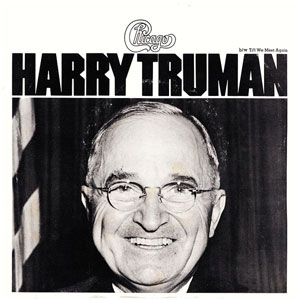
The song “(You’re) Having My Baby” ruined my life.
I know. Yours, too.
It happened in 1974. Ol’ Betsy, my family’s blue station wagon with the imitation-wood paneling stickers, was still in the driveway when I asked my father to turn on “Musicradio 77 – WABC.” A song came on that I particularly liked. Maybe it was “Billy Don’t Be A Hero” or “Band on the Run” or “Rock the Boat” or the song that resonated deeply with every boy my age—“(You’re) Having My Baby.” What a lovely way for my spirits to be lifted. It’s as if that song’s writer/singer, Paul Anka, had been reading my diary. Whichever song it was, I did what any joyful ten-year-old would do: I started to sing along.
My brother, one year my senior, cut me off instantly, saying something along the lines of, “Shut up and stop torturing us.” My father chimed in with something equally dismissive, and my mom echoed the sentiment. They all had a good chuckle.
Some context: music was everything to me. My grandpa had gifted me a transistor radio a few months earlier, and I’d become obsessed. I lived for the Top 40. I listened to Casey Kasem run the countdown every Sunday, loving each and every song he played without judgment, until that dark day in November when “Cats in the Cradle” made its debut. As a kid, I couldn’t relate to this song about parental absence and regret. Five-plus decades later, I completely understand the song’s sentiments, and have a host of other reasons to still hate it.
In 1974 I bought every issue of Song Hits magazine so I could get the lyrics right. (Wait, it’s not “Waterloo / I had my feet there upon the wall?” The opening lines of Three Dog Night’s “The Show Must Go On” aren’t “Beat it! Oh, Lou, I chose this blue life a seena strang mahna mahna?”) It was super important that I knew all the words. I was, in my own head, a burgeoning musical sensation. And why not? Michael Jackson and Donny Osmond were around the same age I was then when they started their recording careers. Between them they had all bases covered. MJ, with his emotive singing, electrifying dancing, boundless charisma, and otherworldly talent. Donny, with his nice teeth. Don’t think that I’m underselling Donny. He had SPECTACULAR teeth.
Maybe I didn’t sing as well as Michael Jackson or Paul Anka, but I thought I sang as well as any other kid in Mrs. Mazze’s music class, and it was an activity that made me happy. Or used to.
I shut up.
For good.
At least in the car. At least around them.
The lessons I learned that day in 1974:
- Don’t poke the bear.
- Don’t make waves.
- Don’t stick your neck out.
- Better safe than sorry.
- Don’t put yourself out there, and no one can tell you you’re not good enough.
- By not trying, you avoid the sting of failure.
- Be quiet. Be small.
- Invisible is safe.
Dinner time at the O’Brien home in 1940s London could be dangerous. It wasn’t unknown for Mrs. O’Brien—an alcoholic former dancer—to throw food, often while still in its serving dish. Mr. O’Brien, a frustrated would-be pianist with a violent temper, was said to call his daughter Mary names and sometimes hit her. She stayed quiet, lest she poked the bear.
In that house, music was an escape for Mary and her brother, Dionysius. Both enjoyed singing. Mary was, in her own head, a burgeoning musical sensation.
At her Catholic all-girls’ school, the nuns looked at the shy, awkward girl and predicted she’d likely make a living as a librarian. Mary had convinced herself they were right; she was boring, unattractive, and meant for a plain, quiet life. She was a girl waiting for permission to exist.
I didn’t stop singing entirely. I performed in my arts & music summer camp’s talent shows, guitar in hand. I auditioned for school and camp musicals, peaking in twelfth grade when I played Motel in Fiddler on the Roof to the genuine applause of my classmates, many of whom had never heard me open my mouth. After I got my driver’s license I sang in the car— alone, windows up, and never at stoplights where someone might glance over and catch me belting out the theme from The Greatest American Hero, thus opening me up to ridicule. Believe it or not, I still harbored a fear of being judged. I had elaborate fantasies of road trips with dates—not that I went on dates in high school—where we’d duet on “You’re the One That I Want” or “Stumblin’ In” or “Mockingbird,” singing loud enough for the back row at Carnegie Hall to hear us. Once, with an actual human present—my friend Ed, senior year of high school—I held the crazy long note at the two-thirds of the way in mark of Barbra Streisand’s “Woman in Love”—girl, you know the one:
I stumble and fall
but I give you it aaaaaaaaaaaaaaaaaaaaaaaaaaaaaaaaaaaaaaalllllllllllllllllllllllllllllllllllllll
—just to prove I could.
Through my childhood and teen years, music remained my passion. Performing in school shows and summer camp was fun, but making a career out of performing? That felt too exposed, too risky. What if my family was right? What if the applause was just people being nice? What if nobody actually wanted to hear me? Better to choose safety over the chance of hearing “shut up and stop torturing us” on a larger scale. I decided to pursue the business side of music instead. After college, I landed a job at CBS Records in the Accounts Receivable department. I was over the moon. I relayed the exciting news to my mom. Her response? “I guess you could do that while you keep looking.” Eighteen years later, when I was named Vice President at Warner Music, I told her that news, proud of how far I’d come. Her response: “I guess this really is your career.”
The nuns wouldn’t have recognized the woman who eventually stepped onto the stage. She wore a blonde beehive and ample mascara inspired by the drag queens she loved. No spectacles sat on her nose. And she no longer called herself Mary. Her new first name came from the nickname kids gave her because she liked playing football in the dirt. Her brother, who performed with Mary in a folk-pop trio, came up with a new last name for the two of them. He wanted a name that would resonate with American audiences, and noticed a lot of towns and cities in the U.S. had the same name. And thus, shy Mary Isobel Catherine Bernadette O’Brien became Dusty Springfield.
In the early 1960s, The Springfields scored several UK hits and cracked the US top twenty with “Silver Threads and Golden Needles.”
In 1964 Dusty launched a solo career built on her obsession with American pop and soul and Motown. She had a solo smash right out of the gate with “I Only Want to Be with You,” which is going to be my wedding song should I ever get someone to propose to me—still wishin’ and hopin’. Speaking of, that first chartbuster was followed by a run of hits on either or both sides of the Atlantic, including “Wishin’ and Hopin’,” “You Don’t Have to Say You Love Me,” “I Just Don’t Know What To Do With Myself,” and “The Look of Love.” She didn’t just sing these songs; she controlled the sessions, including selecting material, shaping arrangements, and re-recording her vocals dozens of times until every note was exactly right, often refusing production credit even though she’d directed the entire vision.
Her obsession with American soul music went deeper than sound. She was a white British woman who became a “soul evangelist.” In early 1960s Britain, soul music was largely confined to underground clubs and dance halls. In 1965, Dusty hosted The Sound of Motown, a British TV special that gave The Supremes, Stevie Wonder, The Miracles, and The Temptations their first UK television appearances, introducing them to a national audience that had never seen them before. The special helped launch Motown’s success in Britain. In addition, she demanded it be written into her contract that she would only perform for integrated audiences. When she was told she had to play a segregated venue in South Africa, she famously told the New Musical Express she’d be “on the first flight home”—and she was, deported with a police escort.
To those watching her, she was fearless. But internally, she was still that girl dodging food.
I’m making a career pivot. I still love music, but I’m over the “business.” I am done with the egos, the politics, the greed, and the manufactured “next big things” with nothing real to offer. Mostly, I’m tired of answering to “the man.” I’ve decided I’d much rather answer to myself.
I’m pursuing corporate speaking. Yes, really. Me, Mr. “Invisible is safe,” now wants to stand on stages and talk to rooms full of people. Surely there are less terrifying career pivots, like skydiving or defusing bombs. At least with those, if you screw up, you don’t have to face anyone afterward. I want to do work that matters. At the same time, I want to keep my limbs so I can dance at my wedding. Still wishin’ and hopin’. Corporate speaking is the choice lets me do both: work that might actually make the world a little better, and Macarena.
Public speaking is not completely new to me. I’ve spoken at conferences and presented at company-wide meetings for years, putting an emphasis on being entertaining and relatable over PowerPoint slides and dry data. For example, as be a fun way to showcase projects my departments were working on, I wrote a parody video of the television show The Office, starring my staff and me. The majority of the company loved it.
There was one notable exception. The day after the video was shown at a company-wide forum, our head of Human Resources summoned me to her office to discuss some of the more “inappropriate” humor in the script, specifically, jokes connected to diversity. The irony: I managed the most diverse departments in our division (and, not coincidentally, the most successful). The rest of the division was whiter and straighter than Donny Osmond’s teeth. Apparently pointing that out was a problem.
That same day my colleague Lauren stopped me as I was walking down the hall. “Here,” she said, handing me a DVD. “I made a copy of your video to show Dwayne. He loved it. He thinks you’re hilarious.” Dwayne was her boyfriend, now husband. Dwayne Johnson. The Rock.
You’d think a thumbs-up from the biggest movie star on the planet would matter more than Ruth from HR’s disapproval. But The Rock didn’t offer me a job; Ruth could actually cause my career harm.
Being at Warner Music felt safe. When I spoke with artist managers or foreign affiliates or potential clients, I was representing the company, advocating for artists and catalog, delivering business strategies.
This new path is different. I’m not representing a label or a brand. I’m not representing anyone but myself. And for someone who spent forty years trying to ensure everyone liked the “corporate” version of him, standing on a stage with no company behind me is the most terrifying thing I’ve ever done.
My speaking topics, drawn directly from my work experience, are diversity and inclusion. To help market myself as a speaker on these subjects, I’ve written a book that uses stories about artists and songs and draws on examples from my four decades in the music business to show that innovation happens and productivity increases when organizations make space for people who don’t fit a set mold. I strongly believe that diversity isn’t just a moral imperative; it’s a competitive advantage.
The book, Make Diversity A Hit!: What My 30+ Years Of Negotiating 10k+ Deals For Music’s Biggest Artists Can Teach You About How Diversity Can Grow Your Business, took me five years to write. Five years of reading scores of articles and books about diversity and inclusion. Five years of writing and rewriting, proofreading and polishing, telling that voice in my head to be quiet so I could just finish the damn thing. Five years.
And then, hurrah! It was finished. Ready to be published. Ready to change lives. Ready to launch my speaking career.
That was in 2019.
I told myself not to rush into things. It was important I do this right. I had to learn how to self-publish. And as the book is meant to be a calling card for speaking, I had to prepare for that, too. And so, during these last six-plus years, I’ve been preparing. I read books about self-publishing. And books about speaking. And books about marketing books with the goal of speaking. I attended webinars and seminars and symposiums and conferences. I went to forums and panel discussions and roundtables. I listened to podcasts and audiobooks. I watched TED talks and YouTube tutorials and masterclasses. I took courses on personal branding, thought leadership, and teaching through storytelling. I learned about SEO optimization, social media strategy, and the algorithm. I joined LinkedIn groups and never posted or read what was posted because I hate LinkedIn. I joined Facebook groups and never posted or read what was posted because I hate Facebook. I bookmarked articles about overcoming impostor syndrome—141 of them. I traveled to Las Vegas to attend masterminds where I brainstormed with other speakers/writers, many of whom have magically published more than one book in that time and are now considered experts on their chosen subjects. I became an expert in preparing to plan to start getting ready.
A therapist may say I have anxiety stemming from perfectionism. But is perfectionism demanding of oneself an extremely high level of performance, in excess of what is required by the situation? I would say no, while the American Psychological Association Dictionary of Psychology says yes. Who are you going to believe—the combined wisdom of every licensed psychologist in America or the guy who still kicks himself because he doesn’t know the lyrics to Three Dog Night’s “The Show Must Go On”?
The truth is, I’m terrified to put it (me) out there.
At Toastmasters I won so many Best Speaker ribbons that one year the club president stopped giving them out. He thought it wasn’t fair to everyone else. I didn’t care about the ribbons. I was competing with myself, trying to convince that ten-year-old in the back of the station wagon that it’s okay to live out loud. To experiment. There was nothing of consequence at stake. It was safe to fail.
But now? Now I’m trying to make this a career. Now there’s something at stake. I look at other speakers—the ones with the PhDs and the massive platforms—and I feel like a fraud with a handful of blue ribbons. Okay, a boatload of blue ribbons. With just the thought of actually booking an engagement, I am instantly ten years old again, terrified that if I step out there, the world will echo my family and tell me to be quiet. What if I deliver a speech that isn’t well-received? And someone posts about my debacle? And that post gets shared? And every hiring manager in America knows I’m the guy who bombed on stage? What if this one speech ruins any chance I have at this career? That would prove the lesson I learned in 1974 was correct: By not trying, you avoid the sting of failure. Invisible is safe.
In 1968, Dusty Springfield went to Memphis to record with session musicians behind some of the soul records she revered. She walked into American Sound Studio. The rhythm tracks had already been recorded. Now it was her turn. She stood at the microphone in the same vocal booth where her heroes had stood.
She froze. A therapist may say she had anxiety stemming from perfectionism. She would have called it fear.
“I hated it,” she later said, “because I couldn’t be Aretha Franklin. If only people like [record producer] Jerry Wexler could realize what a deflating thing it is to say ‘Otis Redding stood there’ or ‘That’s where Aretha sang.’ Whatever you do, it’s not going to be good enough.”
Eventually, she left. Wexler would later claim he “never got a note out of her” in Memphis.
The vocals would have to be recorded somewhere else. Somewhere she could relax. Somewhere peaceful. Somewhere quiet. Somewhere unintimidating. New York City, obviously. Away from the weight of that Memphis studio, she found her voice. Which means Dusty didn’t actually record Dusty In Memphis in Memphis, making it the most blatant case of a fraudulent album title since The Beach Boys’ Pet Sounds.
The songwriters on Dusty in Memphis were a “Who’s Who” of pop music greatness—Carole King and Gerry Goffin, Barry Mann and Cynthia Weil, Burt Bacharach and Hal David, Marilyn and Alan Bergman with Michel Legrand, and a rising star named Randy Newman.
But the song that became the album’s hit single was written by the lesser known team of John Hurley and Ronnie Wilkins. They intended it for Aretha Franklin to sing, but the Queen of Soul, famously the daughter of a preacher man, passed on singing how the only man who could ever love her was the son of a preacher man.
Dusty took “Son of a Preacher Man” and made it a global Top 10 smash. (Seeing its success, Ms. Franklin did end up recording her own version.)
Despite the popularity of the single, the album Dusty In Memphis was a commercial “meh,” missing the British and American top 40. It would be just shy of 20 years before she again achieved the commercial height of “Son of a Preacher Man,” when Pet Shop Boys, over the objections of their record label, who preferred they record with Tina Turner or Barbra Streisand, recruited Dusty for their song “What Have I Done To Deserve This?”
That single went to #2 on both sides of the Atlantic. She was back. Critics dusted off their copies of Dusty in Memphis and realized they were holding a masterpiece. Soon it was included in many Best Albums Of All Time lists. Elvis Costello called it a record “that will chill and thrill, always and forever,” adding “Dusty Springfield’s singing on this album is among the very best ever put on record by anyone.” Then came 1994 and Quentin Tarantino. The writer/director put “Son of a Preacher Man” in Pulp Fiction. The soundtrack sold over three million copies in the U.S. alone; more people owned that album than had ever owned a Dusty Springfield record.
On March 2, 1999, the day she was scheduled to receive an award at Buckingham Palace as an Officer of the Order of the British Empire for “services to popular music,” breast cancer took Dusty Springfield’s life. Two weeks later, she was inducted into the Rock & Roll Hall of Fame, where Elton John called her “the greatest white singer there has ever been.”
Where Mary O’Brien was terrified of saying the wrong thing, Dusty made herself heard. She’d fought for integrated audiences and came out publicly as bisexual in 1970, a time when the number of openly LGBTQ pop stars could be counted on one fist.
Mary O’Brien spent her childhood being quiet to stay safe. But with a beehive and a little mascara (okay, a lot of mascara), she transformed herself into Dusty Springfield and made herself heard.
I don’t sport a beehive, nor do I wear mascara (that one night in college notwithstanding). I never found my superhero uniform, the one that would make me invincible. Instead, I spent years being invisible, thinking silence was safety. It wasn’t safety; it was erasure. I succeeded in the corporate music world because I was confident I could. I won ribbons at Toastmasters because the stakes were low enough for me to feel comfortable to experiment. The truth is I only tried things where I already believed I could succeed. I avoided anything that might give the world a reason to criticize me. Fear of failure didn’t stop me from achieving; it stopped me from risking. And spending my life avoiding the risk of failure is still a kind of failure—the failure to find out who I might have been without the fear.
I recently came across an interview with Fiona Apple, an artist I adore, worship, admire and worship, not in a creepy way. In 2020, another Apple admirer, Bob Dylan, invited her to the studio to play piano on a song he was recording. Even with all her acclaim and years of experience, she was terrified, convinced she’d mess up the work of a legend. She told Dylan of her trepidation. His response: “You’re not here to be perfect, you’re here to be you.”
After spending many hours thinking about that, I realized that I had been auditioning for a role that doesn’t exist. “Perfect Glenn.” He never messes up, because he never actually participates.
Dusty Springfield managed to finish making Dusty In Memphis, and it became a masterpiece—not because she stopped being afraid, but because she sang through the fear. I’m done waiting for proof that outweighs my doubt. My book has been gestating for twelve years, and now I’m having my baby. I’m putting the book out. I’m seeking the gigs.
Maybe my work will be as great as Dusty in Memphis. Maybe it won’t. Either way, I’m turning the radio up. My voice deserves to be heard.
Follow Tunes Du Jour on Facebook
Follow me on Bluesky
Follow me on Instagram