Tunes Du Jour Celebrates Presidents’ Day

From folk protest to funk, punk rock to hip-hop, this eclectic Presidents’ Day playlist spans decades of American political commentary through the lens of popular music. Not every commander-in-chief makes an appearance—some presidencies inspired little musical response, while others (particularly Kennedy, Reagan, and George W. Bush) sparked entire catalogs of artistic reaction. The collection moves chronologically through the office holders, though the songs themselves range from contemporary responses to retrospective reflections, capturing how each president’s legacy resonated with musicians of different eras and genres. Whether celebratory, satirical, or scathing, these tracks remind us that popular music has always served as a vital form of political discourse, holding power accountable and giving voice to the frustrations, hopes, and criticisms of the American people.


James K. Polk – They Might Be Giants
An infectiously catchy history lesson that chronicles Polk’s ambitious single-term presidency and his campaign promises to expand American territory.

Abie Baby – Hair Original Cast
This number from the groundbreaking musical Hair celebrates Abraham Lincoln’s legacy of emancipation with psychedelic 1960s exuberance.

Louisiana 1927 – Randy Newman
Newman’s haunting ballad captures the devastating Mississippi River flood during Calvin Coolidge’s administration and the government’s inadequate response.

We’d Like To Thank You Herbert Hoover – Annie Original Broadway Cast
A Depression-era shantytown chorus sarcastically thanks Hoover for the economic catastrophe that left Americans destitute and homeless.

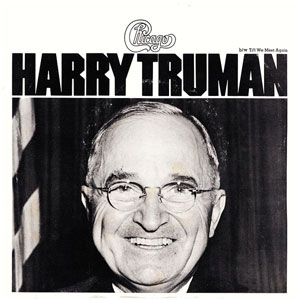
Harry Truman – Chicago
This gentle rock ballad uses Truman as a symbol of simpler times and American authenticity before the cynicism of later decades.

Eisenhower Blues – The Costello Show Feat. The Attractions & Confederates
Costello’s cheeky cover plays with 1950s nostalgia while questioning the era’s conformity and Cold War anxieties.

Murder Most Foul – Bob Dylan
Dylan’s seventeen-minute meditation on the Kennedy assassination weaves together American mythology, cultural memory, and the loss of innocence.

President Kennedy – Eddie Izzard
The British comedian takes on the misunderstanding that President Kennedy declared himself to be a doughnut.

The Day John Kennedy Died – Lou Reed
Reed’s stark, melancholic reflection places Kennedy’s death in the context of personal memory and national trauma.

Lyndon Johnson Told The Nation – Tom Paxton
Paxton’s folk protest song sardonically captures LBJ’s escalation of the Vietnam War and the duplicity of official statements.

You Haven’t Done Nothin’ – Stevie Wonder
Wonder’s funky, cutting critique of Nixon’s broken promises and political corruption became an anthem of Watergate-era disillusionment.

Impeach the President – Honey Drippers
This funk instrumental’s famous drum break refers to Nixon, though it’s become better known as one of hip-hop’s most sampled beats.

Funky President (People It’s Bad) – James Brown
The Godfather of Soul delivers hard-hitting social commentary on economic hardship during the Ford administration.

(We Don’t Need This) Fascist Groove Thang – Heaven 17
British synth-pop warriors take aim at Reagan’s cowboy diplomacy and the early 1980s conservative political climate.

Ronnie, Talk to Russia – Prince
Prince’s Cold War plea urges Reagan to pursue diplomacy and nuclear disarmament before it’s too late.

Bonzo Goes to Bitburg – Ramones
The punk legends blast Reagan’s controversial visit to a German cemetery containing SS graves, delivered with their signature three-chord fury.

Old Mother Reagan – Violent Femmes
The Femmes’ acoustic punk assault critiques Reagan’s policies with youthful anger and folk-punk energy.

Reagan – Killer Mike
The Atlanta rapper delivers a scathing indictment of Reagan’s policies on race, drugs, and economics decades after leaving office.

5 Minutes (B-B-B Bombing Mix) – Bonzo Goes To Washington
This mashup satirizes Reagan’s notorious hot-mic joke about bombing Russia by splicing it with dance beats.

If Reagan Played Disco – Minutemen
The iconoclastic punk band imagines an absurdist alternate reality with their typically angular, political edge.

Fuck You – Lily Allen
Allen’s chipper, profanity-laced dismissal of George W. Bush was initially posted on her MySpace page under the title “Guess Who Batman.”

When the President Talks to God – Bright Eyes
Conor Oberst’s devastating critique questions Bush’s certainty and religious justifications during the Iraq War.

Mosh – Eminem
Eminem’s urgent call to political action rallied young voters against Bush’s policies in the 2004 election.

Let’s Impeach the President – Neil Young
Young’s protest rocker methodically lists grievances against Bush with straightforward outrage and rock-and-roll directness.

I’m With Stupid – Pet Shop Boys
The synth-pop duo skewers Tony Blair’s subservience to Bush’s foreign policy agenda with biting British wit.

Dear Mr. President – P!nk featuring Indigo Girls
P!nk’s open letter challenges Bush to walk in others’ shoes and confront the human cost of his decisions.

Obama – ANOHNI
This haunting piece wrestles with disappointment in Obama’s continuation of drone warfare despite his hopeful campaign promises.

Fuck Donald Trump – YG & Nipsey Hussle
The West Coast rappers deliver an unfiltered denunciation of Trump’s rhetoric and policies with raw urgency.

The President Can’t Read – Amy Rigby
Rigby’s folk-rock takedown questions Trump’s competence and intellectual curiosity with pointed observations.

Streets of Minneapolis – Bruce Springsteen
The Boss’s response to the killings of American citizens by US Immigration and Customs Enforcement under directions from President Trump.

Follow Tunes Du Jour on Facebook

Follow me on Bluesky

Follow me on Instagram

Tunes Du Jour Presents 2009

Looking at a list of songs from 2009 feels a bit like opening a time capsule. It’s a year that feels both incredibly recent and like a completely different era. The internet had firmly established itself as the primary engine of music discovery, yet the monoculture of massive, universally-known hits was still holding on. It was a year of distinct, confident sounds, where different genres weren’t just blending together, but thriving in their own parallel lanes. From stadium-sized anthems to bedroom-born electronic experiments, the music of 2009 was defined by a remarkable breadth of creativity.

One of the most prominent stories of the year was the flourishing of indie rock. This wasn’t the scrappy, underground sound of years past; this was indie at its most ambitious and critically adored. You had the intricate, harmony-drenched compositions of Grizzly Bear on “Two Weeks” and the hypnotic, looping bliss of Animal Collective’s “My Girls.” These were songs that rewarded close listening. Elsewhere, artists like Bat For Lashes (“Daniel”) and Dirty Projectors (“Stillness Is The Move”) were crafting their own unique sonic worlds, while bands like the Yeah Yeah Yeahs (“Zero”) and Japandroids (“Young Hearts Spark Fire”) delivered pure, cathartic energy. It was a moment where “alternative” music felt like it was setting the cultural agenda.

Meanwhile, the top of the charts was being shaped by bold new directions in pop and hip-hop. Lady Gaga’s “Bad Romance” wasn’t just a song; it was a high-concept art project, signaling a new level of theatricality in pop music. This stood alongside the effortless, feel-good charm of Miley Cyrus’s “Party in the U.S.A.” and Kelly Clarkson’s powerhouse hit-making on “My Life Would Suck Without You.” In hip-hop, the genre’s emotional palette was expanding dramatically. You had Jay-Z and Alicia Keys delivering a timeless, triumphant anthem with “Empire State Of Mind,” while at the same time, Kanye West’s auto-tuned melancholy on “Heartless” and Kid Cudi’s spacey introspection on “Day ‘N’ Nite” were paving the way for a more vulnerable sound. The arrival of Drake with “Best I Ever Had” confirmed this shift toward melody and emotional openness was here to stay.

This wasn’t to say that straightforward rock and roll had been left behind. On the contrary, it was a year of massive, unifying rock anthems. Kings Of Leon reached their popular peak with “Use Somebody,” a song that seemed to be playing in every stadium and on every radio station in the world. The UK, meanwhile, was providing its own distinct contributions, from the grand, theatrical rebellion of Muse’s “Uprising” and the clever songwriting of Arctic Monkeys on “Cornerstone” to the dance-floor-ready energy of Franz Ferdinand’s “Ulysses.”

Looking back at this collection of songs, what’s most striking is the confidence of it all. It was a year where artists were creating fully realized worlds for listeners to step into. Whether it was the raw nerve of The Ting Tings, the grime-infused electro of Dizzee Rascal’s “Bonkers,” or the classic synth-pop of Pet Shop Boys, each track feels like a distinct statement. It was a time when you could have a playlist that jumped from an introspective indie ballad to a global pop phenomenon, and the whole thing made perfect sense. It was the sound of several different musical futures all happening at once.

Follow Tunes Du Jour on Facebook

Follow me on Bluesky

Follow me on Instagram

Tunes Du Jour Celebrates Bastille Day

Happy Bastille Day!

On this date in 1789, the French people stormed the Bastille Prison in Paris to shout “No More Kings!” They probably shouted that in French. I can’t say for sure as I wasn’t there that day. Anyhoo, it worked! How’ bout that? This uprising ultimately led to the birth of democracy in France.

To celebrate, I compiled a Bastille Day playlist. I’ll be the first to tell you that there are far more accurate Bastille Day playlists out there. I’m using the holiday as an excuse to compile tracks from French artists, songs sung in French, songs with French titles, and one song by Chicago-born 60s song parodist Allan Sherman. I learned more from that three-minute record, baby, than I ever learned in school about the French Revolution.

Follow Tunes Du Jour on Facebook

Follow me on Bluesky

Follow me on Instagram

Tunes Du Jour Celebrates Pride 2025

Every June, Pride Month invites us to honor the LGBTQ+ community—not just its triumphs and ongoing struggles, but its wildly varied voices. This playlist, drawn from over six decades of music, is less a neat collection than a vibrant mix of statements, emotions, and identities. From Sylvester’s ecstatic disco classic “You Make Me Feel (Mighty Real)” to Billie Eilish’s “LUNCH,” the selections aren’t organized by genre, time period, or even theme. That’s fitting. The LGBTQ+ experience is too broad and multifaceted to be summed up by any single sound.

Some tracks speak directly to queerness, like Lou Reed’s “Walk on the Wild Side,” which namechecks drag queens and trans women, or Bronski Beat’s spiritual descendants, the Scissor Sisters, with their cheeky, loving anthem “Take Your Mama.” Others, like “Rocket Man” or “Do You Really Want to Hurt Me,” resonated with queer audiences before the artists behind them publicly came out—or even if they never did. There’s a history of coded expression here, of lyrics that offered solace to those reading between the lines.

Then there are the songs that became anthems of empowerment by sheer force of feeling: Christina Aguilera’s “Beautiful” offered a lifeline to LGBTQ+ youth when it first aired on MTV, while Madonna’s “Vogue” gave a global spotlight to a ballroom culture that had long gone ignored by the mainstream. Judy Garland’s “Over the Rainbow” might seem quaint next to Chappell Roan’s “Good Luck, Babe!,” but both songs capture longing, whether for love, acceptance, or the audacity to want more.

What unites these artists isn’t a single identity but a shared defiance—sometimes quiet, sometimes flamboyant—against what’s expected. Whether it’s the punkish ache of Buzzcocks’ “Ever Fallen in Love (With Someone You Shouldn’t’ve)” or the glossy Pet Shop Boys cover of “Go West,” the throughline is the refusal to shrink. Pride, in this sense, isn’t about perfection or performance. It’s about visibility, honesty, and a community that keeps evolving, note by note.

So, while this playlist won’t tell a single story, that’s exactly the point. Pride has never been about uniformity. It’s about claiming your truth, however it sounds—and blasting it through the speakers so someone else knows they’re not alone.

Hear last year’s Pride playlist here.

Follow Tunes du Jour on Facebook

Follow me on Bluesky

Follow me on Instagram

Tunes Du Jour Presents 1988

In 1988, hip-hop didn’t just make noise; it made history. Rob Base & DJ E-Z Rock’s “It Takes Two” lit up clubs and car stereos alike, while Eric B. & Rakim’s “Paid in Full (Seven Minutes of Madness)” remix turned the genre into a playground for sonic experimentation. Public Enemy’s “Bring the Noise” brought urgent political commentary to the mix, and LL Cool J’s “Going Back to Cali” offered a sleek, stylized West Coast daydream. Among them, Salt-N-Pepa’s “Push It” stood as a genuine milestone—a breakthrough for women in rap and, at the time, the biggest-selling hip-hop single to date. Though not on the playlist due to its hit version being unavailable on Spotify, its absence in no way reflects its cultural weight.

Elsewhere, 1988 was rich in songs that combined sincerity with staying power. Tracy Chapman’s “Fast Car” offered social commentary through intimate storytelling, and Michael Jackson’s “Man in the Mirror” turned self-reflection into an anthem. “Wishing Well,” performed by the artist then known as Terence Trent D’Arby, brought soul swagger to the top of the charts, while Prince’s “Alphabet St.” reminded listeners he was still capable of keeping them on their toes. Songs like Kylie Minogue’s “I Should Be So Lucky” and Rick Astley’s “Never Gonna Give You Up,” both produced by the UK’s Stock Aitken Waterman, were pure pop that have endured far beyond their original chart runs, largely due to their catchiness and an occasional boost from internet-era rediscovery.

Dance floors were equally alive with invention. M/A/R/R/S’s “Pump Up the Volume” and S’Express’s “Theme from S’Express,” the latter missing from the playlist due to its unavailability on Spotify, helped define a new frontier of UK club music that was steeped in sampling and shaped by emerging house and techno scenes.

INXS’s “Need You Tonight” merged rock and funk with a modern sheen, while The Cure’s “Just Like Heaven” and Morrissey’s “Everyday Is Like Sunday” balanced emotion with pop craftsmanship. The Pixies’ “Where Is My Mind?” and Dinosaur Jr.’s “Freak Scene” would prove even more influential in hindsight, while Mudhoney’s “Touch Me I’m Sick” gave an early signal of what would soon be called grunge.

Both the UK and Australia contributed standout tracks that reflected their national scenes’ strength. From the UK, Depeche Mode’s “Never Let Me Down Again” and Erasure’s “Chains of Love” explored emotional depth through electronic textures, while Pet Shop Boys teamed with Dusty Springfield on “What Have I Done to Deserve This?” to bridge classic and contemporary pop. Australia’s Midnight Oil brought urgency and political purpose with “Beds Are Burning,” The Church crafted dreamlike melancholy in “Under the Milky Way,” and Nick Cave & The Bad Seeds delivered stark intensity with “The Mercy Seat.” All three pointed to a vibrant and diverse Australian presence in global music that year.

The year also held room for collaboration, reinvention, and the unexpected. Traveling Wilburys’ “Handle With Care” saw rock legends joining forces without sounding self-indulgent. my bloody valentine’s “You Made Me Realise” hinted at the hazy swirl of shoegaze to come. The Bangles’ cover of “Hazy Shade of Winter” showed that ‘60s source material could thrive in a late-’80s rock context, and Anita Baker’s “Giving You the Best That I Got” offered polished, grown-up soul amid the noisier trends. Nineteen wighty-eight wasn’t about any one genre dominating the conversation; it was about cross-pollination, with club tracks rubbing shoulders with indie rock, hip-hop expanding its reach, and pop songs finding new ways to stick.

Follow Tunes Du Jour on Facebook

Follow me on Bluesky

Follow me on Instagram

Tunes Du Jour Presents 1990

By 1990, pop music was as fragmented as ever, with the charts reflecting a mix of dancefloor anthems, alternative breakthroughs, and genre-defying oddities. Hip-hop’s mainstream ascent was well underway, electronic music was taking shape in new and exciting forms, and rock music was shifting toward something grittier. The year’s defining hits weren’t just about big hooks—they were about movement, whether physical, emotional, or cultural.

Dance music thrived in 1990, blurring the lines between house, hip-hop, and pop. Madonna’s “Vogue” channeled the underground ballroom culture into a global phenomenon, while Deee-Lite’s “Groove Is in the Heart” mixed funk, rap, and psychedelic whimsy into a club classic. Elsewhere, Snap! (“The Power”) and Black Box (“Everybody Everybody”) brought European dance music into the mainstream, and 808 State’s “Pacific (707)” hinted at a future where electronic beats would dominate pop music. Even hip-hop joined the party, with M.C. Hammer’s “U Can’t Touch This” and Digital Underground’s “The Humpty Dance” bringing humor and flamboyance to the genre.

Meanwhile, alternative rock was carving out a larger space. Jane’s Addiction’s “Been Caught Stealing” and Faith No More’s “Epic” merged funk, metal, and punk into something unpredictable. The UK’s Madchester scene, fueled by dance rhythms and psychedelic guitars, produced The Stone Roses’ “Fools Gold,” Happy Mondays’ “Step On,” and Primal Scream’s “Loaded,” while The Charlatans’ “The Only One I Know” signaled Britpop’s coming rise. Across the Atlantic, Tom Petty’s “Free Fallin’” offered a more traditional take on rock, while Aerosmith’s “Janie’s Got a Gun” tackled dark subject matter with arena-sized drama.

Elsewhere, pop and R&B pushed forward with innovation. En Vogue’s “Hold On” showcased impeccable vocal group harmonies, Lisa Stansfield’s “All Around the World” delivered a fresh take on blue-eyed soul, and George Michael’s “Freedom ’90” turned self-reinvention into an art form. Janet Jackson’s “Escapade” and Prince’s “Thieves in the Temple” kept their respective streaks of forward-thinking pop hits alive. And then there was Sinéad O’Connor’s “Nothing Compares 2 U”—a Prince-penned ballad that, in her hands, became one of the most emotionally raw performances of the era.

Yet 1990 also had space for the delightfully weird. They Might Be Giants’ “Birdhouse in Your Soul” was an offbeat yet catchy rock song that felt beamed in from another world, while Pet Shop Boys’ “So Hard” continued their sophisticated synth-pop explorations. Biz Markie’s “Just a Friend” made earnest goofiness into a virtue, and DNA’s remix of Suzanne Vega’s “Tom’s Diner” pioneered a new wave of genre-hopping, blending folk with electronic beats. Even the global phenomenon of “Lambada” proved that music was becoming more borderless. Whether through innovation, reinvention, or sheer force of personality, 1990’s music remains as compelling as ever.

Follow Tunes Du Jour on Facebook

Follow me on Bluesky

Follow me on Instagram

Tunes Du Jour Presents 1986

Looking back at 1986, what stands out isn’t just the quality of the music, but how effortlessly genres merged and boundaries dissolved. Run-D.M.C. and Aerosmith’s “Walk This Way” wasn’t just a collaboration – it was a statement about how rock and hip-hop could amplify each other’s strengths. Prince, at the height of his powers, stripped everything down to bare essentials with “Kiss,” proving his superstardom could take any form. Robert Palmer’s “Addicted to Love” became inescapable, powered by one of the era’s most iconic videos, while Peter Gabriel’s “Sledgehammer” merged art rock with soul and funk, accompanied by groundbreaking stop-motion animation.

The women of pop music wielded particular influence that year. Madonna continued pushing buttons with “Papa Don’t Preach,” tackling teenage pregnancy in a way that sparked national conversation. Whitney Houston’s “How Will I Know” showcased her extraordinary vocal range while proving dance-pop could be both sophisticated and irresistible. Janet Jackson asked “What Have You Done for Me Lately,” establishing herself as a force independent of her famous family. Cyndi Lauper’s “True Colors” transcended its moment, becoming an enduring anthem of self-acceptance that would be covered for decades to come.

The underground was rising to the surface, but keeping its edge. The Smiths’ “There Is A Light That Never Goes Out” brought literary depth to alternative rock, while New Order’s “Bizarre Love Triangle” helped blueprint the future of electronic dance music. The Pet Shop Boys’ “West End Girls” married street-smart observations with pristine synth-pop, and Public Image Ltd.’s “Rise” proved post-punk could evolve without losing its bite. Even The Cure, with “In Between Days,” found a way to make melancholy sound surprisingly radio-friendly.

Soul and R&B were experiencing their own renaissance. Anita Baker’s “Sweet Love” brought sophisticated quiet storm to the mainstream, while Cameo’s “Word Up!” demonstrated funk’s continuing vitality. Grace Jones’ “Slave to the Rhythm” showcased the artist’s commanding presence, and James Brown reminded everyone he was still the Godfather of Soul with “Living in America.” The year also saw George Michael step out of Wham!’s shadow with “A Different Corner,” proving he could hold his own as a solo artist.

The year proved fertile ground for both established and emerging voices. Bruce Springsteen’s “My Hometown” painted a portrait of a changing America, while Billy Bragg’s “Levi Stubbs’ Tears” showed how personal stories could carry political weight. Elvis Costello’s “I Want You” pushed the boundaries of what a love song could express, and R.E.M.’s “Fall on Me” managed to be both cryptic and urgently relevant. Meanwhile, LL Cool J’s “I Can’t Live Without My Radio” brought hip-hop closer to the mainstream while maintaining its street credibility. In retrospect, 1986 wasn’t just a great year for music – it was a moment when artists across the spectrum proved that innovation and accessibility weren’t mutually exclusive.

Follow Tunes du Jour on Facebook

Follow me on Bluesky

Follow me on Instagram