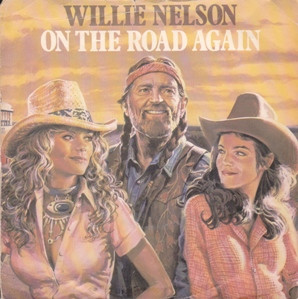
Tunes Du Jour Presents Willie Nelson

What stands out about Willie Nelson, especially in a playlist like this one, is how naturally he connects songs and audiences that do not usually live in the same lane. “Crazy” and “Night Life” point back to his early years as one of Nashville’s great songwriters. “Blue Eyes Crying in the Rain,” “On the Road Again,” and “Always On My Mind” show how fully he grew into stardom as a singer. Then the list keeps widening: pop standards like “Blue Skies” and “Moonlight in Vermont,” a gospel song like “Uncloudy Day,” a duet with Ray Charles on “Seven Spanish Angels,” a track with Snoop Dogg on “Roll Me Up,” and a Pearl Jam cover, “Just Breathe,” recorded with his son Lukas. On paper, that range looks unlikely. In practice, it feels completely coherent, which says a lot about the steadiness of Willie’s musical personality.

Part of that comes from the shape of his career. By the 1960s, Nelson was already well known in Nashville as a songwriter and recording artist. He wrote “Crazy,” which became Patsy Cline’s signature hit, and songs like “Night Life” showed how strong and distinctive his writing already was. He also had chart success of his own, but the polished Nashville system was never a perfect fit for his voice or his instincts. Around 1970, after moving back to Texas, he stepped into a different kind of scene, especially in Austin, where country crowds and younger rock audiences often overlapped. That change in setting helped turn him from a respected country figure into a much larger cultural presence. Albums and songs from the years that followed, including “Shotgun Willie,” “Bloody Mary Morning,” “Whiskey River,” and later “On the Road Again,” made him central to the outlaw movement while also expanding his audience far beyond traditional country radio.

What is especially appealing is that the outlaw image never boxed him in. Yes, this playlist has the swagger of “Me and Paul,” “Good Hearted Woman,” and “Mammas Don’t Let Your Babies Grow Up to Be Cowboys,” but it also has the gentleness of “Angel Flying Too Close to the Ground” and “Blue Eyes Crying in the Rain.” Even “My Heroes Have Always Been Cowboys” is less about posing than about longing and disappointment. Willie has always understood that country music works best when it makes room for toughness and vulnerability at the same time. That balance is one reason he has been so durable: listeners can come to him for a road song, a drinking song, a heartbreak song, or a meditation on aging, and he never sounds like he is trying on a costume.

That same openness explains why he has made sense to so many collaborators across generations and genres. His duets with Waylon Jennings and Merle Haggard feel like conversations between peers, rooted in shared history and mutual respect. “Seven Spanish Angels” with Ray Charles has the gravity of two masters meeting on common ground. “Beer for My Horses” showed that younger mainstream country stars still saw him as a living touchstone. He teamed up with Snoop Dogg (among others) on “Roll Me Up”; then three years after that covered Pearl Jam’s “Just Breathe,” and neither one of those tracks feels like a gimmick, or a cash grab, or an old man trying to stay cool. You never see the calculation with Willie. He does not care if you think he is cool. Willie has a gift for treating every song, whether it comes from country, pop, jazz, gospel, or rock, as something worth inhabiting honestly.

That may be the clearest reason Willie Nelson remains an icon after so many decades: he has never depended on one audience, one era, or one definition of authenticity. He is beloved by country traditionalists, outlaw-country fans, pop listeners, rock audiences, fellow songwriters, jazz admirers, and younger artists looking for a model of how to build a long life in music without becoming rigid. This playlist makes that case quietly but convincingly. It gives you the famous songs, the standards, the duets, the deep feeling, the wit, and the curiosity. More than anything, it shows an artist who has spent decades following good songs wherever they lead, and inviting an unusually wide range of listeners to come along.

Follow Tunes Du Jour on Facebook

Follow me on Bluesky

Follow me on Instagram

Tunes Du Jour Presents 1961

The year 1961 didn’t roar in with a musical revolution—but in hindsight, that’s part of its charm. Instead, it offered a series of small but significant steps toward what would become a much louder, wilder, and more politically charged musical landscape. If the ’50s laid the foundation for rock and R&B, then ’61 felt like a transitional hallway: not quite out of the doo-wop era, but inching toward soul, girl groups, and the unmistakable rise of youth-driven pop. Listen closely, and you can hear a generation beginning to test its voice.

The playlist for this year paints a picture of variety and crossover. Ben E. King’s “Stand by Me” combines gospel roots with a pop sensibility, creating a timeless anthem of emotional resilience. Meanwhile, The Marcels inject a doo-wop jolt into “Blue Moon,” turning a Rodgers and Hart chestnut into something utterly of the moment. And “Shop Around” by The Miracles helps define the early Motown sound—polished, melodic, and unmistakably urban—hinting at the empire Berry Gordy was quietly building in Detroit.

Pop and R&B weren’t the only sounds of 1961. The jazz world was still vibrant, and John Coltrane’s take on “My Favorite Things” stretched the familiar into something exploratory and modal, giving the Broadway tune a hypnotic new dimension. Similarly, Art Blakey’s “A Night in Tunisia” offered a fiery reminder that hard bop was far from finished. This year wasn’t just about three-minute singles on AM radio; it also made room for longer-form musical statements that spoke to listeners seeking complexity.

And then there were the voices—so many distinct, unforgettable voices. Roy Orbison’s near-operatic Crying and Patsy Cline’s aching “Crazy” each showed that vulnerability could be commercially viable. The same went for Etta James, whose rendition of “At Last” remains one of the most iconic vocal performances ever recorded. Elsewhere, the lighter side of pop was thriving with Neil Sedaka’s “Calendar Girl” and Bobby Vee’s “Take Good Care of My Baby,” songs built for teenagers who were beginning to see themselves as a cultural force.

Taken together, the music of 1961 reflects a moment in flux: the last glimmers of the 1950s still lingered, but the seeds of what would define the 1960s were clearly being planted. Whether it was Ray Charles fusing gospel and R&B on “Hit the Road Jack,” or the early stirrings of girl-group grandeur from The Marvelettes and The Shirelles, this was a year where nothing yet dominated—but everything seemed possible.

Follow Tunes Du Jour on Facebook

Follow me on Bluesky

Follow me on Instagram

Tunes Du Jour Presents 1957

The year 1957 stands as a pivotal moment in the evolution of popular music, where rock ‘n’ roll, rhythm and blues, and even a touch of jazz converged to create a soundtrack that would resonate for decades. The hits of the year showcase not only the diverse range of genres but also the rise of some of the most influential voices in music history. A prime example is The Crickets’ “That’ll Be the Day,” a track that embodies the early rock ‘n’ roll spirit, blending Buddy Holly’s unmistakable vocal delivery with a catchy, driving beat. It’s a song that helped shape the sound of the era.

Elvis Presley’s “Jailhouse Rock” is another cornerstone of 1957, with its infectious energy and rebellious attitude. Presley was at the height of his powers, blending rock, blues, and a hint of swagger that would influence generations of performers. Meanwhile, Fats Domino’s “Blueberry Hill” offered a smoother, more melodic contrast. Domino’s effortless combination of rhythm and blues with pop sensibility helped bridge the gap between different audiences, securing his place as one of the genre’s pioneers.

But 1957 wasn’t just about rock ‘n’ roll—it was a year that embraced the full spectrum of American music. Take Harry Belafonte’s “Day-O (Banana Boat Song),” a calypso tune that brought Caribbean sounds to mainstream audiences. Similarly, the soulful ballad “You Send Me” by Sam Cooke introduced a voice that would soon come to define soul music. Cooke’s ability to combine gospel roots with pop elegance opened the doors for future R&B artists.

The variety of sounds continued with tracks like “Whole Lotta Shakin’ Goin’ On” by Jerry Lee Lewis and “Lucille” by Little Richard, both of which pushed the boundaries of what rock music could be with their raw energy and wild performances. On the other end of the spectrum, Ella Fitzgerald and Louis Armstrong’s rendition of “Summertime” added a jazzy sophistication to the year’s musical offerings, reminding listeners that timeless standards still had a place in the changing musical landscape.

Ninety fifty-seven was a year when rock ‘n’ roll solidified its place in popular culture, while artists from various genres continued to innovate and inspire. Whether through the heartfelt croon of Johnny Mathis on “Chances Are” or the rough-edged blues of Muddy Waters’ “Got My Mojo Working,” the music of this year still echoes today as a testament to a time when creativity flourished across musical boundaries.

Your (Almost) Daily Playlist: 9-7-22

Today’s playlist celebrates the September 7 birthdays of The Crickets’ Buddy Holly, Pretenders’ Chrissie Hynde, Air’s Jean-Benoît Dunckel, Chic’s Alfa Anderson, N.W.A’s Eazy-E, Gloria Gaynor, Owen Pallett, Starland Vocal Band’s Margot Chapman, Morris Albert, Latimore, Jermaine Stewart, and The Simpsons’ Julie Kavner; and the September 8 birthdays of The Cars’ Benjamin Orr, Patsy Cline, Neko Case, ’til tuesday’s Aimee Mann, P!nk, Bob & Earl’s Earl Nelson,The Beau Brummels’ Sal Valentino, Wiz Khalifa, Slim Thug, and Peter Sellers.

Follow Tunes du Jour on Facebook

Follow Tunes du Jour on Twitter

Follow me on Instagram

Throwback Thursday: 1961

The years between 1958 and 1963 are often thought of as a sleepy time for rock and roll, a quiet time between the genre’s initial burst onto the charts and the onslaught of the British Invasion. However, lots of great records were charting during those years. Check out this playlist of thirty hits from 1961 for proof.

Follow Tunes du Jour on Facebook.

Follow Tunes du Jour on Twitter.

Follow me on Instagram.