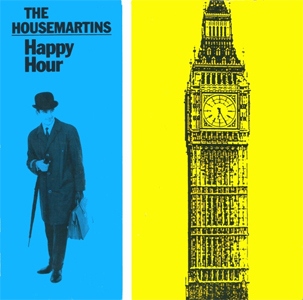
Today is World Bartender Day, and to celebrate, here are 30 alcohol-inspired tunes. I’ll drink to that!
Follow Tunes Du Jour on Facebook
Follow me on Bluesky
Follow me on Instagram

Looking back at the music of 1996, what stands out isn’t just the diversity of sounds, but how confidently artists were breaking free from the constraints that had defined their predecessors. This was the year Oasis gave us “Wonderwall,” a song that somehow managed to be both anthemic and intimate, while across the Atlantic, The Smashing Pumpkins stripped away the grunge aggression for the wistful nostalgia of “1979.” The rock landscape was splintering in fascinating ways—Radiohead’s “High and Dry” hinted at the experimental evolution to come, Garbage fused electronic production with alternative rock attitude on “Stupid Girl,” and Marilyn Manson pushed industrial metal into the mainstream with “The Beautiful People.” These weren’t artists following a template; they were actively rewriting what their genres could be.
Hip-hop in 1996 was experiencing one of its most creative and commercially successful periods. 2Pac’s “California Love” brought West Coast rap to peak visibility, while Busta Rhymes announced himself as a force with the frenetic energy of “Woo Hah!! Got You All in Check.” Fugees demonstrated how hip-hop could incorporate soul, reggae, and pop sensibilities on “Ready Or Not,” and Blackstreet’s “No Diggity” created a template for R&B-rap fusion that would influence the genre for years to come. Even Coolio, riding high from previous success, was experimenting with different flows and production approaches. The genre wasn’t monolithic—it was a conversation between different regional scenes, production styles, and lyrical approaches.
The year also belonged to artists who defied easy categorization. Björk’s “Hyper-Ballad” merged electronic experimentation with raw emotional vulnerability in ways few pop artists would dare attempt. Beck’s “Where It’s At” was a postmodern collage that treated genre itself as raw material to be sampled and reassembled. Underworld’s “Born Slippy [Nuxx]” became an unlikely anthem, a nine-minute electronic track that captured something essential about late-night urban experience. These weren’t novelties—they were artists working at the boundaries of what popular music could accomplish, proving that experimental ambition and accessibility weren’t mutually exclusive.
Meanwhile, more traditional songcraft was producing some of its finest work. No Doubt’s “Don’t Speak” turned heartbreak into a massive pop-rock moment, while Mary J. Blige brought gospel-inflected power to “Not Gon’ Cry.” George Michael’s “Jesus To a Child” showed a mature artist at the height of his powers, and Tracy Chapman’s “Give Me One Reason” proved that blues-based simplicity could still cut through the noise. Even as production techniques grew more sophisticated and genre experimentation accelerated, these songs reminded listeners that a strong melody and honest emotion would never go out of style.
What makes 1996 particularly interesting is that it captured music in transition without feeling unstable. You had Britpop (Pulp’s class-conscious “Common People,” Manic Street Preachers’ working-class anthem “A Design For Life”), the evolution of alternative rock into more diverse forms, hip-hop’s golden age in full swing, and electronic music beginning to infiltrate the mainstream. The playlist of 1996 didn’t cohere into a single statement about where music was headed—and that was precisely the point. It was a year when artists had permission to explore, when audiences were willing to follow them into unexpected territory, and when the charts reflected genuine creative restlessness rather than calculated trends.
Follow Tunes Du Jour on Facebook
Follow me on Bluesky
Follow me on Instagram

Lots of Pulp on the playlist today, the birthday of Pulp’s Jarvis Cocker.

Today is International Hangover Day. Celebrate accordingly. Here’s your inspired by playlist:
In the 1990s, the musical landscape of Britain was forever transformed by the meteoric rise of Oasis. Emerging from Manchester, this exceptional group left an indelible mark on popular music, inspiring generations of artists and fans alike.
Led by brothers Noel and Liam Gallagher, the band achieved global acclaim with seminal albums like Definitely Maybe and (What’s the Story) Morning Glory? These masterpieces showcased their ability to craft anthemic, emotionally charged songs that resonated with listeners. From the soaring melody of “Wonderwall” to the defiant swagger of “Don’t Look Back in Anger,” Oasis’ music encapsulated the spirit of youth, rebellion, and unbound creativity.
Their debut album, Definitely Maybe, was hailed as a groundbreaking work, earning them a devoted fan base. The follow-up, (What’s the Story) Morning Glory?, cemented their status as icons, selling over 22 million copies worldwide and earning them two Brit Awards.
Oasis’ music transcended time and genres, leaving an indelible mark on the fabric of popular culture. Their raw energy and unapologetic attitude resonated with audiences worldwide, inspiring generations of musicians and fans to embrace their authenticity and passion. Through their remarkable body of work and enduring legacy, Oasis etched their name among the most iconic and influential bands of our time.
Follow Tunes Du Jour on Facebook
Follow Tunes Du Jour on Twitter
Follow me on Instagram


A used unwashed black t-shirt worn by Green Day’s Billie Joe Armstrong during the promotion of the band’s American Idiot album sold for $2500 at a charity auction, with the proceeds going to the Oakland School of the Arts. I would love to dispose of my laundry pile the same way, but I doubt anybody would pay more than $400 for my sweat-stained socks.
Billie Joe Armstrong was born on this date in 1972. Tracks from his band are included on today’s playlist.
Follow Tunes du Jour on Facebook
Follow Tunes du Jour on Twitter
Follow me on Instagram
When first presented with his brother Noel’s composition “Wonderwall,” Oasis’ usual lead singer Liam Gallagher didn’t care for it. Of course, the song became a worldwide smash. Did Liam come around? In 2008 he told MTV News “I can’t fucking stand that fucking song! Every time I have to sing it I want to gag.” Guess not. What about Noel, the song’s writer? He must like it, right? Here is what he said: “Outside of England, it’s the one song we’re famous for all over the world, and it annoys the fuck out of me. It’s not a fucking rock’n’roll tune. There’s quite a vulnerable statement to it. When people come up to me and say it’s one of the greatest tunes ever written, I think, ‘fucking hell, have you heard “Live Forever”?’”
Oasis’ “Wonderwall” is one of the 1996 songs on today’s Throwback Thursday playlist.
Follow Tunes du Jour on Facebook
Follow Tunes du Jour on Twitter
Follow me on Instagram

The Verve’s Richard Ashcroft was born on this date in 1971. The singles issued from his band’s Urban Hymns are included on today’s playlist.
Follow Tunes du Jour on Facebook
Follow Tunes du Jour on Twitter
Follow me on Instagram
