Tunes Du Jour Celebrates Presidents’ Day

From folk protest to funk, punk rock to hip-hop, this eclectic Presidents’ Day playlist spans decades of American political commentary through the lens of popular music. Not every commander-in-chief makes an appearance—some presidencies inspired little musical response, while others (particularly Kennedy, Reagan, and George W. Bush) sparked entire catalogs of artistic reaction. The collection moves chronologically through the office holders, though the songs themselves range from contemporary responses to retrospective reflections, capturing how each president’s legacy resonated with musicians of different eras and genres. Whether celebratory, satirical, or scathing, these tracks remind us that popular music has always served as a vital form of political discourse, holding power accountable and giving voice to the frustrations, hopes, and criticisms of the American people.


James K. Polk – They Might Be Giants
An infectiously catchy history lesson that chronicles Polk’s ambitious single-term presidency and his campaign promises to expand American territory.

Abie Baby – Hair Original Cast
This number from the groundbreaking musical Hair celebrates Abraham Lincoln’s legacy of emancipation with psychedelic 1960s exuberance.

Louisiana 1927 – Randy Newman
Newman’s haunting ballad captures the devastating Mississippi River flood during Calvin Coolidge’s administration and the government’s inadequate response.

We’d Like To Thank You Herbert Hoover – Annie Original Broadway Cast
A Depression-era shantytown chorus sarcastically thanks Hoover for the economic catastrophe that left Americans destitute and homeless.

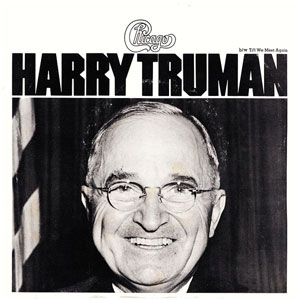
Harry Truman – Chicago
This gentle rock ballad uses Truman as a symbol of simpler times and American authenticity before the cynicism of later decades.

Eisenhower Blues – The Costello Show Feat. The Attractions & Confederates
Costello’s cheeky cover plays with 1950s nostalgia while questioning the era’s conformity and Cold War anxieties.

Murder Most Foul – Bob Dylan
Dylan’s seventeen-minute meditation on the Kennedy assassination weaves together American mythology, cultural memory, and the loss of innocence.

President Kennedy – Eddie Izzard
The British comedian takes on the misunderstanding that President Kennedy declared himself to be a doughnut.

The Day John Kennedy Died – Lou Reed
Reed’s stark, melancholic reflection places Kennedy’s death in the context of personal memory and national trauma.

Lyndon Johnson Told The Nation – Tom Paxton
Paxton’s folk protest song sardonically captures LBJ’s escalation of the Vietnam War and the duplicity of official statements.

You Haven’t Done Nothin’ – Stevie Wonder
Wonder’s funky, cutting critique of Nixon’s broken promises and political corruption became an anthem of Watergate-era disillusionment.

Impeach the President – Honey Drippers
This funk instrumental’s famous drum break refers to Nixon, though it’s become better known as one of hip-hop’s most sampled beats.

Funky President (People It’s Bad) – James Brown
The Godfather of Soul delivers hard-hitting social commentary on economic hardship during the Ford administration.

(We Don’t Need This) Fascist Groove Thang – Heaven 17
British synth-pop warriors take aim at Reagan’s cowboy diplomacy and the early 1980s conservative political climate.

Ronnie, Talk to Russia – Prince
Prince’s Cold War plea urges Reagan to pursue diplomacy and nuclear disarmament before it’s too late.

Bonzo Goes to Bitburg – Ramones
The punk legends blast Reagan’s controversial visit to a German cemetery containing SS graves, delivered with their signature three-chord fury.

Old Mother Reagan – Violent Femmes
The Femmes’ acoustic punk assault critiques Reagan’s policies with youthful anger and folk-punk energy.

Reagan – Killer Mike
The Atlanta rapper delivers a scathing indictment of Reagan’s policies on race, drugs, and economics decades after leaving office.

5 Minutes (B-B-B Bombing Mix) – Bonzo Goes To Washington
This mashup satirizes Reagan’s notorious hot-mic joke about bombing Russia by splicing it with dance beats.

If Reagan Played Disco – Minutemen
The iconoclastic punk band imagines an absurdist alternate reality with their typically angular, political edge.

Fuck You – Lily Allen
Allen’s chipper, profanity-laced dismissal of George W. Bush was initially posted on her MySpace page under the title “Guess Who Batman.”

When the President Talks to God – Bright Eyes
Conor Oberst’s devastating critique questions Bush’s certainty and religious justifications during the Iraq War.

Mosh – Eminem
Eminem’s urgent call to political action rallied young voters against Bush’s policies in the 2004 election.

Let’s Impeach the President – Neil Young
Young’s protest rocker methodically lists grievances against Bush with straightforward outrage and rock-and-roll directness.

I’m With Stupid – Pet Shop Boys
The synth-pop duo skewers Tony Blair’s subservience to Bush’s foreign policy agenda with biting British wit.

Dear Mr. President – P!nk featuring Indigo Girls
P!nk’s open letter challenges Bush to walk in others’ shoes and confront the human cost of his decisions.

Obama – ANOHNI
This haunting piece wrestles with disappointment in Obama’s continuation of drone warfare despite his hopeful campaign promises.

Fuck Donald Trump – YG & Nipsey Hussle
The West Coast rappers deliver an unfiltered denunciation of Trump’s rhetoric and policies with raw urgency.

The President Can’t Read – Amy Rigby
Rigby’s folk-rock takedown questions Trump’s competence and intellectual curiosity with pointed observations.

Streets of Minneapolis – Bruce Springsteen
The Boss’s response to the killings of American citizens by US Immigration and Customs Enforcement under directions from President Trump.

Follow Tunes Du Jour on Facebook

Follow me on Bluesky

Follow me on Instagram

Tunes Du Jour Presents 1983

The year 1983 was a vibrant musical landscape, a moment when pop culture was exploding with creativity and technological advancement. It was a year when Michael Jackson’s “Billie Jean” dominated the airwaves, its infectious rhythm and groundbreaking music video revolutionizing how we experienced music. The single was more than just a song; it was a cultural phenomenon that captured the zeitgeist of an era when music was becoming increasingly visual and dynamic.

This was also the year when Prince’s “1999” prophetically danced with apocalyptic themes, and The Police’s “Every Breath You Take” became an anthem of complex emotional surveillance. The diversity of musical styles was remarkable, with artists like Dexys Midnight Runners bringing an unconventional folk-pop energy with “Come on Eileen,” while New Order’s “Blue Monday” pushed the boundaries of electronic music, creating a sound that would influence dance music for decades to come. David Bowie’s “Let’s Dance” marked a vibrant shift in his musical journey, infusing his signature artistic sensibility with an irresistible pop-funk groove.

The single was king in 1983, with an unprecedented number of memorable tracks that seemed to burst from radios and dance floors everywhere. Eurythmics’ “Sweet Dreams (Are Made Of This)” introduced Annie Lennox’s haunting vocals to the world, while Marvin Gaye’s “Sexual Healing” offered a smooth, sensual counterpoint to the era’s more uptempo sounds. Lionel Richie’s “All Night Long” exemplified the period’s sunny, celebratory pop, and Culture Club’s “Do You Really Want to Hurt Me” challenged musical and social conventions with its charismatic lead singer, Boy George.

The year wasn’t just about pop, however. Rock and new wave were thriving, with bands like The Smiths (“This Charming Man”), The Clash (“Rock the Casbah”), and Duran Duran (“Hungry Like The Wolf”) pushing musical boundaries. Hip-hop and early rap were also emerging, with tracks like Melle Mel’s “White Lines” and Herbie Hancock’s groundbreaking “Rockit” signaling a musical revolution that would transform popular culture in the coming decades.

What made 1983 truly special was how it represented a moment of musical transition—a year when synthesizers and drum machines were becoming more prevalent, when music videos were transforming how artists communicated, and when genres were blending in unprecedented ways. From the new romantic sounds of Heaven 17’s “Temptation” to the quirky charm of Men Without Hats’ “The Safety Dance,” the music of 1983 was a testament to creativity, innovation, and the pure joy of sound. It was a year that didn’t just produce hit songs, but created a sonic landscape that would influence musicians for generations to come.

Follow Tunes du Jour on Facebook

Follow me on Bluesky

Follow me on Instagram

Tunes Du Jour Presents 1981

As the new decade dawned, 1981 emerged as a year of significant musical transformation. The eclectic mix of songs that defined this period reflected a music industry in flux, with established genres evolving and new sounds emerging to captivate listeners across the globe.

Rock music continued to hold its ground, adapting to the changing times. The Rolling Stones proved their enduring relevance with the gritty “Start Me Up,” while Journey’s “Don’t Stop Believin'” became an arena rock anthem that would stand the test of time. Bruce Springsteen’s “The River” showcased his storytelling prowess, and Phil Collins’ “In The Air Tonight” introduced a new dimension of atmospheric rock with its iconic drum break. George Harrison’s “All Those Years Ago,” a touching tribute to John Lennon, marked Harrison’s first U.S. top ten single in eight years, demonstrating the lasting appeal of the former Beatles.

New Wave and post-punk sounds flourished in 1981, pushing boundaries and incorporating electronic elements. Talking Heads’ “Once in a Lifetime” demonstrated the genre’s art-rock leanings, while The Go-Go’s brought a pop sensibility to new wave with “Our Lips Are Sealed.” Duran Duran’s “Girls on Film” hinted at the new romantic movement that was gaining traction. The Psychedelic Furs’ “Pretty in Pink,” with its blend of post-punk edge and pop accessibility, showcased Richard Butler’s distinctive vocals and would later inspire and lend its name to a defining film of the ’80s.

The year also saw the emergence of hip-hop as a force in popular music. Blondie’s “Rapture” became the first song featuring rap vocals to reach number one on the U.S. Billboard Hot 100, fusing new wave with hip-hop influences. Meanwhile, Grandmaster Flash’s innovative “The Adventures of Grandmaster Flash on the Wheels of Steel” was one of the first records to extensively use sampling, laying the groundwork for hip-hop’s future.

Dance music was evolving beyond disco into new, exciting forms. Grace Jones’ “Pull Up to the Bumper” blended funk, new wave, and reggae influences, pointing towards a more eclectic and experimental future for club music. Taana Gardner’s “Heartbeat” helped define the emerging genre of garage house with its stripped-down beat and soulful vocals. Kool & the Gang’s “Celebration” remains a party staple, bridging the gap between disco and contemporary R&B.

In the realm of R&B and funk, Luther Vandross’ “Never Too Much” marked the acclaimed background vocalist’s first hit under his own name, showcasing his smooth, sophisticated style. Rick James pushed funk to new heights with “Super Freak,” incorporating rock elements and a memorable synth line that would be sampled for years to come. The Pointer Sisters’ “Slow Hand” kept R&B smooth and soulful.

1981 also witnessed the continued rise of synth-pop and electronic music. Heaven 17’s politically charged “(We Don’t Need This) Fascist Groove Thang” and New Order’s “Ceremony” showcased the genre’s range from danceable pop to moody post-punk.

As some artists embraced new sounds, others used music to comment on social issues. The Specials’ “Ghost Town” reflected the urban decay and racial tensions in Britain, while Black Flag’s hardcore punk anthem “Rise Above” railed against societal norms. Prince’s “Controversy” challenged listeners both musically and lyrically, blending funk, rock, and new wave while tackling taboo subjects and questioning social norms, hinting at the boundary-pushing artist he would become.

From the chart-topping pop of Kim Carnes’ “Bette Davis Eyes” and Olivia Newton-John’s “Physical” to ABBA’s emotionally charged ballad “The Winner Takes It All,” 1981 was a year of contrasts and transitions. It was a time when established stars adapted to new trends, emerging artists made their mark, and genres blended in exciting ways. This rich musical landscape set the stage for the diverse and innovative sounds that would define the rest of the decade, making 1981 a pivotal year in the evolution of popular music.

Follow Tunes Du Jour on Facebook

Follow Tunes Du Jour on Twitter

Follow me on Instagram

Your (Almost) Daily Playlist: 7-15-23

Norma Jean Wright, who sang lead vocals on Chic’s first smash single “Dance, Dance, Dance (Yowsah, Yowsah, Yowsah),” was born on this date in 1956 in Ripley, Tennessee, which is not far from the town of Nutbush, from where Tina Turner hails. Wright’s dad attended the same church as Tina. Besides her work with Chic, most notably on the aforementioned single and its follow-up, “Everybody Dance,” Wright has released solo records and sang backup on albums by Aretha Franklin, Madonna, Luther Vandross (who sings backup on “Dance, Dance, Dance”) and Sister Sledge.

Tunes du Jour celebrates the birthday of Norma Jean Wright with a playlist that includes her two biggest hits with Chic.

Follow Tunes du Jour on Facebook

Follow Tunes du Jour on Twitter

Follow me on Instagram