Tunes Du Jour Celebrates Presidents’ Day

From folk protest to funk, punk rock to hip-hop, this eclectic Presidents’ Day playlist spans decades of American political commentary through the lens of popular music. Not every commander-in-chief makes an appearance—some presidencies inspired little musical response, while others (particularly Kennedy, Reagan, and George W. Bush) sparked entire catalogs of artistic reaction. The collection moves chronologically through the office holders, though the songs themselves range from contemporary responses to retrospective reflections, capturing how each president’s legacy resonated with musicians of different eras and genres. Whether celebratory, satirical, or scathing, these tracks remind us that popular music has always served as a vital form of political discourse, holding power accountable and giving voice to the frustrations, hopes, and criticisms of the American people.


James K. Polk – They Might Be Giants
An infectiously catchy history lesson that chronicles Polk’s ambitious single-term presidency and his campaign promises to expand American territory.

Abie Baby – Hair Original Cast
This number from the groundbreaking musical Hair celebrates Abraham Lincoln’s legacy of emancipation with psychedelic 1960s exuberance.

Louisiana 1927 – Randy Newman
Newman’s haunting ballad captures the devastating Mississippi River flood during Calvin Coolidge’s administration and the government’s inadequate response.

We’d Like To Thank You Herbert Hoover – Annie Original Broadway Cast
A Depression-era shantytown chorus sarcastically thanks Hoover for the economic catastrophe that left Americans destitute and homeless.

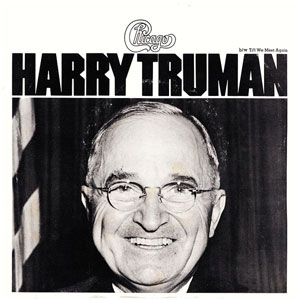
Harry Truman – Chicago
This gentle rock ballad uses Truman as a symbol of simpler times and American authenticity before the cynicism of later decades.

Eisenhower Blues – The Costello Show Feat. The Attractions & Confederates
Costello’s cheeky cover plays with 1950s nostalgia while questioning the era’s conformity and Cold War anxieties.

Murder Most Foul – Bob Dylan
Dylan’s seventeen-minute meditation on the Kennedy assassination weaves together American mythology, cultural memory, and the loss of innocence.

President Kennedy – Eddie Izzard
The British comedian takes on the misunderstanding that President Kennedy declared himself to be a doughnut.

The Day John Kennedy Died – Lou Reed
Reed’s stark, melancholic reflection places Kennedy’s death in the context of personal memory and national trauma.

Lyndon Johnson Told The Nation – Tom Paxton
Paxton’s folk protest song sardonically captures LBJ’s escalation of the Vietnam War and the duplicity of official statements.

You Haven’t Done Nothin’ – Stevie Wonder
Wonder’s funky, cutting critique of Nixon’s broken promises and political corruption became an anthem of Watergate-era disillusionment.

Impeach the President – Honey Drippers
This funk instrumental’s famous drum break refers to Nixon, though it’s become better known as one of hip-hop’s most sampled beats.

Funky President (People It’s Bad) – James Brown
The Godfather of Soul delivers hard-hitting social commentary on economic hardship during the Ford administration.

(We Don’t Need This) Fascist Groove Thang – Heaven 17
British synth-pop warriors take aim at Reagan’s cowboy diplomacy and the early 1980s conservative political climate.

Ronnie, Talk to Russia – Prince
Prince’s Cold War plea urges Reagan to pursue diplomacy and nuclear disarmament before it’s too late.

Bonzo Goes to Bitburg – Ramones
The punk legends blast Reagan’s controversial visit to a German cemetery containing SS graves, delivered with their signature three-chord fury.

Old Mother Reagan – Violent Femmes
The Femmes’ acoustic punk assault critiques Reagan’s policies with youthful anger and folk-punk energy.

Reagan – Killer Mike
The Atlanta rapper delivers a scathing indictment of Reagan’s policies on race, drugs, and economics decades after leaving office.

5 Minutes (B-B-B Bombing Mix) – Bonzo Goes To Washington
This mashup satirizes Reagan’s notorious hot-mic joke about bombing Russia by splicing it with dance beats.

If Reagan Played Disco – Minutemen
The iconoclastic punk band imagines an absurdist alternate reality with their typically angular, political edge.

Fuck You – Lily Allen
Allen’s chipper, profanity-laced dismissal of George W. Bush was initially posted on her MySpace page under the title “Guess Who Batman.”

When the President Talks to God – Bright Eyes
Conor Oberst’s devastating critique questions Bush’s certainty and religious justifications during the Iraq War.

Mosh – Eminem
Eminem’s urgent call to political action rallied young voters against Bush’s policies in the 2004 election.

Let’s Impeach the President – Neil Young
Young’s protest rocker methodically lists grievances against Bush with straightforward outrage and rock-and-roll directness.

I’m With Stupid – Pet Shop Boys
The synth-pop duo skewers Tony Blair’s subservience to Bush’s foreign policy agenda with biting British wit.

Dear Mr. President – P!nk featuring Indigo Girls
P!nk’s open letter challenges Bush to walk in others’ shoes and confront the human cost of his decisions.

Obama – ANOHNI
This haunting piece wrestles with disappointment in Obama’s continuation of drone warfare despite his hopeful campaign promises.

Fuck Donald Trump – YG & Nipsey Hussle
The West Coast rappers deliver an unfiltered denunciation of Trump’s rhetoric and policies with raw urgency.

The President Can’t Read – Amy Rigby
Rigby’s folk-rock takedown questions Trump’s competence and intellectual curiosity with pointed observations.

Streets of Minneapolis – Bruce Springsteen
The Boss’s response to the killings of American citizens by US Immigration and Customs Enforcement under directions from President Trump.

Follow Tunes Du Jour on Facebook

Follow me on Bluesky

Follow me on Instagram
Tunes Du Jour Presents 2000

The year 2000 arrived with a collective sigh of relief. The much-hyped Y2K bug turned out to be a non-event, and the new millennium stretched out before us, feeling both futuristic and strangely familiar. Looking back at the music from that year, you can hear a similar dynamic at play. It wasn’t a time of radical genre fusion or crossover; instead, it felt like several distinct musical movements were all cresting at the exact same time, each one confident and fully-formed. It was a year where you could switch the radio station and feel like you were jumping between entirely different worlds—from the polished pop of Britney Spears to the raw energy of DMX.

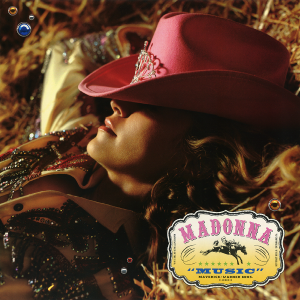
On one hand, pop and R&B were operating at peak performance, dominating the charts with precision-engineered hits. This was the era of the blockbuster music video, and artists delivered. Madonna reinvented herself yet again with the electro-thump of “Music,” while Britney Spears’s “Oops!…I Did It Again” perfected the formula she had established just a year prior. At the same time, R&B was in a period of remarkable innovation. You had the staccato, futuristic production of Timbaland on Aaliyah’s “Try Again,” the iconic, conversational flow of Destiny’s Child on “Say My Name,” and the deep, simmering soul of D’Angelo’s “Untitled (How Does It Feel).” These weren’t just great songs; they were statements of intent from artists at the top of their game.

Meanwhile, rock music was pulling in several different directions at once. Pop-punk had fully broken through to the mainstream, and blink-182’s “All the Small Things” was its endlessly catchy, stadium-sized anthem. More established acts like Foo Fighters and Red Hot Chili Peppers were delivering some of their most memorable melodic rock with “Learn to Fly” and “Californication,” respectively. Yet, on the fringes, things were getting much stranger and more interesting. Radiohead completely abandoned guitar-rock expectations with the anxious, electronic pulse of “Idioteque,” while Queens of the Stone Age offered a taste of heavy, hypnotic desert rock with “Feel Good Hit Of The Summer.” There was no single, unified “sound of rock” in 2000; there were several.

Hip-hop was arguably the most creatively vibrant and commercially powerful force of the year. The genre’s expansion was on full display, from the confrontational wit of Eminem’s “The Real Slim Shady” to the pure, unbridled velocity of OutKast’s “B.O.B.” which still sounds like it was beamed in from the future. The clubs were fueled by the aggression of DMX’s “Party Up (Up in Here)” and M.O.P.’s “Ante Up,” while Jay-Z’s “Big Pimpin’” projected an image of untouchable cool. And of course, you can’t talk about 2000 without acknowledging the songs that were simply inescapable. The unabashedly goofy charm of Sisqó’s “Thong Song” and the perhaps baffling, universal appeal of “Who Let the Dogs Out” added a unique and memorable flavor to the year’s sonic identity.

Listening back to this collection of songs now, what’s most striking is how separate but equal everything feels. This was one of the last moments before the digital revolution would completely flatten the music landscape, encouraging artists to borrow from everywhere at once. The year 2000 wasn’t about blending; it was a snapshot of distinct scenes, each with its own definitive soundtrack. From the raw scream of Kelis on “Caught Out There” to the quiet contemplation of Moby’s “Porcelain,” it was a year of powerful, parallel streams, a final, confident roar from the 20th-century music industry before everything changed.

Follow Tunes Du Jour on Facebook

Follow me on Bluesky

Follow me on Instagram
Tunes Du Jour Presents Eminem

Eminem, born Marshall Mathers, has been a dominant force in hip-hop for over two decades. Rising to fame in the late 1990s with his major-label debut The Slim Shady LP, Eminem quickly became known for his rapid-fire delivery, complex rhyme schemes, and controversial lyrics. His subsequent albums, including The Marshall Mathers LP and The Eminem Show, solidified his status as one of the best-selling artists of the 21st century.

Throughout his career, Eminem has produced numerous chart-topping hits. Tracks like “Lose Yourself,” “The Real Slim Shady,” and “Without Me” showcased his ability to blend catchy hooks with sharp lyricism. His storytelling abilities, evident in songs like “Stan” and “Mockingbird,” have set a high bar for narrative rap. Eminem’s impact on the genre extends beyond his solo work. His collaborations have often resulted in memorable tracks, from “Forgot About Dre” with Dr. Dre to “Forever” alongside Drake, Kanye West, and Lil Wayne. His work with D12 on songs like “Purple Pills” and “My Band” demonstrates his ability to work within a group dynamic.

Despite his undeniable success and influence, Eminem’s career has been marked by persistent controversy and criticism. Many critics point to the misogynistic and homophobic content in some of his lyrics. Songs such as “Guilty Conscience” and “97′ Bonnie & Clyde” have been criticized for their graphic depictions of violence against women.

The problematic aspects of Eminem’s work extend beyond specific themes. Some listeners find his humor juvenile and distasteful, citing songs like “Just Lose It” as examples. Critics argue that despite his technical prowess, Eminem’s core themes and style have remained largely unchanged over the years, suggesting a lack of artistic growth.

These ongoing debates around Eminem’s content raise important questions about artistic expression, social responsibility, and the expectations placed on artists as they progress in their careers. Despite the criticisms, Eminem maintains a significant fanbase and continues to be a prominent figure in hip-hop. Whether Eminem can continue to evolve and remain relevant in a rapidly changing music industry remains a topic of discussion among fans and critics alike.

Tunes Du Jour Celebrates International Left-Handers Day

Happy International Left-Handers Day! 🖐

Did you know that in the 1600s, lefties were suspected of witchcraft? Fast forward to today, and we’re still navigating a world designed for righties. From scissors to can openers, life’s full of little challenges for the left-handed among us.

Even language hasn’t been kind – check a thesaurus and you might find some surprisingly negative synonyms for “left-handed.” (Have you ever been accused of giving a left-handed compliment?) But lefties in good company! Some of the world’s most creative minds have been southpaws.

To celebrate this most important of holidays, I’ve put together a playlist featuring 30 incredible left-handed musicians. From rock legends to pop icons, these artists have left their mark on music history.

Tunes Du Jour Presents 1999

As we look back on the musical landscape of 1999, it’s hard not to be struck by the sheer diversity and quality of singles that dominated the charts and airwaves. Straddling the end of one millennium and the dawn of another, this year produced an extraordinary array of hits that continue to resonate with listeners today.

Pop music was in full force, with young stars like Britney Spears and the Backstreet Boys delivering earworms that would define the era. Spears’ debut “…Baby One More Time” and the Boys’ “I Want It That Way” became instant classics, their catchy hooks and polished productions setting a new standard for pop perfection. Meanwhile, Latin pop exploded onto the mainstream scene with Ricky Martin’s irresistible “Livin’ la Vida Loca,” a song that seemed to capture the exuberant spirit of the times.

But 1999 wasn’t just about glossy pop. Hip-hop continued its ascent, with Jay-Z’s “Hard Knock Life (Ghetto Anthem)” showcasing the genre’s growing crossover appeal. Eminem burst onto the scene with “My Name Is,” his irreverent wordplay and controversial persona signaling a new direction for rap. R&B, too, had a strong showing, with TLC’s “No Scrubs” becoming an anthem of female empowerment and Lauryn Hill’s “Ex-Factor” demonstrating the genre’s capacity for emotional depth.

Rock music, far from being overshadowed, produced some of the year’s most enduring tracks. The Red Hot Chili Peppers’ “Scar Tissue” showcased their evolving sound, while The Offspring’s “Pretty Fly (For a White Guy)” brought punk-pop humor to the masses. Alternative and indie acts like The Flaming Lips and Mercury Rev pushed boundaries with “Race for the Prize” and “Goddess on a Highway” respectively, proving that innovative songwriting could still find a place in the mainstream.

Electronic music also made significant inroads in 1999. Fatboy Slim’s “Praise You” and The Chemical Brothers’ “Hey Boy Hey Girl” brought big beat to the forefront, while Moby’s “Why Does My Heart Feel So Bad?” hinted at electronic music’s potential for emotional resonance. From the dancefloor-filling “Sing It Back” by Moloko to the avant-garde “Windowlicker” by Aphex Twin, electronic artists were expanding the sonic possibilities of popular music in exciting ways.

The singles of 1999 paint a picture of a music industry in flux, embracing new sounds and technologies while still celebrating the timeless art of the perfectly crafted pop song. It was a year that laid the groundwork for the musical landscape of the 21st century, producing hits that continue to inspire and entertain listeners a quarter-century later.

Tunes Du Jour Presents Dr. Dre

Dr. Dre is one of the most influential figures in hip-hop history. As a rapper, producer, and entrepreneur, he has shaped the sound and culture of rap music for over three decades. He is also a philanthropist who has donated millions of dollars to various causes, especially in the fields of arts, technology, and education. However, he is not without controversy, as he has faced accusations of misogyny and violence against women throughout his career. In this blog post, we will explore the achievements and challenges of Dr. Dre, and how his music reflects his life story.

Dr. Dre was born Andre Romelle Young in 1965 in Compton, California, a city notorious for its gang violence and poverty. He began his musical career as a DJ and a member of the electro group World Class Wreckin’ Cru in the early 1980s. He then joined forces with Eazy-E, Ice Cube, MC Ren, and DJ Yella to form N.W.A, a group that pioneered what became known as gangsta rap and brought the realities of the streets to the mainstream. Their second album, Straight Outta Compton (1988), was a landmark in hip-hop, featuring songs like “Fuck tha Police,” “Express Yourself,” and the title track, which showcased Dre’s production skills and the group’s raw and rebellious lyrics.

However, N.W.A soon fell apart due to internal conflicts and legal disputes. Dre left the group and co-founded Death Row Records with Suge Knight in 1991. He released his solo debut album, The Chronic, in 1992, which introduced the G-funk style, a subgenre of rap that used heavy samples of funk music, synthesizers, and melodic hooks. The album was a huge success, spawning hits like “Nuthin’ but a ‘G’ Thang,” “Let Me Ride,” and “Dre Day.” It also featured the debut of Snoop Doggy Dogg, who became one of Dre’s most frequent collaborators and protégés.

In 1996, Dre left Death Row Records after a violent incident with Knight and founded his own label, Aftermath Entertainment. He faced some initial setbacks, as his first compilation album, Dr. Dre Presents: The Aftermath, received mixed reviews and sales. However, he bounced back in 1999 with his second solo album, 2001, which was another commercial and critical hit. The album featured songs like “Still D.R.E.”, “Forgot About Dre,” and “The Next Episode,” which reaffirmed Dre’s status as a rap icon.

Dre also established himself as a prolific and influential producer, working with artists such as Eminem, 50 Cent, The Game, Kendrick Lamar, and many others. He helped launch the careers of some of the biggest names in rap, and earned multiple Grammy Awards and accolades for his production work. He also expanded his business ventures, co-founding Beats Electronics, a company that produces headphones, speakers, and streaming services. In 2014, he sold the company to Apple for $3 billion, making him one of the richest and most powerful figures in the music industry.

Despite his success and fame, Dre has also faced criticism and controversy for his treatment of women. He has been accused of assaulting and abusing several women, including his former girlfriend Michel’le, TV host Dee Barnes, and rapper Tairrie B. He has also been called out for his misogynistic lyrics, which often degrade and objectify women. Some of his songs, such as “Bitches Ain’t Shit,” have been seen as glorifying violence and rape against women.

Dre has apologized for his past actions and expressed regret for his mistakes. He has also tried to distance himself from his violent and sexist image, and focus on his positive contributions to society. He has donated millions of dollars to various causes, such as the USC Jimmy Iovine and Andre Young Academy for Arts, Technology and the Business of Innovation, which he co-founded with music executive Jimmy Iovine in 2013. The academy aims to foster creativity and innovation among students from diverse backgrounds and disciplines. He has also supported other initiatives, such as the Compton High School Performing Arts Center, the Global Fund, and the Michael J. Fox Foundation.

Dr. Dre is a complex and controversial figure, who has both inspired and offended millions of people with his music and actions. He is a rap legend, a musical genius, and a business mogul, who has changed the course of hip-hop and popular culture. He is also a flawed human being, who has made mistakes and hurt others, and has supposedly tried to atone for his sins. He is a man behind the beats, who has a story to tell, and a legacy to leave behind. Today’s playlist consists of 30 examples of his best work, either as a rapper, producer, writer, or some combination thereof.

Follow Tunes du Jour on Facebook

Follow Tunes du Jour on Twitter

Follow me on Instagram