Tunes Du Jour Celebrates Presidents’ Day

From folk protest to funk, punk rock to hip-hop, this eclectic Presidents’ Day playlist spans decades of American political commentary through the lens of popular music. Not every commander-in-chief makes an appearance—some presidencies inspired little musical response, while others (particularly Kennedy, Reagan, and George W. Bush) sparked entire catalogs of artistic reaction. The collection moves chronologically through the office holders, though the songs themselves range from contemporary responses to retrospective reflections, capturing how each president’s legacy resonated with musicians of different eras and genres. Whether celebratory, satirical, or scathing, these tracks remind us that popular music has always served as a vital form of political discourse, holding power accountable and giving voice to the frustrations, hopes, and criticisms of the American people.


James K. Polk – They Might Be Giants
An infectiously catchy history lesson that chronicles Polk’s ambitious single-term presidency and his campaign promises to expand American territory.

Abie Baby – Hair Original Cast
This number from the groundbreaking musical Hair celebrates Abraham Lincoln’s legacy of emancipation with psychedelic 1960s exuberance.

Louisiana 1927 – Randy Newman
Newman’s haunting ballad captures the devastating Mississippi River flood during Calvin Coolidge’s administration and the government’s inadequate response.

We’d Like To Thank You Herbert Hoover – Annie Original Broadway Cast
A Depression-era shantytown chorus sarcastically thanks Hoover for the economic catastrophe that left Americans destitute and homeless.

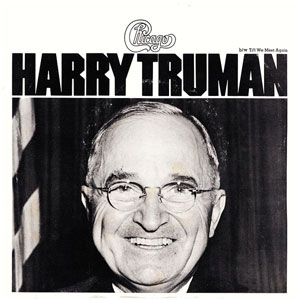
Harry Truman – Chicago
This gentle rock ballad uses Truman as a symbol of simpler times and American authenticity before the cynicism of later decades.

Eisenhower Blues – The Costello Show Feat. The Attractions & Confederates
Costello’s cheeky cover plays with 1950s nostalgia while questioning the era’s conformity and Cold War anxieties.

Murder Most Foul – Bob Dylan
Dylan’s seventeen-minute meditation on the Kennedy assassination weaves together American mythology, cultural memory, and the loss of innocence.

President Kennedy – Eddie Izzard
The British comedian takes on the misunderstanding that President Kennedy declared himself to be a doughnut.

The Day John Kennedy Died – Lou Reed
Reed’s stark, melancholic reflection places Kennedy’s death in the context of personal memory and national trauma.

Lyndon Johnson Told The Nation – Tom Paxton
Paxton’s folk protest song sardonically captures LBJ’s escalation of the Vietnam War and the duplicity of official statements.

You Haven’t Done Nothin’ – Stevie Wonder
Wonder’s funky, cutting critique of Nixon’s broken promises and political corruption became an anthem of Watergate-era disillusionment.

Impeach the President – Honey Drippers
This funk instrumental’s famous drum break refers to Nixon, though it’s become better known as one of hip-hop’s most sampled beats.

Funky President (People It’s Bad) – James Brown
The Godfather of Soul delivers hard-hitting social commentary on economic hardship during the Ford administration.

(We Don’t Need This) Fascist Groove Thang – Heaven 17
British synth-pop warriors take aim at Reagan’s cowboy diplomacy and the early 1980s conservative political climate.

Ronnie, Talk to Russia – Prince
Prince’s Cold War plea urges Reagan to pursue diplomacy and nuclear disarmament before it’s too late.

Bonzo Goes to Bitburg – Ramones
The punk legends blast Reagan’s controversial visit to a German cemetery containing SS graves, delivered with their signature three-chord fury.

Old Mother Reagan – Violent Femmes
The Femmes’ acoustic punk assault critiques Reagan’s policies with youthful anger and folk-punk energy.

Reagan – Killer Mike
The Atlanta rapper delivers a scathing indictment of Reagan’s policies on race, drugs, and economics decades after leaving office.

5 Minutes (B-B-B Bombing Mix) – Bonzo Goes To Washington
This mashup satirizes Reagan’s notorious hot-mic joke about bombing Russia by splicing it with dance beats.

If Reagan Played Disco – Minutemen
The iconoclastic punk band imagines an absurdist alternate reality with their typically angular, political edge.

Fuck You – Lily Allen
Allen’s chipper, profanity-laced dismissal of George W. Bush was initially posted on her MySpace page under the title “Guess Who Batman.”

When the President Talks to God – Bright Eyes
Conor Oberst’s devastating critique questions Bush’s certainty and religious justifications during the Iraq War.

Mosh – Eminem
Eminem’s urgent call to political action rallied young voters against Bush’s policies in the 2004 election.

Let’s Impeach the President – Neil Young
Young’s protest rocker methodically lists grievances against Bush with straightforward outrage and rock-and-roll directness.

I’m With Stupid – Pet Shop Boys
The synth-pop duo skewers Tony Blair’s subservience to Bush’s foreign policy agenda with biting British wit.

Dear Mr. President – P!nk featuring Indigo Girls
P!nk’s open letter challenges Bush to walk in others’ shoes and confront the human cost of his decisions.

Obama – ANOHNI
This haunting piece wrestles with disappointment in Obama’s continuation of drone warfare despite his hopeful campaign promises.

Fuck Donald Trump – YG & Nipsey Hussle
The West Coast rappers deliver an unfiltered denunciation of Trump’s rhetoric and policies with raw urgency.

The President Can’t Read – Amy Rigby
Rigby’s folk-rock takedown questions Trump’s competence and intellectual curiosity with pointed observations.

Streets of Minneapolis – Bruce Springsteen
The Boss’s response to the killings of American citizens by US Immigration and Customs Enforcement under directions from President Trump.

Follow Tunes Du Jour on Facebook

Follow me on Bluesky

Follow me on Instagram

Tunes Du Jour Presents Eurythmics

If you were to press play on the career of Eurythmics, you’d most likely start with “Sweet Dreams (Are Made Of This).” It’s the song that made them global stars—an undeniable classic built on a stark synthesizer riff and Annie Lennox’s commanding, soulful vocals. But as a journey through their work reveals, that iconic hit is just one stop on a much more interesting and varied musical map. The creative engine of Eurythmics was the partnership between Lennox and Dave Stewart, a duo whose collaboration was defined by constant evolution, emotional complexity, and a refusal to be confined to a single sound.

From their initial breakthrough, Eurythmics demonstrated a remarkable sonic range. The synth-pop of tracks like “Sweet Dreams” and “Love Is a Stranger” established their early ’80s identity, blending electronic precision with a sense of psychological intrigue. But they were quick to move beyond that mold. Soon, the duo was infusing their music with American R&B and soul, resulting in the brass-fueled declaration of “Would I Lie To You?” and the driving rock of “Missionary Man.” At the same time, they could create lush, string-laden ballads like “Here Comes the Rain Again,” proving that their electronic roots could coexist with grand, orchestral arrangements.

Beneath the polished production, the songs often explored the more complicated aspects of relationships and society. While they could deliver a pure shot of joy like “There Must Be an Angel (Playing with My Heart),” they were equally adept at dissecting paranoia in “Who’s That Girl?” or the bitter end of a love affair in “Thorn in My Side.” This willingness to look at the darker corners is what gives their music its lasting weight. They could craft a powerful feminist anthem with Aretha Franklin one moment (“Sisters Are Doin’ It for Themselves”) and then create a stark, unsettling piece like “Sexcrime (Nineteen Eighty Four)” for a film soundtrack the next.

The provided playlist also wisely includes a look at their individual paths, which helps illuminate what made the duo’s chemistry so effective. Annie Lennox’s solo career, with hits like the introspective “Why” and the baroque pop of “Walking on Broken Glass,” showcased her incredible power as a vocalist and songwriter in a more personal context. Meanwhile, Dave Stewart’s instrumental hit “Lily Was Here” highlights his strengths as a producer and composer, crafting a distinct mood and melody without Lennox’s voice at the center. These solo ventures weren’t a departure, but rather an extension of the individual talents that made Eurythmics so compelling.

Ultimately, listening to this collection of songs reveals a creative partnership that was always in motion. From the experimental art-pop of “Beethoven (I Love to Listen To)” to the mature reflection of their reunion track “I Saved The World Today,” Eurythmics consistently challenged expectations. They moved seamlessly between genres, moods, and themes, all held together by Stewart’s inventive arrangements and Lennox’s unforgettable voice. They left behind a body of work that is as intelligent and artistically curious as it is full of enduring hits.

Follow Tunes Du Jour on Facebook

Follow me on Bluesky

Follow me on Instagram

Tunes Du Jour Presents The Paul McCartney Songbook

Paul McCartney’s genius as a songwriter extends far beyond his work with The Beatles, revealing itself most clearly in how other artists have transformed his compositions across genres and generations. This remarkable collection of covers demonstrates McCartney’s rare ability to write songs that function as both complete artistic statements and flexible frameworks for reinterpretation. When Joe Cocker turned “With A Little Help From My Friends” into a soulful anthem, or when Guns N’ Roses gave “Live and Let Die” a hard rock edge, they weren’t just covering songs—they were unlocking different emotional possibilities that McCartney had embedded in the original compositions. The breadth of artists drawn to his work, from Aretha Franklin’s gospel-tinged “Eleanor Rigby” to Beyoncé’s contemporary reimagining of “Blackbird,” speaks to the universal resonance of his melodic and lyrical craftsmanship.

What makes McCartney particularly fascinating as a songwriter is his willingness to write specifically for other artists’ strengths while maintaining his distinctive voice. Songs like “A World Without Love” for Peter & Gordon and “Come And Get It” for Badfinger weren’t Beatles cast-offs but carefully crafted compositions that suited those acts perfectly. His collaboration with Elvis Costello on “Veronica” and his work with Michael Jackson on “Girlfriend” show an artist constantly evolving and adapting his approach to different musical contexts. Even when writing for others, McCartney’s melodic sensibility—that ability to find the hook that sticks in your mind—remains unmistakably present, whether it’s the yearning quality of “Yesterday” that En Vogue brought to R&B or the infectious rhythm of “Ob-La-Di, Ob-La-Da” that Celia Cruz infused with Latin flavor.

The lasting power of McCartney’s songwriting becomes evident when artists as diverse as Ray Charles, Stevie Wonder, and Andre 3000 find something meaningful in his catalog. These aren’t novelty covers or tribute performances—they’re genuine artistic connections where musicians recognize something in McCartney’s work that speaks to their own creative vision. From Little Richard’s rock and roll interpretation of “I Saw Her Standing There” to k.d. lang’s haunting take on “Golden Slumbers,” each cover reveals new layers in songs that seemed perfectly complete in their original form. This ongoing dialogue between McCartney’s compositions and successive generations of artists suggests something profound about his approach to songwriting: he creates musical spaces that invite inhabitation rather than mere imitation, proving that truly great songs don’t just endure—they continue to grow.

Follow Tunes Du Jour on Facebook

Follow me on Bluesky

Follow me on Instagram

Tunes Du Jour Presents The Smokey Robinson Songbook

ABC wasn’t wrong—when Smokey sings, everything is wonderful. But just as impressive as his voice is his pen. Smokey Robinson didn’t just write hit songs; he crafted narratives, emotions, and melodies so timeless that they continue to be recorded and reinterpreted decades later. His songwriting, marked by poetic lyricism and effortless hooks, helped define the Motown sound and set a gold standard for pop and R&B composition.

His songs weren’t just catchy; they were masterclasses in storytelling. “My Girl” gave The Temptations a signature hit with a lyric so simple yet evocative that it remains a cultural touchstone. “My Guy” did the same for Mary Wells, its playful devotion making it an anthem of unwavering love. Whether it was the swagger of “Get Ready,” the tenderness of “Ooh Baby Baby,” or the clever metaphor of “The Hunter Gets Captured by the Game,” Smokey knew how to tap into universal feelings and dress them in melodies that lingered.

His influence extended far beyond Motown, as shown by the sheer range of artists who have covered his work. The Beatles took on “You Really Got a Hold on Me,” Elvis Costello recorded “From Head to Toe,” The Rolling Stones tackled “Going to a Go-Go,” D’Angelo put his own spin on “Cruisin’,” and Peter Tosh reimagined “(You Gotta Walk And) Don’t Look Back.” Whether through his own performances or the countless reinterpretations of his songs, Smokey Robinson’s writing continues to resonate, proving that while it’s great when Smokey sings, it’s just as magical when Smokey writes.

Follow Tunes du Jour on Facebook

Follow me on Bluesky

Follow me on Instagram

Tunes Du Jour Presents 1986

Looking back at 1986, what stands out isn’t just the quality of the music, but how effortlessly genres merged and boundaries dissolved. Run-D.M.C. and Aerosmith’s “Walk This Way” wasn’t just a collaboration – it was a statement about how rock and hip-hop could amplify each other’s strengths. Prince, at the height of his powers, stripped everything down to bare essentials with “Kiss,” proving his superstardom could take any form. Robert Palmer’s “Addicted to Love” became inescapable, powered by one of the era’s most iconic videos, while Peter Gabriel’s “Sledgehammer” merged art rock with soul and funk, accompanied by groundbreaking stop-motion animation.

The women of pop music wielded particular influence that year. Madonna continued pushing buttons with “Papa Don’t Preach,” tackling teenage pregnancy in a way that sparked national conversation. Whitney Houston’s “How Will I Know” showcased her extraordinary vocal range while proving dance-pop could be both sophisticated and irresistible. Janet Jackson asked “What Have You Done for Me Lately,” establishing herself as a force independent of her famous family. Cyndi Lauper’s “True Colors” transcended its moment, becoming an enduring anthem of self-acceptance that would be covered for decades to come.

The underground was rising to the surface, but keeping its edge. The Smiths’ “There Is A Light That Never Goes Out” brought literary depth to alternative rock, while New Order’s “Bizarre Love Triangle” helped blueprint the future of electronic dance music. The Pet Shop Boys’ “West End Girls” married street-smart observations with pristine synth-pop, and Public Image Ltd.’s “Rise” proved post-punk could evolve without losing its bite. Even The Cure, with “In Between Days,” found a way to make melancholy sound surprisingly radio-friendly.

Soul and R&B were experiencing their own renaissance. Anita Baker’s “Sweet Love” brought sophisticated quiet storm to the mainstream, while Cameo’s “Word Up!” demonstrated funk’s continuing vitality. Grace Jones’ “Slave to the Rhythm” showcased the artist’s commanding presence, and James Brown reminded everyone he was still the Godfather of Soul with “Living in America.” The year also saw George Michael step out of Wham!’s shadow with “A Different Corner,” proving he could hold his own as a solo artist.

The year proved fertile ground for both established and emerging voices. Bruce Springsteen’s “My Hometown” painted a portrait of a changing America, while Billy Bragg’s “Levi Stubbs’ Tears” showed how personal stories could carry political weight. Elvis Costello’s “I Want You” pushed the boundaries of what a love song could express, and R.E.M.’s “Fall on Me” managed to be both cryptic and urgently relevant. Meanwhile, LL Cool J’s “I Can’t Live Without My Radio” brought hip-hop closer to the mainstream while maintaining its street credibility. In retrospect, 1986 wasn’t just a great year for music – it was a moment when artists across the spectrum proved that innovation and accessibility weren’t mutually exclusive.

Follow Tunes du Jour on Facebook

Follow me on Bluesky

Follow me on Instagram