Throughout the next however many months I’ll be counting down my 100 favorite albums, because why not. I’m up to number sixty-nine.
The song “(You’re) Having My Baby” ruined my life.
I know. Yours, too.
It happened in 1974. Ol’ Betsy, my family’s blue station wagon with the imitation-wood paneling stickers, was still in the driveway when I asked my father to turn on “Musicradio 77 – WABC.” A song came on that I particularly liked. Maybe it was “Billy Don’t Be A Hero” or “Band on the Run” or “Rock the Boat” or the song that resonated deeply with every boy my age—“(You’re) Having My Baby.” What a lovely way for my spirits to be lifted. It’s as if that song’s writer/singer, Paul Anka, had been reading my diary. Whichever song it was, I did what any joyful ten-year-old would do: I started to sing along.
My brother, one year my senior, cut me off instantly, saying something along the lines of, “Shut up and stop torturing us.” My father chimed in with something equally dismissive, and my mom echoed the sentiment. They all had a good chuckle.
Some context: music was everything to me. My grandpa had gifted me a transistor radio a few months earlier, and I’d become obsessed. I lived for the Top 40. I listened to Casey Kasem run the countdown every Sunday, loving each and every song he played without judgment, until that dark day in November when “Cats in the Cradle” made its debut. As a kid, I couldn’t relate to this song about parental absence and regret. Five-plus decades later, I completely understand the song’s sentiments, and have a host of other reasons to still hate it.
In 1974 I bought every issue of Song Hits magazine so I could get the lyrics right. (Wait, it’s not “Waterloo / I had my feet there upon the wall?” The opening lines of Three Dog Night’s “The Show Must Go On” aren’t “Beat it! Oh, Lou, I chose this blue life a seena strang mahna mahna?”) It was super important that I knew all the words. I was, in my own head, a burgeoning musical sensation. And why not? Michael Jackson and Donny Osmond were around the same age I was then when they started their recording careers. Between them they had all bases covered. MJ, with his emotive singing, electrifying dancing, boundless charisma, and otherworldly talent. Donny, with his nice teeth. Don’t think that I’m underselling Donny. He had SPECTACULAR teeth.
Maybe I didn’t sing as well as Michael Jackson or Paul Anka, but I thought I sang as well as any other kid in Mrs. Mazze’s music class, and it was an activity that made me happy. Or used to.
I shut up.
For good.
At least in the car. At least around them.
The lessons I learned that day in 1974:
Don’t poke the bear.
Don’t make waves.
Don’t stick your neck out.
Better safe than sorry.
Don’t put yourself out there, and no one can tell you you’re not good enough.
By not trying, you avoid the sting of failure.
Be quiet. Be small.
Invisible is safe.
Dinner time at the O’Brien home in 1940s London could be dangerous. It wasn’t unknown for Mrs. O’Brien—an alcoholic former dancer—to throw food, often while still in its serving dish. Mr. O’Brien, a frustrated would-be pianist with a violent temper, was said to call his daughter Mary names and sometimes hit her. She stayed quiet, lest she poked the bear.
In that house, music was an escape for Mary and her brother, Dionysius. Both enjoyed singing. Mary was, in her own head, a burgeoning musical sensation.
At her Catholic all-girls’ school, the nuns looked at the shy, awkward girl and predicted she’d likely make a living as a librarian. Mary had convinced herself they were right; she was boring, unattractive, and meant for a plain, quiet life. She was a girl waiting for permission to exist.
I didn’t stop singing entirely. I performed in my arts & music summer camp’s talent shows, guitar in hand. I auditioned for school and camp musicals, peaking in twelfth grade when I played Motel in Fiddler on the Roof to the genuine applause of my classmates, many of whom had never heard me open my mouth. After I got my driver’s license I sang in the car— alone, windows up, and never at stoplights where someone might glance over and catch me belting out the theme from The Greatest American Hero, thus opening me up to ridicule. Believe it or not, I still harbored a fear of being judged. I had elaborate fantasies of road trips with dates—not that I went on dates in high school—where we’d duet on “You’re the One That I Want” or “Stumblin’ In” or “Mockingbird,” singing loud enough for the back row at Carnegie Hall to hear us. Once, with an actual human present—my friend Ed, senior year of high school—I held the crazy long note at the two-thirds of the way in mark of Barbra Streisand’s “Woman in Love”—girl, you know the one:
I stumble and fall
but I give you it aaaaaaaaaaaaaaaaaaaaaaaaaaaaaaaaaaaaaaalllllllllllllllllllllllllllllllllllllll
—just to prove I could.
Through my childhood and teen years, music remained my passion. Performing in school shows and summer camp was fun, but making a career out of performing? That felt too exposed, too risky. What if my family was right? What if the applause was just people being nice? What if nobody actually wanted to hear me? Better to choose safety over the chance of hearing “shut up and stop torturing us” on a larger scale.I decided to pursue the business side of music instead. After college, I landed a job at CBS Records in the Accounts Receivable department. I was over the moon. I relayed the exciting news to my mom. Her response? “I guess you could do that while you keep looking.” Eighteen years later, when I was named Vice President at Warner Music, I told her that news, proud of how far I’d come. Her response: “I guess this really is your career.”
The nuns wouldn’t have recognized the woman who eventually stepped onto the stage. She wore a blonde beehive and ample mascara inspired by the drag queens she loved. No spectacles sat on her nose. And she no longer called herself Mary. Her new first name came from the nickname kids gave her because she liked playing football in the dirt. Her brother, who performed with Mary in a folk-pop trio, came up with a new last name for the two of them. He wanted a name that would resonate with American audiences, and noticed a lot of towns and cities in the U.S. had the same name. And thus, shy Mary Isobel Catherine Bernadette O’Brien became Dusty Springfield.
In the early 1960s, The Springfields scored several UK hits and cracked the US top twenty with “Silver Threads and Golden Needles.”
In 1964 Dusty launched a solo career built on her obsession with American pop and soul and Motown. She had a solo smash right out of the gate with “I Only Want to Be with You,” which is going to be my wedding song should I ever get someone to propose to me—still wishin’ and hopin’. Speaking of, that first chartbuster was followed by a run of hits on either or both sides of the Atlantic, including “Wishin’ and Hopin’,” “You Don’t Have to Say You Love Me,” “I Just Don’t Know What To Do With Myself,” and “The Look of Love.” She didn’t just sing these songs; she controlled the sessions, including selecting material, shaping arrangements, and re-recording her vocals dozens of times until every note was exactly right, often refusing production credit even though she’d directed the entire vision.
Her obsession with American soul music went deeper than sound. She was a white British woman who became a “soul evangelist.” In early 1960s Britain, soul music was largely confined to underground clubs and dance halls. In 1965, Dusty hosted The Sound of Motown, a British TV special that gave The Supremes, Stevie Wonder, The Miracles, and The Temptations their first UK television appearances, introducing them to a national audience that had never seen them before. The special helped launch Motown’s success in Britain. In addition, she demanded it be written into her contract that she would only perform for integrated audiences. When she was told she had to play a segregated venue in South Africa, she famously told the New Musical Express she’d be “on the first flight home”—and she was, deported with a police escort.
To those watching her, she was fearless. But internally, she was still that girl dodging food.
I’m making a career pivot. I still love music, but I’m over the “business.” I am done with the egos, the politics, the greed, and the manufactured “next big things” with nothing real to offer. Mostly, I’m tired of answering to “the man.” I’ve decided I’d much rather answer to myself.
I’m pursuing corporate speaking. Yes, really. Me, Mr. “Invisible is safe,” now wants to stand on stages and talk to rooms full of people. Surely there are less terrifying career pivots, like skydiving or defusing bombs. At least with those, if you screw up, you don’t have to face anyone afterward. I want to do work that matters. At the same time, I want to keep my limbs so I can dance at my wedding. Still wishin’ and hopin’. Corporate speaking is the choice lets me do both: work that might actually make the world a little better, and Macarena.
Public speaking is not completely new to me. I’ve spoken at conferences and presented at company-wide meetings for years, putting an emphasis on being entertaining and relatable over PowerPoint slides and dry data. For example, as be a fun way to showcase projects my departments were working on, I wrote a parody video of the television show The Office, starring my staff and me. The majority of the company loved it.
There was one notable exception. The day after the video was shown at a company-wide forum, our head of Human Resources summoned me to her office to discuss some of the more “inappropriate” humor in the script, specifically, jokes connected to diversity. The irony: I managed the most diverse departments in our division (and, not coincidentally, the most successful). The rest of the division was whiter and straighter than Donny Osmond’s teeth. Apparently pointing that out was a problem.
That same day my colleague Lauren stopped me as I was walking down the hall. “Here,” she said, handing me a DVD. “I made a copy of your video to show Dwayne. He loved it. He thinks you’re hilarious.” Dwayne was her boyfriend, now husband. Dwayne Johnson. The Rock.
You’d think a thumbs-up from the biggest movie star on the planet would matter more than Ruth from HR’s disapproval. But The Rock didn’t offer me a job; Ruth could actually cause my career harm.
Being at Warner Music felt safe. When I spoke with artist managers or foreign affiliates or potential clients, I was representing the company, advocating for artists and catalog, delivering business strategies.
This new path is different. I’m not representing a label or a brand. I’m not representing anyone but myself. And for someone who spent forty years trying to ensure everyone liked the “corporate” version of him, standing on a stage with no company behind me is the most terrifying thing I’ve ever done.
My speaking topics, drawn directly from my work experience, are diversity and inclusion. To help market myself as a speaker on these subjects, I’ve written a book that uses stories about artists and songs and draws on examples from my four decades in the music business to show that innovation happens and productivity increases when organizations make space for people who don’t fit a set mold. I strongly believe that diversity isn’t just a moral imperative; it’s a competitive advantage.
The book, Make Diversity A Hit!: What My 30+ Years Of Negotiating 10k+ Deals For Music’s Biggest Artists Can Teach You About How Diversity Can Grow Your Business, took me five years to write. Five years of reading scores of articles and books about diversity and inclusion. Five years of writing and rewriting, proofreading and polishing, telling that voice in my head to be quiet so I could just finish the damn thing. Five years.
And then, hurrah! It was finished. Ready to be published. Ready to change lives. Ready to launch my speaking career.
That was in 2019.
I told myself not to rush into things. It was important I do this right. I had to learn how to self-publish. And as the book is meant to be a calling card for speaking, I had to prepare for that, too. And so, during these last six-plus years, I’ve been preparing. I read books about self-publishing. And books about speaking. And books about marketing books with the goal of speaking. I attended webinars and seminars and symposiums and conferences. I went to forums and panel discussions and roundtables. I listened to podcasts and audiobooks. I watched TED talks and YouTube tutorials and masterclasses. I took courses on personal branding, thought leadership, and teaching through storytelling. I learned about SEO optimization, social media strategy, and the algorithm. I joined LinkedIn groups and never posted or read what was posted because I hate LinkedIn. I joined Facebook groups and never posted or read what was posted because I hate Facebook. I bookmarked articles about overcoming impostor syndrome—141 of them. I traveled to Las Vegas to attend masterminds where I brainstormed with other speakers/writers, many of whom have magically published more than one book in that time and are now considered experts on their chosen subjects. I became an expert in preparing to plan to start getting ready.
A therapist may say I have anxiety stemming from perfectionism. But is perfectionism demanding of oneself an extremely high level of performance, in excess of what is required by the situation? I would say no, while the American Psychological Association Dictionary of Psychology says yes. Who are you going to believe—the combined wisdom of every licensed psychologist in America or the guy who still kicks himself because he doesn’t know the lyrics to Three Dog Night’s “The Show Must Go On”?
The truth is, I’m terrified to put it (me) out there.
At Toastmasters I won so many Best Speaker ribbons that one year the club president stopped giving them out. He thought it wasn’t fair to everyone else. I didn’t care about the ribbons. I was competing with myself, trying to convince that ten-year-old in the back of the station wagon that it’s okay to live out loud. To experiment. There was nothing of consequence at stake. It was safe to fail.
But now? Now I’m trying to make this a career. Now there’s something at stake. I look at other speakers—the ones with the PhDs and the massive platforms—and I feel like a fraud with a handful of blue ribbons. Okay, a boatload of blue ribbons. With just the thought of actually booking an engagement, I am instantly ten years old again, terrified that if I step out there, the world will echo my family and tell me to be quiet. What if I deliver a speech that isn’t well-received? And someone posts about my debacle? And that post gets shared? And every hiring manager in America knows I’m the guy who bombed on stage? What if this one speech ruins any chance I have at this career? That would prove the lesson I learned in 1974 was correct: By not trying, you avoid the sting of failure. Invisible is safe.
In 1968, Dusty Springfield went to Memphis to record with session musicians behind some of the soul records she revered. She walked into American Sound Studio. The rhythm tracks had already been recorded. Now it was her turn. She stood at the microphone in the same vocal booth where her heroes had stood.
She froze. A therapist may say she had anxiety stemming from perfectionism. She would have called it fear.
“I hated it,” she later said, “because I couldn’t be Aretha Franklin. If only people like [record producer] Jerry Wexler could realize what a deflating thing it is to say ‘Otis Redding stood there’ or ‘That’s where Aretha sang.’ Whatever you do, it’s not going to be good enough.”
Eventually, she left. Wexler would later claim he “never got a note out of her” in Memphis.
The vocals would have to be recorded somewhere else. Somewhere she could relax. Somewhere peaceful. Somewhere quiet. Somewhere unintimidating. New York City, obviously. Away from the weight of that Memphis studio, she found her voice. Which means Dusty didn’t actually record Dusty In Memphis in Memphis, making it the most blatant case of a fraudulent album title since The Beach Boys’ Pet Sounds.
The songwriters on Dusty in Memphis were a “Who’s Who” of pop music greatness—Carole King and Gerry Goffin, Barry Mann and Cynthia Weil, Burt Bacharach and Hal David, Marilyn and Alan Bergman with Michel Legrand, and a rising star named Randy Newman.
But the song that became the album’s hit single was written by the lesser known team of John Hurley and Ronnie Wilkins. They intended it for Aretha Franklin to sing, but the Queen of Soul, famously the daughter of a preacher man, passed on singing how the only man who could ever love her was the son of a preacher man.
Dusty took “Son of a Preacher Man” and made it a global Top 10 smash. (Seeing its success, Ms. Franklin did end up recording her own version.)
Despite the popularity of the single, the album Dusty In Memphis was a commercial “meh,” missing the British and American top 40. It would be just shy of 20 years before she again achieved the commercial height of “Son of a Preacher Man,” when Pet Shop Boys, over the objections of their record label, who preferred they record with Tina Turner or Barbra Streisand, recruited Dusty for their song “What Have I Done To Deserve This?”
That single went to #2 on both sides of the Atlantic. She was back. Critics dusted off their copies of Dusty in Memphis and realized they were holding a masterpiece. Soon it was included in many Best Albums Of All Time lists. Elvis Costello called it a record “that will chill and thrill, always and forever,” adding “Dusty Springfield’s singing on this album is among the very best ever put on record by anyone.” Then came 1994 and Quentin Tarantino. The writer/director put “Son of a Preacher Man” in Pulp Fiction. The soundtrack sold over three million copies in the U.S. alone; more people owned that album than had ever owned a Dusty Springfield record.
On March 2, 1999, the day she was scheduled to receive an award at Buckingham Palace as an Officer of the Order of the British Empire for “services to popular music,” breast cancer took Dusty Springfield’s life. Two weeks later, she was inducted into the Rock & Roll Hall of Fame, where Elton John called her “the greatest white singer there has ever been.”
Where Mary O’Brien was terrified of saying the wrong thing, Dusty made herself heard. She’d fought for integrated audiences and came out publicly as bisexual in 1970, a time when the number of openly LGBTQ pop stars could be counted on one fist.
Mary O’Brien spent her childhood being quiet to stay safe. But with a beehive and a little mascara (okay, a lot of mascara), she transformed herself into Dusty Springfield and made herself heard.
I don’t sport a beehive, nor do I wear mascara (that one night in college notwithstanding). I never found my superhero uniform, the one that would make me invincible. Instead, I spent years being invisible, thinking silence was safety. It wasn’t safety; it was erasure. I succeeded in the corporate music world because I was confident I could. I won ribbons at Toastmasters because the stakes were low enough for me to feel comfortable to experiment. The truth is I only tried things where I already believed I could succeed. I avoided anything that might give the world a reason to criticize me. Fear of failure didn’t stop me from achieving; it stopped me from risking. And spending my life avoiding the risk of failure is still a kind of failure—the failure to find out who I might have been without the fear.
I recently came across an interview with Fiona Apple, an artist I adore, worship, admire and worship, not in a creepy way. In 2020, another Apple admirer, Bob Dylan, invited her to the studio to play piano on a song he was recording. Even with all her acclaim and years of experience, she was terrified, convinced she’d mess up the work of a legend. She told Dylan of her trepidation. His response: “You’re not here to be perfect, you’re here to be you.”
After spending many hours thinking about that, I realized that I had been auditioning for a role that doesn’t exist. “Perfect Glenn.” He never messes up, because he never actually participates.
Dusty Springfield managed to finish making Dusty In Memphis, and it became a masterpiece—not because she stopped being afraid, but because she sang through the fear. I’m done waiting for proof that outweighs my doubt. My book has been gestating for twelve years, and now I’m having my baby. I’m putting the book out. I’m seeking the gigs.
Maybe my work will be as great as Dusty in Memphis. Maybe it won’t. Either way, I’m turning the radio up. My voice deserves to be heard.
If you were flipping through radio stations in 1973, you might have been forgiven for wondering whether you’d accidentally landed on multiple stations at once. In a single week, you could hear Stevie Wonder’s “Superstition” — all nervous funk and clavinet — followed immediately by Tony Orlando & Dawn tying a yellow ribbon around an oak tree. That wasn’t a coincidence or a quirk of programming. It was just what 1973 sounded like: a year when pop music was genuinely pulling in several directions at the same time, and somehow holding together anyway.
Soul and R&B were operating at an extraordinary level. Marvin Gaye’s “Let’s Get It On,” Gladys Knight’s “Midnight Train to Georgia,” the O’Jays’ “Love Train,” and the Spinners’ “Could It Be I’m Falling In Love” all landed that year, each with its own emotional weight and personality. Curtis Mayfield’s “Superfly” brought something sharper and more cinematic to the mix, while Ann Peebles’ “I Can’t Stand the Rain” — still somewhat underappreciated in the wider cultural memory — was as raw and soulful as anything released that decade. Eddie Kendricks, fresh off his Temptations run, went solo with “Keep On Truckin’,” and it clicked immediately. The breadth of what Black artists were producing in this single calendar year is genuinely remarkable.
Rock was doing its own sprawling thing. The Rolling Stones released “Angie,” one of their more restrained and melancholy singles. Elton John’s “Goodbye Yellow Brick Road” was the title track of a double album that showed he could sustain a full artistic statement across four sides of vinyl, not just deliver three minutes at a time. Pink Floyd’s “Money” brought an odd-time signature to FM radio in a way that probably shouldn’t have worked as well as it did. And then there were the louder contingents: Deep Purple’s “Smoke on the Water” became one of the most-played riffs in guitar shop history, Grand Funk Railroad declared themselves an American band, and Slade and Sweet were doing glam rock with considerably more volume than glamour. Meanwhile, Iggy & the Stooges released “Search and Destroy” — which most of 1973’s radio audience largely ignored, though history would eventually course-correct on that.
The year also captured several artists at particularly interesting transitional moments. David Bowie’s “Space Oddity,” originally released in 1969, finally broke through in the US in 1973, reaching American audiences who were now ready for its strange, detached storytelling. Lou Reed’s “Walk on the Wild Side” had no business being as widely played as it was, given its subject matter, but here we are. Bob Dylan contributed “Knockin’ on Heaven’s Door” via his Pat Garrett & Billy The Kid soundtrack — unassuming and brief, but immediately recognizable as something that would last. T. Rex’s “20th Century Boy” and George Harrison’s “Give Me Love (Give Me Peace On Earth)” filled out a year that seemed to have room for almost anything, provided it had a decent hook.
What holds up most clearly, looking back at 1973’s output, is that the music wasn’t being made according to any unified cultural script. Some of it was deliberately commercial; some of it was confrontational; some of it was deeply personal. Carly Simon’s “You’re So Vain,” Roberta Flack’s “Killing Me Softly With His Song,” and Paul Simon’s “Loves Me Like a Rock” feel like they come from entirely different worlds, yet they all landed in the same twelve-month window. Ringo Starr had a hit with “Photograph.” The Allman Brothers were rambling. Cher was charting with “Half-Breed.” By any measure, 1973 was a disorganized, contradictory, frequently excellent year for popular music — and that’s precisely what makes it worth revisiting.
Throughout the next however many months I’ll be counting down my 100 favorite albums, because why not. I’m up to number seventy.
It was May 1985. “We Are the World” was on the radio, New Coke was in the fridge, and America’s favorite dad was Bill Cosby. WHAT WERE WE THINKING?? New Coke?
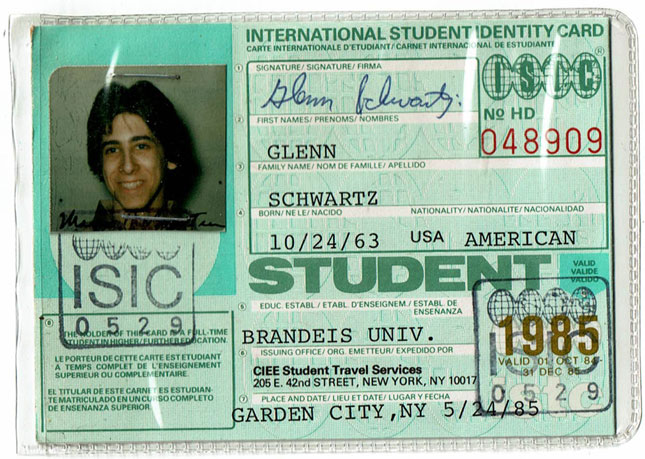
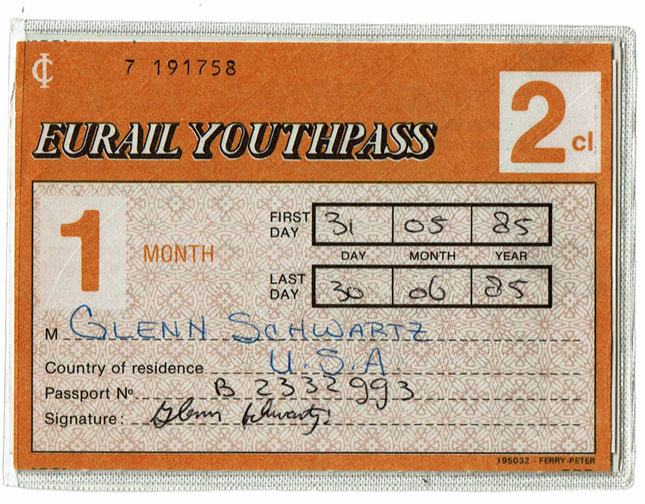
That month, having just graduated college, I, along with six friends—Amy, Autumn, Bruce, Ira, Mike, and Regan— boarded a plane for our self-designed Highlights Of Europe Tour. Six countries! Eight cities! Landmarks! Art! Authentic Cuisine! Exclamation points galore! We had Eurail passes. We had a copy of Europe On $25 A Day. And just like my bar mitzvah turned me from a boy into a man, I was convinced that a month of trains, museums, and whatever authentic cuisine is would turn 21-year-old me into a sophisticated, cultured citizen of the world, one who could talk about my “gallivanting” across “the continent” with the “hoi polloi” and make it sound natural.
***
STATION #1: LONDON
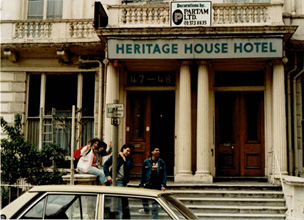
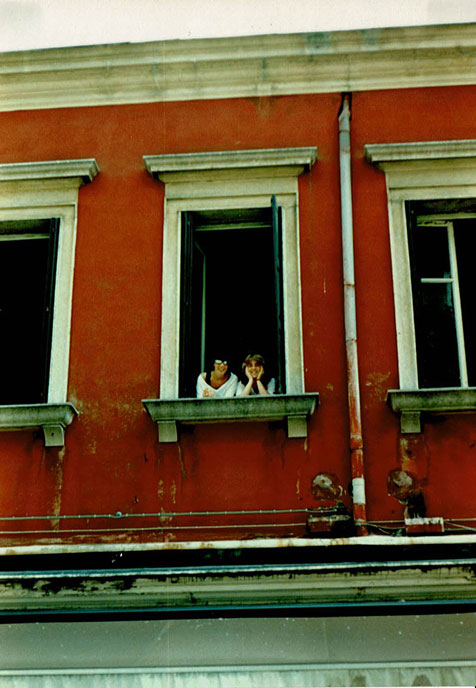
Our hotel in London was the Heritage House, a name that suggests a certain level of grandeur it had no intention of delivering. It was not a Victorian manor with wood-paneled libraries and sprawling lawns, but a Britain of a different heritage, say at the time of the Industrial Revolution, the hotel façade suggesting not glamour but those halcyon days of war and disease. But I didn’t care. I was in London. My only requirements for a hotel room were that it had a door and a bed. The Heritage House exceeded expectations. Not only did my room have a door and a bed but for no additional charge they served us a morning ration of tea and toast. That was enough luxury for me.
The Heritage House Hotel. It looks precisely as cheerful as it felt.
We spent our days dutifully marching from one famous place to another: Big Ben, Windsor Castle, the Tower of London, the London Bridge (btw, not falling down), Trafalgar Square, Hyde Park, Kensington Gardens, and Westminster Abbey. We set foot on the campus of London’s most prestigious, historic, respected and elite university—Cambridge. Or maybe it was Oxford. (I’d make a “tomato/tomato” joke here but it only works if you can hear the typical American pronunciation, then the British pronunciation, so just imagine I said something clever.) We viewed the changing of the guard at Buckingham Palace, a solemn ritual that essentially is like the shift change at 7-Eleven done with more pageantry and furrier hats. We had tea at Harrods. We rode on the top of a double-decker bus. We saw, in its natural habitat, an actual British punk whose long, high, stiff, red and white Mohawk made him look like the angry love child of a cockatoo and a candy cane. I took a photo of Mike pretending to make a call in a red telephone booth. Yes, we did it all. Thankfully, I took lots of photos and saved every admission stub and receipt, for I remember none of it.
We went inside the British Museum, a name that must have been a placeholder suggested at 4:59 PM on a Friday. Despite avoiding museums during my college years in Boston (I’m not sure Boston had any), visiting all the museums while in a foreign city is required of tourists. The taking of photographs was forbidden in the British Museum, so I just did a Google search so I could tell you what I saw, which included Egyptian mummies, ancient Greek bowls, and centuries-old West African sculptures, enabling the visitor to appreciate Britain’s rich history. Per the Google search, the most popular exhibit is the Rosetta Stone. In 1985, I was sure Rosetta Stone played keyboards in Sly & The Family Stone. Today, I know better. It’s the software that teaches you Spanish, named after an old rock I have no recollection of ever viewing.
Outside the National Gallery (are they even trying?), I witnessed a pigeon create a Jackson Pollock-inspired work on the shirt of my friend Bruce. An art critic might have called it a masterpiece of abstract expressionism. Bruce, however, was not a big fan of Pollock’s drip period. Inside, the paintings were a blur of dour-faced aristocrats and gloomy crucifixions. Were aristocrats always so dour? Were crucifixions always so gloomy? Almost everything was exceedingly serious and dark, and for the most part I couldn’t tell one painter’s style from another. A visitor would stare at a da Vinci painting for several minutes, and I’d be reminded of my family’s cat, Dr. Jekyll, who would stare for hours through a window entirely shrouded by a shrub. What are they seeing that I’m not? My arts education—mandatory elementary school trips to museums, where we’d shuffle through the rooms like tiny, corduroy-clad convicts partaking in supervised rec time—had not prepared me for the unexpected day when I would visit a museum voluntarily. Our third grade teacher, Mrs. Halpern, taught us to revere the name “da Vinci,” but not why. I should have asked “What are the prevailing theoretical frameworks for assessing a painting’s aesthetic and artistic merit?,” but instead eight-year old I went with “When’s lunch?” Thirteen years later, I was left to deal with the consequence of that choice—a feeling of inadequacy over my cultural illiteracy. So sad. I’m in my Blue Period.
Some of the National Gallery’s pieces broke through the gloom. I appreciated the works of Monet and Seurat—relaxing vistas, some showing relaxed people relaxing. They were a splash of joy in a Very Serious Building. Van Gogh’s radiant yellow sunflowers were bright and cheery, giving off a “don’t worry, be happy” vibe that can only come from someone who clearly enjoys every moment of their life, and his self-portrait had lots of blue, my favorite color. Paintings could always use more blue. I stared at that Van Gogh self-portrait longer than I did all the crucifixion paintings combined. They would have benefited from a splash of blue. Maybe a radiant Mediterranean blue sky as the backdrop and sunny yellow flowers in the foreground would lighten the mood and make viewers like me want to linger.
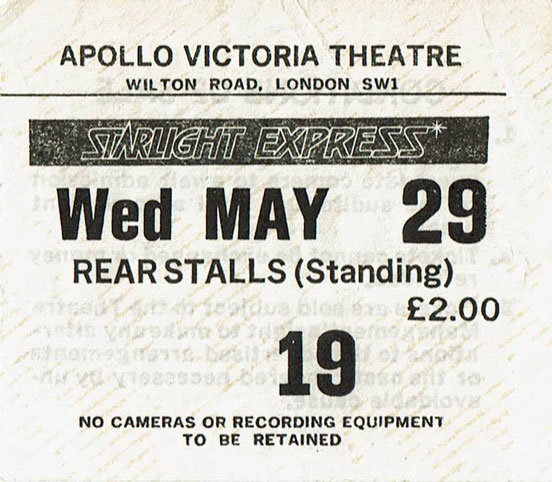
Of course, whilst in London, one must also attend the theatuh. After all, this is the city that brought prominence to William Shakespeare. A ticket stub tells me I saw Sweeney Todd for a mere £2.80, which, cool. Don’t remember a single second. I do remember seeing the musical Starlight Express, as it was literally hell on wheels.
Spandexed actors on roller skates portrayed toy trains. Our hero was Rusty, a steam engine with low self-esteem. The villains were a diesel engine named Greaseball, and an electric engine, named—wait for it—Electra. GET IT?? Electra, ‘cause she’s…oh, you got it. The English sure do suck at naming things.
Speaking of sucking… at one point in the show, a deity known as the Starlight Express—the Jesus of trains—descended to give Rusty a pep talk. This was followed by a rap number from the freight cars that went: “Freight is great / We carry weight / ‘Cause we are freight / And freight is great.” I was witnessing the birth of the expression “like watching a trainwreck.” Autumn said it was a privilege to see the show before its inevitable Broadway triumph. The only triumph I witnessed was my ability to remain awake. This show is lame / I don’t get its fame / I’m not glad I came / Cause this show is lame.
Because we were broke and seeing Europe on $25 a day, we’d bought two-pound standing-room-only tickets, which put us in the back of the auditorium with the other poors. By the time Rusty whined about his love for Pearl the observation car, I was no longer watching the show; I was reading the only material I had on me to read—the show’s Playbill. I saw the tiny, postage-stamp photo of the composer, and then I looked up. I looked back at the photo; then I looked up again. There he was. The actual Andrew Lloyd Webber, thief of my two pounds and two-plus hours, standing two people away from me in the cheap non-seats. Did the man who wrote the music for Cats and Jesus Christ Superstar have no connections who could score him a proper seat? Why was he here? Had he lost a bet? Or was he in the back so he could observe the audience’s honest reactions, far from the sycophancy he was accustomed to? That must be it. Why else would he subject himself to this?
I decided that as soon as the show ended I would go up to him and give him my honest feedback and request an autograph. While thinking of a genial way to say “Your musical has made me question my will to live,” I saw the cast taking their bows. The lights came up, I caught his eye, and poof—the seven-time Tony Award winner was gone. I couldn’t help but feel a little responsible for his running off so quickly, what with my reading during the show and letting out many award-worthy yawns. Did my non-verbal feedback influence his future work? I’d like to think so. I don’t recall any rapping trains in his Broadway production The Phantom of the Opera, the 1988 Tony Award-winner for Best Musical. You’re welcome, Webber.
Before I board an actual train to my next European stop, I must mention the highlight of London: Piccadilly Circus, a hopping part of town with lots of lights and foot traffic. A neighborhood where I lost some pounds, and I don’t mean weight. Ba dum tss. For there, just steps from each other, stood Tower Records, HMV, and a Virgin Megastore. The authors of Europe On $25 A Day didn’t mention record stores, so money spent there didn’t count toward the daily quota. A nice hotel room is a fleeting thing; a rare 12” single lasts forever. I snagged cool releases unavailable stateside from icons such as Sade, Wham!, and Culture Club. Mike was the only of my friends who joined me. The rest convinced themselves there were other things to do in London besides shop for records. Sometimes I wondered why they bothered to fly all that way. You can find photos of the Important Sites in books, but where else could one go, in those pre-Spotify/YouTube days, to discover different mixes of Billy Ocean’s hits?
And so ended my time in London. The official sites were all well and good, but the moments I recall with the most clarity could not have been found in a guidebook. The pigeon Pollacking on Bruce. Sending a world-renowned composer fleeing. Finding a Billy Ocean 45 where on the B-side of his worldwide smash “Caribbean Queen,” he offered “European Queen,” the exact same song with one word swapped. My tweed cap’s off to you, Billy Ocean, you mad genius! The feeling someone else gets from a da Vinci, I get from an Ocean. And you know what? That’s okay. “Different strokes for different folks,”to quote Sly & the Rosetta Stone.
***
STATION #2: AMSTERDAM
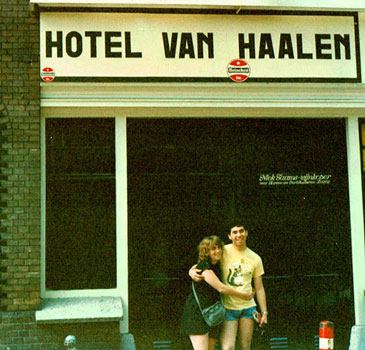
Our lodgings in Amsterdam were at the Hotel Van Haalen—a name that, to our 1985 American ears, had nothing to do with a 17th-century Dutch painter I’d never heard of until earlier this afternoon, and everything to do with guitar solos and high kicks.
We found Hotel Van Haalen after arriving in Amsterdam. Following our guidebook’s sage advice to inspect the merchandise before purchasing, one of our team, Ira, asked the concierge if we could see a room before committing.
Have you ever watched someone ask an innocent question and immediately wished you could blend into the faded tulip wallpaper?
The concierge slammed his fist on the reception desk. “See a room?!” His voice got progressively louder as he questioned our manners, asked if we were raised in barns, ranted about the sickness of our generation, and ended by yelling “It’s the same despicable arrogance that led the Americans to bombard the village of Quallah Battoo in 1832! You’re all the same. Get out of my hotel! You are not welcome here.”
Faced with such a baffling and hostile reception, we did the only sensible thing a group of tired 21 and 22-year-olds could do: we apologized for Ira’s outrageous behavior, explaining this was his first time being more than four hours from Long Island. We apologized for the invasion of Quallah Battoo, whatever that was. We begged the concierge to please take our money for a few rooms. Luckily, he accepted our apology and we checked in. It felt rude not to.
That sorted, we began our tour of Amsterdam’s hallowed cultural sites, navigating the sidewalks with the hyper-vigilance of a bomb-disposal experts, as pooper scooper laws wouldn’t arrive to the city until the late 1990s.
Our first must-see site was the Anne Frank House, in whose attic and secret rooms 13-year-old Frank, her family, and four other people hid from the Nazis. Powerful, sobering, moving—these are some of the words used to describe it. I took it in, thinking, “Wow. This is unforgettable. A profound experience that will stay with me forever.” At least I think that’s what went through my head, as I have since forgotten it. Completely. Every detail of every room has left my brain to make room for Billy Ocean song lyrics. I don’t know if that makes me a “bad Jew,” but if Anne Frank, while going through what she was going through, could write in her diary “I still believe, in spite of everything, that people are truly good at heart,” I’m sure she’d forgive me for no longer being able to picture the room where she wrote that.
Next was the Van Gogh Museum. After loving his yellow flowers and blue self-portrait in London, I was excited to see more of his work.
Turns out Van Gogh painted approximately three dozen self-portraits. Three dozen. The man was obsessed with his own face, though he wasn’t what a modern person would call influencer material. When he wasn’t painting himself, he was painting fruit. Bowls of fruit. Baskets of fruit. Fruit on plates. Fruit on tables. Just so much fruit.
I didn’t get it. Do people actually stare at bowls of fruit for extended periods (if they’re not stoned)? I could appreciate the technical skill, but a still life of pears strewn across a table like it was the cleaning person’s day off didn’t make me feel anything. Not even hungry.
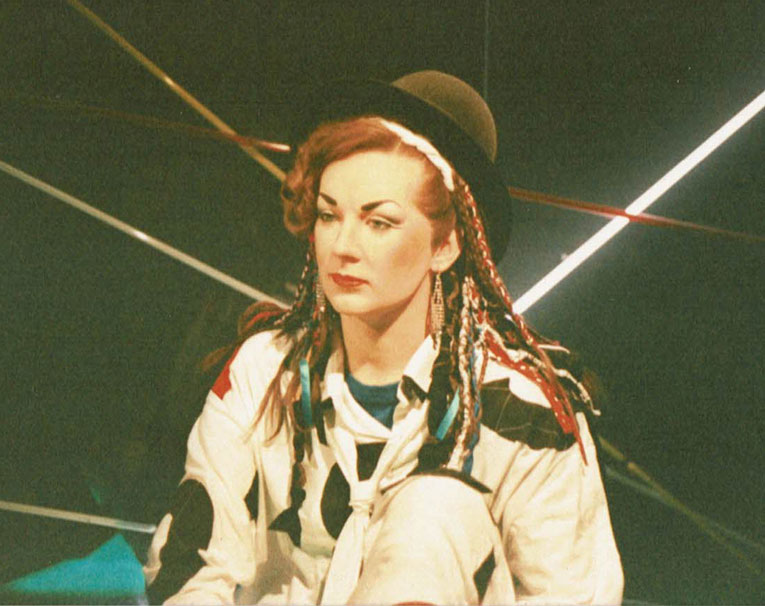
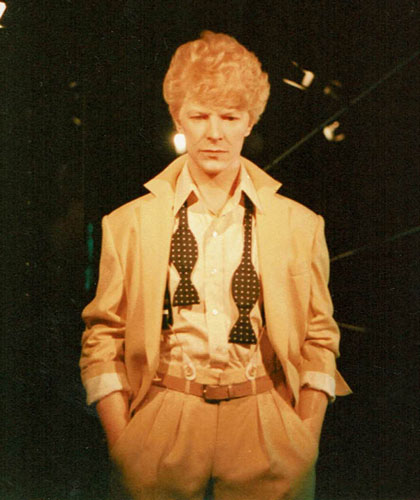
Disappointed, I left the Van Gogh Museum with the hope that at the next stop I’d encounter art that stirs emotions. That’s exactly what happened. Feelings of joy, inspiration, excitement, and wonder rose to the surface like beef ravioli in a pot of boiling water at the next cultural landmark—Madame Tussaud’s Wax Museum. There one could get close to a celebrity without fear they’ll run from you because you didn’t like their shitty new musical. There was no pretense within this collection. Wax David Bowie looked like a wax David Bowie. Wax Michael Jackson looked like a wax Michael Jackson and at the same time looked more human than human Michael Jackson. And wax Boy George, whether intentional or not, perfectly captured the feeling of ennui that comes from looking at multiple paintings of fruit in a bowl. I’m not saying Madame Tussaud was BETTER than Van Gogh, but at the time of this writing there are 26 Madame Tussaud’s Wax Museums in the world and only one Van Gogh Museum.
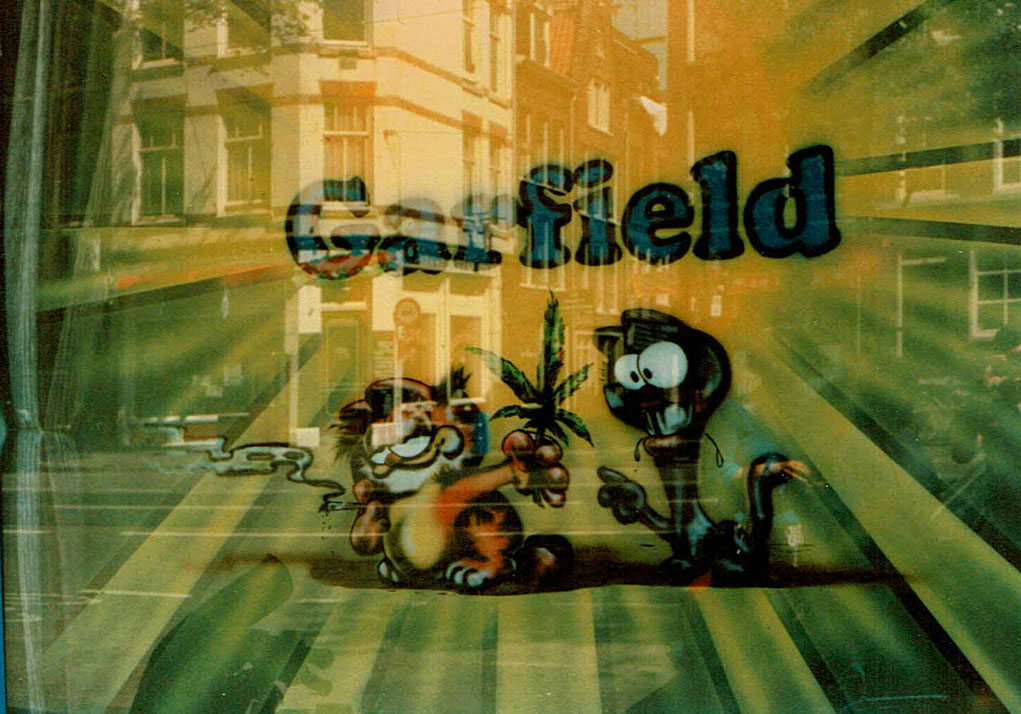
There were two famous Amsterdam attractions I decided to skip. The first was the Red Light District, as I wasn’t in the market for a souvenir that required a follow-up visit to a clinic. The second was the city’s famous “coffee shops.” Back in 1985, I thought coffee shops sold coffee. What a doofus! Cafés sold coffee; coffee shops sold cannabis, and many coffee shops dotted the dogshit-coated sidewalks. While they weren’t exactly legal, there was a tacit agreement with the authorities: the shops could operate as long as they were discreet. No direct advertising and no marketing to minors. That means absolutely no images of marijuana associated with cartoon characters that might appeal to children.
Anyway, here’s a photo I took of a shop window:
Proof that Garfield’s laziness and insatiable appetite had a very specific, botanical origin. Please excuse the reflective glare on the window. On that particular day the sun was, appropriately, blazing.
That wasn’t my first encounter with Aunt Mary. During my teens my parents grew a small crop in the backyard. Despite its ready availability at 16 Carol Drive, I’d never fired up the jazz cabbage. My abstinence stemmed from two things: the fear that if I were high I might shoplift a candy bar or join a cult; and a stubborn, teenage rebellion against my mother, who regarded my sobriety as a personal failing. So when my traveling companions in Amsterdam indulged in the local “space cakes,” which I assumed were brownies laced with angel dust, I refrained. I’m not going to give my mother the satisfaction of my developing a PCP addiction.
One night, we ended up at a club where everyone who wasn’t me was profoundly stoned. The music wasn’t exactly club music, and the patrons weren’t exactly dancing. They were swaying, like sea kelp in a gentle tide. I was the sober Jane Goodall among the zonked-out chimps. These were the people who could stare endlessly at a bowl of fruit and find meaning. Does this mean if I were to partake in the devil’s lettuce, I might experience art differently? Might I be moved by a Van Gogh still life or enjoy a performance of Starlight Express? We’ll never find out. I’d sooner shoplift a Snickers and join a cult.
I never felt that I was missing something profound by remaining sober. Maybe it’s okay to not be like everybody else. Maybe it’s okay to be the guy on the outside looking in. Maybe it’s okay to like what I like. Maybe I should write my own guidebook.
***
STATION #3: MUNICH
Our first stop in Munich (after checking into a hotel without issue) was Marienplatz Square’s Glockenspiel, a large mechanical clock with 32 life-size characters that twice daily re-enact scenes from Munich’s history: its top half tells the story of the 16th century marriage of Duke Someone-or-Other to Whomever; then the bottom half depicts a lively dance by local craftsmen celebrating the end of the 1517 plague. Following this joyous jig of population decimation, a tiny golden rooster at the top of the Glockenspiel flaps its wings and chirps weakly. In 1908, when the clock was constructed, this dude’s wedding and the plague were the two most notable events in Munich’s history. The city would later become the birthplace of the Nazi party, a historical development for which, one notes, they have not yet added a charming, life-sized clockwork reenactment. Apparently, once your town becomes historically interesting in the most horrifying way imaginable, you decide to stick with the quiet rooster.
Walking from the Glockenspiel we passed a store with an alarming name—Christ Schmuck, two words that generally aren’t heard next to each other unless you’re a passenger in my dad’s car. “Christ, schmuck, choose a lane!” he’d yell at other drivers, who couldn’t hear him through the closed windows. As Jews from New York, my friends and I knew a schmuck was a jerk—not as bad as a putz, and a distant relative of the yutz. Say what you will about Jesus; I’ve never heard him called a jerk. Many of his followers, sure, but the man himself? I was let down to find out they didn’t sell sacrilegious knick-knacks, for I was in the market for a crucifix that plays “The Hallelujah Chorus” when you press on Jesus’s tummy. I arrived in Munich knowing two German words: gesundheit and luftballons. And then I learned that “schmuck” is the German word for jewelry. Christ Schmuck sold religious-themed jewelry. Nothing blasphemous about it. Boy, did I feel like a yutz.
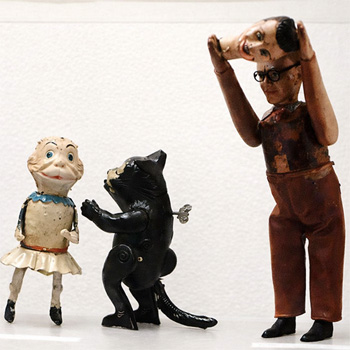
Later, we found the Spielzeugmuseum, a toy museum, which sounds adorable until you step inside and realize it’s less “Barbie’s Dream House” and more an explanation of how a not insignificant part of Germany’s 20th century history came to be. My childhood toys were Tonka trucks and Lincoln Logs, with which I pretended to build things. The toys in the museum were something else entirely. Displayed haphazardly on the shelves were grim-faced soldiers holding tiny bayonets, porcelain dolls that made the twins from The Shining look like Cabbage Patch Kids, a wind-up black cat that looked ready to strangle the frog-face woman in the very short skirt next to him, and most intriguing: an “action figure” of a man in thick, black-framed glasses wearing pants several sizes too large, holding a decapitated head. If you’re an insightful person like me, you’re picturing the only sensible explanation—Jack Benny got dressed in the dark to beat a hasty retreat from yet another orgy gone horribly wrong. If you’re not analytical like me, I’m sorry if I’ve forever killed the arousal you felt when thinking about Jack Benny.
Given the context of this museum, I could understand the decapitated head. But the glasses and comically oversized pants threw me. What was this figurine’s backstory? At the toy factory, did Frederick, the supervisor, yell at his underling, “Günter, I asked you to create an action figure for young boys and this is what you bring me? A hulking man holding a severed head? This is your idea of a children’s toy? Kids need something less brutish. Give him clown pants and glasses. That’ll make him less threatening.”
Whatever their backstory, I was entranced. These were items that raised questions. What becomes of children who play with such disturbing toys? Will they end up in prison? In a psychiatric hospital? Running a major European country? You look at these grim little figures, and suddenly, you understand. You give a kid a tiny soldier holding a bayonet, he’s probably not going to grow up to be a florist. These weren’t merely toys; they were warning signs. What was displayed in this museum was disturbing and unusual, yet captivating and thought-provoking.
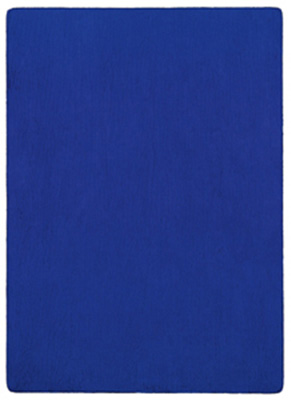
The theme of unusual, captivating and thought-provoking continued at the Staatsgalerie moderner Kunst. I admired the surrealist works of Salvador Dalí—melting clocks, elephants with the legs of Tina Turner, a 1929 painting he titled “The Great Masturbator” (much more skilled than run-of-the-mill masturbators. You know who you are.). Dali seemed like a man who enjoyed a space cake on the daily. But it was a creation by a different artist that blew me away. The artwork was a solid blue rectangle and the artist was Yves Klein. I no longer recall if it was on canvas or paper, but I remember thinking it was perfect. My friend Regan didn’t share my enthusiasm. “Anybody could do that,” she scoffed, to which I replied “The point isn’t whether you could do it. The point is you didn’t. Klein did.” And it checked off all of the boxes on my newly-forming checklist for what constituted great art: it was blue, it made me feel something, and boy, did it raise questions.
The most significant question was a game changer for me: who says art has to be complicated? Who says art needs to look (or sound) like it took a long time to complete? Dolly Parton wrote both “Jolene” and “I Will Always Love You” in a single evening. Are you seriously going to tell me those songs aren’t masterpieces, you pompous piece of shit? (That last question wasn’t directed at Regan or you. That was for the hypothetical philistine questioning Dolly.) Christ, schmuck, don’t make me sic my army of tiny, bayonet-wielding soldiers on you.
I liked the Klein piece because it didn’t tell you what to think. It didn’t say “Here are flowers. Flowers are pretty. Like this painting.” Or “Here is a bearded man sticking his finger in another man’s gaping wound. Life is miserable.” I could project whatever I wanted onto Klein’s canvas. And while not everybody in the museum appreciated the work as I did (as evidenced by the fact that I had an unobstructed view), a curator found it worthy of inclusion, and Klein’s shade of blue has its own Wikipedia entry. I may be in the minority, but I’m not alone.
In 1957 Klein displayed eleven identical blue canvases at a gallery, all for sale, all priced differently. He also composed the Monotone Symphony, a D-major chord sustained for 20 minutes, followed by 20 minutes of silence. In addition, Klein once staged an exhibition called The Void which consisted of an entirely empty gallery. That makes perfect sense to me. You can’t call something The Void and then fill it with stuff. That would be like opening a store called Just Shirts and having it sell smoked salmon.
This blue rectangle—simple, unorthodox, rebellious—showed me what art could be. Not for everyone. Not playing by the rules. Just boldly, defiantly itself. That’s my kind of art.
***
STATION #4: VIENNA
Next came Vienna, known for its boys choir, Wiener Schnitzel, and being the title of a Billy Joel song from 1977. I hadn’t completely given up on Billy Joel by 1985—we were still four years away from “We Didn’t Start the Fire”—though my college friend Kathy forever tainted “Uptown Girl” for me by insisting its drums sounded like Nazis marching.
Which brings us back to Vienna.
Vienna has been called “The City of Music,” which is a grand claim for a city whose only contribution to the pop charts was Falco. The month we set off for Europe, Falco released “Rock Me Amadeus.” The best that can be said about that song is that it doesn’t sound like Nazis marching. The best that can be said about my time in Vienna is that I didn’t see Nazis marching.
We were there for three days, long enough to know that the city has never experienced a day of sunshine ever. We didn’t let the constant rain stop us from heading out each morning to see all we were told the city had to offer.
There’s a palace the locals consider to be famous. We arrived there, wet, to find it was closed for a national holiday or a visiting head of state or maybe it was inventory day. Like most everything about Vienna, my memory is fuzzy. Did we visit churches? Probably. Did we see art? Maybe. I remember the rain. I remember the grayness. I remember the puddles. I remember nothing else.
At least our Vienna lodging was top of the line
***
STATION #5: VENICE
You know the Venice spiel: a city on water, a labyrinth of canals, centuries-old splendor, BLAH BLAH BLAH. Those words don’t capture what makes Venice special. Venice is like the “It’s a Small World” ride at Disneyland, but better. In the Disneyland ride you sit in a boat with a dozen other mammals, next to a friend or family member or Christ Schmuck forbid —a ruffian from one of the Dakotas wearing a t-shirt that reads “HERE’S THE BEEF” and has an arrow pointing down—and move along a track, delighting in this around-the-world excursion watching children sing and feeling exhilarated that war, poverty, disease and hunger have been eradicated. In Venice, the boat is a gondola—much nicer—and you share it with two friends where the worst sartorial decision might be Mike’s Duran Duran t-shirt. A gondolier rows you to your destination, and the whole ride you’re Madonna in her “Like A Virgin” video. I felt, if not quite shiny and new, at least—compared to Vienna—less whiny and blue. This was more like it. A city with personality, originality, and that Katrina and the Waves “Walking On Sunshine” weather. Venice was life-affirming.
Then I tried the pizza.
You’d think Italy would have good pizza. I’d been told from an early age that pizza—possibly the greatest food ever created—comes from Italy. The gastronomical crime I ingested in Venice made me question that origin story the way I questioned the existence of God and the legitimacy of the 1876 presidential election. That piz—I can’t even call it pizza. Let’s call it pizzoff. That pizzoff was cheesier than “Rock Me Amadeus” and saltier than a seaman’s slang. The best thing that can be said about it is that it kills bacteria in your mouth and throat, saving you a dental co-pay.
Beyond the traveling by gondola and the nasty-ass pizza, the details of Venice get hazy. I’m sure I saw a museum and stepped inside a church. It’s all a blur.
***
STATION #6: FLORENCE
Florence had a buttload of pigeons. Florence had a fuckton of statues. Pigeons everywhere. Statues everywhere. Pigeons walking in groups, like tourists who just dismounted the bus and didn’t want to lose each other. Statues holding other statues, like fathers cradling their armless bambinos. The buttload of pigeons were not impressed by the fuckton of statues. The pigeons shat freely and frequently all over the statues, and the statues did the same to the pigeons. Everyone’s a critic. But buttloads and fucktons and shit notwithstanding, it’s a beautiful city.
What?
Those statues, though. I didn’t connect with them. For example, look at the dude above. The big cream-colored dude, not the green little person. Let’s start with his couture. A tunic with a belt two inches below his nipples. A hat in one hand, the living room curtains draped over the opposite wrist. He doesn’t appear to be wearing pants, but we’ve all had those days when we’ve gone to the grocery store having forgotten to put on pants, so I’ll let that slide. But no shoes! In a city carpeted with pigeon droppings! That’s so disgusting I literally can’t even. So while the city planner in me appreciated having three thousand statues per square foot, these weren’t the ones I wanted to see. I think there should be a statue of a tourist, camera in one hand and a water bottle in the other, wearing jeans with their tunic and the nipple belt that holds their fanny pack, shvitzing and caught mid-yawn. Engraved in its base would be ALRIGHT ALREADY.
As we were in Florence, the birthplace of the Renaissance, we visited the Uffizi Gallery and the Accademia Gallery. I’m not going to say that da Vinci and Botticelli didn’t know how to paint, but Jesus! Literally! The artwork was all Jesus this and Jesus that and Jesus something else and Jesus Jesus Jesus Jesus Jesus and the Virgin Mary and gods and saints and Jesus. Geez, such original subject matter! It’s like each of them were at school copying off the canvas of the kid next to them. Jesus’s dad forbid they paint something else! Admittedly, I’m an atheist Jew, so maybe I’m not the target audience. In 1985, 21-year-old Glenn worshiped Prince. He was my God. But would I have wanted to view a thousand paintings of Prince? [long thoughtful pause] Actually, yes. But Jesus isn’t Prince. Prince wrote “Raspberry Beret.”
A break in Jesus came in the form of the works of Caravaggio, whose portraits include Boy Bitten by a Lizard, Young Sick Bacchus, Rest on the Flight into Egypt, and Boy Peeling Fruit. He may not be my favorite artist, but the man knew how to title a painting.
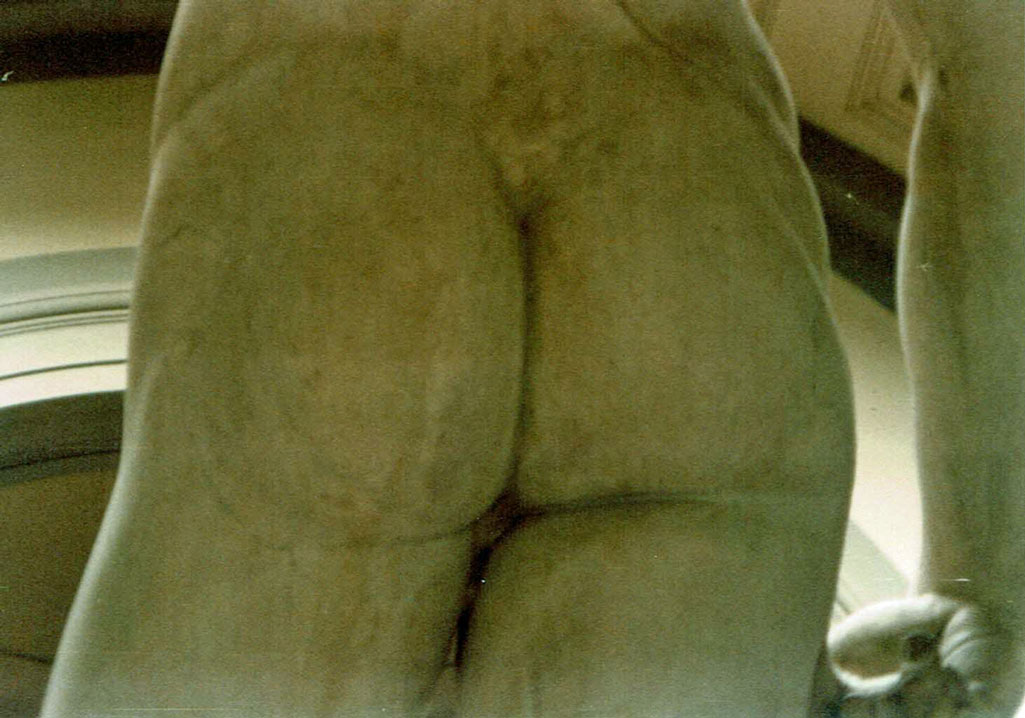
More my speed was the 16th century thirst trap that is Michelangelo’s David. After weeks of trudging through museums, I’d finally learned to recognize art when I saw it, and damn skippy, David was a fine piece of art. Though I was hopelessly heterosexual in 1985, I couldn’t deny that David had a rockin’ bod—exactly the kind of guy I’d want if I were “that way.” Since I didn’t know when I’d be passing through Florence again, I needed to take in all of this aesthetically fine model. Well, almost all. Lest anyone get the wrong idea, I told myself “Don’t look at his Wiener Schnitzel. Don’t look at his Wiener Schnitzel. Get your kicks above the waistline, Sunshine. Don’t look at his Wiener Schnitzel.”
I looked at his Wiener Schnitzel. Eh. He’d never be a centerfold in Inches magazine, a publication I stumbled across every time I went to the newsstand looking for Billboard.
As much as David filled my mind with new thoughts (about sculpture), all of this art was taking a toll on me and my friends. We were culturally bloated. This trip was starting to feel like a series of compulsory marches through Important Old Places, awesome as they were. We needed a vacation from our vacation. The sight of David’s perfectly sculpted glutes had sent a subliminal message to our worn-out souls. We needed a beach.
Look at that perfect art!
***
DETOUR: PISA, NICE
The plan was to escape to Nice for some beach time, but Italy was like, “PSYCH!” Somewhere en route to the French Riviera, the entire Italian rail system went on strike. We were dumped in Pisa. From the train window we saw its second most famous site, the leaning tower. Of course, its most famous site is…just kidding. The only thing there is the leaning tower. An architect makes a huge mistake and suddenly a city is on the map.
Did I want to climb it? Hell no. I’m terrified of heights. More importantly: NO MORE SITES. NO MORE CULTURE. My brain couldn’t take anymore. I JUST WANTED TO LAY ON A BEACH. Lean, straighten up, fall down—I didn’t care.
After renting a car to complete the journey, we finally collapsed in Nice. For two days, we did nothing. No museums. No churches. No palaces. No woman, no cry. We’d reached the point in our grand tour where the most profound cultural experience we could handle was a nap.
***
STATION #7: PARIS
And then, Paris.
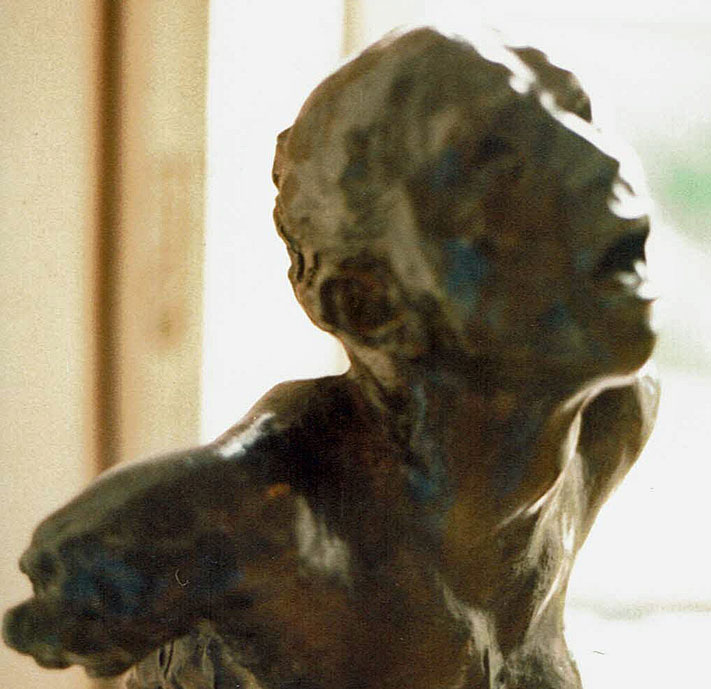
We began at the Rodin Museum, admiring the sculptor’s greatest hits: The Thinker and The Kiss, though my personal favorite, with which I was previously unfamiliar, was The Cry. Rodin intended this bust of a middle age man to display perseverance despite pain, grief and despair, but to me it looked like a boy getting the Heimlich maneuver. His chest was thrust forward, eyes bugged out, mouth open, ready to barf out a mushy cube of regurgitated brioche. Either way, the message was the same as what Corey Hart, the “Sunglasses At Night” guy, commanded us to do on his then new single—“Never Surrender.”
Next stop—Notre Dame, a cathedral best known for its progressive hiring of a man with an excessive curvature of the spine. To reach his tower, one had to traverse a walkway roughly the width of a ruler with only a knee-high wall keeping one from teetering off the ledge and splatting on the sidewalk 300 feet below like a mushy cube of regurgitated brioche. It’s safe if you’re a rat, but not if you’re a 5’10” acrophobe like moi. It’s been said that facing your fears is the surest way to conquer them. On the other hand, it’s also the surest way to death or disfigurement. Just ask the Venus di Milo. To get over her fear of sharks, she went swimming with them, and next thing you know, she couldn’t volunteer to clap the erasers after class.
Then the voice in my head made its presence known. “Glenn, bubelah, you’re in PARIS. This is NOTRE DAME. You HAVE to go to the bell tower. Don’t be a chicken. Buck-buck-buck-buck.” Though I don’t much care for that guy, internal Glenn was right. I’d come this far. It’d be ridiculous to stop now. What would Corey Hart say? Never surrender! Sweat formed on my forehead and in my pits. My heart raced. I took a deep breath. I flattened myself against the ancient wall like a terrified human starfish, fixed my gaze straight ahead, and with a series of sideways teeny tiny steps s l o w l y made my way. Finally I reached the bell tower. In it I saw a bell. I’m not sure what I was expecting to see, but I felt like a prize asshole.
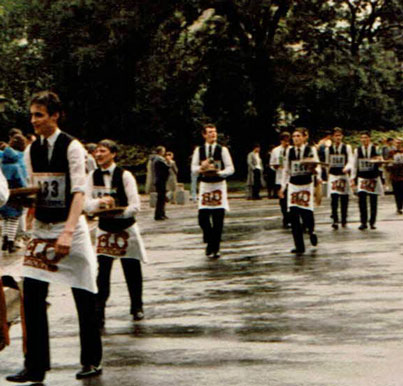
As we were leaving the cathedral a squadron of waiters in crisp white shirts sprint past while holding trays of food and drinks miraculously level. I was dying to know wtf was happening, but the only French I knew came from songs:
Voulez-vous coucher avec moi ce soir?
Les yeux sans visage
Ça plane pour moi, moi, moi, moi, moi
None of these phrases would be of service when inquiring about what appeared to be a city-wide catering emergency. I had been forewarned about the infamous French attitude aimed at those who don’t speak the language, so I dare not ask anyone in English what I was witnessing. If the Olympics Committee were smart, they’d add whatever this was to the summer games to increase viewership. I’d watch, and I think my neighbor Mitchell would, too.
The original Door Dash
We saw the Arc de Triomphe, one of the nicer Arcs I’d seen. We spent hours at The Louvre, where I saw the shark-bitten Venus De Milo, the Mona Lisa (which the museum called La Jaconde to confuse tourists—the French HATE the English language), Whistler’s Mother, a sphinx, a mummy, and other cool shit that would be out of place if displayed in my family’s living room, but suited the vibe the Louvre was aiming for: the drawing rooms of a fantastically wealthy hoarder. Sculptures that pre-dated Christ by over 2000 years, paintings from the 1500s, a dead person from around 300 BC, give or take—all are welcome.
It would be folly of me to leave the Mona Lisa as a passing reference, for Leonardo da Vinci’s masterpiece may be the most famous painting in the history of the world. It was alright, I suppose, though if you’ve seen a photo of the painting, you’ve seen the painting. The only difference is that in person, she’s behind glass and it’s difficult to get up close as throngs of tourists crowd her, all desperate for a glimpse of the piece of art they’ve been told their entire lives they must see. She’s treated like a bat in an enclosure at the zoo, or a lady on display in the Red Light District I avoided in Amsterdam. I knew that it was of the utmost importance that I take a picture of Mona to have at the ready should any person I encounter in the rest of my natural born days need evidence of my viewing the most famous painting in the world; however, after failing to get a decent photo through the glare of the glass enclosure and the sea of heads, I gave up and bought the postcard in the gift shop.
Then, after leaving The Louvre and wandering with no particular aim, I turned a corner and there it was. The Eiffel Tower. In the flesh, or whatever the expression is for something that doesn’t have flesh. Photographs diminish it. Keychains trivialize it. It is truly awesome. Standing before it was a “WOW!” moment. I thought “I really am in Europe,” as if the last four weeks may as well have been the Jersey shore. The tower is high. Very high. I thought back to the day before, at Notre Dame, and how I pushed through my fear of heights to muster up the courage to go up into the bell tower. Welp, you’re not going to trick me this time. Fool me once, shame on you. Fool me twice, your grandma’s a whore. I took a photo from ground level, then on to the next stop.
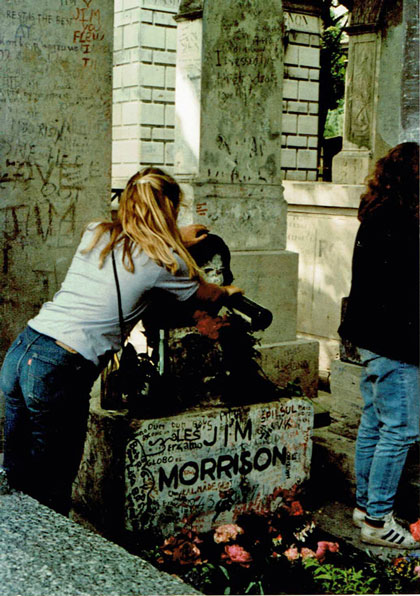
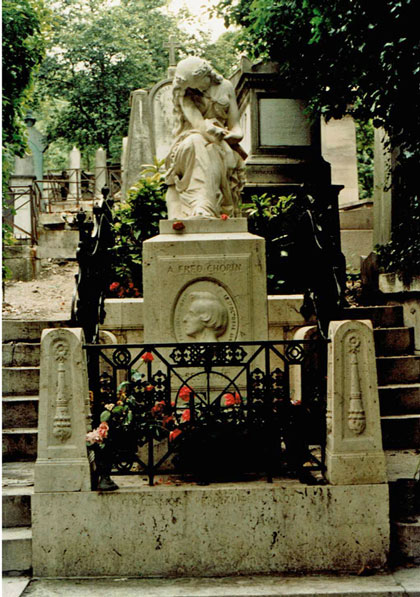
My friends and I trekked to the grave of Jim Morrison of the rock and roll outfit The Doors, on whose gravestone sat a bunch of young hooligans who looked like they wandered over from an Amsterdam disco, wasted on space cakes and not displaying proper burial ground decorum. (See the photo below of a girl offering the deceased rock star a swig of her hooch. People are strange.) In the same cemetery was Chopin’s grave, which was quieter. I worried his ghost looked over at Morrison’s and thought, “What am I, chopped liver?” But let’s be honest—nobody ever headlined a magazine cover story about Chopin “He’s hot, he’s sexy, and he’s dead.” Still, he was way more attractive than Schubert, based on a deep dive I took rating classical composers on how hot they were. The winner was Brahms in his youth, considered an upset by the Liszt fan club.
Morrison
Choppedliverin
There’s nothing like a romp through a graveyard to whet one’s appetite. French cuisine has a reputation for being very Frenchy and very cuisiney, but an allowance of $25 a day doesn’t allow for a fine French dining experience.
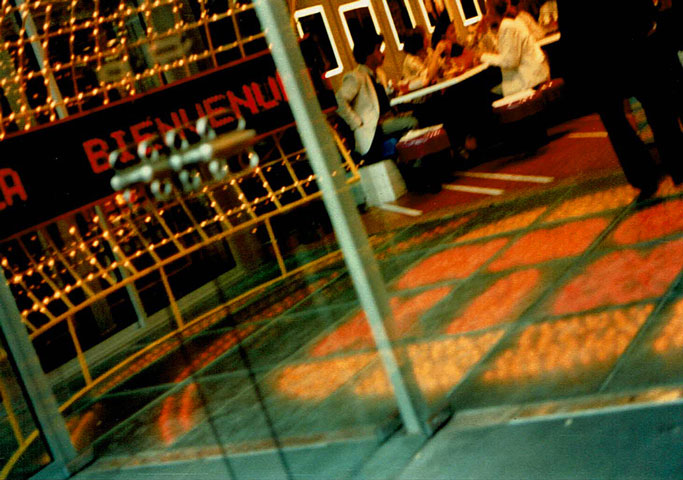
And so we found ourselves in a Burger King on the Champs-Élysées. Its floor lit up like the disco in Saturday Night Fever, which makes sense if you think about it, for John Travolta, before he starred in Saturday Night Fever, did a television commercial for Band-Aid, in which he sang the iconic jingle “I am stuck on a Band-Aid ‘cause Band-Aid’s stuck on me,” which was composed by Barry Manilow, who in a McDonald’s ad sang their iconic jingle “You deserve a break today,” and seeing as McDonald’s and Burger King are the two biggest hamburger fast food chains, now and then, well, need I say more?
Determined not to be the Ugly American, I rehearsed my order using a string of French words I’d cobbled together from a phrasebook. Ready to serve some flawless French, I approached the counter and announced to the cashier in my best Pepé Le Pew accent: “Deux hamburgers avec ketchup et pickles, sans moutarde et œufs.”
The young cashier took a beat and replied in the thickest Brooklyn accent I have ever heard “So, two hamboygahs, ketchup, pickles, no mustard, no egg. Got it.” Clearly someone wants to be in the Saturday Night Fever sequel. (I’m pretending the actual Saturday Night Fever sequel, 1983’s Staying Alive, doesn’t exist. You should do the same.)
Upon receiving my meal, I took my tray and sat down. I propped my feet up on the plastic bench opposite me, which apparently is a non-non in Paree, for an older gentleman in black slacks, a white button-down shirt with a black tie, and a red sweater with a “BK” monogram on the right breast appeared from nowhere and delivered to me a dressing-down of spectacular velocity and passion. This was a French dining experience after all. I didn’t know the words, but I understood the music. It was a symphony of disgust, conducted in furious, beautiful, magnificent, incomprehensible French. I was so proud of myself. He heard me order my food and believed I actually spoke the language. Ça plane pour moi!
My final full day in Europe began at the Jeu de Paume Museum. I don’t remember it, but my photo album contains the admission stub next to a photo I took of YET ANOTHER Van Gogh self-portrait. JFC, VVG! To jog my memory, I just visited the museum’s website, and was greeted on its landing page by a 2016 photograph of a handsome, bare-chested man with full lips and slicked-back dark hair, his eyes closed, water droplets on his tanned skin, locked in a deeply, sensual, intimate embrace.
With a sea bass.
Holy mackerel, that’s hot. The public display of a photo of a man being intimate with a fish in 1985 in the U.S. would probably have sparked public outrage and congressional hearings, but in 2025 in Paris it’s a museum’s welcome mat. Paris libéré!
We then explored Napoleon Bonaparte‘s tomb. I learned recently that during his autopsy someone allegedly pulled a Loreena Bobbitt on his Little General. I try not to judge. Glass houses and all that. It’s not like I’ve never taken anything home from work—a hi-liter, post-it notes, paper clips. But to date I‘ve never taken home a penis that wasn’t attached to its owner. Call me a hypocrite if you must, but that’s where a line should be drawn. That being said, if Mrs. Halpern spent less time teaching us about the explorers and what lands they “discovered” and more time sharing stories of stolen penises, I may have found history much more interesting and all those hallowed sites I’d seen on this trip would have had more significance. The obvious thing to do would be to make a Bonaparte/bone apart joke here. Instead, I’ll wrap up this history lesson by telling you that over the years, Napoleon’s penis has passed through several owners, some of whom have publicly displayed it. One observer described it as resembling a “small, shriveled eel.” Sorry if I’ve forever killed the arousal you felt when thinking about Napoleon.
For all the fanfare and whoop-ti-do about the structure in which it’s housed, the sarcophagus itself is kind of meh. It looks like a piece of furniture that you’d see in the home of a friend’s parents who have money but are too formal and unimaginative when it comes to home décor. It’s the smooth, shiny, monochromatic deep red stone chest against the foot of the bed in the primary bedroom that instead of containing spare towels and sheets houses a dead French general with no dick.
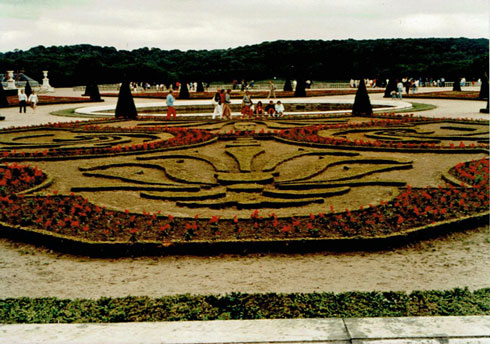
Our final stop was the palace of Versailles. I have no memory of the actual building, but its gardens, consisting of fountains and lawns and meticulously sculpted hedges, were magnificent. In the latter part of the 18th century Versailles was home to Marie Antoinette. When I was a kid I wished I had a babysitter like Marie instead of Grandma Pearl. Grandma Pearl complained about me eating Oreos within three hours of dinner; Marie would let me eat cake. The choice was obvious. France, with an enthusiasm for removing body parts that bordered on psychotic, had her beheaded (Marie Antoinette, not Grandma Pearl) in 1793. She ceased being Queen soon afterward.
And thus, our five weeks spent gallivanting around the continent amidst the hoi polloi came to an end. We saw what we were supposed to, and then some. It was time to begin the next phase of my life.
***
From Paris we flew into New York’s John F. Kennedy Airport. Regan’s father picked us up and took us to their home, where my Ford Pinto had been parked the past month. I took the Long Island Expressway to the Brooklyn-Queens Expressway to the George Washington Bridge into New Jersey. I arrived at 16 Carol Drive. Home. No museums in our town. No towers. No ancient cathedrals. No palaces, though we had the Royal Cliffs Diner. And good pizza, which we washed down with New Coke.
That was me at 21. Decades later, I still don’t get a thrill from a Caravaggio. If you do, fantastic! Like what you like. But if you think his work belongs in our living room, we probably shouldn’t get married. Having your own taste doesn’t make you a contrarian. It just means you’ve figured out what moves you instead of accepting what you’re told should move you.
Not to knock Europe On $25 A Day, but a guidebook is only helpful up to a point. Guidebooks can make suggestions, but ultimately, you need to decide where you want to go. It’s your life.
***
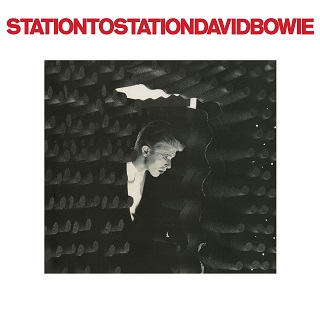
STATION TO STATION
In April 1975 David Bowie announced his retirement from rock & roll, calling it a “boring dead end.” Around the same time he told friends that witches were trying to steal his semen. One of these things turned out to be untrue. In the autumn of 1975, Bowie announced a world tour to support his upcoming album, Station By Station.
If you know one song from that album, it’s likely “Golden Years,” a funky, catchy number which Bowie admitted he wrote to chase a hit. Legend has it that before he put out his version, he offered the song to his fellow January 8th birthday celebrant, Elvis Presley. It was one of two songs he performed on the television program Soul Train, Bowie becoming the second white artist to appear on that show (Elton John performed on it a few months prior). Like Michelangelo’s David, “Golden Years” was art that the masses could appreciate. It became his second US top ten single and went top 40 in much of Europe. It would be his last song to make the US top 40 prior to 1983’s “Let’s Dance.”
The next single was “TVC15,” an uptempo bop about a television swallowing Iggy Pop’s girlfriend. Now’s a good time to mention Bowie was doing A LOT of cocaine then. You may think the bizarre subject matter is what kept it from the top 40, but this was 1976—one of the year’s biggest hits was about a man who when he visits a disco turns into a duck. Another was a song about muskrats in love who eat cheese and swing dance and get engaged. And then there was “Convoy,” about trucks driving over the speed limit. Clearly Americans were not discerning about lyrical content in 1976, but something about “TVC15” didn’t work for them. It was a blue canvas in a wax museum.
“Golden Years” and “TVC15” were two stops on what felt like Bowie taking the listener on a journey, a journey that begins with the song “Station To Station.” Over the course of its ten-plus minutes, Bowie takes us on a trip from his narrator’s emotional detachment to a strong desire to feel.
The journey/album ends with Bowie doing “Wild Is the Wind,” a hit in 1957 for Johnny Mathis. On paper, a Mathis cover on a Bowie album stands out like Jack Benny at an orgy, but Bowie owned it. Even Frank Sinatra spoke highly of Bowie’s rendition. As we debark, it’s clear that the weird and the accessible can co-exist.
The Station To Station album shot into the Top 5 in the UK and the US. Bowie wouldn’t attain that chart position in America again for another 37 years. The singer said that this album and its follow-up, 1977’s Low, were his favorites from his catalogue.
“Turn and face the strange” weren’t just words he sang on an earlier album. He turned, faced, and walked into it. His art pushed boundaries. He challenged expectations.
I arrived in Europe with expectations—to check off everything on the list of what I was supposed to see. Luckily, I found room to face the strange. I could embrace both “We Are the World” and a blue rectangle. The Louvre and Madame Tussauds. I could even embrace a pigeon’s artistic contribution to Bruce’s shirt—though I recommend not embracing Bruce himself until the paint dries. I didn’t have to choose. Bowie didn’t choose between commercial hits and avant-garde experiments—he did both. I didn’t have to give up who I was to become a sophisticated, cultured citizen of the world. Both could co-exist. As David Bowie said, “The truth is, of course, that there is no journey. We are arriving and departing all at the same time.”
If you scroll through a playlist of Britney Spears’s greatest hits, you’re not just looking at a list of popular songs. You’re tracing a remarkable path through modern pop music, one that is often defined by its distinct chapters. The journey begins with the now-iconic “…Baby One More Time,” a song that launched a career and set a new standard for late-90s pop. Tracks like this, along with “Oops!…I Did It Again” and “(You Drive Me) Crazy,” presented a specific, highly polished image: the approachable girl next door, navigating first loves and heartbreaks. Even in these early days, however, songs like “Lucky”—a surprisingly melancholic look at a famous girl who is crying behind her smile—hinted at the complex relationship with fame that would become a recurring theme in her work.
It wasn’t long before that polished image began to intentionally crack and evolve. The shift is palpable. You can hear it in the slinky, breathless production of “I’m a Slave 4 U,” a track that signaled a clear departure from her previous sound and a confident step into a more adult persona. This era wasn’t just about a new sound; it was about a new narrative. In songs like “Overprotected” and “Stronger,” the lyrics became declarations of independence, pushing back against outside control and expectations. It was a crucial pivot, one where the artist began using her music to comment on her own public journey, a theme she would revisit with even more focus later on.
As her career progressed into the mid-2000s, Spears became a central figure in the electronic and dance-pop wave that would dominate the decade. This is perhaps her most sonically adventurous period, producing some of pop’s most enduring anthems. The frantic, string-driven beat of “Toxic,” the demanding pulse of “Gimme More,” and the robotic sneer of “Womanizer” are all masterclasses in dance floor command. This period also saw the subject matter of her songs become its most self-referential. With “Piece Of Me,” she directly addressed the media frenzy surrounding her life, turning the camera back on the audience with a defiant and clever hook. It’s a bold move that transformed her from a subject of pop culture into one of its sharpest commentators.
Of course, the story isn’t all high-energy production and defiant statements. Woven throughout this catalogue are moments of striking vulnerability that offer a different kind of insight. The simple, piano-led melody of “Everytime” stands in stark contrast to the high-octane tracks that often surrounded it, revealing a quiet fragility. This emotional range is a key part of her artistry. Similarly, her collaborations show her ability to stand alongside fellow icons, from the dance-off with Madonna in “Me Against The Music” to her graceful return on the warm, inviting duet “Hold Me Closer” with Elton John, a track that feels less like a comeback and more like a welcome continuation.
Listening back, from the earnest pop of “Sometimes” to the commanding instruction of “Work Bitch,” what emerges is the sound of an artist continuously recalibrating. Her discography tells a story of growth, defiance, and resilience, all filtered through the lens of pop music. Each song is not just a hit, but a snapshot of a specific moment, capturing a young woman defining herself, a global star navigating immense pressure, and an artist creating a body of work that has profoundly shaped the sound and style of pop for more than two decades.
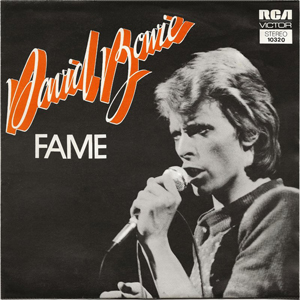
It’s interesting to start a playlist of John Lennon songs with David Bowie’s “Fame.” It feels like an outlier at first, until you remember Lennon co-wrote the track, contributed guitar, and sang backup vocals. It’s one of just a handful of songs on this list that isn’t a straightforward cover, and its placement at the top serves as a great reminder: one of the best ways to understand a songwriter’s impact is to see how their work thrives in the hands of others. Listening to a collection like this isn’t just about nostalgia; it’s an active exploration of how durable and adaptable Lennon’s compositions truly are, revealing the deep-seated melodic and lyrical strengths that invite constant reinterpretation.
The sheer variety of artists drawn to his work speaks volumes about its fundamental structure. A Lennon song can be a sturdy vessel for almost any style. In its original form, “Help!” was a desperate plea disguised as an upbeat folk-rock hit. But when Tina Turner gets ahold of it, she strips away the disguise, transforming it into a full-throated, soulful cry for salvation. Similarly, Johnny Cash takes “In My Life,” a song of youthful reflection, and imbues it with the profound weight of a long life lived, making each line land with a different, more somber gravity. From the raw R&B groove Otis Redding finds in “Day Tripper” to the cool, atmospheric poise Roxy Music brings to “Jealous Guy,” these songs prove to be exceptionally resilient, their core emotions accessible to any genre.
Beyond musical versatility, the playlist highlights the different facets of Lennon’s lyrical persona. There’s the acerbic political commentator, whose pointed dissatisfaction is channeled perfectly by the punk sneer of Generation X on “Gimme Some Truth” and the world-weary defiance of Marianne Faithfull on “Working Class Hero.” Then there is the deeply vulnerable Lennon, the man wrangling with insecurity and fame. You can hear this in the anxious, propulsive energy The Feelies bring to “Everybody’s Got Something To Hide (Except Me And My Monkey)” or the stark, pleading quality Maxïmo Park finds in the solo track “Isolation.” He could be pointedly political or achingly personal, and both modes have continued to resonate with artists who have their own truths to tell.
Of course, no look at Lennon’s work would be complete without touching on his more surreal and experimental side. These are often the songs that seem most tied to a specific time, yet they possess a dreamlike logic that continues to inspire. Elton John, a friend and collaborator, treats “Lucy in the Sky with Diamonds” not as a museum piece but as a glam-rock epic. R.E.M. leans into the hypnotic, floating quality of “#9 Dream,” while Fiona Apple’s take on “Across the Universe” honors its ethereal nature while grounding it with her distinctive emotional intensity. These artists don’t just copy the psychedelia; they find new ways to access the spirit of imaginative freedom that fueled the original recordings.
Ultimately, listening through these interpretations feels less like a tribute and more like a conversation across decades. We hear Billy J. Kramer’s simple pop charm on “Bad to Me,” a song Lennon wrote for him in 1963, and then Glen Campbell’s posthumous, heart-rending version of “Grow Old With Me,” one of Lennon’s last compositions. The journey between those two points is remarkable. This collection of songs, re-shaped by everyone from The Breeders to Bettye LaVette, demonstrates that the power of Lennon’s work isn’t just in his own iconic recordings. It’s in the bones of the songs themselves—the unforgettable melodies, the honest lyrics, and the restless spirit that others can’t help but be drawn to, again and again.
Fifty years ago, radio dials and turntables were spinning an uncommonly diverse mix of sounds. The charts of 1975 didn’t follow a single storyline—instead, they captured a moment when multiple musical currents were flowing with equal strength. Disco was gaining momentum but hadn’t yet dominated everything in its path. Rock was simultaneously reaching for arena-sized ambition and stripping down to raw emotion. Soul and funk were evolving into more sophisticated forms, while pop continued doing what it does best: making people hum along whether they meant to or not.
The year belonged, in many ways, to artists who understood that hooks and ambition weren’t mutually exclusive. Bruce Springsteen’s “Born to Run” arrived like a desperate prayer wrapped in Phil Spector production, while Queen’s “Killer Queen” proved that flamboyance and precision could coexist in three minutes of glam-rock perfection. Led Zeppelin stretched “Kashmir” across nearly nine minutes of Eastern-influenced grandeur, and Pink Floyd’s “Wish You Were Here” turned melancholy into an art form. Even Bob Dylan, never one to stand still, was crafting the narrative complexity of “Tangled Up in Blue.” These weren’t just songs—they were statements about how far popular music could reach while still connecting with listeners.
Meanwhile, dance floors were becoming cultural epicenters. KC and the Sunshine Band’s “That’s the Way (I Like It)” and Gloria Gaynor’s “Never Can Say Goodbye” helped establish disco as something more than a passing trend. The Bee Gees’ “Jive Talkin'” showed that the brothers Gibb could pivot from balladeers to funk-influenced hitmakers. Labelle’s “Lady Marmalade” brought New Orleans sass and unapologetic sexuality to the mainstream, while Earth, Wind & Fire’s “Shining Star” blended funk, soul, and jazz into something that felt both cosmic and grounded. The groove wasn’t just a rhythm—it was becoming a philosophy.
What’s striking about 1975 is how much sonic territory gets covered without any single approach dominating. 10cc’s “I’m Not in Love” used studio technology to create something hauntingly atmospheric, while Kraftwerk’s “Autobahn” was quietly suggesting what electronic music might become. Barry White continued orchestrating romantic opulence, Minnie Riperton’s five-octave range soared through “Lovin’ You,” and Linda Ronstadt’s “You’re No Good” proved that straightforward rock could still pack a punch. David Bowie’s “Fame,” co-written with John Lennon, showed him already moving past glam into funk-inflected territory. Glen Campbell brought “Rhinestone Cowboy” to country-pop crossover success, while Average White Band demonstrated that Scottish musicians could master American funk with “Pick Up the Pieces.”
Listening to these songs now, what emerges isn’t just nostalgia but a reminder of a particular kind of creative confidence. These artists weren’t afraid to be big or vulnerable, funky or introspective, polished or raw—sometimes all within the same track. The year didn’t belong to any single movement or sound, and that might be exactly what made it memorable. It was a time when the radio could take you from the Staple Singers’ gospel-infused soul to Sweet’s glitter-rock crunch to ABBA’s pristine pop architecture without anyone thinking twice about the journey. That kind of range feels worth celebrating.
Every June, Pride Month invites us to honor the LGBTQ+ community—not just its triumphs and ongoing struggles, but its wildly varied voices. This playlist, drawn from over six decades of music, is less a neat collection than a vibrant mix of statements, emotions, and identities. From Sylvester’s ecstatic disco classic “You Make Me Feel (Mighty Real)” to Billie Eilish’s “LUNCH,” the selections aren’t organized by genre, time period, or even theme. That’s fitting. The LGBTQ+ experience is too broad and multifaceted to be summed up by any single sound.
Some tracks speak directly to queerness, like Lou Reed’s “Walk on the Wild Side,” which namechecks drag queens and trans women, or Bronski Beat’s spiritual descendants, the Scissor Sisters, with their cheeky, loving anthem “Take Your Mama.” Others, like “Rocket Man” or “Do You Really Want to Hurt Me,” resonated with queer audiences before the artists behind them publicly came out—or even if they never did. There’s a history of coded expression here, of lyrics that offered solace to those reading between the lines.
Then there are the songs that became anthems of empowerment by sheer force of feeling: Christina Aguilera’s “Beautiful” offered a lifeline to LGBTQ+ youth when it first aired on MTV, while Madonna’s “Vogue” gave a global spotlight to a ballroom culture that had long gone ignored by the mainstream. Judy Garland’s “Over the Rainbow” might seem quaint next to Chappell Roan’s “Good Luck, Babe!,” but both songs capture longing, whether for love, acceptance, or the audacity to want more.
What unites these artists isn’t a single identity but a shared defiance—sometimes quiet, sometimes flamboyant—against what’s expected. Whether it’s the punkish ache of Buzzcocks’ “Ever Fallen in Love (With Someone You Shouldn’t’ve)” or the glossy Pet Shop Boys cover of “Go West,” the throughline is the refusal to shrink. Pride, in this sense, isn’t about perfection or performance. It’s about visibility, honesty, and a community that keeps evolving, note by note.
So, while this playlist won’t tell a single story, that’s exactly the point. Pride has never been about uniformity. It’s about claiming your truth, however it sounds—and blasting it through the speakers so someone else knows they’re not alone.
By 1976, disco had moved from underground clubs to the top of the charts, and rock music found itself facing challenges from multiple fronts. Donna Summer’s “Love to Love You Baby” and Diana Ross’ “Love Hangover” showcased the genre’s hypnotic groove and sensuality, while Wild Cherry’s “Play That Funky Music” blurred the lines between rock and funk, proving that even guitar-driven bands weren’t immune to disco’s influence. Hits like Andrea True Connection’s “More, More, More” and Candi Staton’s “Young Hearts Run Free” reinforced that this was no passing trend—it was a movement reshaping popular music.
Mainstream rock, meanwhile, leaned into grandeur and melody. Queen’s “Bohemian Rhapsody” became a landmark in songcraft, a multi-part epic that defied conventional structure and solidified the band’s place in rock history. Boston’s “More Than a Feeling” offered a soaring, polished take on arena rock, while Blue Öyster Cult’s “(Don’t Fear) The Reaper” balanced an ethereal mood with a sinister undercurrent. Even David Bowie, ever the shape-shifter, leaned into a sleeker sound with “Golden Years.”
Yet, outside of the glossy productions and layered harmonies, a different kind of energy was brewing. The Sex Pistols’ “Anarchy in the U.K.” was a shot across the bow, rejecting the excesses of rock in favor of raw urgency. While not a punk act, Thin Lizzy’s “The Boys Are Back in Town” carried a swagger and directness that resonated with rock fans who would soon embrace punk’s stripped-down ethos. Punk’s full-blown arrival was just around the corner, but 1976 gave the first clear signs that the dominant sounds of the decade were about to face a reckoning.
Beyond disco and rock, R&B and soul continued to thrive, offering both lush ballads and infectious grooves. The Manhattans’ “Kiss and Say Goodbye” and Lou Rawls’ “You’ll Never Find Another Love Like Mine” showcased rich, emotive vocal performances, while Spinners’ “The Rubberband Man” and Boz Scaggs’ “Lowdown” leaned into rhythmic sophistication. Daryl Hall & John Oates’ “She’s Gone” marked a breakthrough for the duo, setting the stage for their string of hits in the late 1970s and early 1980s, where they refined their blend of blue-eyed soul and pop.
In a year that saw both nostalgia and forward momentum, songs like the Four Seasons’ “December, 1963 (Oh, What a Night)” and Gordon Lightfoot’s “The Wreck of the Edmund Fitzgerald” reminded listeners of storytelling’s power in song. Meanwhile, ABBA’s “Mamma Mia” and Elton John and Kiki Dee’s “Don’t Go Breaking My Heart” offered sheer pop exuberance. The music of 1976 reflected an industry in transition—disco was ascendant, rock was splintering, and a new wave of rebellion was beginning to make itself heard.
Thom Bell, one of the primary architects of the Philadelphia soul sound of the 1970s, transformed popular music through his sophisticated approach to arrangement, production, and songwriting. As a producer, Bell crafted numerous classics with The Stylistics (“You Make Me Feel Brand New,” “Betcha by Golly, Wow”), Spinners (“I’ll Be Around,” “Could It Be I’m Falling In Love”), and The Delfonics (“La-La (Means I Love You),” “Didn’t I (Blow Your Mind This Time)”). His signature style combined lush orchestration with tight rhythm sections, creating a smooth yet emotionally resonant backdrop for the distinctive vocal harmonies of these groups.
Beyond his production work, Bell’s talents as an arranger and songwriter were equally significant to his legacy. His intricate string and horn arrangements elevated songs like “People Make the World Go Round” by The Stylistics and “The Rubberband Man” by The Spinners into something far more sophisticated than typical pop fare. As a songwriter, often collaborating with Linda Creed, he penned enduring hits including “You Are Everything” and “Break Up to Make Up.” While this playlist highlights his work as a producer, Bell’s arranging skills also enhanced recordings by artists he didn’t produce, including Archie Bell & The Drells, Dusty Springfield, Jerry Butler, and many others, extending his musical influence far beyond his core production credits.
What distinguished Bell’s work was his classical training combined with deep soul sensibilities—creating arrangements that balanced complexity with accessibility. Unlike many producers of his era who relied on formula, Bell approached each artist uniquely, tailoring his sound to complement specific vocal qualities. This musical versatility allowed him to help shape not just the Philadelphia soul sound but to influence broader pop music trends throughout the 1970s and beyond. His productions maintain their artistic integrity and emotional impact decades later, testament to a visionary who understood that the most profound musical innovations often happen in the mainstream, where artistry and accessibility converge.
The music of 1971 was shaped by a world in transition. The optimism of the ’60s had given way to a more complicated reality—political upheaval, the Vietnam War, and shifting cultural norms weighed heavily on society. In response, many artists channeled these changes into their music, whether through protest, storytelling, or deeply personal reflection. The result was a year that produced enduring songs across multiple genres, from confessional singer-songwriter fare to hard-hitting rock and infectious soul.
Some of the most memorable hits of the year leaned into personal themes rather than overt social commentary. Carole King’s “It’s Too Late” and Elton John’s “Your Song” exemplified the rise of the singer-songwriter era, blending lyrical vulnerability with sophisticated melodies. Al Green’s “Tired of Being Alone” showcased his effortless mix of longing and smooth Southern soul, while Rod Stewart’s “Maggie May” became his breakthrough solo hit, telling the story of youthful romance with a blend of folk and rock. At the same time, Marvin Gaye’s “What’s Going On” took a broader view, addressing war, inequality, and injustice in a way that felt both urgent and timeless.
Rock music remained as dominant as ever, though it took on new forms. Led Zeppelin’s “Immigrant Song” showcased their thunderous power, while The Who’s “Won’t Get Fooled Again” harnessed synthesizers and political defiance to craft an enduring anthem. The Rolling Stones’ “Brown Sugar,” released without much controversy at the time, has since been reevaluated due to its lyrical content. Meanwhile, The Doors painted a dark, atmospheric landscape on “Riders on the Storm,” and Paul & Linda McCartney’s “Uncle Albert/Admiral Halsey” leaned into whimsical experimentation, proving that rock still had room for playfulness.
Soul and funk made significant strides in 1971, with Sly & The Family Stone’s “Family Affair” pioneering a more subdued, groove-heavy sound. The Staple Singers’ “Respect Yourself” and Curtis Mayfield’s “Move On Up” carried messages of empowerment, while Honey Cone’s “Want Ads” and Jean Knight’s “Mr. Big Stuff” infused attitude into their infectious rhythms. The Jackson 5’s “Never Can Say Goodbye” demonstrated a maturing sound beyond their bubblegum pop beginnings, while Cher’s “Gypsies, Tramps and Thieves” and Melanie’s “Brand New Key” brought storytelling into the pop realm with memorable melodies and an enduring campiness.
Fifty-plus years later, the music of 1971 still resonates. Whether through the social commentary of “What’s Going On,” the country-rock warmth of “Me and Bobby McGee,” or the swampy energy of Ike & Tina Turner’s “Proud Mary,” these songs remain essential listening. They serve as both a time capsule and a reminder that great music doesn’t just reflect its era—it continues to shape the generations that follow.