Tunes Du Jour Presents 1973

If you were flipping through radio stations in 1973, you might have been forgiven for wondering whether you’d accidentally landed on multiple stations at once. In a single week, you could hear Stevie Wonder’s “Superstition” — all nervous funk and clavinet — followed immediately by Tony Orlando & Dawn tying a yellow ribbon around an oak tree. That wasn’t a coincidence or a quirk of programming. It was just what 1973 sounded like: a year when pop music was genuinely pulling in several directions at the same time, and somehow holding together anyway.

Soul and R&B were operating at an extraordinary level. Marvin Gaye’s “Let’s Get It On,” Gladys Knight’s “Midnight Train to Georgia,” the O’Jays’ “Love Train,” and the Spinners’ “Could It Be I’m Falling In Love” all landed that year, each with its own emotional weight and personality. Curtis Mayfield’s “Superfly” brought something sharper and more cinematic to the mix, while Ann Peebles’ “I Can’t Stand the Rain” — still somewhat underappreciated in the wider cultural memory — was as raw and soulful as anything released that decade. Eddie Kendricks, fresh off his Temptations run, went solo with “Keep On Truckin’,” and it clicked immediately. The breadth of what Black artists were producing in this single calendar year is genuinely remarkable.

Rock was doing its own sprawling thing. The Rolling Stones released “Angie,” one of their more restrained and melancholy singles. Elton John’s “Goodbye Yellow Brick Road” was the title track of a double album that showed he could sustain a full artistic statement across four sides of vinyl, not just deliver three minutes at a time. Pink Floyd’s “Money” brought an odd-time signature to FM radio in a way that probably shouldn’t have worked as well as it did. And then there were the louder contingents: Deep Purple’s “Smoke on the Water” became one of the most-played riffs in guitar shop history, Grand Funk Railroad declared themselves an American band, and Slade and Sweet were doing glam rock with considerably more volume than glamour. Meanwhile, Iggy & the Stooges released “Search and Destroy” — which most of 1973’s radio audience largely ignored, though history would eventually course-correct on that.

The year also captured several artists at particularly interesting transitional moments. David Bowie’s “Space Oddity,” originally released in 1969, finally broke through in the US in 1973, reaching American audiences who were now ready for its strange, detached storytelling. Lou Reed’s “Walk on the Wild Side” had no business being as widely played as it was, given its subject matter, but here we are. Bob Dylan contributed “Knockin’ on Heaven’s Door” via his Pat Garrett & Billy The Kid soundtrack — unassuming and brief, but immediately recognizable as something that would last. T. Rex’s “20th Century Boy” and George Harrison’s “Give Me Love (Give Me Peace On Earth)” filled out a year that seemed to have room for almost anything, provided it had a decent hook.

What holds up most clearly, looking back at 1973’s output, is that the music wasn’t being made according to any unified cultural script. Some of it was deliberately commercial; some of it was confrontational; some of it was deeply personal. Carly Simon’s “You’re So Vain,” Roberta Flack’s “Killing Me Softly With His Song,” and Paul Simon’s “Loves Me Like a Rock” feel like they come from entirely different worlds, yet they all landed in the same twelve-month window. Ringo Starr had a hit with “Photograph.” The Allman Brothers were rambling. Cher was charting with “Half-Breed.” By any measure, 1973 was a disorganized, contradictory, frequently excellent year for popular music — and that’s precisely what makes it worth revisiting.

Follow Tunes Du Jour on Facebook

Follow me on Bluesky

Follow me on Instagram
Tunes Du Jour Celebrates Black History Month

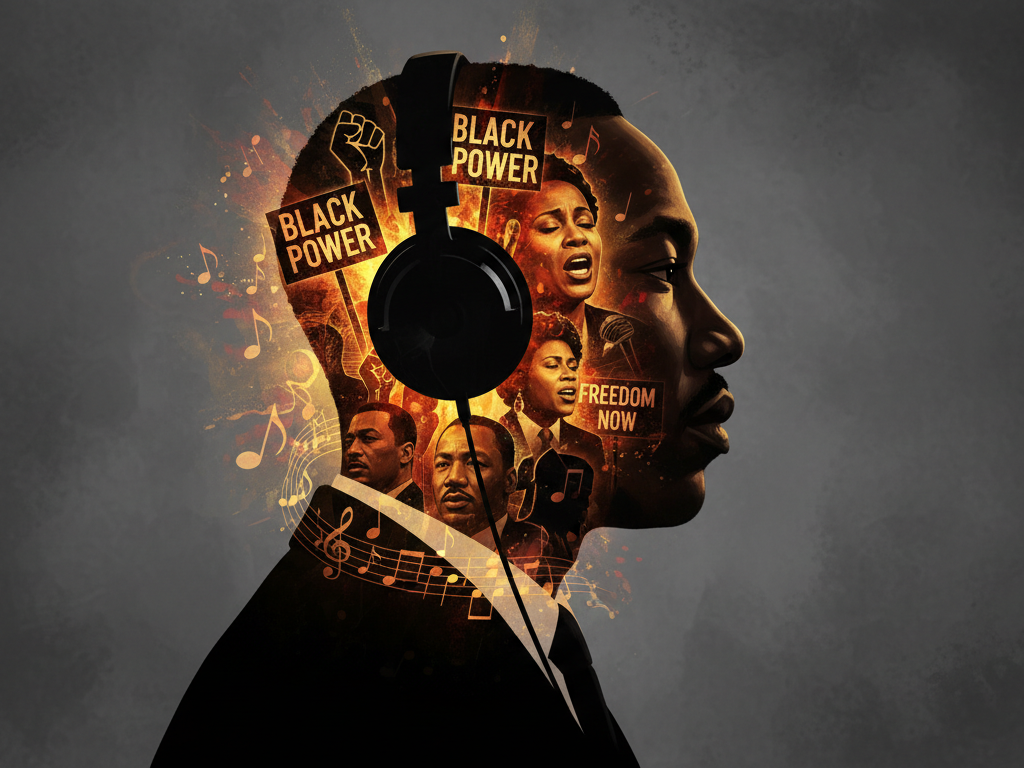
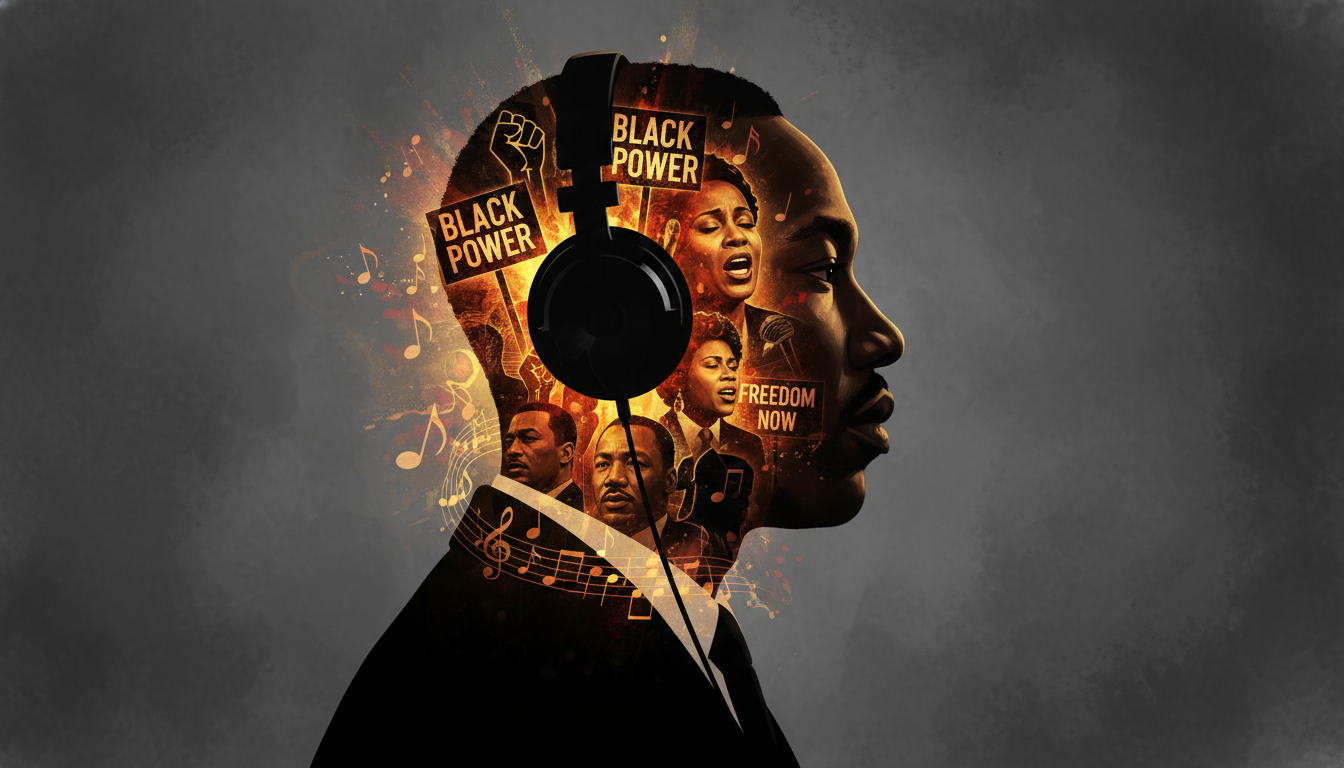
Music has always been more than just a backdrop to history; it is a living, breathing part of it. It’s the coded message in a spiritual, the roar of protest in a soul anthem, and the unshakeable pride in a hip-hop verse. This playlist was curated with that spirit in mind. It is not just a collection of songs by Black artists or about Black experiences, but a deliberate sonic journey where each track serves as a chapter in the long, complex, and powerful story of Black history. From the harrowing journey of the Middle Passage in The O’Jays’ “Ship Ahoy” to the defiant celebration of identity in Beyoncé’s “BROWN SKIN GIRL,” every song here is a direct link to a person, an event, a movement, or some combination of the three.

The running order is intentional, designed to guide the listener through a powerful emotional and historical arc. We begin in the depths of oppression, bearing witness to the brutality of slavery, the terror of Jim Crow, and the pain of foundational betrayals. From that bitter root, the playlist pivots to the fire of resistance. It chronicles the fight for Civil Rights in America and the parallel global struggle against apartheid, honoring the heroes who led the charge and the anthems that fueled their movements. The narrative then moves into the modern era, where the fight for justice continues in the face of new challenges, chronicled with unflinching honesty by artists from Bruce Springsteen to Janelle Monáe.

This journey through pain and protest ultimately leads to a place of empowerment, joy, and hard-won hope. The final act of the playlist is a celebration of contribution, a lesson in self-love for future generations, and a recognition of monumental triumphs. It culminates in the profound resilience of Aretha Franklin’s “A Change Is Gonna Come”—a final, stirring testament to an unshakeable faith in the future. This Black History Month, we invite you to not just hear these songs, but to truly listen. Follow the stories, look up the names, and feel the weight and glory of the history they carry. Let the rhythms move you, but let the histories change you.

Follow Tunes Du Jour on Facebook
Follow me on Bluesky
Follow me on Instagram
Tunes Du Jour Presents 1971

The music of 1971 was shaped by a world in transition. The optimism of the ’60s had given way to a more complicated reality—political upheaval, the Vietnam War, and shifting cultural norms weighed heavily on society. In response, many artists channeled these changes into their music, whether through protest, storytelling, or deeply personal reflection. The result was a year that produced enduring songs across multiple genres, from confessional singer-songwriter fare to hard-hitting rock and infectious soul.

Some of the most memorable hits of the year leaned into personal themes rather than overt social commentary. Carole King’s “It’s Too Late” and Elton John’s “Your Song” exemplified the rise of the singer-songwriter era, blending lyrical vulnerability with sophisticated melodies. Al Green’s “Tired of Being Alone” showcased his effortless mix of longing and smooth Southern soul, while Rod Stewart’s “Maggie May” became his breakthrough solo hit, telling the story of youthful romance with a blend of folk and rock. At the same time, Marvin Gaye’s “What’s Going On” took a broader view, addressing war, inequality, and injustice in a way that felt both urgent and timeless.

Rock music remained as dominant as ever, though it took on new forms. Led Zeppelin’s “Immigrant Song” showcased their thunderous power, while The Who’s “Won’t Get Fooled Again” harnessed synthesizers and political defiance to craft an enduring anthem. The Rolling Stones’ “Brown Sugar,” released without much controversy at the time, has since been reevaluated due to its lyrical content. Meanwhile, The Doors painted a dark, atmospheric landscape on “Riders on the Storm,” and Paul & Linda McCartney’s “Uncle Albert/Admiral Halsey” leaned into whimsical experimentation, proving that rock still had room for playfulness.

Soul and funk made significant strides in 1971, with Sly & The Family Stone’s “Family Affair” pioneering a more subdued, groove-heavy sound. The Staple Singers’ “Respect Yourself” and Curtis Mayfield’s “Move On Up” carried messages of empowerment, while Honey Cone’s “Want Ads” and Jean Knight’s “Mr. Big Stuff” infused attitude into their infectious rhythms. The Jackson 5’s “Never Can Say Goodbye” demonstrated a maturing sound beyond their bubblegum pop beginnings, while Cher’s “Gypsies, Tramps and Thieves” and Melanie’s “Brand New Key” brought storytelling into the pop realm with memorable melodies and an enduring campiness.

Fifty-plus years later, the music of 1971 still resonates. Whether through the social commentary of “What’s Going On,” the country-rock warmth of “Me and Bobby McGee,” or the swampy energy of Ike & Tina Turner’s “Proud Mary,” these songs remain essential listening. They serve as both a time capsule and a reminder that great music doesn’t just reflect its era—it continues to shape the generations that follow.


Follow Tunes Du Jour on Facebook

Follow me on Bluesky

Follow me on Instagram

Your (Almost) Daily Playlist: 5-11-24

Eric Burdon rose to fame as the lead vocalist of the rock band The Animals, which was part of the British Invasion that took the music world by storm in the 1960s. With his powerful and distinctive vocals, Burdon helped the band achieve international success with hits like “House of the Rising Sun” and “Don’t Let Me Be Misunderstood.”

In the late 1960s, with a new set of Animals, Burdon embraced the psychedelic sound that was popular during that era. This incarnation of the band showcased Burdon’s ability to evolve with the changing times, as they incorporated elements of funk, soul, and psychedelic rock into their music.

In 1970, Burdon introduced the world to the band War. Their collaboration resulted in the hit song “Spill the Wine,” which fused elements of rock, funk, and Latin music. I’m impressed by Burdon’s versatility and willingness to explore new musical territories.

Eric Burdon was born on this date in 1941. A few songs from him are included on today’s playlist.

Follow Tunes Du Jour on Facebook

Follow Tunes Du Jour on Twitter

Follow me on Instagram