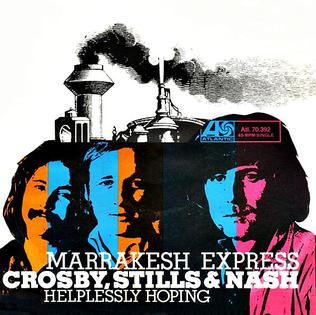
Tunes Du Jour Presents Crosby, Stills & Nash

The term “supergroup” gets thrown around a lot, often describing a short-lived project more notable for its lineup than its output. But with Crosby, Stills & Nash, the label felt different. This wasn’t just a collection of famous musicians; it was a genuine fusion of distinct, fully-formed artistic voices. Listening to a playlist of their work is like tracing a map back to its origins. To truly understand a song like “Suite: Judy Blue Eyes,” you first have to appreciate where its creators came from: David Crosby’s expansive, harmony-rich work with The Byrds, Stephen Stills’s fiery folk-rock with Buffalo Springfield, and Graham Nash’s pristine pop sensibility with The Hollies.

Before they ever sang a note together, each member had already left an indelible mark on the 1960s. The playlist gives us a clear picture of the ingredients they brought to the table. From The Byrds, you can hear Crosby pushing boundaries with the psychedelic exploration of “Eight Miles High” and the moody, jazz-inflected atmosphere of “Everybody’s Been Burned.” From Buffalo Springfield, Stills emerges as a formidable guitarist and a writer of anthems, penning the definitive protest song “For What It’s Worth” and the intricate, multi-part “Bluebird.” And from The Hollies, Nash provided the soaring high harmony and pop craftsmanship evident on tracks like “Carrie Anne” and “On A Carousel,” a perfect, bright counterpoint to the others’ more rugged styles.

When these three voices first combined, the result was an entirely new chemical reaction in popular music. The intricate vocal arrangements became their signature. A song like “Suite: Judy Blue Eyes” isn’t just a long track; it’s an ambitious, multi-movement piece that relies entirely on the interplay of their voices. This new entity could accommodate Nash’s breezy travelogue “Marrakesh Express” on the same album as the haunting, allegorical “Wooden Ships,” a song that feels heavier and more complex. It was this ability to contain different perspectives within one cohesive sound that defined their initial success.

Of course, the story soon expanded. The addition of Neil Young, Stills’s former bandmate, added a darker, more unpredictable edge to the group, a change you can hear immediately in the raw vulnerability of “Almost Cut My Hair” or the generational power of “Woodstock.” Yet even as a quartet, they could produce moments of profound gentleness, like Nash’s portrait of domestic bliss in “Our House” or the timeless advice of “Teach Your Children.” The solo efforts included on the playlist further highlight their individuality: Stills’s direct, blues-rock command to “Love The One You’re With,” Crosby’s ethereal musings in “Laughing,” and Nash’s political rallying cry in “Chicago.”

Decades later, what endures is the sound of those voices. It’s a sound that could carry later hits like the reflective “Wasted on the Way” and the nautical, evocative “Southern Cross.” Crosby, Stills & Nash—with or without Young—was a remarkable convergence. It was a project born from friendship and a shared desire to create something that none of them could have achieved alone. Their legacy isn’t just in the hit singles, but in the creation of a sound so specific and intricately constructed that it remains instantly recognizable from the very first note.

Follow Tunes Du Jour on Facebook

Follow me on Bluesky

Follow me on Instagram

Tunes Du Jour Celebrates National Eye Exam Month

August is National Eye Exam Month in the US of A, so do yourself a favor and make an appointment to see an eye care professional. Your eyes will thank you (which is reason enough to see such a doctor, for if your eyes are talking, something is very very wrong).

Below are 30 songs with the word “eye” (or “eyes”) in the title.

Follow Tunes Du Jour on Facebook

Follow me on Bluesky

Follow me on Instagram

Tunes Du Jour Presents 1969

The music of 1969 captures a unique crossroads in cultural history—a year teetering between optimism and cynicism, unity and rebellion. Looking at a playlist from this year reveals a blend of genres and voices, each reflecting a society in flux. The playlist’s tracks encompass themes of love, social change, disillusionment, and raw individualism, echoing the era’s contradictions and bold spirit.

On one end of the spectrum, songs like Elvis Presley’s “Suspicious Minds” and Tammy Wynette’s “Stand By Your Man” echo traditional themes of love, loyalty, and heartbreak, though with a hint of modern skepticism. Presley’s soulful performance marked his return to chart-topping success, while Wynette’s hit became a polarizing anthem, embraced by some for its devotion and questioned by others for its apparent passivity. Meanwhile, Glen Campbell’s “Wichita Lineman” captured a more introspective side of the decade, blending pop and country into a haunting portrayal of loneliness and perseverance.

But 1969 wasn’t all about introspection; it was also a year of unrestrained expression and pushing boundaries. Creedence Clearwater Revival’s “Bad Moon Rising” hinted at a sense of looming danger, with its ominous lyrics striking a nerve during a time of political upheaval. In contrast, “Honky Tonk Women” by The Rolling Stones embraced the gritty allure of rock and roll without aiming for a larger societal message. Jagger’s tales of chance encounters and gin-soaked nights represent the Stones’ unapologetic celebration of indulgence, sidestepping introspection in favor of pure hedonism.

Amidst the wild spirit of rock, 1969 also offered more uplifting messages with a hint of idealism. Sly & The Family Stone’s “Everyday People” and The Youngbloods’ “Get Together” conveyed calls for unity that resonated deeply in an era fraught with political and racial tensions. Sly Stone’s anthem became a rallying cry for acceptance, emphasizing individuality while embracing common ground. Similarly, “Aquarius/Let the Sunshine In” by The 5th Dimension captured the essence of the countercultural movement in all its utopian ambitions, even if the optimism was a bit idealistic in hindsight.

Then there was the music that addressed disillusionment head-on, perhaps best captured by Simon & Garfunkel’s “The Boxer” and Peggy Lee’s “Is That All There Is?” Both songs offer reflective, sometimes jaded perspectives on life’s struggles and the disappointments that can accompany maturity. Where “The Boxer” tells the story of a young man grappling with hardship and loss, Lee’s dry wit in “Is That All There Is?” confronts the emptiness that can lie beneath life’s surface pleasures.

Ultimately, this playlist from 1969 feels like a time capsule of an era balancing between hope and disillusionment. From the raw proto-punk of The Stooges to the tender balladry of Stevie Wonder’s “My Cherie Amour,” the year’s music speaks to a generation grappling with unprecedented social changes. Through these songs, 1969 continues to resonate, reminding us that music often reflects the spirit of its time while challenging listeners to consider where they stand.

Follow Tunes Du Jour on Facebook

Follow Tunes Du Jour on Twitter

Follow me on Instagram

Your (Almost) Daily Playlist: 2-20-24

Steely Dan’s Walter Becker was obsessed with a tiny sound glitch on the album Katy Lied and flew to a 3M factory in Minnesota to find out the cause. It turned out to be a blot of dried mustard on the tape. Duh!

The late Walter Becker was born on this date in 1950. Lots of Steely Dan on today’s playlist.

Follow Tunes du Jour on Facebook

Follow Tunes du Jour on Twitter

Follow me on Instagram

Your (Almost) Daily Playlist: 8-13-22

Today’s playlist celebrates the August 13 birthdays of The Undertones’ Feargal Sharkey, MØ, Outlaws’ Hughie Thomasson, Tal Bachman, and Dan Fogelberg; the August 14 birthdays of Crosby Stills & Nash’s David Crosby, Scissor Sisters’ Ana Matronic, Seals & Crofts’ Dash Crofts, Utah Saints’ Jez Willis, Steve Martin, and Graham Central Station’s Larry Graham; and the August 15 birthdays of Deee-Lite’s Lady Miss Kier, The The’s Matt Johnson, Jon Hopkins, The Doobie Brothers’ Tom Johnston, Bobby Caldwell, Diamond Head’s Sean Harris, The Fabulous Wailers’ Mark Marush, Buster Brown, Bobby Helms, and Nipsey Hussle.

Follow Tunes du Jour on Facebook

Follow Tunes du Jour on Twitter

Follow me on Instagram