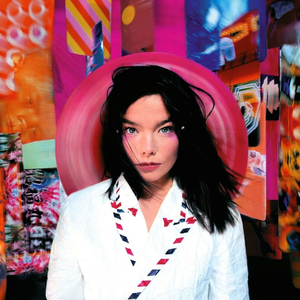
Throughout the next however many months I’ll be counting down my 100 favorite albums, because why not. I’m up to number sixty-eight.
“This is me,” I said as we arrived at my car on the third floor of the parking garage.
“Ah. I’m one level up.”
“This was fun. It was great meeting and hanging out with you.” He smiled. “Let’s do this again.” I pulled my phone from my back pocket. “Can I have your number?”
His smile vanished, his face now looking like he got a whiff of a pungent malodorous cheese. “Wh-what? My phone number? Wh-why? No!” And with that, he turned. He didn’t walk away. He didn’t scurry. He Jesse-Owens-at-the-1936-Olympics ran.
I’d been in Los Angeles for two years and still couldn’t figure out the rules of engagement.
It’s not that I was thrilled about living here, but when Warner Music offered me a six-figure salary and said they’d pay all expenses for me to move from my 200 square foot Manhattan apartment, I couldn’t say no. And while for me, meeting new people is like simultaneously squeezing into my mouth a tennis ball, a running lawnmower and President McKinley (trust me I’ve tried), I already got a jump start as I had a friend in LA.
I met Victor on a trip to Mexico a few years earlier. I called him the day I arrived here, and we made plans to hang out the coming Sunday. I was psyched to see him and be shown hot spots. A friend of a friend of an acquaintance of someone Victor met somewhere doing something invited him to a house party, so he suggested we stop over there on our way to nowhere in particular. Cool. I could meet more people. At the party house we were greeted at the front door by a chirpy twenty-something blonde-haired woman wearing a colorful top and blue denim miniskirt. “Welcome! The cocaine is over there.” She motioned toward a room to our right, presumably the drug den. She then walked away. I shot Victor a look that said “I’m 100% drug free. What kind of party have you taken me to?” His face shot back a grin that said “Welcome to Hollywood.” It was jarring, as nobody in New York does drugs.
###
In NY, I’d walk from my shoebox to Madison Square Garden to see Lauryn Hill or Britney Spears or Prince or whomever, then walk home, or I’d subway to Radio City Music Hall to see Aretha Franklin or Pet Shop Boys or k.d. lang or to the Beacon Theater to see Sinéad O’Connor (and concert attendee Daniel Day Lewis in the lobby) or Fine Young Cannibals or Seal. I don’t tell you that to show off the artists I’ve seen in concert—it’s not like I mentioned the times I saw Stevie Wonder or George Michael or Annie Lennox IN CENTRAL PARK!!!—but rather to express to you that in New York the audiences were one, united in our love of the act we were seeing, except at Fine Young Cannibals, where we were two – those of us who danced during the show and the guy behind me, who told me that if I didn’t sit down he’d beat the crap out of me. Oh, and one of the times I saw Beastie Boys, two guys threw metal chairs at each other. Other than that, each show was a lovefest by New York City standards. After the shows, everyone was still abuzz as we got on the subway, smiling and singing and knowing that we were way cooler than anyone else on that train or any train. Los Angeles provides a different experience. You can’t take a train to the theater, unless you can; I’ve never investigated this and don’t intend to. You have to drive to the venue, give up the pretense that you’ll find street parking, and then park at the theater. Some of the larger venues, such as The Hollywood Bowl or The Greek Theater, have “stacked parking,” in which cars are arranged back-to-front, first in first out, in rows where vehicles block each other in. If the folks who arrived at the venue before you did lollygag after the show is over, you must lollygag as well. (“Lollygag me with a spoon” I thought of writing, but then thought better of it.) Waiting and waiting and waiting to move your car while everyone else has to wait and wait and wait is an excruciating experience, and I say that as someone who when getting a filling doesn’t take Novocain. Must I be held captive in a dark parking lot breathing in exhaust fumes just so I can see Cher sing “Believe” live? No. I don’t like Cher that much.
###
If the city’s infrastructure seems designed to thwart you, its relationship with nature is even more baffling. In New York, rain is a nuisance. But you turn your collar up, you buy a $5 umbrella from a street vendor that will go inside out at the slightest breeze, and you get on with your life. In Los Angeles, rain is an EVENT. It’s the top story on our newscasts, where reporters, cosplaying as Anderson Cooper in war torn wherever, ask the poor downtrodden Angelenos what they did when the precipitation started. “I ran for shelter under this awning!” is the breathless response. Displaced, weary, resilient. Stay strong, Los Angeles!
I was at the office the first time I experienced rain in L.A. It was 1:30 in the afternoon. I noticed scattered raindrops hitting the window and turned back to my computer monitor. “Attention, everybody.” The president of our division got on a loudspeaker that echoed throughout the halls. “It’s starting to rain. You have the option to evacuate. Anyone who wishes to head out now may do so.” It was 1:32. The sprinkle had blossomed into a full-blown drizzle. My colleagues quickly packed items into their go bags—post-it notes, bottles of water, chocolates from that bowl in Kim’s office—and hit the road before the drizzle turned into a light rain and all bets were off. I sat at my desk, listening to the gentle pitter-patter on the window, and came to a stunning conclusion: L.A. is full of pussies.
###
In NY, the answer to your boredom is right outside your door, any day, any time. You step outside and look—a street fair! Look—David Byrne of Talking Heads! Look—one of the taxicab drivers involved in a verbal altercation opened his trunk and removed a baseball bat. I’m not bored. “Cut!” the great director in the sky must have shouted before said bat met skull, and that was alright. The city and I—and both cab drivers—were ALIVE. In LA, you have to get in your car, sit in forty minutes of traffic, arrive at the Arts District neighborhood that the Time Out website assured you was worth the drive, pay ten dollars to park, walk around, past all of the smoothie shops and thrift stores and breweries and bakeries and bail bondsmen to arrive at a shop that the donut review blog Eat My Hole noted as having the best donuts in LA, so you buy one Chocness Monster and one Glaze Anatomy and you eat them and they’re fine, just fine, and you think perhaps you should have ordered a The Filling Is Mutual donut but oh well and as you ponder the credibility of Eat My Hole, you’re downtown and want to get value for your parking expense and you continue strolling but you’re still bored. Where are the steel drum players, the tables of hand-crafted jewelry, the sausages on grills? Where are the road-raged cabbies? Ironic that in New York City one feels like they’re in a movie, while in the land of movies one feels like they’re in a play that as of yet only has a set design.
###
“How’s that sandwich?” The waitress with the strawberry blonde bouffant and Maraschino cherry red lipstick was back at my table. I stared at the sandwich. Then back at her. I had ordered a very basic tuna sandwich. Just rye bread, tuna, and a little mayo. It was meeting every expectation one could reasonably have for chopped fish and mayonnaise on rye. How would it be? One time in New York when I grabbed a dinner with my sister, she had a question for our waitress. “The sautéed oysters – how are they prepared?”, to which the waitress replied “They’re sautéed.” End of discussion.
###
Several years after I moved here I went to a park with a gay picnic group I found on Meetup called LGBTs With BLTs. We’d gather for lunch every couple of weeks at a different park. One didn’t have to have a BLT. I, for example, packed a tuna sandwich. A few bites into it, someone asked “How’s that sandwich?” LA, WTF? Another guy there asked me my age. “47,” I answered. “Really? Wow. I would have guessed 44.” THAT’S NOT A COMPLIMENT! The year before I moved to L.A. a cute guy on the street handed me a flier inviting me to the 20-something picnic. I was 39. That’s a compliment!
###
Two years after arriving in L.A., someone in “the biz” gifted me a ticket to a screening of a new Johnny Depp movie called The Libertine. All of my friends (i.e. Victor) were working, so I went solo. The man next to me on line was also by himself. I forced myself to start a conversation. “Do you know anything about this movie besides it starring Johnny Depp?” He said blah blah blah and I said yadda yadda yadda and our banter never dipped while we waited to be let in. When I took my seat, he followed me and asked if he could sit with me. “Of course!” I responded. We continued chatting. It was so easy. We stopped our discussion during the movie (which in retrospect was a mistake, as the movie, a poorly lit slog about a syphilitic playwright, was terrible). After the movie there was a Q&A session with Depp. I asked him what his dream role would be, and he answered he’d love to portray Carol Channing. (Still waiting for that.) We left the theater together (not me and Johnny, but me and the man I met on line). It turns out we parked in the same garage a block over, so we walked there together and continued our chit-chat. “I can picture Johnny Depp with a blonde shoulder-length bob.” “I hope Tim Burton directs that movie!” We arrived at my car first. I told him how great it was to meet him and suggested we hang out again. I asked him for his phone number. That’s when he Jesse Owens’d to his car one level up.
But still, I kept trying.
###
In New York I’d fed my love of writing at The New School, five blocks from my apartment. Every class I took there was nourishing, and whoever named the university “The New School” would have done well to audit any of them and learn how to be creative. (If the school was named after its founders, say Sherman and Mildred New, I apologize for my flip comment.) In Los Angeles, I found a writers group less than two miles from my home, and usually I made it there in under an hour. Not only was the workshop a place to exercise my creative muscles; it was where I might meet others for whom working out was a cerebral activity. The group was run by a native Angeleno named Nicole—cheery, around my age, dark hair down to her neck. Each session started with an exercise: Nicole would give us a prompt and for 20 to 30 minutes we’d write something based on that prompt. Then we’d share our prose with the group, who’d give feedback, the greatest praise being “that’s a typer-upper!” Often I’d hang out after workshop finished and Nicole and I would chat. Beyond the helpful feedback she gave me during the sessions, I enjoyed her company. She was smart, creative and unpretentious, plus we were both Prince fans, which in my book counts for a lot. During one of these discussions it came up that she loves to cook; my kitchen was primarily an adjunct record album storage shed. She offered to teach me, and a couple of times we got together at her place for cooking lessons. Then she and I made plans to get together to make dinner at my place one Saturday evening. I moved my records from the kitchen. I mopped. I scrubbed the countertops. I degreased the oven racks. Yes, I would have done that anyway. (No, I wouldn’t.) She didn’t show up. She called me a few hours later. “I’m so sorry! I fell asleep and just woke up. Shall we reschedule for tomorrow night?” As luck and my lack of a social life would have it, I was free that night as well. “It’s a date!” Sunday evening came, but Nicole didn’t. I called her to ask where she was, and she told me she thought the plans were off as I didn’t call to confirm. WE MADE THE PLANS LESS THAN 24 HOURS AGO! Why would I then need to confirm them? Here, does the phrase “See you tomorrow” come with an asterisk to a footnote that reads “Or maybe I won’t. Whatever.” Oh, no, no, Godot. Compare this to New York City, where nobody taught me how to cook—my kitchen was barely big enough to hold a dozen LPs—but you can make plans with someone nine months out and they’ll be at the appointed place at the appointed time, no confirmation needed.
###
Several times, a friend and I would make plans to hang out, but they’d soft cancel the plans. A soft cancel is when one party pulls out of plans without telling the other, as opposed to a hard cancel, which is what the world outside Los Angeles simply calls a cancel. With a soft cancel, you’re left waiting—at a restaurant, on your sofa, in your wedding dress—until the clock strikes half past they’re-not-coming. Later (the next day or in a couple of weeks or on Yom Kippur), the canceller explains that “something better came along.” I’ll admit there may exist things that are better than hanging out with me—cruising along the Pacific Coast Highway eating home-baked chocolate chip cookies and singing show tunes with Dolly Parton, or, um, hmmm. That’s the whole list, really. I was on the receiving end of a soft cancel from my “friend” Scott, who I met in Nicole’s writers group (not to be confused with my other friend Scott who has an outsized fascination with Kim Carnes). I had dinner plans with not-“Bette Davis Eyes”-loving Scott. When he didn’t show up at the designated time, I texted him to see if he was on his way. No reply. I waited another ten minutes, then called him. He answered the phone and quickly hung up without saying anything. The next day he called and explained to me that he got a new phone and couldn’t figure out how to work it. Look, I get it. Answering a phone is challenging. Don’t think you’re all that because when your phone rings you hit the green phone icon on your mobile device’s screen and speak. Not everybody is a member of MENSA like you are, smartypants. Oooh, look at Miss Thing! Able to answer a call like it’s nothing! What a genius! Give her a FIFA Phone Prize! For some, answering a phone is like trying to squeeze into your mouth simultaneously a tennis ball, a running lawnmower, and President McKinley. Scott (from the writers group, not the Scott one who knows that Kim Carnes had ten US top 40 singles besides “Bette Davis Eyes”) said he’d make it up to me by taking me out to dinner the coming Wednesday. And give him a tiara and a bouquet, for he showed up at The Flaming Skillet at the agreed upon time. When the bill came he suggested we split it. Give me back that tiara and bouquet. Asshole.
###
I met Stella when she attended an improv workshop I was part of. She was funny and gave off a no-nonsense energy that drew me in, so I introduced myself at the end of her first session. “I know you from somewhere” she said. “Did you live in New York?” “Yes,” I answered. “You were a standup comic, right?” “Yes again.” “I saw you perform! You had that hilarious routine about the song ‘Gloria’!” ‘Tis true. One of my routines was about how loud Laura Branigan sang her signature hit, how it’s not that there isn’t anybody calling; it’s that Gloria can’t hear the phone ringing over Laura Branigan’s singing. How ‘bout her remembering my routine from years prior and praising it!?! She also did standup, which I stopped performing a couple of years before I left NYC, just after the 9/11 attacks, when getting on stage to talk about Laura Branigan seemed inappropriate. Naturally, I took to her right away. And she’s a fellow New Yorker – hurrah! She won’t flake. She was based in L.A. now, in a house up a hill off Laurel Canyon. I visited a few times. The narrow winding streets gave me panic attacks, but that’s a sacrifice I’d gladly make to hang with a pal. I went to the theater and enjoyed her one-person show based on her life. The last time I saw her was at West Hollywood’s now-closed Big Gay Starbucks, when she said “I’ll call you this week and we’ll make plans.” The phone still hasn’t rung, or maybe I haven’t heard it over Laura Branigan’s singing.
###
I hate going to the doctor. It’s not that I’m afraid they’re going to look at my elbow and tell me I have inoperable brain cancer. It’s that 20+ years on in this town, I still have no idea who to enter as my emergency contact when filling out new patient forms, which is like being in one’s 40s and not knowing how to cook. My nominees for Best Emergency Contact (my sister, my stepmom, my friend Laura) all are 3000+ miles away. What good’ll they do me when the doctor calls with the brain cancer news? For now, I postpone important medical procedures, as the patient is required to have a ride to and from the hospital (not a rideshare or taxi or one’s self) and I’m not close enough with anyone to ask them to sacrifice like that for me. Whatever I have, maybe it’ll go away.
(I feel it’s important to note that Scott—the one who follows Kim Carnes and her son on Facebook—has been my chauffer to a couple of MRI’s, but I don’t want to take advantage of his kindness, plus relying solely on him makes it sound like I don’t have any other friends, which I do. Not.)
###
Early in my residence here I had a visitor from the east coast stay with me for a few days. He arrived by mail. Flat Stanley is a paper cutout who goes on adventures. My niece in the third grade wanted him to have a Hollywood experience. My role was to take Flat Stanley out for a day in the city, photographing all the fun things we did, and then send Flat Stanley and our photos back to my niece for a show-and-tell at class.
It was a beautiful day for a sightseeing adventure. The convertible top of my car was down. I took pictures of Stanley in the passenger seat with the seatbelt strapping him in. I finally made my first trip to Griffith Park and I held up my homeboy Stan with the HOLLYWOOD sign behind him. We went to the Chinese Theater where F-Stan put his hand in famous handprints and posed outside the theater with any number of Captain Jack Sparrows and Spongebob Squarepantses. Then I had to mail Stan My Man back to my seven-year-old niece. Is it weird to miss him? Can I just make another Flat Stanley and if anybody asks, I’ll say it’s for another niece? Am I a Stan stan? Am I pathetic?
###
Ten years after relocating to la la land, Warner laid me off. A subsequent consulting client cheated me out of tens of thousands of dollars; the CFO had decided we were friends—I’d spent considerable time with him, even driving him to urgent care once after a business dinner served him complications—and in his view, friends don’t stop working for other friends just because they haven’t been paid their contractually-due consulting fees for several months. Wrong ‘em, boyo. Book some time with Dionne Warwick, ’cause that’s not what friends are for. I found myself in therapy again—Therapist #13—telling him I wanted to live alone somewhere I wouldn’t have to see any others. People who cheat you, take advantage of you, are unkind, disrespectful, self-absorbed and inconsiderate. You know—people. “How would that help your feelings of isolation?” he asked. “It won’t,” I said, “but I already feel isolated, so I may as well be isolated.” It’s not that I’m misanthropic. Misanthropes hate humanity. I hate humans as individuals (except you, the one reading this. You’re the cat’s pajamas, the bee’s knees and the ferret’s suspenders. May I put you down as my emergency contact? Please?).
Why set myself up for more disappointment and rejection? Better to stay in with my dogs and my records and my books and my subscription to HBO Max (or whatever they’re calling themselves at the time this essay is published).
I knew the healthy thing to do was to keep trying. To put myself out there. Making friends is a numbers game. Studies show that even a couple of quality friendships measurably extend your life. Many more years of this.
I decided to be unhealthy. I don’t know if I need permission to quote from a movie and I’m too lazy to find out, so let me rephrase the words of Danny Glover as Sgt. Roger Murtaugh in Lethal Weapon: for this shit too old I’m getting.
Even if someone appears to make overtures for a friendship with me these days, I keep my distance, lest I be left standing all alone yet again.
###
In 1993, just before the release of her album Debut, Icelandic singer-songwriter Björk moved from lifelong hometown Reykjavik to London for work. The work was to put aside her deep shyness and introversion and see how life in a big city may affect her music. The result was the album Post, mostly written post her move to London and as a post to the folks back home, saying “This is how I’m doing.” Her work paid off. The record is so great I sense she found the city’s best donut emporium and treated herself to a Greenwich Cream Time.
The album opens with “Army of Me,” Björk telling someone (me) to stop their (my) bellyaching and set about fixing their (my) situation. You’re on your own. No one is going to save you. Self-sufficience, please. Björk is serving tough love. She’s the Coach Taylor to my Matt Saracen. (At the suggestion of my friend Laura I recently started watching the high school football-centered drama Friday Night Lights.) (I probably shouldn’t include 20-year-old TV references I have to explain.) Björk is my Therapist #14.
Following “Army of Me” is my favorite song on the album, “Hyper-ballad,” about a woman who wakes up early each day, walks to the cliff near her home, and throws off of it things she finds lying around—car parts, bottles, cutlery, sometimes imagining throwing herself off. It’s a perfect party starter, as evidenced by the song going to number one on the Dance chart. This woman’s life and relationship with her partner had lost their zing boom. She has to do something to exorcise her frustrations. In an interview, Björk, assuming the role I assigned her as Therapist #14 (or Coach Taylor, if you prefer out-of-date TV references), offers advice as to how to counter one’s malaise: “You wake up early in the morning and you sneak outside and you do something horrible and destructive, break whatever you can find, watch a horrible film, read a bit of William Burroughs, something really gross and come home and be like, ‘Hi honey, how are you?’” I don’t live near a cliff, so one afternoon while in a deep funk (not the good Chaka Khan kind) I did the most horrible and destructive and gross thing I could think of—I sat down for lunch at the California Pizza Kitchen in Westwood, where I was served something that in NY could only be found in a crafts store.
I sat there alone, rending the grease-saturated, limp slab of cardboard blanketed in laboratory-devised, coagulated pseudo-cheese fat, smothered under a sauce that leaned more toward solid than liquid, and topped with reddish-orange rubber discs that were neither pork-based nor beef-based but rather nuclear waste-based, and I wondered how I ended up here, here being my lonesome life, not CPK, but that, too. What am I doing wrong? I don’t want to have the CPK equivalent of a life. I thought about what Therapist #14 said: Don’t complain. Don’t feel sorry for yourself. What you need to do is set about fixing your situation. Get that negativity out of your system. But how?
###
Put a pin in that for the moment, for I don’t want to leave Post without mentioning three more of my favorite songs on it. There’s “Isobel,” whose titular character grew up alone in a forest and sends moths to the city’s inhabitants as a way to tell them to favor instinct over logic. Isobel/Björk doesn’t tell us how the insects convey this message, but I will—they use Moth Code. Get it? (I’m starting to see why I don’t have any friends.) Favor instinct over logic — four star advice from Therapist #14, unconventionally delivered via moth, as is her wont. Meetup groups, forced conversations with whoever is next to me on line, putting myself out there. Maybe I’ve been overthinking it, as is my wont. Maybe I should follow the moth.
In “I Miss You,” the narrator dreamed up exactly who their perfect companion will be and is sure they will meet them. “I’m so impatient / I can’t stand the wait,” she sings. Nor can I, Björk, but screw my perfect companion (I probably could have phrased that better); I’ll gladly settle for someone to hang out with, who shares some of my interests. The bar is not high. The bar is low. Very low. The bar is so low to the ground the world’s most supple limbo dancer can’t get under it. I continue to wait.
And there’s the album’s only cover song, “It’s Oh So Quiet,” which Smash Hits called “oh so brilliant,” “Bjönkers,“ and “a loonier-than-the-looniest-thing-ever-loonied choon.” A top five single in the UK, it is Björk’s biggest hit. The song opens as a calm, mellow, relaxed acceptance of being alone as a nice, peaceful state, until…until a full orchestra kicks in, Björk belts “You fall in love, zing boom,” soon to be followed by screams of delight. In the song’s video, we have a dancing metallic muffler man, dancing marble columns, and a dancing mailbox, ending with Björk levitating. It’s bjöyous. That’s where I want to live, if not geographically, at least emotionally.
###
One recent day, I turned down invites not received to stay in and delete files from my Google Drive, as Google informs me on the daily I’m reaching my storage limit and if I didn’t make some room I’d be alone forever and not get into heaven. (I’m paraphrasing.) I spent an inordinate amount of time asking Google’s chatbot, Gemini, how to delete from my Google Drive files shared with me by people with whom I am no longer in contact. Gemini kept giving me instructions, none of which worked, until eventually it threw up its virtual arms and sent me the message “You are out of points for today.” End of discussion. How am I supposed to learn how to make friends when even a non-human chatbot has Jesse Owens’d me?
###
Within the last year, both of my dogs passed away. I felt lonesome before; now I am truly alone. I didn’t realize just how much my dogs were my social life. Besides my weekly grocery shopping, I’ve barely left my home since the second one passed. I seldom talk to anybody, outside of a weekly Zoom call for work and a twice-monthly Zoom with my writers group. (This is not Nicole’s writers group, but rather one I‘ve been running since its previous host abandoned it.) Should I stay in L.A.?
I had been thinking I’ll move back east when my dogs pass, but when that came to be so, I was on the fence. I used to go back to Manhattan two or three times per year, but I haven’t been since 2018. On each trip I had one fewer friend left, until it was just Martin, who ignored my calls to get together. (Martin is to friends what CPK is to pizza.) My favorite hangout spots–Bendix Diner, Tower Records, Mxyplyzyk–closed. (Mxyplyzyk is not something I typed while having a stroke connected to my hypothetical brain cancer, but was a home furnishings/gift shop filled with lots of cute, useful, overpriced this and that.) The Strand is still open, with its cellar filled with reviewer copies of books at half-price, though it filled me with anxiety on my most recent trip there, thanks to my fairly new fear of basements, an offshoot of my fairly new claustrophobia. You think my latest therapist (Therapist #15? 16? I’ve lost count.) wants to solely hear about my loneliness week in week out? I have plenty more sources of distress, agitation and ick with which to keep him entertained. Which brings me to…
New York City has cockroaches that are roughly the size of your average third grader and rats so huge that as they scurry along the subway tracks they’re often mistaken for the E train. And before you get all smug, City of Angels, I have seen, on my street, coyotes and bobcats. They’re not gross like cockroaches and rats, but they are topics of conversation with Therapist #17. That’s the trade-off. Cockroaches and rats vs. coyotes and bobcats. Terrorist attacks and blizzards vs. fires and earthquakes. Friends having moved vs. flakes and soft cancellers. You say “So, you’ll go back to your beloved New York and make new friends.” Have you been paying attention? I am to making friends what Diane Warren is to the Academy Award for Best Original Song. (See, she’s been nominated for that award 17 times yet she’s never won.) (It loses something when I have to explain an analogy.) (Still, though, 17 nominations and no wins! Ouch!) (Anyway….)
I already had a friend in L.A. when I moved here. Victor. Remember Victor? We made plans to get together one New Year’s Eve. He had suggested an outdoor dance party, but when December 31 rolled around it was cold and raining. I left Victor a voicemail suggesting we find another place to celebrate. I didn’t hear back from him until 11:30 PM. He called from the field where the party was to tell me he’s there. I crossed him off my friends list and went to bed.
I look at my attempts to make friends in L.A. They blow me off. They run from me. They soft cancel our plans. They want to ring in the new year with a case of pneumonia.
But there are two constants in my failed friendships: L.A., and me. Am I using L.A. as an excuse when the problem is me? That possibility is why I‘m skeptical about making new friends in New York. That’s why I brought up the Diane Warren analogy, though I’m loathe to mention her again as my intuition tells me you’re still unsettled that I referenced her in the first place. I don’t want you to Jesse Owens me when I’m so close to wrapping up this essay, plus I’m still in need of an emergency contact.
###
After sharing an essay in her workshop, Nicole told me it was great until the end. I didn’t resolve the conflict I set up in the story. That’s because there was no resolution. Not every story has one. And here I sit.
###
I read about an exhibition of the work of artist Shepard Fairey at a gallery not too far from where I live. I hadn’t gone to a museum or gallery since before the pandemic, specifically some 14 years before the pandemic, when I was visiting Australia. Initially I thought of attending alone, but then I figure I’d invite someone to join me. I’m going anyway, so if they blow me off, it’ll hurt but not so much as I expect it to happen because L.A. Mainly I’m going to dig the art. I reached out to Ronnie in my writers group. She said yes.
The temperature on that January day was 68 degrees. I elected to walk the two miles to get there. The sidewalks, as usual, were not crowded. Traffic on the street was pretty light. I heard no honking, but then again, I was wearing my noise-canceling headphones with my iPod Shuffle, blasting my ears with Gladys Knight & The Pips, Joan Jett, Young MC, and “Texas Has a Whorehouse In It” from the Broadway cast album of Annie The Best Little Whorehouse In Texas. The sky was blue, there was no wind, and, thankfully, I didn’t cross paths with coyotes or bobcats. There was the fear Ronnie wouldn’t show up, not because of Ronnie being Ronnie. She’s great. I trusted her. But then again, I trusted Nicole. And Stella, And Scott (the Scott who finds answering the telephone to be a challenge on a par with scaling Mount Everest without the use of boots, ropes or arms, as opposed to the always reliable other Scott, the one who knows that Kim Carnes’ nine-week run at #1 with “Bette Davis Eyes” was interrupted for one week by Stars On 45). Ronnie showed up. A little late, but not half past she’s-not-coming. The art was powerful and inspiring. Afterwards we walked a few blocks and found a café where we hung out and chatted as I nibbled on a very tasty chocolate chip cookie, which I washed down with a hot cocoa. (It was winter.) It was an enjoyable afternoon. Not zing boom, but the limbo stick has been raised.
I’d worn one of my many impressive pairs of sneakers, which were designed more for attention and admiration than for walking two miles, so Ronnie and I shared an Uber to our respective homes. Our driver attempted conversation, awkwardly. I know that feeling. When with someone more socially inept than I, I feel the need to put them at ease, and so I engaged our driver in a one-way conversation on the subject of Jermaine Jackson. This was not the first time I discussed Jermaine Jackson with an Uber driver; it also happened on the way home from a drag show with Scott (you know which Scott). For the record, both drivers were fascinated.
I renewed my lease for another year.
Follow Tunes Du Jour on Facebook
Follow me on Bluesky
Follow me on Instagram


