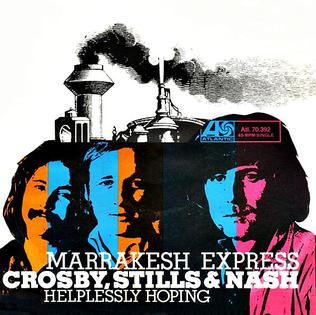
Tunes Du Jour Presents Crosby, Stills & Nash

The term “supergroup” gets thrown around a lot, often describing a short-lived project more notable for its lineup than its output. But with Crosby, Stills & Nash, the label felt different. This wasn’t just a collection of famous musicians; it was a genuine fusion of distinct, fully-formed artistic voices. Listening to a playlist of their work is like tracing a map back to its origins. To truly understand a song like “Suite: Judy Blue Eyes,” you first have to appreciate where its creators came from: David Crosby’s expansive, harmony-rich work with The Byrds, Stephen Stills’s fiery folk-rock with Buffalo Springfield, and Graham Nash’s pristine pop sensibility with The Hollies.

Before they ever sang a note together, each member had already left an indelible mark on the 1960s. The playlist gives us a clear picture of the ingredients they brought to the table. From The Byrds, you can hear Crosby pushing boundaries with the psychedelic exploration of “Eight Miles High” and the moody, jazz-inflected atmosphere of “Everybody’s Been Burned.” From Buffalo Springfield, Stills emerges as a formidable guitarist and a writer of anthems, penning the definitive protest song “For What It’s Worth” and the intricate, multi-part “Bluebird.” And from The Hollies, Nash provided the soaring high harmony and pop craftsmanship evident on tracks like “Carrie Anne” and “On A Carousel,” a perfect, bright counterpoint to the others’ more rugged styles.

When these three voices first combined, the result was an entirely new chemical reaction in popular music. The intricate vocal arrangements became their signature. A song like “Suite: Judy Blue Eyes” isn’t just a long track; it’s an ambitious, multi-movement piece that relies entirely on the interplay of their voices. This new entity could accommodate Nash’s breezy travelogue “Marrakesh Express” on the same album as the haunting, allegorical “Wooden Ships,” a song that feels heavier and more complex. It was this ability to contain different perspectives within one cohesive sound that defined their initial success.

Of course, the story soon expanded. The addition of Neil Young, Stills’s former bandmate, added a darker, more unpredictable edge to the group, a change you can hear immediately in the raw vulnerability of “Almost Cut My Hair” or the generational power of “Woodstock.” Yet even as a quartet, they could produce moments of profound gentleness, like Nash’s portrait of domestic bliss in “Our House” or the timeless advice of “Teach Your Children.” The solo efforts included on the playlist further highlight their individuality: Stills’s direct, blues-rock command to “Love The One You’re With,” Crosby’s ethereal musings in “Laughing,” and Nash’s political rallying cry in “Chicago.”

Decades later, what endures is the sound of those voices. It’s a sound that could carry later hits like the reflective “Wasted on the Way” and the nautical, evocative “Southern Cross.” Crosby, Stills & Nash—with or without Young—was a remarkable convergence. It was a project born from friendship and a shared desire to create something that none of them could have achieved alone. Their legacy isn’t just in the hit singles, but in the creation of a sound so specific and intricately constructed that it remains instantly recognizable from the very first note.

Follow Tunes Du Jour on Facebook

Follow me on Bluesky

Follow me on Instagram

Tunes Du Jour Presents 1967

Nineteen sixty-seven stands as a pivotal moment in the evolution of popular music, a year when artistic boundaries expanded dramatically across multiple genres. The musical landscape was transformed by groundbreaking releases from established artists and remarkable debuts from newcomers who would become legends. From Aretha Franklin’s powerful rendition of “Respect” to Pink Floyd’s psychedelic “See Emily Play,” the year produced an extraordinary collection of songs that continue to resonate decades later.

Soul music experienced a remarkable surge, with Aretha Franklin’s definitive version of “Respect” establishing her as the genre’s preeminent female voice. The raw emotion of Otis Redding’s “Try a Little Tenderness,” the exuberance of Jackie Wilson’s “(Your Love Keeps Lifting Me) Higher and Higher,” and the groove-driven “Soul Man” by Sam & Dave showcased the genre’s diversity and emotional range. Motown continued its dominance with several more hits for Diana Ross & the Supremes, including “The Happening,” while Smokey Robinson & the Miracles added “I Second That Emotion” to their growing catalog of hits. Marvin Gaye enjoyed multiple chart successes in 1967, with “Your Precious Love” being just one of several duets with Tammi Terrell that would define this productive period.

Meanwhile, rock music underwent seismic shifts as experimentation became the norm. The Beatles had an astonishingly prolific year, releasing the landmark album Sgt. Pepper’s Lonely Hearts Club Band while also producing standalone singles of remarkable quality like “Strawberry Fields Forever” and “Penny Lane.” The Doors’ extended opus “Light My Fire” and The Jimi Hendrix Experience’s revolutionary “Purple Haze” redefined what electric guitars could accomplish. The Rolling Stones contributed the melancholic beauty of “Ruby Tuesday,” which ironically became the bigger hit after radio stations deemed its intended A-side, “Let’s Spend the Night Together,” too controversial for airplay. The Who’s powerhouse “I Can See for Miles” and Buffalo Springfield’s protest anthem “For What It’s Worth” reflected rock’s increasing social consciousness. Perhaps most radical was The Velvet Underground’s “Heroin,” which brought an unprecedented rawness to discussions of addiction.

The year’s diversity extended far beyond these genres. The Monkees transcended their manufactured origins with the wistful “Daydream Believer,” while Van Morrison crafted the timeless “Brown Eyed Girl.” Bobbie Gentry’s Southern Gothic narrative “Ode to Billie Joe” demonstrated songwriting’s storytelling potential, and Procol Harum’s “A Whiter Shade of Pale” merged classical influences with rock sensibilities. Jefferson Airplane’s “White Rabbit” and Pink Floyd’s “See Emily Play” pushed psychedelic music further into the mainstream, establishing both bands as significant forces in the burgeoning psychedelic scene.

What made 1967 truly remarkable was how these diverse sounds coexisted and influenced each other, creating a musical conversation that crossed genre lines. This was the year when album-oriented rock solidified, soul music reached new emotional depths, and psychedelia flowered into mainstream consciousness. The thirty songs listed here barely scratch the surface of a year that saw popular music mature into an art form capable of expressing the full spectrum of human experience. Many artists were at their creative peaks, producing multiple hit singles and groundbreaking albums within this single exceptional year. These recordings capture a moment when musical innovation accelerated at an unprecedented pace, leaving an enduring legacy that continues to inspire and influence musicians more than half a century later.

Follow Tunes Du Jour on Facebook

Follow me on Instagram

Follow me on Bluesky

Tunes Du Jour Presents Neil Young

Distilling Neil Young’s half-century-plus career into a mere 30 songs is, to put it lightly, a tall order. For an artist who’s explored nearly every facet of American and Canadian folk, rock, country, and grunge—not to mention electronic and experimental music—each track here offers just a glimpse of his expansive vision. Yet, even within this condensed selection, Young’s restless creativity and refusal to be pigeonholed shine through, capturing a legacy that continues to grow with each decade.

Take “Heart of Gold” and “Old Man,” two of his most well-known songs from the early 1970s. Both tracks reflect Young’s introspective side, a man grappling with aging, relationships, and the very nature of wisdom. These are songs that echo across generations, carrying lyrics that balance tenderness with the weight of lived experience. “Harvest Moon,” recorded over two decades later, feels like a companion piece to these earlier reflections—a seasoned, bittersweet look at enduring love that feels both familiar and fresh.

Young’s power isn’t limited to gentle musings, though; he’s just as revered for his biting social commentary and unflinching political anthems. “Ohio,” recorded with Crosby, Stills, Nash & Young, is a visceral response to the Kent State shootings and remains one of rock’s most searing protest songs. “Rockin’ in the Free World,” with its stark verses and raw energy, reminds listeners of Young’s willingness to confront societal issues head-on, even when they’re uncomfortable. These songs reflect Young’s complex relationship with his North American roots, a deep love for the land tempered by a sharp awareness of its faults.

Then, there’s Young’s bold experimentation—what he once referred to as a desire to avoid becoming a “human jukebox.” Tracks like “Like a Hurricane” showcase his noisy, distorted electric side, tapping into the rawness that inspired later generations of grunge and alternative rock musicians. He’s unafraid to explore darker themes, as seen in “The Needle and the Damage Done,” a haunting portrayal of addiction’s impact. Meanwhile, songs from his Buffalo Springfield days, such as “Mr. Soul” and “Broken Arrow,” highlight his knack for introspective storytelling, even at the beginning of his career.

Whether he’s singing about broken dreams, love, social justice, or life on the open road, Neil Young brings an authenticity that’s hard to match. The tracks on this playlist, though just a small slice of his work, reflect the remarkable range of one of rock’s most fearless and unpredictable artists. For Young, evolution isn’t a phase—it’s his way of life, one that keeps his fans and listeners perpetually guessing and undeniably engaged.

Follow Tunes Du Jour on Facebook

Follow Tunes Du Jour on Twitter

Follow me on Instagram

Your (Almost) Daily Playlist: 5-11-24

Eric Burdon rose to fame as the lead vocalist of the rock band The Animals, which was part of the British Invasion that took the music world by storm in the 1960s. With his powerful and distinctive vocals, Burdon helped the band achieve international success with hits like “House of the Rising Sun” and “Don’t Let Me Be Misunderstood.”

In the late 1960s, with a new set of Animals, Burdon embraced the psychedelic sound that was popular during that era. This incarnation of the band showcased Burdon’s ability to evolve with the changing times, as they incorporated elements of funk, soul, and psychedelic rock into their music.

In 1970, Burdon introduced the world to the band War. Their collaboration resulted in the hit song “Spill the Wine,” which fused elements of rock, funk, and Latin music. I’m impressed by Burdon’s versatility and willingness to explore new musical territories.

Eric Burdon was born on this date in 1941. A few songs from him are included on today’s playlist.

Follow Tunes Du Jour on Facebook

Follow Tunes Du Jour on Twitter

Follow me on Instagram

Your (Almost) Daily Playlist: 7-5-23

I just learned that Robbie Robertson, who was the lead guitarist and songwriter for The Band, is of Cayuga and Mohawk descent and has supported causes such as the American Indian Movement and the Native American Rights Fund. He has also spoken out against the misrepresentation and appropriation of Indigenous cultures by non-Native people.

Robbie Robertson turns 80 today. Some of his work is included on today’s playlist.

Follow Tunes du Jour on Facebook

Follow Tunes du Jour on Twitter

Follow me on Instagram

Your (Almost) Daily Playlist: 11-12-22

Today’s playlist celebrates the November 13 birthdays of Booker T., Buffalo Springfield’s Neil Young, Blue Öyster Cult’s Buck Dharma, Bikini Kill/Le Tigre’s Kathleen Hanna, Darlene Edwards (a/k/a Jo Stafford), Hot Chocolate’s Errol Brown, Brian Hyland, Bay City Rollers’ Les McKeown, The Mello-Kings’ Jerry Scholl, Tevin Campbell, and Grace Kelly; and the November 13 birthdays of Timmy Thomas, The Teddy Bears’ Carol Connors, Cass McCombs, Onyx’s Sonny Seeza, and Idris Muhammad.

Follow Tunes du Jour on Facebook

Follow Tunes du Jour on Twitter

Follow me on Instagram