Tunes Du Jour Presents 1995

If you were paying attention to music in 1995, you probably noticed something a little odd: the word “alternative” had started to mean almost nothing, because it had come to mean almost everything. A year earlier, the death of Kurt Cobain had cast a long shadow over rock music, but rather than stalling out, the genre fractured and expanded in every direction. Weezer were writing nerdy, hook-driven power pop. Foo Fighters were delivering straightforward hard rock. Hole were confrontational and raw. Radiohead were drifting somewhere cerebral and unsettling. Garbage were threading industrial textures through pop songwriting. Veruca Salt and Elastica were sharp and guitar-driven in entirely different ways. What united all of them under one label was more a matter of attitude and distribution than any shared sound. “Alternative” had become a marketing category, and in becoming one, it quietly swallowed whole.

Across the Atlantic, British music was having one of its more confident years. In their home country the year prior, Oasis released “Live Forever” and soon carried themselves like they were already the biggest band in the world — and for a stretch, they weren’t wrong. Blur’s “Country House” was cheeky and sardonic, all music-hall bounce and art-school wink. Pulp’s “Disco 2000” was Jarvis Cocker doing what he did best: writing working-class character studies with a disco pulse underneath. Supergrass and Elastica added urgency and speed. But the British presence in 1995 wasn’t limited to guitar bands — Take That had “Back for Good,” one of the cleaner pop songs of the decade, and it charted everywhere. The UK wasn’t just making noise in rock circles; it was competitive across the board.

The year also belonged, in large part, to women making unambiguous statements. Alanis Morissette’s “You Oughta Know” arrived like something had finally been let out of a locked room — angry, specific, and entirely unconcerned with being likable. PJ Harvey’s “Down by the Water” was quieter but no less unsettling. Björk’s “Army of Me” was a kind of mechanical ultimatum. Des’ree brought warmth and self-possession to “You Gotta Be.” TLC’s “Waterfalls” managed to be simultaneously a pop smash and a genuine cautionary narrative, delivered with enough grace that the message landed without feeling like a lecture. These weren’t novelty moments. They were artists working at full capacity.

Hip-hop and R&B in 1995 were doing something interesting: they were crossing lanes in ways that felt natural rather than forced. Coolio’s “Gangsta’s Paradise” borrowed from Stevie Wonder and landed on a movie soundtrack, but it had weight that outlasted its context. Method Man and Mary J. Blige turned “I’ll Be There for You/You’re All I Need to Get By” into something genuinely tender. Skee-Lo’s “I Wish” was lighter — a little self-deprecating, a little funny — and it stuck anyway.

Meanwhile, Massive Attack’s “Protection” and Portishead’s “Sour Times” were doing something that didn’t fit neatly into any existing box: slow, cinematic, built more from mood than momentum. Trip-hop was the year’s most quietly influential genre, even if most listeners didn’t have a name for it yet.

Some of the year’s most lasting moments came from artists who resisted easy categorization entirely. Nick Cave and Kylie Minogue recorded “Where the Wild Roses Grow” — a murder ballad duet that shouldn’t have worked as well as it did, but did. Jeff Buckley’s “Last Goodbye” was enormous in its emotion without ever tipping into melodrama. McAlmont & Butler made “Yes” feel like a genuine declaration. Pearl Jam’s “Better Man” was a quiet story song buried in an album, yet it became one of their most-loved tracks. In 1995, the mainstream was wide enough to hold all of this at once — the bratty and the mournful, the danceable and the difficult. That’s not always true of a given year in pop music, and it’s worth noticing when it is.

Follow Tunes Du Jour on Facebook

Follow me on Bluesky

Follow me on Instagram
Tunes Du Jour Celebrates Have A Bad Day Day

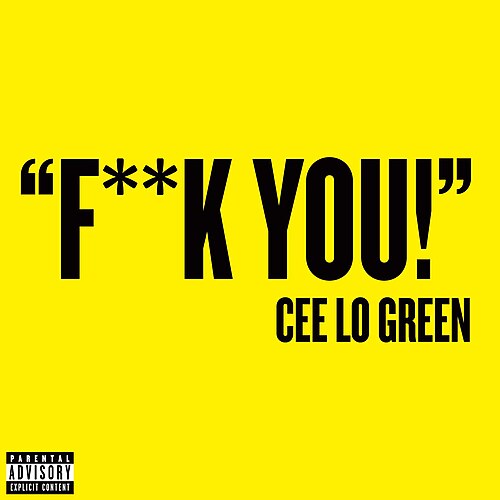
Today is Have A Bad Day Day. Per holidayinsights.com, as a greeting today, you are encouraged people to wish people a lousy or terrible day.

I think wishing a terrible day to someone to their face might put you in danger. Instead, I choose to celebrate with song. If someone were to hear one of the songs on my Have A Bad Day Day playlist, they’d know that somebody out there wants their day to suck.

Follow Tunes Du Jour on Facebook

Follow me on Bluesky

Follow me on Instagram

Tunes Du Jour Presents 1998

The year 1998 was a watershed moment for popular music. Emerging from the stylistic chaos and radical experimentation of the early/mid ’90s, the music of 1998 represented a culmination of daring artistic visions cohering into some of the most innovative, insightful, and flat-out infectious songs of the decade. Across genres, it was a year that shattered boundaries and solidified legends – a prolific melting pot of game-changing sounds destined to endure.

One of the standout tracks of the year was The Verve’s “Bitter Sweet Symphony,” a song that fused rock with sweeping orchestral arrangements, creating an anthemic yet melancholic sound that resonated with a wide audience. Its poignant lyrics and grandiose strings captured a sense of wistful longing and existential reflection that felt emblematic of the complicated late ’90s zeitgeist. Similarly, Radiohead’s “Karma Police” continued to explore the darker, more unsettling side of human experience with its haunting melody and cryptic lyrics, solidifying the band’s status as one of alt-rock’s most vital and cerebral forces.

The late ’90s also saw electronic music rapidly integrating into the mainstream pop landscape in visionary ways. Fatboy Slim’s “The Rockafeller Skank” was an explosively funky example of this trend, with its gritty, sample-heavy production and addictive dancefloor-ready beats. Stardust’s “Music Sounds Better With You” took a more soulful tack, combining classic house rhythms with a simple yet instantly catchy vocal hook to create an enduring dancefloor classic still beloved today. And the Norman Cook remix of Cornershop’s “Brimful of Asha” ingeniously blended Indian folk sounds with UK club vibes for a globe-spanning hit. For seekers of more atmospheric, boundary-pushing electronica, Massive Attack’s “Teardrop” provided a hypnotic, cinematic soundscape. This fertile era helped lay the groundwork for electronic music’s dominance in pop in the coming decades.

Hip-hop and R&B asserted their cultural force in 1998 as well, with few tracks as powerful as Lauryn Hill’s “Doo Wop (That Thing)” – an undeniable feminist anthem of self-respect powered by Hill’s dexterous rapping and soulful crooning. Her ability to fuse hip-hop bravado with uplifting, socially-conscious lyricism over neo-soul grooves earned her massive critical acclaim. Similarly future-leaning was Aaliyah’s “Are You That Somebody?” which saw the singer’s sultry vocals gliding over Timbaland’s percussive, synthetic production for an alluringly sleek sound that felt years ahead of its time. 

While maintaining their commercial clout, pop’s biggest icons weren’t afraid to musically reinvent themselves in 1998. Madonna’s “Ray of Light” saw the Queen of Pop shedding her known persona for a more spiritually inquisitive stance matched by the song’s trance-inflected electronica textures. And Janet Jackson’s “Together Again” honored loved ones lost to AIDS with its uplifting, gospel-tinged dance-pop sound tempering heavier subject matter.

In retrospect, the diverse brilliance of 1998’s musical landscape feels almost overwhelming. From fist-pumping dancefloor anthems to raw outpourings of soul, from guitar-driven songs of profundity to mindblowing productions that rewrote pop’s boundaries – the year’s music seamlessly bridged the underground and the mainstream in a way that felt thrillingly new. It was the sound of artists across genres at their hungriest and most inspired, creating the shared musical memories that still bond generations of fans together in nostalgic reverie decades later. For many, 1998 was simply the rarest of cultural moments – when everything intersected with perfection. 

Follow Tunes Du Jour on Facebook

Follow Tunes Du Jour on Twitter

Follow me on Instagram

Tunes Du Jour Presents 2002


The year 2002 was a turbulent one for the world, marked by wars, terrorism, scandals, and natural disasters. But it was also a year of creativity, innovation, and diversity in music. From hip-hop to rock, from pop to indie, from dance to folk, the music of 2002 reflected the mood and spirit of the times, offering both escapism and commentary, both nostalgia and novelty, both challenge and comfort.

One of the most dominant genres of the year was hip-hop, which reached new heights of popularity and influence. Eminem’s Lose Yourself became an anthem of determination and resilience, while Missy Elliott’s Work It showcased her inventive and playful style. Nelly’s Hot in Herre was a summer smash, while Clipse’s Grindin’ introduced a minimalist and gritty sound. Tweet and Missy Elliott’s Oops (Oh My) was a sensual and empowering ode to self-love, while Truth Hurts and Rakim’s Addictive sampled a Bollywood song and sparked a controversy. Cam’ron’s Oh Boy featured a catchy sample of Rose Royce’s I’m Going Down, while Khia’s My Neck, My Back (Lick It) was a raunchy and explicit hit.

Rock music also had a strong presence in 2002, with a variety of styles and sounds. Elvis Presley’s A Little Less Conversation (JXL Edit) was a remix of a 1968 song that became a worldwide hit, thanks to its inclusion in a Nike commercial. Avril Lavigne’s Complicated was a pop-rock anthem for the rebellious and misunderstood youth, while Coldplay’s In My Place was a melancholic and soaring ballad. The Strokes’ Hard to Explain was a garage rock revival, while Wilco’s Jesus, Etc. was a country-rock masterpiece. Interpol’s Obstacle 1 was a post-punk gem, while Spoon’s The Way We Get By was a catchy and quirky indie rock tune. The Libertines’ What a Waster was a punk rock blast, while Bruce Springsteen’s The Rising was a tribute to the victims and heroes of 9/11.

Pop music also had its share of hits and surprises in 2002, with some old and new faces. Christina Aguilera’s Dirrty was a provocative and edgy reinvention, while Beyonce’s Work It Out was a funky and soulful solo debut. Brandy’s What About Us was a futuristic and sleek R&B track, while No Doubt’s Hella Good was a disco and rock fusion. Bjork’s Pagan Poetry was a haunting and experimental song, while Las Ketchup’s Asereje was a catchy and silly novelty. Alanis Morissette’s Hands Clean was a confessional and catchy pop-rock song, while Rufus Wainwright’s Across the Universe was a beautiful and faithful cover of the Beatles classic.

Some of the most memorable songs of 2002 were not easily categorized, but rather blended genres and styles. Sugababes’ Freak Like Me was a mash-up of Adina Howard’s Freak Like Me and Gary Numan’s Are ‘Friends’ Electric?, creating a pop and electro masterpiece. The Flaming Lips’ Do You Realize?? was a psychedelic and uplifting song, while X-Press 2’s Lazy was a house and spoken word collaboration with David Byrne. The Streets’ Weak Become Heroes was a rap and piano tribute to rave culture, while Doves’ There Goes The Fear was a rock and electronic epic.

The music of 2002 was a reflection of the year itself: diverse, unpredictable, exciting, and sometimes challenging. It was a year of contrasts and surprises, of highs and lows, of old and new. It was a year that gave us some of the most memorable songs of the 21st century, and a year that we can revisit through this playlist. Enjoy!

Follow Tunes du Jour on Facebook

Follow Tunes du Jour on Twitter

Follow me on Instagram