#69: Dusty Springfield – Dusty In Memphis

Throughout the next however many months I’ll be counting down my 100 favorite albums, because why not. I’m up to number sixty-nine.

The song “(You’re) Having My Baby” ruined my life.

I know. Yours, too.

It happened in 1974. Ol’ Betsy, my family’s blue station wagon with the imitation-wood paneling stickers, was still in the driveway when I asked my father to turn on “Musicradio 77 – WABC.” A song came on that I particularly liked. Maybe it was “Billy Don’t Be A Hero” or “Band on the Run” or “Rock the Boat” or the song that resonated deeply with every boy my age—“(You’re) Having My Baby.” What a lovely way for my spirits to be lifted. It’s as if that song’s writer/singer, Paul Anka, had been reading my diary. Whichever song it was, I did what any joyful ten-year-old would do: I started to sing along.

My brother, one year my senior, cut me off instantly, saying something along the lines of, “Shut up and stop torturing us.” My father chimed in with something equally dismissive, and my mom echoed the sentiment. They all had a good chuckle.

Some context: music was everything to me. My grandpa had gifted me a transistor radio a few months earlier, and I’d become obsessed. I lived for the Top 40. I listened to Casey Kasem run the countdown every Sunday, loving each and every song he played without judgment, until that dark day in November when “Cats in the Cradle” made its debut. As a kid, I couldn’t relate to this song about parental absence and regret. Five-plus decades later, I completely understand the song’s sentiments, and have a host of other reasons to still hate it.

In 1974 I bought every issue of Song Hits magazine so I could get the lyrics right. (Wait, it’s not “Waterloo / I had my feet there upon the wall?” The opening lines of Three Dog Night’s “The Show Must Go On” aren’t “Beat it! Oh, Lou, I chose this blue life a seena strang mahna mahna?”) It was super important that I knew all the words. I was, in my own head, a burgeoning musical sensation. And why not? Michael Jackson and Donny Osmond were around the same age I was then when they started their recording careers. Between them they had all bases covered. MJ, with his emotive singing, electrifying dancing, boundless charisma, and otherworldly talent. Donny, with his nice teeth. Don’t think that I’m underselling Donny. He had SPECTACULAR teeth.

Maybe I didn’t sing as well as Michael Jackson or Paul Anka, but I thought I sang as well as any other kid in Mrs. Mazze’s music class, and it was an activity that made me happy. Or used to.

I shut up.

For good.

At least in the car. At least around them.

The lessons I learned that day in 1974:

  • Don’t poke the bear.
  • Don’t make waves.
  • Don’t stick your neck out.
  • Better safe than sorry.
  • Don’t put yourself out there, and no one can tell you you’re not good enough.
  • By not trying, you avoid the sting of failure.
  • Be quiet. Be small.
  • Invisible is safe.

Dinner time at the O’Brien home in 1940s London could be dangerous. It wasn’t unknown for Mrs. O’Brien—an alcoholic former dancer—to throw food, often while still in its serving dish. Mr. O’Brien, a frustrated would-be pianist with a violent temper, was said to call his daughter Mary names and sometimes hit her. She stayed quiet, lest she poked the bear.

In that house, music was an escape for Mary and her brother, Dionysius. Both enjoyed singing. Mary was, in her own head, a burgeoning musical sensation.

At her Catholic all-girls’ school, the nuns looked at the shy, awkward girl and predicted she’d likely make a living as a librarian. Mary had convinced herself they were right; she was boring, unattractive, and meant for a plain, quiet life. She was a girl waiting for permission to exist.

I didn’t stop singing entirely. I performed in my arts & music summer camp’s talent shows, guitar in hand. I auditioned for school and camp musicals, peaking in twelfth grade when I played Motel in Fiddler on the Roof to the genuine applause of my classmates, many of whom had never heard me open my mouth. After I got my driver’s license I sang in the car— alone, windows up, and never at stoplights where someone might glance over and catch me belting out the theme from The Greatest American Hero, thus opening me up to ridicule. Believe it or not, I still harbored a fear of being judged. I had elaborate fantasies of road trips with dates—not that I went on dates in high school—where we’d duet on “You’re the One That I Want” or “Stumblin’ In” or “Mockingbird,” singing loud enough for the back row at Carnegie Hall to hear us. Once, with an actual human present—my friend Ed, senior year of high school—I held the crazy long note at the two-thirds of the way in mark of Barbra Streisand’s “Woman in Love”—girl, you know the one:

I stumble and fall

but I give you it aaaaaaaaaaaaaaaaaaaaaaaaaaaaaaaaaaaaaaalllllllllllllllllllllllllllllllllllllll

—just to prove I could.

Through my childhood and teen years, music remained my passion. Performing in school shows and summer camp was fun, but making a career out of performing? That felt too exposed, too risky. What if my family was right? What if the applause was just people being nice? What if nobody actually wanted to hear me? Better to choose safety over the chance of hearing “shut up and stop torturing us” on a larger scale. I decided to pursue the business side of music instead. After college, I landed a job at CBS Records in the Accounts Receivable department. I was over the moon. I relayed the exciting news to my mom. Her response? “I guess you could do that while you keep looking.” Eighteen years later, when I was named Vice President at Warner Music, I told her that news, proud of how far I’d come. Her response: “I guess this really is your career.”

The nuns wouldn’t have recognized the woman who eventually stepped onto the stage. She wore a blonde beehive and ample mascara inspired by the drag queens she loved. No spectacles sat on her nose. And she no longer called herself Mary. Her new first name came from the nickname kids gave her because she liked playing football in the dirt. Her brother, who performed with Mary in a folk-pop trio, came up with a new last name for the two of them. He wanted a name that would resonate with American audiences, and noticed a lot of towns and cities in the U.S. had the same name. And thus, shy Mary Isobel Catherine Bernadette O’Brien became Dusty Springfield.

In the early 1960s, The Springfields scored several UK hits and cracked the US top twenty with “Silver Threads and Golden Needles.”

In 1964 Dusty launched a solo career built on her obsession with American pop and soul and Motown. She had a solo smash right out of the gate with “I Only Want to Be with You,” which is going to be my wedding song should I ever get someone to propose to me—still wishin’ and hopin’. Speaking of, that first chartbuster was followed by a run of hits on either or both sides of the Atlantic, including “Wishin’ and Hopin’,” “You Don’t Have to Say You Love Me,” “I Just Don’t Know What To Do With Myself,” and “The Look of Love.” She didn’t just sing these songs; she controlled the sessions, including selecting material, shaping arrangements, and re-recording her vocals dozens of times until every note was exactly right, often refusing production credit even though she’d directed the entire vision.

Her obsession with American soul music went deeper than sound. She was a white British woman who became a “soul evangelist.” In early 1960s Britain, soul music was largely confined to underground clubs and dance halls. In 1965, Dusty hosted The Sound of Motown, a British TV special that gave The Supremes, Stevie Wonder, The Miracles, and The Temptations their first UK television appearances, introducing them to a national audience that had never seen them before. The special helped launch Motown’s success in Britain. In addition, she demanded it be written into her contract that she would only perform for integrated audiences. When she was told she had to play a segregated venue in South Africa, she famously told the New Musical Express she’d be “on the first flight home”—and she was, deported with a police escort.

To those watching her, she was fearless. But internally, she was still that girl dodging food.

I’m making a career pivot. I still love music, but I’m over the “business.” I am done with the egos, the politics, the greed, and the manufactured “next big things” with nothing real to offer. Mostly, I’m tired of answering to “the man.” I’ve decided I’d much rather answer to myself.

I’m pursuing corporate speaking. Yes, really. Me, Mr. “Invisible is safe,” now wants to stand on stages and talk to rooms full of people. Surely there are less terrifying career pivots, like skydiving or defusing bombs. At least with those, if you screw up, you don’t have to face anyone afterward. I want to do work that matters. At the same time, I want to keep my limbs so I can dance at my wedding. Still wishin’ and hopin’. Corporate speaking is the choice lets me do both: work that might actually make the world a little better, and Macarena.

Public speaking is not completely new to me. I’ve spoken at conferences and presented at company-wide meetings for years, putting an emphasis on being entertaining and relatable over PowerPoint slides and dry data. For example, as be a fun way to showcase projects my departments were working on, I wrote a parody video of the television show The Office, starring my staff and me. The majority of the company loved it.

There was one notable exception. The day after the video was shown at a company-wide forum, our head of Human Resources summoned me to her office to discuss some of the more “inappropriate” humor in the script, specifically, jokes connected to diversity. The irony: I managed the most diverse departments in our division (and, not coincidentally, the most successful). The rest of the division was whiter and straighter than Donny Osmond’s teeth. Apparently pointing that out was a problem.

That same day my colleague Lauren stopped me as I was walking down the hall. “Here,” she said, handing me a DVD. “I made a copy of your video to show Dwayne. He loved it. He thinks you’re hilarious.” Dwayne was her boyfriend, now husband. Dwayne Johnson. The Rock.

You’d think a thumbs-up from the biggest movie star on the planet would matter more than Ruth from HR’s disapproval. But The Rock didn’t offer me a job; Ruth could actually cause my career harm.

Being at Warner Music felt safe. When I spoke with artist managers or foreign affiliates or potential clients, I was representing the company, advocating for artists and catalog, delivering business strategies.

This new path is different. I’m not representing a label or a brand. I’m not representing anyone but myself. And for someone who spent forty years trying to ensure everyone liked the “corporate” version of him, standing on a stage with no company behind me is the most terrifying thing I’ve ever done.

My speaking topics, drawn directly from my work experience, are diversity and inclusion. To help market myself as a speaker on these subjects, I’ve written a book that uses stories about artists and songs and draws on examples from my four decades in the music business to show that innovation happens and productivity increases when organizations make space for people who don’t fit a set mold. I strongly believe that diversity isn’t just a moral imperative; it’s a competitive advantage.

The book, Make Diversity A Hit!: What My 30+ Years Of Negotiating 10k+ Deals For Music’s Biggest Artists Can Teach You About How Diversity Can Grow Your Business, took me five years to write. Five years of reading scores of articles and books about diversity and inclusion. Five years of writing and rewriting, proofreading and polishing, telling that voice in my head to be quiet so I could just finish the damn thing. Five years.

And then, hurrah! It was finished. Ready to be published. Ready to change lives. Ready to launch my speaking career.

That was in 2019.

I told myself not to rush into things. It was important I do this right. I had to learn how to self-publish. And as the book is meant to be a calling card for speaking, I had to prepare for that, too. And so, during these last six-plus years, I’ve been preparing. I read books about self-publishing. And books about speaking. And books about marketing books with the goal of speaking. I attended webinars and seminars and symposiums and conferences. I went to forums and panel discussions and roundtables. I listened to podcasts and audiobooks. I watched TED talks and YouTube tutorials and masterclasses. I took courses on personal branding, thought leadership, and teaching through storytelling. I learned about SEO optimization, social media strategy, and the algorithm. I joined LinkedIn groups and never posted or read what was posted because I hate LinkedIn. I joined Facebook groups and never posted or read what was posted because I hate Facebook. I bookmarked articles about overcoming impostor syndrome—141 of them. I traveled to Las Vegas to attend masterminds where I brainstormed with other speakers/writers, many of whom have magically published more than one book in that time and are now considered experts on their chosen subjects. I became an expert in preparing to plan to start getting ready.

A therapist may say I have anxiety stemming from perfectionism. But is perfectionism demanding of oneself an extremely high level of performance, in excess of what is required by the situation? I would say no, while the American Psychological Association Dictionary of Psychology says yes. Who are you going to believe—the combined wisdom of every licensed psychologist in America or the guy who still kicks himself because he doesn’t know the lyrics to Three Dog Night’s “The Show Must Go On”?

The truth is, I’m terrified to put it (me) out there.

At Toastmasters I won so many Best Speaker ribbons that one year the club president stopped giving them out. He thought it wasn’t fair to everyone else. I didn’t care about the ribbons. I was competing with myself, trying to convince that ten-year-old in the back of the station wagon that it’s okay to live out loud. To experiment. There was nothing of consequence at stake. It was safe to fail.

But now? Now I’m trying to make this a career. Now there’s something at stake. I look at other speakers—the ones with the PhDs and the massive platforms—and I feel like a fraud with a handful of blue ribbons. Okay, a boatload of blue ribbons. With just the thought of actually booking an engagement, I am instantly ten years old again, terrified that if I step out there, the world will echo my family and tell me to be quiet. What if I deliver a speech that isn’t well-received? And someone posts about my debacle? And that post gets shared? And every hiring manager in America knows I’m the guy who bombed on stage?  What if this one speech ruins any chance I have at this career?  That would prove the lesson I learned in 1974 was correct: By not trying, you avoid the sting of failure. Invisible is safe.

In 1968, Dusty Springfield went to Memphis to record with session musicians behind some of the soul records she revered. She walked into American Sound Studio. The rhythm tracks had already been recorded. Now it was her turn. She stood at the microphone in the same vocal booth where her heroes had stood.

She froze. A therapist may say she had anxiety stemming from perfectionism. She would have called it fear.

 “I hated it,” she later said, “because I couldn’t be Aretha Franklin. If only people like [record producer] Jerry Wexler could realize what a deflating thing it is to say ‘Otis Redding stood there’ or ‘That’s where Aretha sang.’ Whatever you do, it’s not going to be good enough.”

Eventually, she left. Wexler would later claim he “never got a note out of her” in Memphis.

The vocals would have to be recorded somewhere else. Somewhere she could relax. Somewhere peaceful. Somewhere quiet. Somewhere unintimidating. New York City, obviously. Away from the weight of that Memphis studio, she found her voice. Which means Dusty didn’t actually record Dusty In Memphis in Memphis, making it the most blatant case of a fraudulent album title since The Beach Boys’ Pet Sounds.

The songwriters on Dusty in Memphis were a “Who’s Who” of pop music greatness—Carole King and Gerry Goffin, Barry Mann and Cynthia Weil, Burt Bacharach and Hal David, Marilyn and Alan Bergman with Michel Legrand, and a rising star named Randy Newman.

But the song that became the album’s hit single was written by the lesser known team of John Hurley and Ronnie Wilkins. They intended it for Aretha Franklin to sing, but the Queen of Soul, famously the daughter of a preacher man, passed on singing how the only man who could ever love her was the son of a preacher man.

Dusty took “Son of a Preacher Man” and made it a global Top 10 smash. (Seeing its success, Ms. Franklin did end up recording her own version.)

Despite the popularity of the single, the album Dusty In Memphis was a commercial “meh,” missing the British and American top 40. It would be just shy of 20 years before she again achieved the commercial height of “Son of a Preacher Man,” when Pet Shop Boys, over the objections of their record label, who preferred they record with Tina Turner or Barbra Streisand, recruited Dusty for their song “What Have I Done To Deserve This?”

That single went to #2 on both sides of the Atlantic. She was back. Critics dusted off their copies of Dusty in Memphis and realized they were holding a masterpiece. Soon it was included in many Best Albums Of All Time lists. Elvis Costello called it a record “that will chill and thrill, always and forever,” adding “Dusty Springfield’s singing on this album is among the very best ever put on record by anyone.”  Then came 1994 and Quentin Tarantino. The writer/director put “Son of a Preacher Man” in Pulp Fiction. The soundtrack sold over three million copies in the U.S. alone; more people owned that album than had ever owned a Dusty Springfield record.

On March 2, 1999, the day she was scheduled to receive an award at Buckingham Palace as an Officer of the Order of the British Empire for “services to popular music,” breast cancer took Dusty Springfield’s life. Two weeks later, she was inducted into the Rock & Roll Hall of Fame, where Elton John called her “the greatest white singer there has ever been.”

Where Mary O’Brien was terrified of saying the wrong thing, Dusty made herself heard. She’d fought for integrated audiences and came out publicly as bisexual in 1970, a time when the number of openly LGBTQ pop stars could be counted on one fist.

Mary O’Brien spent her childhood being quiet to stay safe. But with a beehive and a little mascara (okay, a lot of mascara), she transformed herself into Dusty Springfield and made herself heard.

I don’t sport a beehive, nor do I wear mascara (that one night in college notwithstanding). I never found my superhero uniform, the one that would make me invincible. Instead, I spent years being invisible, thinking silence was safety. It wasn’t safety; it was erasure. I succeeded in the corporate music world because I was confident I could. I won ribbons at Toastmasters because the stakes were low enough for me to feel comfortable to experiment. The truth is I only tried things where I already believed I could succeed. I avoided anything that might give the world a reason to criticize me. Fear of failure didn’t stop me from achieving; it stopped me from risking. And spending my life avoiding the risk of failure is still a kind of failure—the failure to find out who I might have been without the fear.

I recently came across an interview with Fiona Apple, an artist I adore, worship, admire and worship, not in a creepy way. In 2020, another Apple admirer, Bob Dylan, invited her to the studio to play piano on a song he was recording. Even with all her acclaim and years of experience, she was terrified, convinced she’d mess up the work of a legend. She told Dylan of her trepidation. His response: “You’re not here to be perfect, you’re here to be you.”

After spending many hours thinking about that, I realized that I had been auditioning for a role that doesn’t exist. “Perfect Glenn.” He never messes up, because he never actually participates.

Dusty Springfield managed to finish making Dusty In Memphis, and it became a masterpiece—not because she stopped being afraid, but because she sang through the fear. I’m done waiting for proof that outweighs my doubt. My book has been gestating for twelve years, and now I’m having my baby. I’m putting the book out. I’m seeking the gigs.

Maybe my work will be as great as Dusty in Memphis. Maybe it won’t. Either way, I’m turning the radio up. My voice deserves to be heard.

Follow Tunes Du Jour on Facebook

Follow me on Bluesky

Follow me on Instagram
Tunes Du Jour Presents 1975

Fifty years ago, radio dials and turntables were spinning an uncommonly diverse mix of sounds. The charts of 1975 didn’t follow a single storyline—instead, they captured a moment when multiple musical currents were flowing with equal strength. Disco was gaining momentum but hadn’t yet dominated everything in its path. Rock was simultaneously reaching for arena-sized ambition and stripping down to raw emotion. Soul and funk were evolving into more sophisticated forms, while pop continued doing what it does best: making people hum along whether they meant to or not.

The year belonged, in many ways, to artists who understood that hooks and ambition weren’t mutually exclusive. Bruce Springsteen’s “Born to Run” arrived like a desperate prayer wrapped in Phil Spector production, while Queen’s “Killer Queen” proved that flamboyance and precision could coexist in three minutes of glam-rock perfection. Led Zeppelin stretched “Kashmir” across nearly nine minutes of Eastern-influenced grandeur, and Pink Floyd’s “Wish You Were Here” turned melancholy into an art form. Even Bob Dylan, never one to stand still, was crafting the narrative complexity of “Tangled Up in Blue.” These weren’t just songs—they were statements about how far popular music could reach while still connecting with listeners.

Meanwhile, dance floors were becoming cultural epicenters. KC and the Sunshine Band’s “That’s the Way (I Like It)” and Gloria Gaynor’s “Never Can Say Goodbye” helped establish disco as something more than a passing trend. The Bee Gees’ “Jive Talkin'” showed that the brothers Gibb could pivot from balladeers to funk-influenced hitmakers. Labelle’s “Lady Marmalade” brought New Orleans sass and unapologetic sexuality to the mainstream, while Earth, Wind & Fire’s “Shining Star” blended funk, soul, and jazz into something that felt both cosmic and grounded. The groove wasn’t just a rhythm—it was becoming a philosophy.

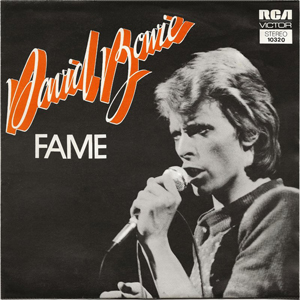
What’s striking about 1975 is how much sonic territory gets covered without any single approach dominating. 10cc’s “I’m Not in Love” used studio technology to create something hauntingly atmospheric, while Kraftwerk’s “Autobahn” was quietly suggesting what electronic music might become. Barry White continued orchestrating romantic opulence, Minnie Riperton’s five-octave range soared through “Lovin’ You,” and Linda Ronstadt’s “You’re No Good” proved that straightforward rock could still pack a punch. David Bowie’s “Fame,” co-written with John Lennon, showed him already moving past glam into funk-inflected territory. Glen Campbell brought “Rhinestone Cowboy” to country-pop crossover success, while Average White Band demonstrated that Scottish musicians could master American funk with “Pick Up the Pieces.”

Listening to these songs now, what emerges isn’t just nostalgia but a reminder of a particular kind of creative confidence. These artists weren’t afraid to be big or vulnerable, funky or introspective, polished or raw—sometimes all within the same track. The year didn’t belong to any single movement or sound, and that might be exactly what made it memorable. It was a time when the radio could take you from the Staple Singers’ gospel-infused soul to Sweet’s glitter-rock crunch to ABBA’s pristine pop architecture without anyone thinking twice about the journey. That kind of range feels worth celebrating.

Follow Tunes Du Jour on Facebook

Follow me on Bluesky

Follow me on Instagram

Tunes Du Jour Celebrates Bastille Day

Happy Bastille Day!

On this date in 1789, the French people stormed the Bastille Prison in Paris to shout “No More Kings!” They probably shouted that in French. I can’t say for sure as I wasn’t there that day. Anyhoo, it worked! How’ bout that? This uprising ultimately led to the birth of democracy in France.

To celebrate, I compiled a Bastille Day playlist. I’ll be the first to tell you that there are far more accurate Bastille Day playlists out there. I’m using the holiday as an excuse to compile tracks from French artists, songs sung in French, songs with French titles, and one song by Chicago-born 60s song parodist Allan Sherman. I learned more from that three-minute record, baby, than I ever learned in school about the French Revolution.

Follow Tunes Du Jour on Facebook

Follow me on Bluesky

Follow me on Instagram

Tunes Du Jour Presents 1976

By 1976, disco had moved from underground clubs to the top of the charts, and rock music found itself facing challenges from multiple fronts. Donna Summer’s “Love to Love You Baby” and Diana Ross’ “Love Hangover” showcased the genre’s hypnotic groove and sensuality, while Wild Cherry’s “Play That Funky Music” blurred the lines between rock and funk, proving that even guitar-driven bands weren’t immune to disco’s influence. Hits like Andrea True Connection’s “More, More, More” and Candi Staton’s “Young Hearts Run Free” reinforced that this was no passing trend—it was a movement reshaping popular music.

Mainstream rock, meanwhile, leaned into grandeur and melody. Queen’s “Bohemian Rhapsody” became a landmark in songcraft, a multi-part epic that defied conventional structure and solidified the band’s place in rock history. Boston’s “More Than a Feeling” offered a soaring, polished take on arena rock, while Blue Öyster Cult’s “(Don’t Fear) The Reaper” balanced an ethereal mood with a sinister undercurrent. Even David Bowie, ever the shape-shifter, leaned into a sleeker sound with “Golden Years.”

Yet, outside of the glossy productions and layered harmonies, a different kind of energy was brewing. The Sex Pistols’ “Anarchy in the U.K.” was a shot across the bow, rejecting the excesses of rock in favor of raw urgency. While not a punk act, Thin Lizzy’s “The Boys Are Back in Town” carried a swagger and directness that resonated with rock fans who would soon embrace punk’s stripped-down ethos. Punk’s full-blown arrival was just around the corner, but 1976 gave the first clear signs that the dominant sounds of the decade were about to face a reckoning.

Beyond disco and rock, R&B and soul continued to thrive, offering both lush ballads and infectious grooves. The Manhattans’ “Kiss and Say Goodbye” and Lou Rawls’ “You’ll Never Find Another Love Like Mine” showcased rich, emotive vocal performances, while Spinners’ “The Rubberband Man” and Boz Scaggs’ “Lowdown” leaned into rhythmic sophistication. Daryl Hall & John Oates’ “She’s Gone” marked a breakthrough for the duo, setting the stage for their string of hits in the late 1970s and early 1980s, where they refined their blend of blue-eyed soul and pop.

In a year that saw both nostalgia and forward momentum, songs like the Four Seasons’ “December, 1963 (Oh, What a Night)” and Gordon Lightfoot’s “The Wreck of the Edmund Fitzgerald” reminded listeners of storytelling’s power in song. Meanwhile, ABBA’s “Mamma Mia” and Elton John and Kiki Dee’s “Don’t Go Breaking My Heart” offered sheer pop exuberance. The music of 1976 reflected an industry in transition—disco was ascendant, rock was splintering, and a new wave of rebellion was beginning to make itself heard.

Follow Tunes Du Jour on Facebook

Follow me on Bluesky

Follow me on Instagram

#72: Radiohead – OK Computer

Throughout the next however many months I’ll be counting down my 100 favorite albums, because why not. I’m up to number seventy-two.

When I was a senior in high school, I auditioned for Carnegie Mellon University’s Theater program with what in retrospect looked like a performance on The Gong Show – that 1970s television talent show hosted by a man who claimed to have been a CIA assassin where celebrities would strike a large gong to end particularly unbearable amateur performances. “Juicy” Jaye P. Morgan and Jamie Farr would have reached for that gong mallet to ensure someone destroyed my boyhood dreams and taught me the cold hard fact that life is not for the sensitive or the marginally talented.

I Laurence Oliviered a monologue from a source I no longer recall, and at my mother’s suggestion, I introduced a rubber rat as a prop for my musical selection: Michael Jackson’s “Ben.” Yes, a song about a rat, from a movie about a rat, performed to a black rubber rat the length of the bowel movement that my younger sister gifted to the world when she was four years old that so impressed our babysitter Molly that she called my parents, who were on vacation in Hong Kong, to describe it with more details than a typical Tinder profile, ruler still in hand. Thankfully, this was in the pre-camera phone days, lest a pic of a four-year-old’s discharge get mixed in the slideshow of Hong Kong vacation highlights that were shown to my parents’ friends. “Is that a vermin native to China?” they’d ask. “No, it’s my daughter’s feculence,” my dad would reply, using a more coarse term for feculence. The neighbor, Mr. Brown, would nod the way one does when admiring a masterpiece. “Nice work. Have you thought of entering her in a competition?” Anyway, it had teeth and a tail that was just as long. The rat, that is, not my sister’s business. I thought the inclusion of a rubber rat was a good idea, having seen the comedian Gallagher on television and how he won over audiences with his props, particularly the enduring bit where he took a large mallet to a watermelon and baptized the front row of his audience with sweet, sticky melon juice. In just a few minutes I had to face the horrible reality that I was no Gallagher, a feeling that crushed me like the aforementioned melon.

The confidence with which I entered the audition room left me halfway through the song’s second verse, when one of the judges interrupted with the weary resignation of someone who had seen too many rubber-rat-assisted performances that day, beginning with the kind of sigh usually reserved for terminal diagnosis deliveries. “I don’t suppose anything extraordinary is going to happen in the next two minutes?”

Nothing extraordinary happened. There’s a reason that guy gets to decide who can be in show business and who can’t. He knows his stuff.

I got accepted to attend Pittsburgh’s Carnegie Mellon; just not in their Theater department. In their Anything But Our Theater department. It was like being invited to a party but told to stay in the kitchen. My academics were marvy. My application essay was cool beans. However, my acting and singing were not at the level of an Andrea McArdle (the original Annie in the Broadway musical Annie) or Little Jimmy Osmond (of THE Osmonds, who at age nine had a hit on both sides of the Atlantic with a song that opened with “I’ll be your long haired lover from Liverpool” which is a weird thing for a nine-year-old from Utah to sing). My second choice school, Brandeis University, located in a suburb outside of Boston, didn’t have an audition requirement. I sang to the rat “Ben, something something, something air / You feel you’re not wanted anywhere.” And now, the rat sang to me “Glenn, that Pittsburgh school can kiss your ass / You will learn your trade in Waltham, Mass.” (That’s a joke, folks! I know that rubber rats don’t sing. Unlike real rats, who can belt out an aria that will bring tears to your eyes.) (That’s also a joke. A silly joke. I’m sorry about this run of silliness.)

It didn’t take long to realize I wasn’t cut out for theater – not because I lacked talent (though there was that), but because I lacked the backbone to face rejection after disheartening rejection. Getting turned down by Carnegie Mellon’s Theater Department was the determinative tenon in the sarcophagus. They wouldn’t take $50k from me (well, my parents) because they thought if word got out they’d trained me, their reputation would vanish faster than Lipps, Inc.’s recording career, and they’d end up as one of those sad stories – a once-prestigious university reduced to offering interpretive dance classes in an abandoned Woolworth’s. If they wouldn’t even let me pay to embarrass myself on their stage, community theater wasn’t exactly going to be breaking down my door with offers for me to play the title roles in King Lear or Ma Rainey’s Black Bottom.

Having breezed through a high school computer programming course, I switched my major to Computer Science. Over my four years in college, what started as neat, logical statements like “If X then Y” evolved into increasingly hostile computer languages that made as much sense to me as The Sound of Music winning the Oscar for Best Picture, which is to say, huh? (Extraneous, more so than usual, story: In mid-November 2000, when the US presidential election between Democratic candidate Al Gore and Republican George W. Bush remained undecided due to a contested Florida vote count, I attended a screening of The Sound of Music in Greenwich Village, New York. During the scene where the Von Trapp family wins a singing competition at the Salzburg Festival, someone in the movie theater shouted “I demand a recount!” I♥NY! I should have gotten that guy’s phone number.) Even as I pursued the degree, my heart wasn’t in it. Upon graduation, I halfheartedly applied for programming jobs while pursuing my true passion: positions at record companies. Most computer-related positions were in Defense, and as a pacifist, that wasn’t my path.  Cue my dad saying “Well, somebody’s gotta do it!” Sure, Dad, but should it be the guy who thought “What if I sing TO the rubber rat instead of just holding it?” More importantly, such a job would indubitably crush my soul.

Thanks to a summer temp job in Accounts Receivable at a furniture leasing company, I landed a similar position at CBS Records. When I told my mother I got the job, she responded with an enthusiastic and supportive “I guess you can do that while you keep looking for a computer-related job.” Because obviously, working at a record company was just a stepping stone to the real dream of playing a small part in the destruction of foreign lands. The subtext was clear: the CBS gig was less a career starter and more a temporary detour on the highway to Serious Professional Accomplishment. The way she said this was similar in tone to ten years earlier when she yelled from her bedroom “Glenn, what are you doing?” when I was clearly working on my Carol Channing impression. It wasn’t THAT bad! She knew full well what I was doing. Another dream dashed. #GoodbyeDolly

The only happy memory I have of prior to then was of that singular moment in second grade when Mrs. Halpern praised my essay on prison reform. While my peers were presumably writing about dinosaurs or Scooby Doo or spaghetti, I was crafting a treatise on human decency. I wrote about how the conditions of jail cells were deplorable and no place for actual rehabilitation to take place and about treating inmates humanely, arguing that everyone deserves dignity – a perspective that, looking back, seems remarkably developed for a seven-year-old and certainly didn’t come from my family or the evening news.

My personal experiences and observations made me perceive the world as uncaring if not downright cruel. I found something to care about when I was ten years old. Grandpa Abe regifted me the radio given to him by the bank as his reward for opening a new account with them (a common practice in the 1970s, when banks wooed new customers with treasures like radios and bathroom scales and electric blankets and belt buckles emblazoned with “Wells Fargo”). The radio was a brown box, roughly the dimensions of five stacked rubber rats (minus their tails), with the AM and FM band displays at the top and a fabric-covered speaker comprising its lower two-thirds. Two plastic knobs protruded from its right side like a minimalist Mr. Potato Head design – one volume ear and one tuning nose, as if Picasso had designed it exclusively for Wells Fargo after they informed him his checking account had fallen below the minimum balance requirement. I’m fairly certain that in handing over to me this free no-frills appliance, my grandpa wasn’t aware that he was passing along my primary emotional survival kit, though from that spring day in 1974 when WABC first crackled through the speaker in my bedroom sanctuary, music became my escape hatch from the perpetual disappointment that was life. I very soon began my record collection and would turn to those records when I needed a companion.

When Albert Wunch dropped me as a friend because I didn’t vote for him for sixth grade student council president (I felt he lacked the leadership skills to unite our class) and lashed out at me with “Where did you get your watch – a junkyard?” (nobody insults their constituents and wins the presidency, Albert!), I took solace in the Diana Ross Greatest Hits album that my parents gave me for Hanukkah, at my request. In my bedroom, with its black wood paneling and golden shag carpet, I carefully removed the album from its sleeve, holding it on its perimeter, and placed it on the record player. I flipped the “on” switch, set the speed to 33, and gently placed the needle on the opening groove. “Touch me in the mo-orning….” I immediately lifted the needle. I have an issue with that song, which is: who laughs at wind? “Wasn’t it yesterday we used to laugh at the wind behind us?” Diana sings in the second verse, as if she and her lover were meteorology enthusiasts who found low-pressure systems hilarious. Next track, please. “Love Hangover” – now that’s a certified banger. Side A concludes with the sublime “Theme From Mahogany.” I flip the record over and BOOM! “Ain’t No Mountain High Enough” lifts me up like a melodic brassiere. It filled/fills me with the unshakeable belief that Diana Ross would, indeed, be there in a hurry if I called her name – though I never tested this theory, because some illusions are better left unshattered. (Thirty years later I saw Miss Ross entering the food court at the mall in Century City as I was leaving it. We caught each other’s eyes and she flashed me a huge smile that said “I still mean what I said.”)

Since childhood, shyness was/is my albatross. Much like my Lenovo PC, I have a tendency to freeze at the most inopportune moments, like during what others refer to as “normal human interactions.” Back at school, my obsession with music and the Billboard charts was less a conversation starter and more a classmate repellent. While my peers discussed Little League and Mad magazine and Raquel Welch, I was bursting to share that on the flip side of Elton John’s “Philadelphia Freedom” was a live cover of The Beatles’ “I Saw Her Standing There” performed with John Lennon – the same Lennon who, on Elton’s previous single, a cover of The Beatles’ “Lucy in the Sky with Diamonds,” performed under the pseudonym Dr. Winston O’Boogie! Riveting, right? Yet for some crazy reason these boys on the verge of adolescence preferred discussing Raquel Welch‘s boobies. “Clod-polls!” I thought to myself. Looking back, mentally categorizing peers as simpletons might have contributed to my social isolation, so I must shoulder some of the blame.

Yet, amidst my inadvertent self-imposed musical exile, Nicole Winston actually tried to connect with me through my love of music. In eighth grade told me of a song she thought I’d love by Seals & Crofts, a long-haired, bearded soft rock duo that in the 1970s conferred on an unsuspecting public such wussy hits as  “Summer Breeze” and “Diamond Girl” and “Hummingbird.” Having me to listen to their music should be punishable as a hate crime, though Nicole had the best of intentions. She picked up on my sensitivity and non-participation in athletic activities and disinterest in Raquel Welch and assumed I was a flaming mellow music fan. I preferred things that were a bit more rocking, like Eagles, Electric Light Orchestra and Barry Manilow, always throwing up the devil horns hand gesture when I heard “It’s a Miracle” or “Daybreak.” She said the Seals & Crofts song was called “Babe in the Woods” and it was about a deer and as I’m recalling this I’m throwing up in my mouth a little and doing my utmost to keep my building rage from flying out of control and wondering what impression I give off that would impel someone to recommend such a sickening vile song to me when I go wild and headbang to “New Kid in Town.” I didn’t even give the offensive song a listen. The fact that I’ve carried this memory for 45 years, only to discover through an internet search while writing this paragraph that Seals & Crofts never even recorded a song called “Babe in the Woods” or anything about a deer, feels like a perfect metaphor for my less-than-idyllic teenage years. I lost a potential colleague in my musical passions because she didn’t meet my standard of exclusively supporting artists who truly rock. Like Barry Manilow. (Years later, I negotiated deals to have Seals & Crofts’ hits be included on compilation CDs with titles like NOW! That’s What My Dentist Plays: Volume 37. Both men were a pleasure to work with and I forgive them for “Summer Breeze” and “Diamond Girl.” Not “Hummingbird,” though.)

Fast forward a few decades to the rise of social media and adult Glenn still trying to use music to make a connection, hoping the broader reach of this new technology would help with that. I used to post music-related tidbits on Facebook, such as commemorating an artist’s birthday by posting a clip of them, until a fellow writing workshop student, auditioning for the role of Buzz Killington, informed me that nobody cares. “That’s not what Facebook is for!” she scolded. True enough, nobody besides me posted the video of Nu Shooz’s “I Can’t Wait” on the birthday of their lead singer, the unforgettable Valerie Day. What others post generally falls under one of the following categories:

– Documenting their food intake via photographs. I’m not sure why. Is the plan to years from now reminisce? “I’m so glad I posted a pic of the fruit and feta salad I ate at the Heritage Towne Center with whatshisface.  Otherwise, I may have completely forgotten about it. #MistyWatermelonMemories” Or is it to make me jealous because my meals come from a box and are eaten alone?

– Similar to that last one, the wine o’clock news. Every glass, meticulously catalogued like rare butterflies before they’re imbibed. I’m puzzled. Will future historians need to know exactly when Sharyn switched from merlot to pinot grigio?

– Announcing their kid made the honor roll. Yes, be proud! Take little Einstein out for some ice cream. They’re brilliant and I’m thrilled to be leaving the world in their hands, but some perspective here. You know how many kids make the honor roll each year? Around 19 million. You know how many people own a mint condition original Japanese pressing of ABBA’s Super Trouper with an intact obi strip? < 19 million. And yet more people post about the former, conforming to what’s expected of them. Post when your second grader writes an essay about prison reform.

– Wishing a happy birthday to their significant other. Do you not live with this person? Are you no longer on speaking terms? Did you forget their birthday until now? Do you think a no-cost post that reads “Happy birthday to my beloved who is currently sitting next to me and asking me why I’m typing this instead of just saying it out loud” will make up for that? Give them a gift, like a spa vacation or theater tickets or a mint condition original Japanese pressing of ABBA’s Super Trouper with an intact obi strip, you cheap, forgetful offspring-of-a-bitch-and-stud. #GenderNeutralPejorative #StillHeteronormativeThough

– Announcing the death of a relative. I genuinely feel for these people, but is there a more thoughtful and respectful place to honor their memory than between a photo of a breakfast burrito and a video of a cat playing tennis? I had a lump in my throat and a tear forming until I saw Dolly Purrton’s forehand groundstroke. Ha ha! #IsThisFurReal?

– Selfies. And only selfies. A daily documentary of one’s face from slightly different angles. Ain’t ya got a mirror? I give a pass to those with biceps and defined abs. Keep up the good work, boys!

Interestingly, on Instagram I found a very large community of people who post items from their record collections. More interestingly, gay men make up exactly 99.2% of those people. You could say they’re into aural! #SorryNotSorry. And while my Kylie Minogue fervor may not be as strong as theirs, I get the bigger picture.

Many of us who fall outside the mainstream use music to escape a world that ravages us with homophobia, transphobia, xenophobia, racism, misogyny, religious persecution, famine, poverty, war, human rights abuses, weather-related disasters, gun violence, genocide, corruption, human trafficking, terrorism, and Paul Blart: Mall Cop 2. I resist engaging with a world where greed prevails, where doing the right thing is not as important as the profit margin. Yes, I’m looking at you, Lenovo Corporation. My Lenovo is a subpar computer, but it would make a good boyfriend, given how often it goes down on me. #SorryNotSorry2. Worst of all, we live in a world where The Recording Academy gives the Song of the Year Grammy to “Don’t Worry, Be Happy” over “Fast Car.” Okay, maybe that isn’t worse than genocide, but it’s damn close. Okay, maybe it isn’t damn close, but it still pisses me off.

Unfortunately, the escape music provides me lasts only as long as I’m listening. It doesn’t permanently alter reality. Listening to a stack of Ray Charles records doesn’t change the results of the 2024 US presidential election, where a majority of the voters said “I WANT A CONVICTED RAPIST WHO STOLE DONATIONS MADE TO A CANCER CHARITY TO RUN THE COUNTRY! HE SHARES MY VALUES!” No record would fix that, though a great one can make me feel like I’m not alone in my revulsion of the state of affairs, that somewhere out there are people who share my values and my interests.

Radiohead’s OK Computer is one such album. It captures the disconnect of a society where technology, meant to connect us, often leaves us feeling isolated (see “Facebook, Glenn’s posts on”). The themes of detachment, corporate dreariness, and seeking escape reflect my own journey, from spending my school days feeling like a porcupine at a massage parlor to discovering release through music. Released in 1997, its observations on modern life may strike a more profound chord today. To me, it’s as if Radiohead hopped on a TMZ double decker bus to take a guided tour of my brain: they entered through my prefrontal cortex, where a robotic voice not too dissimilar to the one in Styx’s “Mr. Roboto” instructed them to please power off their devices (Am I the first to mention Radiohead and Styx in the same sentence? Is “Mr. Roboto” now playing in your brain as it constantly plays in mine? Domo arigato.); wandered through my hippocampus, covered in posters of Olivia Newton-John and bearing the strong scent of York Peppermint Patties, making it far more enchanting than the sterile computer labs of the Brandeis campus; stopped at my temporal lobe, where they found a confused mess of career expectations colliding with artistic dreams – an unholy mix of model rockets, a briefcase, and more posters of Olivia Newton-John; paused for a quick lunch at Ye Olde Hypothalamus Café, where they devoured a microwaved mac-and-cheese that, ignoring Mr. Roboto’s instructions, they photographed and posted on Facebook (being British, they had never tasted something so flavorful and exotic); and finally reached my amygdala, where they discovered enough alienation and technological dread to inspire the OK Computer album and its deluxe expanded version, released twenty years later. I should sue.

The narrator of the song “Paranoid Android,” who is disgusted by the lack of empathy and humanity around him? That sounds so much like yours truly that I think I’ll add that title to my email signature: “Yours in revulsion, Glenn Schwartz, Writer/Licensing Consultant/Paranoid Android/Record Collector/Owner Of Many Olivia Newton-John Posters.” At the risk of sounding callous, I simply cannot put myself in the shoes of someone who lacks empathy.

The protagonist of “Subterranean Homesick Alien,” who, feeling out of place in this world, dreams of an alien abduction, hoping they’ll take him aboard their ship and “show me the world as I’d love to see it?” That is so me, except for the part about wanting to be abducted and taken aboard a spaceship, as with my luck I’ll be stuck in the middle seat between a guy who removed his shoes and socks before takeoff (that’s not what “takeoff” means, you jackal!) and someone who gives me a play-by-play of her Aunt Tillie’s gall bladder surgery during the safety demonstration, causing me to miss the instructions about the quantum-lock seatbelts and anti-gravity emergency procedures and how to operate the fifth-dimensional oxygen mask. All I heard was “smoking of any substance, including Zorpian plasma-vapor, is strictly prohibited.” Hard to believe that was ever allowed. This is not the world as I’d love to see it! Flight attendant, is it too late to get bumped up to Business Class? It is? Now Tillie’s niece is telling me how rude I am. “You could be a little cordial, as we’re going to be stuck next to each other for the next 6000 hours! Anyway, when they cut Aunt Tillie open, it was like popping a zit the size of a grapefruit. All this chunky yellow gunk oozed out. Is there food on this flight?” #ISuckAtMakingFriends

Then there’s “Exit Music (For A Film),” written for the closing credits of Baz Luhrman’s Romeo + Juliet. Do I relate to the star-crossed loverboy’s point of view as he plans his escape from an oppressive society? Does a polar bear shit on an ice floe?

I very much identify with the narrator of “Let Down,” who finds life monotonous, disappointing, and, well, a letdown. I was let down by the judges at my college theater audition, let down by the lack of support when I landed my dream music business job, and, of course, let down by Lenovo, who, once they have your money, treat you like a rubber rat prop – something that has served its purpose and now can be ignored and dismissed.

The protagonist of “Karma Police” requests that the titular law enforcement “arrest this girl; her Hitler hairdo is making me feel ill.” Imagine if karma police actually existed, rounding up those who make others’ lives miserable – offenders with appalling hair choices, barefoot airline passengers, billionaire social media overlords who wouldn’t know empathy if it sent them a friend request, the current administration, Lenovo executives, and the jackals ensuring Seals & Crofts’ continued relevance through compilation licenses (though I suppose that last offense only warrants a warning).

On “Fitter, Happier,” a robot that sounds markedly different than the one in “Mr. Roboto” dictates the proper way for humans to live: drinking in moderation, hitting the gym three days a week (Glenn: ha!), no microwave dinners (Glenn: ha ha!), no saturated fats (Glenn: ha ha ha! This machine’s a real Gallagher!). Thom Yorke, Radiohead’s lead singer/chief lyricist, called “Fitter, Happier” “the most upsetting thing I’ve ever written,” which proves he’s never had to write to Lenovo’s customer service about a computer that is such a colossal piece of crap that my former babysitter Molly took pictures of it to send to my parents.

My favorite song on OK Computer and indeed my favorite song in the Radiohead oeuvre is “No Surprises,” a suicide note disguised as a children’s lullaby. The narrator, trapped in an unfulfilling life, speaks of “a job that slowly kills you” and “bruises that won’t heal.” He looks in the mirror and sees someone tired and unhappy. He questions why a democratic government serves only the privileged few. All he wants is “no alarms and no surprises,” letting us know that “this is my final fit, my final bellyache.” The song poses a question I think about more often than I’d like: when does merely existing become too heavy a burden to bear? The real power of “No Surprises” is how it makes me feel less alone in asking that question. There are others like me out there; I just have to find them, with or without the help of technology. I hate to think about what might have been had I pursued one of those Defense jobs. #NotEveryParagraphHasAPunchLine

Closing OK Computer is “The Tourist,” a song about taking the time to enjoy life in a world moving too fast. “Idiot, slow down, slow down” implores Thom Yorke. Great advice, lest I become like my Lenovo pc, teetering on the verge of a complete breakdown at any given moment, though unlike my less than ok computer, I know where to find my reset button: my record collection.

OK Computer bridged my abandoned computer science path with my innate sensitivity to human suffering, easing my loneliness by demonstrating that someone else viewed the world similarly, questioned where we were heading, and felt the tension between society’s expectations and remaining true to one’s self. In its tales of darkness, I found light; in its characters’ despair, I found hope; in between my couch cushions, I found 27 cents, which I took to my local independent record store and put toward the purchase of some new vinyl because, unlike Amazon, this store still accepts loose change and its clerks engage in actual conversation with fellow music enthusiasts. This is what Radiohead had been telling us all along: no algorithm can replace the joy of genuine human connection. The relevance of this message has only grown stronger over time.

The music that accompanies the lyrics reflects the idea that one needn’t conform. The spirit of experimentation on the record – distorted vocals, shifting time signatures, computerized voices, abrupt structural shifts, layers of electronic samples – breaks free of the boundaries of what a rock band is supposed to sound like. The band and their producer, Nigel Godrich, revel in the sonic possibilities of modern technology, while singer Yorke expresses an opposition to technology’s potential social, moral, and psychological impact. I’d wager TWICE the amount of money I found in my couch cushions that right now your brain is invoking the philosophical precepts of poet and teacher Eli Siegel, who posited that the quintessence of art lies in the dialectical synthesis of opposing forces, and therefore, one might assert that OK Computer achieves an exalted aesthetic status, wherein dissonance and melody, fragmentation and cohesion, despair and transcendence—even a vocalist decrying technology while enmeshed in its sonic landscape—coalesce into an indelible auditory manifestation of artistic profundity. To take this idea further, the preceding sentence is simultaneously terrible and meaningful, which means it is art, as art contains opposing elements, unless it is meaningfully terrible, in which case it transcends art entirely and becomes a Seals & Crofts song. I trust you’re following this logic, for this will be on the final exam.

That the album sounded like nothing else on the radio, nor like Radiohead’s prior album, The Bends, or “Creep,” the breakthrough hit off the band’s first album, caused concern at their record label. Deeming the album uncommercial and difficult to market, the band’s record label reduced their sales estimates. Much like the 21-year-old who defied what was expected of him and began a long and fruitful career in the music industry, Radiohead defied the doubters about their third album’s commercial appeal. OK Computer became the band’s biggest success, topping the UK Albums Chart and selling over 7.8 million copies worldwide. It won the Grammy for Best Alternative Music Album, was nominated for Album of the Year, and has repeatedly been recognized in polls of music critics as one of the greatest albums of all time. In 2014, the US Library of Congress inducted it into the National Recording Registry for its cultural, historical, and aesthetic significance. Most significantly, The Sixth Sense actor Haley Joel Osment loves it.

The suits at Radiohead’s record label were like the judge at my Carnegie Mellon audition who said to me “I don’t suppose anything extraordinary is going to happen in the next two minutes.” Just because someone’s in a certain role doesn’t mean they know greatness when they see or hear it. Their goal is to keep the status quo. That needn’t be your goal. They can’t tell you what you can or cannot do. Live your life. Live it with integrity. And if those gatekeepers block you, tell the karma police to arrest them.

Follow Tunes Du Jour on Facebook

Follow me on Bluesky

Follow me on Instagram

Tunes Du Jour Presents 1974

The music of 1974 proved that the pop charts could be both wildly fun and profoundly moving. It was a year where novelty songs like Carl Douglas’s “Kung Fu Fighting” and Ray Stevens’ “The Streak” shared space with deeply resonant tracks like Stevie Wonder’s “Living for the City” and Aretha Franklin’s “Until You Come Back to Me (That’s What I’m Gonna Do).” While it’s easy to dismiss the year as a playground for lighthearted hits, a closer listen reveals a wealth of outstanding singles that still resonate today.

Take “Rock Your Baby” by George McCrae, for example. Often credited as one of the earliest disco hits, its smooth groove helped usher in a new musical era. Meanwhile, Paul McCartney & Wings offered rock escapism with “Band on the Run,” a mini-suite that felt cinematic in scope. Dolly Parton’s “Jolene,” with its pleading urgency and timeless melody, has become a cultural touchstone, while David Bowie’s “Rebel Rebel” gave glam rock an anthem for the ages.

It was also a year of musical storytelling. Terry Jacks’ “Seasons in the Sun” might be remembered as saccharine by some, but its tale of farewell struck a chord with listeners. In a completely different vein, Stevie Wonder’s “Living for the City” painted a vivid picture of systemic inequality, blending sharp social commentary with impeccable musicianship. These songs showcased the versatility of 1974’s music, capable of being both personal and political.

Of course, 1974 also gave us unabashedly joyful hits that simply aimed to make us feel good. The Hues Corporation’s “Rock the Boat” was an irresistible call to the dance floor, while ABBA’s “Waterloo” introduced the Swedish group’s knack for crafting pop perfection. On the romantic front, Barry White’s “Can’t Get Enough of Your Love, Babe” and The Stylistics’ “You Make Me Feel Brand New” showcased lush, heartfelt soul.

For every “The Streak,” there was a “Help Me” by Joni Mitchell—a song of intricate vulnerability. For every “Kung Fu Fighting,” there was a “Rikki Don’t Lose That Number” by Steely Dan—an effortlessly cool fusion of jazz and rock. The pop charts of 1974 reflected a fascinating duality, where silly and sublime coexisted, creating a year of music that remains as memorable as it was diverse.

Follow Tunes Du Jour on Facebook

Follow me on Bluesky

Follow me on Instagram

Tunes Du Jour Presents 1981

As the new decade dawned, 1981 emerged as a year of significant musical transformation. The eclectic mix of songs that defined this period reflected a music industry in flux, with established genres evolving and new sounds emerging to captivate listeners across the globe.

Rock music continued to hold its ground, adapting to the changing times. The Rolling Stones proved their enduring relevance with the gritty “Start Me Up,” while Journey’s “Don’t Stop Believin'” became an arena rock anthem that would stand the test of time. Bruce Springsteen’s “The River” showcased his storytelling prowess, and Phil Collins’ “In The Air Tonight” introduced a new dimension of atmospheric rock with its iconic drum break. George Harrison’s “All Those Years Ago,” a touching tribute to John Lennon, marked Harrison’s first U.S. top ten single in eight years, demonstrating the lasting appeal of the former Beatles.

New Wave and post-punk sounds flourished in 1981, pushing boundaries and incorporating electronic elements. Talking Heads’ “Once in a Lifetime” demonstrated the genre’s art-rock leanings, while The Go-Go’s brought a pop sensibility to new wave with “Our Lips Are Sealed.” Duran Duran’s “Girls on Film” hinted at the new romantic movement that was gaining traction. The Psychedelic Furs’ “Pretty in Pink,” with its blend of post-punk edge and pop accessibility, showcased Richard Butler’s distinctive vocals and would later inspire and lend its name to a defining film of the ’80s.

The year also saw the emergence of hip-hop as a force in popular music. Blondie’s “Rapture” became the first song featuring rap vocals to reach number one on the U.S. Billboard Hot 100, fusing new wave with hip-hop influences. Meanwhile, Grandmaster Flash’s innovative “The Adventures of Grandmaster Flash on the Wheels of Steel” was one of the first records to extensively use sampling, laying the groundwork for hip-hop’s future.

Dance music was evolving beyond disco into new, exciting forms. Grace Jones’ “Pull Up to the Bumper” blended funk, new wave, and reggae influences, pointing towards a more eclectic and experimental future for club music. Taana Gardner’s “Heartbeat” helped define the emerging genre of garage house with its stripped-down beat and soulful vocals. Kool & the Gang’s “Celebration” remains a party staple, bridging the gap between disco and contemporary R&B.

In the realm of R&B and funk, Luther Vandross’ “Never Too Much” marked the acclaimed background vocalist’s first hit under his own name, showcasing his smooth, sophisticated style. Rick James pushed funk to new heights with “Super Freak,” incorporating rock elements and a memorable synth line that would be sampled for years to come. The Pointer Sisters’ “Slow Hand” kept R&B smooth and soulful.

1981 also witnessed the continued rise of synth-pop and electronic music. Heaven 17’s politically charged “(We Don’t Need This) Fascist Groove Thang” and New Order’s “Ceremony” showcased the genre’s range from danceable pop to moody post-punk.

As some artists embraced new sounds, others used music to comment on social issues. The Specials’ “Ghost Town” reflected the urban decay and racial tensions in Britain, while Black Flag’s hardcore punk anthem “Rise Above” railed against societal norms. Prince’s “Controversy” challenged listeners both musically and lyrically, blending funk, rock, and new wave while tackling taboo subjects and questioning social norms, hinting at the boundary-pushing artist he would become.

From the chart-topping pop of Kim Carnes’ “Bette Davis Eyes” and Olivia Newton-John’s “Physical” to ABBA’s emotionally charged ballad “The Winner Takes It All,” 1981 was a year of contrasts and transitions. It was a time when established stars adapted to new trends, emerging artists made their mark, and genres blended in exciting ways. This rich musical landscape set the stage for the diverse and innovative sounds that would define the rest of the decade, making 1981 a pivotal year in the evolution of popular music.

Follow Tunes Du Jour on Facebook

Follow Tunes Du Jour on Twitter

Follow me on Instagram

Tunes Du Jour Presents 1978

The year 1978 was a pivotal moment in music history, showcasing a striking contrast between the mainstream hits dominating the airwaves and the underground sounds bubbling beneath the surface. This year offered a rich assortment of genres, from disco and pop ruling the charts to punk and new wave carving out their own rebellious niches.

Disco was undoubtedly the dominant force in popular music. The Bee Gees’ “Stayin’ Alive” became an anthem of the era, while Chic’s “Le Freak,” A Taste of Honey’s “Boogie Oogie Oogie,” Donna Summer’s “Last Dance,” and Alicia Bridges’ “I Love the Nightlife (Disco ‘Round)” kept the dance floors packed. Even rock legends like the Rolling Stones couldn’t resist disco’s pull oor, as evidenced by their hit “Miss You.”

But 1978 wasn’t all about disco. Pop music thrived with ABBA’s timeless “Take a Chance on Me” and Electric Light Orchestra’s upbeat “Mr. Blue Sky.” Queen’s anthemic “We Are the Champions” became a staple at sporting events worldwide. In R&B, the Commodores’ soulful ballad “Three Times a Lady,” Funkadelic’s anthemic “One Nation Under a Groove,” and Chaka Khan’s empowering “I’m Every Woman” showcased the genre’s range. The soundtrack to Grease, featuring John Travolta and Olivia Newton-John’s “You’re the One That I Want,” dominated both radio and cinema.

While mainstream pop and disco ruled the charts, a counter-cultural revolution was taking place in underground venues. The Clash’s “(White Man) In Hammersmith Palais” blended social commentary with irresistible hooks, while the Buzzcocks’ “Ever Fallen in Love (With Someone You Shouldn’t’ve)” captured the essence of punk’s raw emotional energy. The Undertones’ “Teenage Kicks” embodied the unbridled spirit of youth, and Siouxsie & the Banshees’ “Hong Kong Garden” showcased the emerging goth-punk sound. Public Image Ltd.’s self-titled track “Public Image” signaled the evolution of post-punk.

1978 also saw the emergence of artists who defied easy categorization. Kate Bush’s haunting “Wuthering Heights” introduced a unique voice to the pop landscape, blending literary references with art-rock sensibilities. Kraftwerk’s “The Model” pushed the boundaries of electronic music, influencing countless genres in the decades to come. Patti Smith’s “Because the Night” (co-written with Bruce Springsteen) bridged the gap between punk poetry and mainstream rock. The year also saw reggae making inroads with Althea & Donna’s “Uptown Top Ranking,” while Randy Newman’s misunderstood “Short People” showcased his brilliance in crafting satirical, thought-provoking pop.

Looking back, it’s clear that 1978 was more than just a year of disco balls and safety pins. It was a time of musical diversity and innovation, where chart-toppers and underground icons coexisted, each pushing the boundaries of their respective genres. From the dancefloor anthems to punk’s raw energy, from synth-pop’s early days to reggae’s growing influence, 1978 offered a rich and varied soundtrack that continues to resonate today. This dynamic interplay between mainstream and alternative sounds would continue to shape the musical landscape for years to come, making 1978 a truly unforgettable year in music history.

Follow Tunes Du Jour on Facebook

Follow Tunes Du Jour on Twitter

Follow me on Instagram