Tunes Du Jour Presents The Bob Dylan Songbook

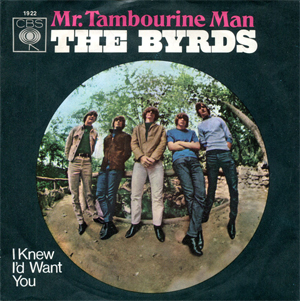
One way to measure a songwriter’s reach is not by how often their work is covered, but how widely. The playlist below spans decades, genres, and sensibilities—from Adele to The Dead Weather, from Johnny Cash to the Neville Brothers—and all roads lead back to Bob Dylan. This is not just a reflection of his prominence; it’s a testament to the adaptability of his writing. Dylan’s lyrics aren’t locked into one style or moment—they hold up when filtered through gospel, punk, glam, folk, or soul. His songs invite reimagining because they’re grounded in strong narrative bones and emotional honesty, not ornamental frills.

Consider the different shades of “All Along the Watchtower.” Dylan’s original version is stark and cryptic; Hendrix turned it into an electrified storm. Likewise, “I Shall Be Released,” rendered with hushed reverence by The Band, has the structure of a gospel hymn but the ambiguity of a fable. “Make You Feel My Love,” one of Dylan’s later compositions, found new life in Adele’s version—proof that his songwriting didn’t peak in the ’60s, but simply evolved. His voice as a writer has always been the constant: a blend of plainspoken wisdom, sly humor, and a deep sense of historical and emotional context.

It’s notable, too, how Dylan’s songs seem to absorb the character of the performer. When Elvis Presley sings “Tomorrow Is a Long Time,” it feels like a Southern ballad. When PJ Harvey takes on “Highway 61 Revisited,” it becomes something raw and jagged. Nina Simone’s version of “Just Like Tom Thumb’s Blues” brings out a haunted intensity not present in Dylan’s own delivery. That elasticity points to a rare kind of craftsmanship—songs written with enough specificity to be meaningful, but enough openness to be inhabited.

Even in unexpected settings, Dylan’s words linger. Tom Petty co-wrote the lyrics to “Jammin’ Me” with him, a pointed pop-rock critique of media saturation. Patti Smith’s “Changing of the Guards” channels the mystical imagery and layered storytelling that Dylan deployed throughout the ’70s. And when The Specials tear into “Maggie’s Farm,” it becomes a statement of punk-era defiance. These aren’t nostalgia pieces—they’re songs that meet each era on its own terms.

Dylan’s catalog isn’t just influential; it’s usable. His songs function as cultural currency, endlessly exchangeable yet retaining value. Whether you hear him through Joan Osborne’s gothic reading of “Man in the Long Black Coat” or the crystalline harmonies of Peter, Paul and Mary’s “Blowin’ in the Wind,” what’s most striking is not just who sings Dylan—but what his songs reveal when they do.

Follow Tunes Du Jour on Facebook

Follow me on Bluesky

Follow me on Instagram

Tunes Du Jour Presents Punk

Ask ten people to define punk rock, and you’re likely to get at least fifteen answers. That’s part of its charm—and its challenge. Punk has always been more than a style of music; it’s a way of questioning the status quo, pushing back against complacency, and refusing to color inside the lines. The 30 songs in this playlist represent the genre’s many branches: from the snarling minimalism of the Sex Pistols’ “God Save the Queen” to the tightly coiled fury of Black Flag’s “Rise Above,” from Patti Smith’s poetic incantations to the danceable paranoia of Talking Heads’ “Psycho Killer.”

The roots of punk go deep, even before the term existed. “I’m Waiting for the Man” by The Velvet Underground and “Kick Out the Jams” by MC5 helped pave the way with their raw sound and confrontational lyrics. By the mid-1970s, punk had taken recognizable form in both New York and London. The Ramones stripped rock to its bare essentials with “Sheena Is a Punk Rocker,” while The Clash’s London Calling album pointed to punk’s potential to absorb and reflect broader influences—including reggae, ska, and politics.

Acts like Gang of Four and Television took the energy of punk and redirected it into jagged rhythms and angular guitars. The B-52’s “Rock Lobster” and Talking Heads introduced eccentricity and art-school sensibilities, while the Dead Kennedys and Sham 69 channeled punk into direct political protest. Meanwhile, bands like The Jam and Buzzcocks added a melodic urgency, and Iggy Pop and the New York Dolls injected glam and danger into the proceedings.

In the decades that followed, punk fragmented and flourished. Rancid’s “Time Bomb” leaned into ska-punk; Blink-182’s “Dammit” helped define a generation’s version of pop-punk adolescence. Bikini Kill’s “Rebel Girl” roared from the riot grrrl movement with feminist fire, and Billy Bragg brought punk’s commitment to social critique to a solo singer-songwriter context. Even grunge touchstones like Mudhoney carried punk’s DNA—loud, unpolished, and emotionally direct.

This playlist doesn’t claim to be definitive—if anything, it’s a conversation starter. It suggests that punk isn’t a sound so much as a stance. Whether it’s The Replacements thumbing their nose at success in “Bastards of Young,” or Green Day channeling disillusionment into “American Idiot,” punk continues to reinvent itself. It may shift forms, but it never goes quietly.

Follow Tunes du Jour on Facebook

Follow me on Bluesky

Follow me on Instagram

Tunes Du Jour Presents 1960

The year 1960 often gets passed over in rock history—a transitional time between the first burst of rock and roll and the cultural and musical revolutions just a few years away. But to call it sleepy is to miss the point. In fact, many of the year’s hits still reverberate today, not just as nostalgic touchstones but as enduring standards. “The Twist” by Chubby Checker launched a dance phenomenon that would ripple through pop culture for years. And “Save the Last Dance for Me” by the Drifters remains a masterclass in balancing heartbreak and sweetness—still played at weddings and in soundtracks, still finding new generations of listeners.

Ballads carried a lot of weight in 1960, and few did it better than Elvis Presley’s aching “Are You Lonesome Tonight?” or Roy Orbison’s “Only the Lonely,” which showcased his operatic vulnerability. Country narratives crossed into the mainstream with Marty Robbins’ “El Paso,” a story song that unspooled like a Western in miniature. At the other end of the spectrum, Maurice Williams & the Zodiacs’ “Stay” packed teenage yearning into a lean, irresistible one minute thirty-five seconds. And “Wonderful World” by Sam Cooke, though modest in ambition compared to some of his later work, remains a model of warmth and accessibility—a song that’s managed to feel timeless for more than six decades.

The sense of genre boundaries being tested is another hallmark of the year. Ray Charles brought gospel, blues, and pop together on his definitive reading of “Georgia on My Mind,” while Barrett Strong’s “Money (That’s What I Want)” helped lay the foundation for Motown’s impending ascent. Fats Domino’s “Walking to New Orleans” fused New Orleans rhythm with a subtle orchestral flourish, and Bobby Darin’s “Beyond the Sea” added a cosmopolitan swagger to the charts. These weren’t experiments for their own sake—they were evolutions of form, often rooted in deep tradition.

Rock’s wilder edges were still alive, though not always in the spotlight. Ike and Tina Turner’s “A Fool in Love” marked Tina’s explosive debut on the national stage—raw, commanding, and impossible to ignore. Instrumentals also carved out real estate, from the cinematic calm of Percy Faith’s “Theme From ‘A Summer Place’” to the proto-surf energy of The Ventures’ “Walk Don’t Run.” And in the novelty corner, “Itsy Bitsy Teeny Weeny Yellow Polka Dot Bikini” and “Alley Oop” proved that humor and absurdity had a place in the pop ecosystem.

So while 1960 may not have produced a defining movement, it certainly produced defining songs. These weren’t just placeholders between rock and roll’s rise and the British Invasion—they were records that resonated, sometimes quietly at first, but with a staying power that’s hard to deny. Whether filtered through covers, samples, soundtracks, or simple endurance, many of these tracks are still with us. It wasn’t a year of reinvention—but it was a year of remarkable staying power.


Follow Tunes Du Jour on Facebook

Follow me on Bluesky

Follow me on Instagram
Tunes Du Jour Presents Adele

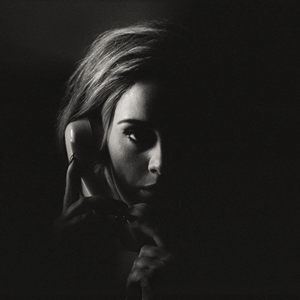
Few artists in the 21st century have managed to make vulnerability feel as commanding as Adele does. Emerging from North London with her debut album 19 in 2008, she quickly distinguished herself with a voice that carried both technical precision and emotional depth. The songs weren’t flashy or heavily produced; instead, they leaned on classic soul and singer-songwriter traditions, framing heartbreak in ways that felt both timeless and personal.

What’s notable about Adele’s rise is how she has consistently succeeded on her own terms. At a time when pop music was increasingly leaning into EDM and maximalist production, she held firm with piano ballads and slow-burning anthems. Her second album, 21, became a global phenomenon not because it chased trends, but because it tapped into something universal—loss, regret, and the ache of moving on. “Someone Like You” and “Rolling in the Deep” didn’t just climb charts; they lingered, prompting singalongs in arenas and solo tears in bedrooms alike.

Over the course of her career, Adele has kept a relatively low profile between releases, letting the music—not a nonstop media presence—do the heavy lifting. Each album (25, and more recently, 30) has arrived as a kind of chapter marker, reflecting not just shifts in her personal life but broader changes in how we listen and connect with music. Her songwriting has grown more introspective with time, more willing to sit with ambiguity rather than resolve it neatly.

Despite the accolades and massive sales, Adele has remained surprisingly unvarnished in public. There’s a candor to her interviews and a grounded quality to her stage presence that seem to resonate just as strongly as her lyrics. In an industry often defined by reinvention, Adele’s appeal may lie in her consistency—both in her sound and in her refusal to be anything but herself.

Follow Tunes Du Jour on Facebook

Follow me on Bluesky

Follow me on Instagram

Tunes Du Jour Presents 1962

The music of 1962 wasn’t so much at a crossroads as it was following several lively paths at once. What captivated the public ranged from soul ballads to novelty records to stirrings of folk activism. Instrumentals, dance crazes, and heartfelt pop all found room on the charts. It’s this eclecticism — rather than any one dominant trend — that best characterizes the year. Yet in small ways, a few songs hinted at larger shifts to come. For example, The Tornados’ “Telstar,” the first U.S. number one by a British group, captured a sense of futuristic possibility that would soon manifest more dramatically with the Beatles and the British Invasion.

Instrumentals found their way into the spotlight in very different forms. While “Telstar” beamed into space with its shimmering, otherworldly sound, Booker T. & the MG’s grounded listeners with the earthy groove of “Green Onions.” Meanwhile, Stan Getz and Charlie Byrd’s “Desafinado” introduced many American listeners to the smoother, jazz-inflected rhythms of bossa nova — a style that would quietly influence pop and jazz recordings throughout the decade. Taken together, these instrumentals showed how musical expression could take new forms without abandoning broad popular appeal, and how lyrics weren’t always necessary to convey strong emotion.

Soul music also solidified its foundation. Sam Cooke’s “Bring It on Home to Me” and Solomon Burke’s “Cry to Me” mixed gospel roots with secular longing in ways that would help define soul music itself. Girl groups and doo-wop continued to resonate, with The Crystals’ “He’s a Rebel” and The Shirelles’ “Soldier Boy” offering different takes on devotion and defiance. Dion’s “The Wanderer” carried forward some of doo-wop’s spirit, while Gene Chandler’s “Duke of Earl” stood proudly as a bridge from doo-wop’s earlier heyday into a new era of soul and R&B. Even novelty records had staying power — Bobby “Boris” Pickett’s “Monster Mash” reached number one and, thanks to perennial Hallowe’en airplay, remains a cultural touchstone.

Folk music, too, gained traction. Peter, Paul & Mary’s debut album, featuring “If I Had a Hammer,” became one of the year’s bestsellers, spending over a month at number one. Its clean harmonies and calls for justice would help set the stage for the socially conscious folk boom led by artists like Bob Dylan, whose own debut — mostly overlooked in 1962 — was just the beginning of a rapid ascent. Meanwhile, outside the U.S., Françoise Hardy’s “Tous Les Garçons Et Les Filles” offered a moody, introspective style that would come to influence the understated emotionality of later French pop and, indirectly, certain strands of indie pop decades later.

Some of 1962’s biggest hits have proven remarkably enduring. Elvis Presley’s “Can’t Help Falling in Love,” originally from the Blue Hawaii soundtrack, has since become one of his most covered and beloved songs. The Contours’ raucous “Do You Love Me” found new life decades later with Dirty Dancing, while Carole King, years before Tapestry, scored her first chart hit as a performer with “It Might as Well Rain Until September” — even as she continued to dominate as a songwriter, co-writing Little Eva’s infectious “The Loco-Motion.” These songs from 1962 don’t just capture a moment in time; they reveal a popular music scene that was broadening and diversifying while quietly laying the groundwork for upcoming revolutions, capturing both the fleeting spirit of its moment and the lasting power of pop at its best in a year where no single trend reigned supreme.

Follow Tunes Du Jour on Facebook

Follow me on Bluesky

Follow me on Instagram

Tunes Du Jour Presents 1961

The year 1961 didn’t roar in with a musical revolution—but in hindsight, that’s part of its charm. Instead, it offered a series of small but significant steps toward what would become a much louder, wilder, and more politically charged musical landscape. If the ’50s laid the foundation for rock and R&B, then ’61 felt like a transitional hallway: not quite out of the doo-wop era, but inching toward soul, girl groups, and the unmistakable rise of youth-driven pop. Listen closely, and you can hear a generation beginning to test its voice.

The playlist for this year paints a picture of variety and crossover. Ben E. King’s “Stand by Me” combines gospel roots with a pop sensibility, creating a timeless anthem of emotional resilience. Meanwhile, The Marcels inject a doo-wop jolt into “Blue Moon,” turning a Rodgers and Hart chestnut into something utterly of the moment. And “Shop Around” by The Miracles helps define the early Motown sound—polished, melodic, and unmistakably urban—hinting at the empire Berry Gordy was quietly building in Detroit.

Pop and R&B weren’t the only sounds of 1961. The jazz world was still vibrant, and John Coltrane’s take on “My Favorite Things” stretched the familiar into something exploratory and modal, giving the Broadway tune a hypnotic new dimension. Similarly, Art Blakey’s “A Night in Tunisia” offered a fiery reminder that hard bop was far from finished. This year wasn’t just about three-minute singles on AM radio; it also made room for longer-form musical statements that spoke to listeners seeking complexity.

And then there were the voices—so many distinct, unforgettable voices. Roy Orbison’s near-operatic Crying and Patsy Cline’s aching “Crazy” each showed that vulnerability could be commercially viable. The same went for Etta James, whose rendition of “At Last” remains one of the most iconic vocal performances ever recorded. Elsewhere, the lighter side of pop was thriving with Neil Sedaka’s “Calendar Girl” and Bobby Vee’s “Take Good Care of My Baby,” songs built for teenagers who were beginning to see themselves as a cultural force.

Taken together, the music of 1961 reflects a moment in flux: the last glimmers of the 1950s still lingered, but the seeds of what would define the 1960s were clearly being planted. Whether it was Ray Charles fusing gospel and R&B on “Hit the Road Jack,” or the early stirrings of girl-group grandeur from The Marvelettes and The Shirelles, this was a year where nothing yet dominated—but everything seemed possible.

Follow Tunes Du Jour on Facebook

Follow me on Bluesky

Follow me on Instagram

Tunes Du Jour Presents 1988

In 1988, hip-hop didn’t just make noise; it made history. Rob Base & DJ E-Z Rock’s “It Takes Two” lit up clubs and car stereos alike, while Eric B. & Rakim’s “Paid in Full (Seven Minutes of Madness)” remix turned the genre into a playground for sonic experimentation. Public Enemy’s “Bring the Noise” brought urgent political commentary to the mix, and LL Cool J’s “Going Back to Cali” offered a sleek, stylized West Coast daydream. Among them, Salt-N-Pepa’s “Push It” stood as a genuine milestone—a breakthrough for women in rap and, at the time, the biggest-selling hip-hop single to date. Though not on the playlist due to its hit version being unavailable on Spotify, its absence in no way reflects its cultural weight.

Elsewhere, 1988 was rich in songs that combined sincerity with staying power. Tracy Chapman’s “Fast Car” offered social commentary through intimate storytelling, and Michael Jackson’s “Man in the Mirror” turned self-reflection into an anthem. “Wishing Well,” performed by the artist then known as Terence Trent D’Arby, brought soul swagger to the top of the charts, while Prince’s “Alphabet St.” reminded listeners he was still capable of keeping them on their toes. Songs like Kylie Minogue’s “I Should Be So Lucky” and Rick Astley’s “Never Gonna Give You Up,” both produced by the UK’s Stock Aitken Waterman, were pure pop that have endured far beyond their original chart runs, largely due to their catchiness and an occasional boost from internet-era rediscovery.

Dance floors were equally alive with invention. M/A/R/R/S’s “Pump Up the Volume” and S’Express’s “Theme from S’Express,” the latter missing from the playlist due to its unavailability on Spotify, helped define a new frontier of UK club music that was steeped in sampling and shaped by emerging house and techno scenes.

INXS’s “Need You Tonight” merged rock and funk with a modern sheen, while The Cure’s “Just Like Heaven” and Morrissey’s “Everyday Is Like Sunday” balanced emotion with pop craftsmanship. The Pixies’ “Where Is My Mind?” and Dinosaur Jr.’s “Freak Scene” would prove even more influential in hindsight, while Mudhoney’s “Touch Me I’m Sick” gave an early signal of what would soon be called grunge.

Both the UK and Australia contributed standout tracks that reflected their national scenes’ strength. From the UK, Depeche Mode’s “Never Let Me Down Again” and Erasure’s “Chains of Love” explored emotional depth through electronic textures, while Pet Shop Boys teamed with Dusty Springfield on “What Have I Done to Deserve This?” to bridge classic and contemporary pop. Australia’s Midnight Oil brought urgency and political purpose with “Beds Are Burning,” The Church crafted dreamlike melancholy in “Under the Milky Way,” and Nick Cave & The Bad Seeds delivered stark intensity with “The Mercy Seat.” All three pointed to a vibrant and diverse Australian presence in global music that year.

The year also held room for collaboration, reinvention, and the unexpected. Traveling Wilburys’ “Handle With Care” saw rock legends joining forces without sounding self-indulgent. my bloody valentine’s “You Made Me Realise” hinted at the hazy swirl of shoegaze to come. The Bangles’ cover of “Hazy Shade of Winter” showed that ‘60s source material could thrive in a late-’80s rock context, and Anita Baker’s “Giving You the Best That I Got” offered polished, grown-up soul amid the noisier trends. Nineteen wighty-eight wasn’t about any one genre dominating the conversation; it was about cross-pollination, with club tracks rubbing shoulders with indie rock, hip-hop expanding its reach, and pop songs finding new ways to stick.

Follow Tunes Du Jour on Facebook

Follow me on Bluesky

Follow me on Instagram

Tunes Du Jour Celebrates International Be Kind To Lawyers Day

It started, as these things often do, with a law.

Or more accurately, with three: “Law of the Land” (Temptations), “The Laws Have Changed” (New Pornographers), and “You Can’t Rule Me” (Lucinda Williams). A trifecta of declarations, all suggesting that whether you’re enforcing the law or dodging it, someone’s about to get into trouble.

This playlist is my musical tribute to International Be Kind To Lawyers Day — a real holiday, celebrated annually on the second Tuesday in April, for reasons that are presumably legal. It’s not just about lawyers, though. This 30-track journey follows the trajectory of a full-blown legal drama: rules are established, rules are broken, crimes are committed, time is served, lawyers are called, and justice is… complicated.

We meet a few Fun Lovin’ Criminals, some Smooth Criminals, and even those who insist they’re just Criminal Minded. The lawbreakers get caught — there’s fighting, testifying, jail time, and at least one unfortunate visit to the Court of the Crimson King (which, I suspect, is not a traffic violation court).

And let’s not forget the lawyers themselves. They’re gun-toting in one song, love-struck in another, and altogether overburdened. But in honor of their service — and in defense of their billable hours — we end on a note of redemption: “Return to Innocence” by Enigma. Because if music has taught us anything, it’s that legal complications can always be resolved in just over four minutes.

So, whether you’re in the mood to break the law, beat the rap, or rap to the beat of the Fat Boys (or Snoop, Freddie Gibbs, Boogie Down Productions…), press play and pass the gavel. And if you happen to know a lawyer, consider saying something nice. After all, they know where all the paperwork is buried.

Follow Tunes du Jour on Facebook

Follow me on Bluesky

Follow me on Instagram

Tunes Du Jour Presents 1976

By 1976, disco had moved from underground clubs to the top of the charts, and rock music found itself facing challenges from multiple fronts. Donna Summer’s “Love to Love You Baby” and Diana Ross’ “Love Hangover” showcased the genre’s hypnotic groove and sensuality, while Wild Cherry’s “Play That Funky Music” blurred the lines between rock and funk, proving that even guitar-driven bands weren’t immune to disco’s influence. Hits like Andrea True Connection’s “More, More, More” and Candi Staton’s “Young Hearts Run Free” reinforced that this was no passing trend—it was a movement reshaping popular music.

Mainstream rock, meanwhile, leaned into grandeur and melody. Queen’s “Bohemian Rhapsody” became a landmark in songcraft, a multi-part epic that defied conventional structure and solidified the band’s place in rock history. Boston’s “More Than a Feeling” offered a soaring, polished take on arena rock, while Blue Öyster Cult’s “(Don’t Fear) The Reaper” balanced an ethereal mood with a sinister undercurrent. Even David Bowie, ever the shape-shifter, leaned into a sleeker sound with “Golden Years.”

Yet, outside of the glossy productions and layered harmonies, a different kind of energy was brewing. The Sex Pistols’ “Anarchy in the U.K.” was a shot across the bow, rejecting the excesses of rock in favor of raw urgency. While not a punk act, Thin Lizzy’s “The Boys Are Back in Town” carried a swagger and directness that resonated with rock fans who would soon embrace punk’s stripped-down ethos. Punk’s full-blown arrival was just around the corner, but 1976 gave the first clear signs that the dominant sounds of the decade were about to face a reckoning.

Beyond disco and rock, R&B and soul continued to thrive, offering both lush ballads and infectious grooves. The Manhattans’ “Kiss and Say Goodbye” and Lou Rawls’ “You’ll Never Find Another Love Like Mine” showcased rich, emotive vocal performances, while Spinners’ “The Rubberband Man” and Boz Scaggs’ “Lowdown” leaned into rhythmic sophistication. Daryl Hall & John Oates’ “She’s Gone” marked a breakthrough for the duo, setting the stage for their string of hits in the late 1970s and early 1980s, where they refined their blend of blue-eyed soul and pop.

In a year that saw both nostalgia and forward momentum, songs like the Four Seasons’ “December, 1963 (Oh, What a Night)” and Gordon Lightfoot’s “The Wreck of the Edmund Fitzgerald” reminded listeners of storytelling’s power in song. Meanwhile, ABBA’s “Mamma Mia” and Elton John and Kiki Dee’s “Don’t Go Breaking My Heart” offered sheer pop exuberance. The music of 1976 reflected an industry in transition—disco was ascendant, rock was splintering, and a new wave of rebellion was beginning to make itself heard.

Follow Tunes Du Jour on Facebook

Follow me on Bluesky

Follow me on Instagram