Tunes Du Jour Presents 2016

If you want to understand what 2016 felt like, you could do worse than just sitting down and listening to its music. It was a year when several of the biggest artists in the world released some of their most ambitious work, while a second tier of artists was quietly making records that would age just as well. The result is a body of music that holds up not because it captured a singular mood, but because it didn’t — it scattered in a dozen different directions at once, and that tension is exactly what makes it interesting to revisit.

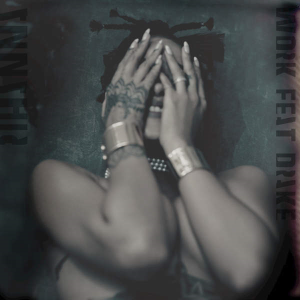
The blockbusters were genuinely good. Beyoncé’s Lemonade arrived as a cultural event, and “Formation” was its defiant opening statement — grounded in Black Southern identity, uninterested in making anyone comfortable. Rihanna and Drake’s “Work” was inescapable in the best way, a dancehall-inflected earworm that somehow felt both effortless and precise. Drake also appeared on “One Dance,” a song that helped bring Afrobeats to mainstream Western audiences in a real way, with Wizkid and Kyla doing a lot of the heavy lifting that often went uncredited. Kanye West’s “Ultralight Beam” opened The Life of Pablo with a gospel choir and a Chance the Rapper verse that became one of the most talked-about moments in rap that year. These were pop and rap operating at a high level, and they knew it.

But some of the year’s most lasting music came from artists working in a quieter register. Solange’s “Cranes in the Sky” approached anxiety and avoidance with a kind of elegant restraint that her sister’s more maximalist work doesn’t always make room for. Frank Ocean finally released Blonde after years of anticipation, and “Nights” — with its midpoint beat switch — felt like the whole album in miniature. Mitski’s “Your Best American Girl” packed more emotional complexity into three and a half minutes than most artists manage in an entire record, and Angel Olsen’s “Shut Up Kiss Me” was a shot of pure guitar-rock energy from an artist who could do pretty much anything she turned her hand to. These songs didn’t dominate the charts, but they dominated year-end lists for good reason.

2016 was also a year when the world outside the speakers kept bleeding in. A Tribe Called Quest came out of a long hiatus to release We Got It from Here, and “We The People….” was an explicit, unambiguous political statement made by veterans who had earned the right to make it. YG and Nipsey Hussle’s “FDT” was rawer and angrier, a West Coast rap track that said plainly what a lot of people were thinking during a particularly ugly election season. ANOHNI’s “Drone Bomb Me,” from her album Hopelessness, took a different approach entirely — a beautiful, devastating song sung from the perspective of a bombing victim, using the form of a love song to make its critique land harder. And then there was Leonard Cohen’s “You Want It Darker,” released just weeks before his death, which felt less like a goodbye than a reckoning. David Bowie’s “Lazarus,” similarly, arrived as part of Blackstar and took on a different weight entirely after he died in January. Not every year loses two artists of that stature within months of each other.

What ties all of this together isn’t a single sound or theme, but a kind of seriousness of purpose — even in the party songs, even in the straightforwardly fun ones. Justin Timberlake’s “CAN’T STOP THE FEELING!” was designed to be a piece of pure joy, and it succeeded. “Broccoli” by D.R.A.M. featuring Lil Yachty was loose and goofy and charming in a way that didn’t need to be anything else. Car Seat Headrest’s “Drunk Drivers/Killer Whales” captured a specific kind of young-adult exhaustion with more precision than most rock music manages. Radiohead’s “Burn the Witch” was tightly wound and anxious. The xx’s “On Hold” was cool and minimal and aching. These songs don’t belong to the same world, and yet they all came from the same twelve months. That’s not a contradiction — that’s just what a genuinely good year in music looks like.

Follow Tunes Du Jour on Facebook

Follow me on Bluesky

Follow me on Instagram

Tunes Du Jour Presents 1959

If you want to understand what American popular music sounded like at the end of the 1950s, you could do a lot worse than sitting with this playlist for an afternoon. What you’d find isn’t a single sound but something more like a conversation between styles — rock and roll, R&B, doo-wop, jazz, and pop all rubbing up against each other, sometimes within the same radio hour. Bobby Darin opened the year with “Mack the Knife,” a song adapted from a 1928 Bertolt Brecht musical that somehow became a massive pop hit, delivered with such easy confidence that nobody seemed to think it was strange. Across town, figuratively speaking, Ray Charles was recording “What’d I Say” — a raw, call-and-response number that drew on gospel and blues in a way that made some radio stations nervous enough to ban it. That both songs belonged to the same year tells you something important about how wide the tent had gotten.

Doo-wop was arguably at its commercial and artistic peak in 1959, and the playlist reflects that richly. The Flamingos’ “I Only Have Eyes for You” remains one of the most otherworldly recordings of the era — that cascading, echo-drenched arrangement makes the song feel like it’s arriving from somewhere slightly outside of time. The Drifters were charting new territory with “There Goes My Baby,” which introduced string arrangements to R&B in a way that would reshape the sound of the next decade. Meanwhile, groups like The Crests, The Skyliners, and Dion & The Belmonts were making teenage heartache sound genuinely beautiful — polished harmonies over simple, sturdy chord progressions that didn’t need much else.

The year also carried some real weight in grief. Buddy Holly, Ritchie Valens, and The Big Bopper had died in a plane crash in February, and both “It Doesn’t Matter Anymore” and “La Bamba” were essentially posthumous hits, charting after their performers were already gone. Listening to them now, knowing that, adds a layer that wasn’t entirely there before. Holly’s song, produced by Dick Jacobs with a pizzicato string arrangement, was unusually polished for rock and roll at the time — it pointed toward a sophistication that Holly never got the chance to fully explore. Valens, just seventeen when he died, had already recorded a Spanish-language folk song and turned it into something that crossed genre lines before anyone had a clean vocabulary for doing that.

Rock and roll in its more straightforward, energetic form was still very much alive. Eddie Cochran’s “C’mon Everybody” is as good a distillation of early rock enthusiasm as you’ll find — loud, fast, a little reckless, built for a generation that wanted music that belonged specifically to them. Chuck Berry’s “Memphis” showed he hadn’t lost his gift for narrative economy; the twist at the end of that song is genuinely elegant storytelling. And the Isley Brothers’ “Shout” was the kind of performance that didn’t ask for your attention politely — it just took it. These weren’t songs that required interpretation or context. They worked immediately, physically, which was more or less the point.

What makes 1959 interesting in retrospect is how much was happening simultaneously without any of it feeling like it had arrived at a conclusion. Miles Davis released Kind of Blue that year — represented here by “So What” — an album that redefined what jazz could do harmonically, and it coexisted on the charts and in the culture alongside teen pop, gospel-inflected R&B, and rockabilly without any obvious contradiction. Dinah Washington was recording “What a Diff’rence a Day Made” with full orchestration; James Brown was recording “Try Me” with raw urgency. Neither was wrong. The music of 1959 wasn’t heading toward one thing — it was several things at once, most of them worth paying attention to.

Follow Tunes Du Jour on Facebook

Follow me on Bluesky

Follow me on Instagram

Tunes Du Jour Presents 1973

If you were flipping through radio stations in 1973, you might have been forgiven for wondering whether you’d accidentally landed on multiple stations at once. In a single week, you could hear Stevie Wonder’s “Superstition” — all nervous funk and clavinet — followed immediately by Tony Orlando & Dawn tying a yellow ribbon around an oak tree. That wasn’t a coincidence or a quirk of programming. It was just what 1973 sounded like: a year when pop music was genuinely pulling in several directions at the same time, and somehow holding together anyway.

Soul and R&B were operating at an extraordinary level. Marvin Gaye’s “Let’s Get It On,” Gladys Knight’s “Midnight Train to Georgia,” the O’Jays’ “Love Train,” and the Spinners’ “Could It Be I’m Falling In Love” all landed that year, each with its own emotional weight and personality. Curtis Mayfield’s “Superfly” brought something sharper and more cinematic to the mix, while Ann Peebles’ “I Can’t Stand the Rain” — still somewhat underappreciated in the wider cultural memory — was as raw and soulful as anything released that decade. Eddie Kendricks, fresh off his Temptations run, went solo with “Keep On Truckin’,” and it clicked immediately. The breadth of what Black artists were producing in this single calendar year is genuinely remarkable.

Rock was doing its own sprawling thing. The Rolling Stones released “Angie,” one of their more restrained and melancholy singles. Elton John’s “Goodbye Yellow Brick Road” was the title track of a double album that showed he could sustain a full artistic statement across four sides of vinyl, not just deliver three minutes at a time. Pink Floyd’s “Money” brought an odd-time signature to FM radio in a way that probably shouldn’t have worked as well as it did. And then there were the louder contingents: Deep Purple’s “Smoke on the Water” became one of the most-played riffs in guitar shop history, Grand Funk Railroad declared themselves an American band, and Slade and Sweet were doing glam rock with considerably more volume than glamour. Meanwhile, Iggy & the Stooges released “Search and Destroy” — which most of 1973’s radio audience largely ignored, though history would eventually course-correct on that.

The year also captured several artists at particularly interesting transitional moments. David Bowie’s “Space Oddity,” originally released in 1969, finally broke through in the US in 1973, reaching American audiences who were now ready for its strange, detached storytelling. Lou Reed’s “Walk on the Wild Side” had no business being as widely played as it was, given its subject matter, but here we are. Bob Dylan contributed “Knockin’ on Heaven’s Door” via his Pat Garrett & Billy The Kid soundtrack — unassuming and brief, but immediately recognizable as something that would last. T. Rex’s “20th Century Boy” and George Harrison’s “Give Me Love (Give Me Peace On Earth)” filled out a year that seemed to have room for almost anything, provided it had a decent hook.

What holds up most clearly, looking back at 1973’s output, is that the music wasn’t being made according to any unified cultural script. Some of it was deliberately commercial; some of it was confrontational; some of it was deeply personal. Carly Simon’s “You’re So Vain,” Roberta Flack’s “Killing Me Softly With His Song,” and Paul Simon’s “Loves Me Like a Rock” feel like they come from entirely different worlds, yet they all landed in the same twelve-month window. Ringo Starr had a hit with “Photograph.” The Allman Brothers were rambling. Cher was charting with “Half-Breed.” By any measure, 1973 was a disorganized, contradictory, frequently excellent year for popular music — and that’s precisely what makes it worth revisiting.

Follow Tunes Du Jour on Facebook

Follow me on Bluesky

Follow me on Instagram
Tunes Du Jour Presents The Who

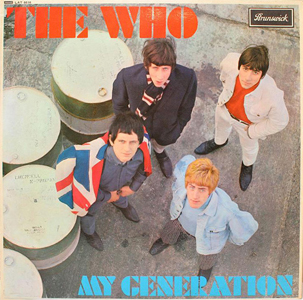
Listening to The Who is an active experience. You don’t just put their music on in the background; you feel it in your chest. A glance at a career-spanning playlist reveals a band that was never content to stand still. It all starts with that jangling, nervous energy of early tracks like “I Can’t Explain” and “Anyway, Anyhow, Anywhere.” These songs are short, sharp declarations of youthful confusion and defiance, built on raw guitar chords and a rhythm section that sounds less like it’s keeping time and more like it’s trying to knock down a wall. With “My Generation,” that feeling was codified into a stuttering, aggressive anthem that perfectly captured the frustration of not being heard. This was the band’s foundation: purposeful noise and a palpable sense of urgency.

But that initial burst of energy quickly gave way to something more complex and narrative-driven. Pete Townshend’s songwriting began to explore characters and unusual situations. Songs like “Pictures Of Lily” and “I’m A Boy” moved beyond simple angst to tell detailed, slightly strange stories about identity and longing. This interest in character-building was a clear precursor to the band’s larger conceptual works. You can hear the DNA of their famous rock operas in the storytelling of a standalone track like “Happy Jack,” and by the time you arrive at pieces like “Pinball Wizard” or the climactic “See Me, Feel Me,” it’s clear this was a group with ambitions far beyond the three-minute pop single.

Of course, no discussion of The Who is complete without acknowledging their unparalleled command of stadium-sized rock. The period that produced “Baba O’Riley,” “Won’t Get Fooled Again,” and “Bargain” found them at the height of their powers, famously integrating synthesizers not as a gimmick, but as a core component of their monumental sound. This is where the four distinct personalities of the band converged perfectly. You had Townshend’s visionary songwriting, Roger Daltrey’s commanding vocal presence, John Entwistle’s incredibly nimble and melodic bass lines (just listen to “The Real Me” or his delightfully dark “Boris the Spider”), and Keith Moon’s explosive, unconventional drumming that gave the band its chaotic heart.

Running through all these different eras is a powerful current of searching and self-examination. From the directness of “The Seeker” to the introspective melancholy of “Behind Blue Eyes,” their music often grapples with the difficulty of figuring out who you are and where you fit in. This theme matures with the band. The youthful frustration of “The Kids Are All Right” evolves into the world-weary questioning of “Who Are You” and the profound desperation for connection in “Love, Reign O’er Me.” It’s a recurring conversation about identity that gives their extensive catalog a remarkable depth and human quality.

Ultimately, a playlist like this demonstrates a journey of constant musical development. The band that covered “Summertime Blues” with raw R&B power is the same band that created the sleek, cynical groove of “Eminence Front” and the charming pop of “You Better You Bet” more than a decade later. They were a band of contradictions—loud yet introspective, chaotic yet meticulously constructed, aggressive yet deeply vulnerable. More than just a collection of hits, their body of work serves as a timeline of a band that never stopped pushing the boundaries of what a rock song could say and do.

Follow Tunes Du Jour on Facebook

Follow me on Bluesky

Follow me on Instagram