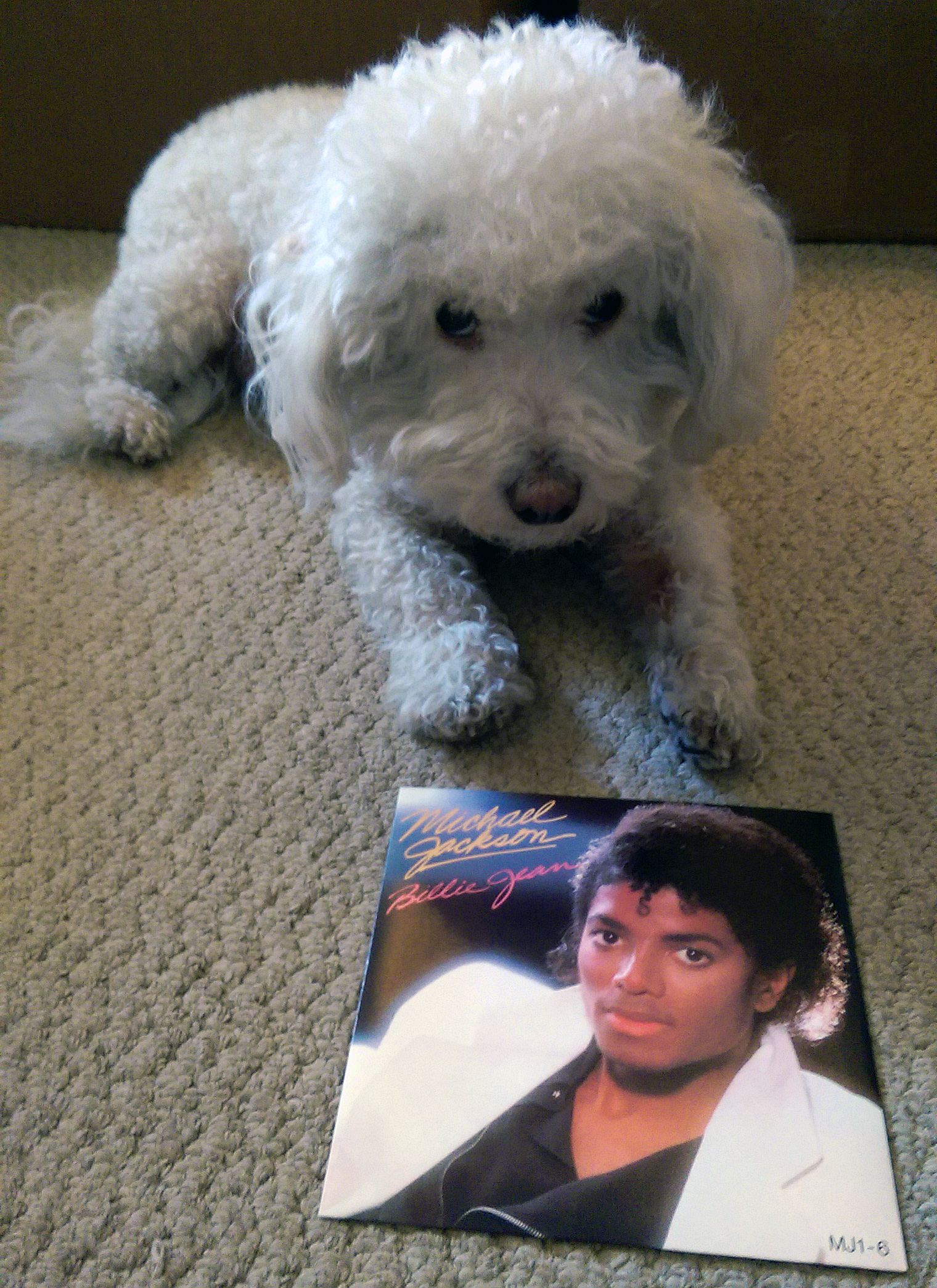
Winston + MJ

Throwback Thursday – 1983

Winston + MJ
MTV debuted on August 1, 1981. Back then it was a music video network. It positioned itself as a rock station. Most of the videos shown were of songs made by Caucasian performers, though rock-leaning black acts such as Joan Armatrading and the Bus Boys got some play.

Then came “Billie Jean.” The second single from Michael Jackson’s Thriller, “Billie Jean” was accompanied by a stylish video featuring a mesmerizing performance from Jackson. However, it wasn’t a rock song. It didn’t fit the format of rock radio stations, and it didn’t fit the format of MTV either.

But there is a big difference between radio and music television. There were plenty of radio stations and many different formats. You may not hear “Billie Jean” on the rock stations, but you could hear it on r&b stations and pop stations and dance-leaning stations. However, there was only one music television – MTV.

In his autobiography, Howling at the Moon, Walter Yetnikoff, head of CBS Records, for whom Jackson recorded (and where I worked in my first music business job), wrote “I screamed bloody murder when MTV refused to air [Jackson’s] videos. They argued that their format, white rock, excluded Michael’s music. I argued they were racist assholes – and I’d trumpet it to the world if they didn’t relent. I’ve never been more forceful or obnoxious. I’ve also never been as effective, threatening to pull all our videos. With added pressure from [Thriller producer] Quincy Jones, they caved in, and in doing so the MTV color line came crashing down.”

Jackson’s video for “Billie Jean” aired on MTV, followed just weeks later by his video for “Beat It,” a song whose guitar solo from Eddie Van Halen helped make it a hit on rock radio. These two videos made Jackson, already a superstar, a worldwide phenomenon with a humongous fan base that transcended race, age and location in a way never seen before. These two videos made MTV, a year and a half old and fairly popular in white suburban areas, a cultural institution. These two videos made the music video, then not something done for many singles, particularly those performed by artists of color, an art form and a necessary marketing tool.

Some people tuned in to MTV to see the Michael Jackson videos, and while watching the channel, discovered other acts. Some people tuned in to MTV to watch “white rock” videos, and while watching the channel, discovered Michael Jackson.

MTV went to showcase more “non-rock” videos. In 1988, they launched their hugely popular program Yo! MTV Raps, something that would have been completely unexpected just five years earlier, pre-“Billie Jean.”

While MTV deserves credit for making “Billie Jean” and Thriller successful, the person most responsible is Jackson himself. He wrote the song. He sang the song. He danced the song. Quincy Jones did not want “Billie Jean” to appear on Thriller. He didn’t like the title. He didn’t like the bassline. He felt the song’s introduction was too long. Jackson argued “But that’s the jelly!…That’s what makes me want to dance.” Jones wasn’t ready for this jelly, but Jackson stood his ground.

In May of 1983, NBC aired a tribute to Motown Records. Motown: Yesterday, Today, Forever featuring many legends who recorded for the storied label performing their classics. We saw Diana Ross, the Temptations, Marvin Gaye, Smokey Robinson and the Miracles, Stevie Wonder, the Four Tops, Martha Reeves, Lionel Richie and the Commodores, Mary Wells, Junior Walker and then some. It was a terrific show, but the talk of the town following its airing was the performance of a song not from the Motown catalogue – Michael Jackson’s “Billie Jean.” The iconic performance, during which Jackson brought the famous moonwalk to the world at large, pushed him that much more ahead of any other performer working in music back then.

Following “Beat It,” CBS Records released four more singles from Thriller. All seven of the singles released (the album had only nine songs!) went top ten, breaking the record of most top ten hits from a single-artist album that was set a few years earlier by…Michael Jackson, whose Off the Wall gave us four. Before Thriller, four singles for one album was considered a lot. Thriller raised the bar for blockbuster albums, and subsequent releases such as Bruce Springsteen’s Born in the U.S.A., Prince’s Purple Rain, Def Leppard’s Hysteria and Janet Jackson’s Control each produced more than four hits.

“Billie Jean” changed everything.

On this week’s Throwback Thursday playlist, Tunes du Jour spotlights 1983, kicking off with Michael Jackson’s classic “Billie Jean.”


Click here to like Tunes du Jour on Facebook!
Follow me on Twitter: @TunesDuJour
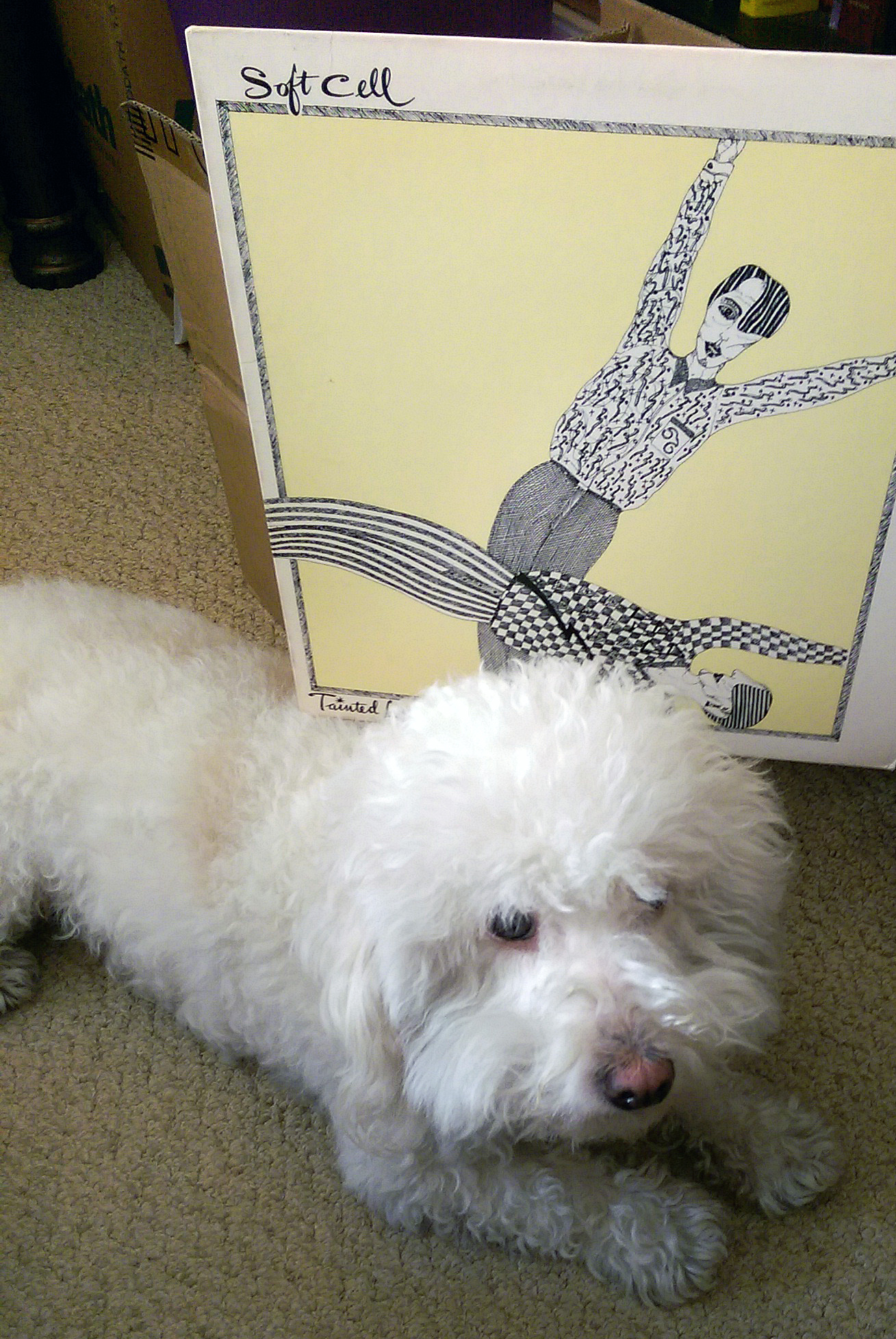
Winston + Soft Cell

Throwback Thursday – 1982

As a songwriter, Gloria Jones charted with Gladys Knight & the Pips’ “If I Were Your Woman,” the Four Tops’ “Just Seven Numbers (Can Straighten Out My Life),” and Marvin Gaye and Diana Ross’ “My Mistake (Was to Love You).” As a producer, Gloria Jones hit the top ten on the disco chart with Gonzalez’s “Haven’t Stopped Dancing Yet.” But as a lead singer, Jones failed to make the pop, r&b or dance charts.

In 1973, while on a trip to the United States, British DJ Richard Searling purchased a copy of a Gloria Jones single from 1965. The A-side was a song called “My Bad Boy’s Comin’ Home,” but it was the B-side that really got Searling’s attention.

Northern soul music (uptempo American soul music in a sixties Motown vein yet without commercial success) had a large cult following in the northern England at that time, and Searling played the Gloria Jones b-side during his sets.

Northern soul fan David Ball loved the song. When he and his musical partner, Mark Almond, who together comprised the duo Soft Cell, were looking for a song to cover, they went with the Jones song, thinking it would be interesting for a synth band to cover a soul tune. Their record label asked them to add guitar, bass and drums to the track, but the duo refused. Despite this, the label put out the singer. Almond told Rolling Stone magazine “We thought if we were really lucky, we’d scrape into the top 75 in Britain. We didn’t think anything would happen over here [in the US].”

Soft Cell’s recording of “Tainted Love” became a smash worldwide. In the US, it spent 43 weeks on Billboard’s Hot 100, a record at that time. Said Gloria Jones of the Soft Cell recording “Their version was far better than mine.”

Winston + Soft Cell
This week, Tunes du Jour celebrates Throwback Thursday with twenty great tunes from 1982, kicking off with Soft Cell’s version of “Tainted Love,” but first, check out Gloria Jones’ original:


Click here to like Tunes du Jour on Facebook!
Follow me on Twitter: @TunesDuJour
Throwback Thursday – 1971

At the end of the 1960s, Marvin Gaye was a huge star, having had more than two dozen top 40 hits before 1970. However, the singer was having a crisis of conscience, wanting to sing about the ills of the world he saw around him as opposed to perform nothing but love songs.

Inspired by the horrific stories told to him by his brother of what he witnessed serving three years in Viet Nam, Gaye, who hadn’t a hand in writing most of his hits up to this point, added lyrics to an unreleased song written by Obie Benson of the Four Tops and Al Cleveland.

He presented the song to Motown head Berry Gordy, who supposedly called it “the worst thing I ever heard in my life.” Gaye’s response? “Basically, I said ‘Put it out or I’ll never record for you again.’ That was my ace in the hole, and I had to play it.”

“What’s Going On” became the fastest-selling single in the history of Motown Records. Rolling Stone magazine has since placed it at #4 on their ranking of the greatest songs of all-time.

This week’s Throwback Thursday playlist consists of twenty hits from 1971, kicking off with Marvin Gaye’s “What’s Going On.”


Click here to like Tunes du Jour on Facebook!
Follow me on Twitter: @TunesDuJour
Throwback Thursday – 1967

I heard the news today. Oh boy! The Beatles’ recordings are now available on streaming platforms, including Spotify.

To celebrate, Tunes du Jour kicks off its 1967 playlist this Throwback Thursday with The Beatles’ “A Day in the Life,” a song that combines an unfinished song from John Lennon, inspired by newspaper articles, with one from Paul McCartney, a reflection of his school days.

Here are twenty of 1967’s finest musical moments.


Click here to like Tunes du Jour on Facebook!
Follow me on Twitter: @TunesDuJour

Throwback Thursday – The Hits Of 1977

An instrumental performed by then new Eagles member Don Felder was submitted to his bandmates Glenn Frey and Don Henley to add lyrics. The first working title the guys gave the song was “Mexican Reggae.”

Henley was determined to create the perfect song, spending eight months in the studio working on “Mexican Reggae,” which came to be called “Hotel California.” A lyric referring to the band Steely Dan was added (“They stab it with their steely knives but they just can’t kill the beast”) after Steely Dan included the lyric “Turn up the Eagles, the neighbors are listening” on their song “Everything You Did.”

In 2009, music critic John Soeder asked Don Henley about the lyric “So I called up the Captain / ‘Please bring me my wine’ / He said, ‘We haven’t had that spirit here since 1969’,” pointing out that wine isn’t a spirit, as wine is fermented whereas spirits are distilled. Soeder asked the singer/composer “Do you regret that lyric?” Henley replied “Believe me, I’ve consumed enough alcoholic beverages in my time to know how they are made and what the proper nomenclature is….My only regret would be having to explain it in detail to you, which would defeat the purpose of using literary devices in songwriting and lower the discussion to some silly and irrelevant argument about chemical processes.” Insert steely knife here!

This week for Throwback Thursday, Tunes du Jour listens to the hits of 1977, kicking off with Eagles’ “Hotel California.”


Click here to like Tunes du Jour on Facebook!
Follow me on Twitter: @TunesDuJour
Throwback Thursday – The Hits Of 1973

Singer/Songwriter/Record producer Ed Townsend had, in his own words, “a monstrous addiction to alcohol.” While in rehab he wrote a song which he described as a message to himself “about the business of getting on with life.”

On March 13, 1973, Townsend recorded a demo of Marvin Gaye singing this composition.

Nine days later, the men were again in the studio. Visiting the two men there was Barbara Hunter, a friend of Townsend. She came with her 16-year-old daughter, Janis.

Gaye was immediately smitten with Janis. As he often did, Gaye made up new lyrics in the studio. Inspired by the presence of this beautiful teenage girl, Townsend’s song about understanding and brotherhood became a paean to enjoying sex for its own sake, particularly when it is with someone you love.

Marvin and Janis got married in 1977, four years after the song Gaye recorded the day they met, “Let’s Get It On,” hit #1.

This week’s Throwback Thursday playlist consists of twenty big hits from 1973, kicking off with the classic “Let’s Get It On.”


Click here to like Tunes du Jour on Facebook!
Follow me on Twitter: @TunesDuJour
Try A Little Kindness: The Ashford & Simpson Songbook

Try a little kindness and you’ll see it’s something that comes very naturally

I have a neighbor down the hall who has never said hello to me. He has never acknowledged my existence. We’ve been neighbors for twelve years. Until recently, that rankled me. Is it so difficult to say hello? To smile? To half-smile?

There is a couple who live on the floor beneath mine. A couple of years ago, after our morning walk, I got on the elevator with my dogs. One of the guys got on as well and said, unsolicited, “I hate your dogs.” That’s a terrible thing to say under any circumstances, but you should know, my dogs don’t bark. They don’t jump up on people they don’t know. They were standing in the corner of the elevator next to me when this man shared his opinion, an opinion that could not have any positive effect on the environment. Recently that same guy and his partner were on the elevator. The vocal dog hater saw me approaching (sans pets) and held the door open for me. I said thank you. When they exited on their floor, the partner of the vocal dog hater admonished the vocal dog hater. “See what happens when you hold the door for people!” They get on the elevator? They say “Thank you?” I’m not sure what his beef was, but again, what positive effect does such an attitude encourage? If those are your thoughts, why share them?

It still bothers me a little to encounter such uninvited nastiness, but I’ve come to realize it’s not me. It’s them. I’m nice. I say thank you. I adopted two rescue dogs, one of which was abandoned by his previous owners, and nurtured them. That someone can’t appreciate who I am, that someone can’t appreciate what I do, that someone can’t bring themselves to be courteous or half-smile is a sign of their damaged psyche.

Once I fully realized this I decided to make a concerted effort to display more acts of kindness. I say hello to people I pass on the sidewalk, which, as a native New Yorker, took some getting used to. I smile at store clerks, not just the ones I want to date. I “like” more posts on Facebook and LinkedIn.

The more kindness we put out into the world, the kinder the world will be.

The lyric at the top of this post comes from Diana Ross’s first post-Supremes solo hit, 1970’s “Reach Out and Touch (Somebody’s Hand).” The song was written by Nickolas Ashford and Valerie Simpson, the married couple who wrote so many great songs for Miss Ross, Marvin Gaye and Tammi Terrell, Ray Charles, Chaka Khan, and others, including themselves.

Today Valerie Simson turns 69 years old. Our playlist consists of twenty of Ashford & Simpson’s finest.


Click here to like Tunes du Jour on Facebook!
Follow me on Twitter: @TunesDuJour

Sam + Ringo

It Really Shoulda…

Sam + Ringo
It’s that time of year when music geeks such as I think about the I.R.S. I.R.S. as in It Really Shoulda, as in it really should been a top ten hit.

Eight years ago, a colleague from my Sony Music days, Rich Appel, created the I.R.S. countdown. Music fans submitted a list of songs that didn’t make the top ten on Billboard magazine’s Hot 100 but should have, in their opinion. Rich compiled the tallies to create the overall I.R.S. top 104. He’s been compiling this survey each year since.

As for why a song should have been a top ten hit, that’s left entirely up to the list-maker. On my list, I included records that are perfect or near-perfect melodically, lyrically and/or production-wise. I included songs that have withstood the test of time and are still part of the public consciousness years later. I included records that everybody thinks were top ten hits. I included tracks that would have been top ten hits except they didn’t conform to Billboard’s rules for chart placement at their time of release (e.g. they weren’t available on commercial 7-inch singles or viral video play didn’t count in metric measurements). I included singles by artists who hit the top ten with lesser songs. I focused on tracks that have pop appeal, leaving out fantastic recordings from some of my favorite acts, such as The Replacements and The Smiths – they were called “alternative” because they weren’t pop.

My list for 2015 is below, followed by a Spotify playlist of those songs. Rich asks people submitting lists to put them in order, with #1 being the record one feels should have, more than any other, been a top ten hit. Ask me to do so tomorrow and my list will likely be in a different order.

For today, here is my I.R.S. 104. After the artist name I listed how high the song charted during its initial release. If the single hit the Hot 100 at a later date, I included that information as well.

You can hear the official I.R.S. 104 tally for 2015 on Rich Appel’s radio show, That Thing, this coming weekend on RewoundRadio.com. Friday at 6PM Eastern he’ll go from #104 to around #53 and Sunday starting at 6PM Eastern he’ll pick up from where he left off and go to #1.

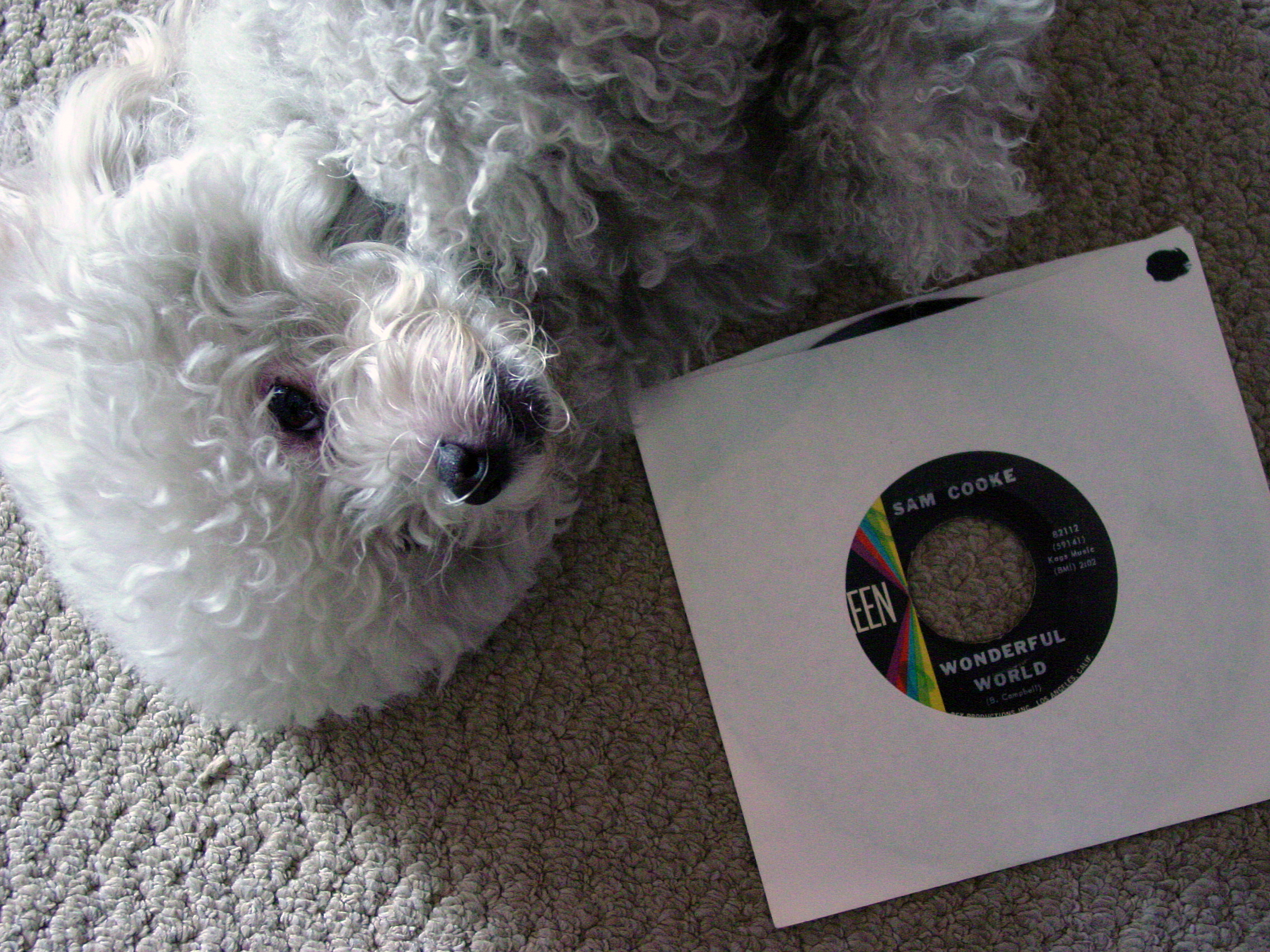
1. Wonderful World – Sam Cooke (#12, 1960)
2. Ain’t No Mountain High Enough – Marvin Gaye and Tammi Terrell (#19, 1967)
3. River Deep, Mountain High – Ike and Tina Turner (#88, 1966)
4. I Only Want to Be with You – Dusty Springfield (#12, 1964)
5. Fortunate Son – Creedence Clearwater Revival (#14, 1969)
6. Cupid – Sam Cooke (#17, 1961)
7. Holiday – Madonna (#16, 1984)
8. Isn’t She Lovely – Stevie Wonder (did not chart, 1977)
9. 1999 – Prince (#44, 1982; #12, 1983; #40, 1999)
10. Born to Run – Bruce Springsteen (#23, 1975)
11. It Takes Two – Marvin Gaye and Kim Weston (#14, 1967)
12. Little Egypt (Ying Yang) – The Coasters (#23, 1961)
13. I Want to Take You Higher – Sly & the Family Stone (#60, 1969; #38, 1970)
14. Into the Groove – Madonna (did not chart, 1985)
15. We Will Rock You – Queen (did not chart, 1978; #52, 1992)
16. S.O.S. – Abba (#15, 1975)
17. You’ve Got a Friend – Carole King (did not chart, 1971)
18. Hold On! I’m Comin’ – Sam & Dave (#21, 1966)
19. Try a Little Tenderness – Otis Redding (#25, 1967)
20. The Way You Do the Things You Do – The Temptations (#11, 1964)
21. It’s a Shame – Spinners (#14, 1970)
22. It’s Gonna Work Out Fine – Ike & Tina Turner (#14, 1961)
23. Under My Thumb – the Rolling Stones (did not chart, 1966)
24. Opus 17 (Don’t You Worry ‘Bout Me) – Four Seasons (#13, 1966)
25. Me and Julio down by the School Yard – Paul Simon (#22, 1972)
26. Happy Xmas (War Is Over) – John & Yoko & the Plastic Ono Band with the Harlem Community Choir (did not chart, 1971)
27. I’m Every Woman – Chaka Khan (#21, 1978)
28. Viva Las Vegas – Elvis Presley (#29, 1964)
29. Do They Know It’s Christmas? – Band Aid (#13, 1984)
30. Super Freak – Rick James (#16, 1981)
31. Mighty Love – Spinners (#20, 1974)
32. Stan – Eminem featuring Dido (#51, 2000)
33. So Far Away – Carole King (#14, 1971)
34. Christmas (Baby Please Come Home) – Darlene Love (did not chart, 1963)
35. Because the Night – Patti Smith Group (#13, 1978)
36. Big Yellow Taxi – Joni Mitchell (#67, 1970)
37. Candy Girl – New Edition (#46, 1983)
38. Brass in Pocket (I’m Special) – Pretenders (#14, 1980)
39. Everybody Hurts – R.E.M. (#29, 1993)
40. It Takes Two – Rob Base & DJ E-Z Rock (#36, 1988)
41. Heartbreak Hotel – the Jacksons (#22, 1981)
42. Young Hearts Run Free – Candi Staton (#20, 1976)
43. Valerie – Mark Ronson featuring Amy Winehouse (did not chart, 2007)
44. Rock and Roll All Nite (live) – Kiss (#12, 1976)
45. You Make Me Feel (Mighty Real) – Sylvester (#36, 1979)
46. L-O-V-E (Love) – Al Green (#13, 1975)
47. It’s Raining Men – the Weather Girls (#46, 1983)
48. I’m a Slave 4 U – Britney Spears (#27, 2001)
49. You Shook Me All Night Long – AC/DC (#35, 1980)
50. Wake Up Everybody – Harold Melvin and the Blue Notes (#12, 1976)
51. Walk on the Wild Side – Lou Reed (#16, 1973)
52. Bring It on Home to Me – Sam Cooke (#13, 1962)
53. Pride (In the Name of Love) – U2 (#33, 1984)
54. Ain’t No Stoppin’ Us Now – McFadden & Whitehead (#13, 1979)
55. Move Your Feet – Junior Senior (did not chart, 2003)
56. Heroes – David Bowie (did not chart, 1977)
57. Werewolves of London – Warren Zevon (#21, 1978)
58. One Way or Another – Blondie (#24, 1979)
59. You Get What You Give – New Radicals (#36, 1999)
60. Heaven Must Be Missing an Angel – Tavares (#15, 1976)
61. Ain’t Nobody – Rufus featuring Chaka Khan (#22, 1983)
62. You Can Call Me Al – Paul Simon (#44, 1986, #23, 1987)
63. I Can’t Make You Love Me – Bonnie Raitt (#18, 1992)
64. Young Americans – David Bowie (#28, 1975)
65. A Change Is Gonna Come – Sam Cooke (#31, 1965)
66. Respect Yourself – the Staple Singers (#12, 1971)
67. Moondance – Van Morrison (did not chart, 1970; #92, 1977)
68. Where’s the Love – Hanson (did not chart, 1997)
69. Don’t You Worry ‘Bout a Thing – Stevie Wonder (#16, 1974)
70. I Want Candy – Bow Wow Wow (#62, 1982)
71. Genius of Love – Tom Tom Club (#31, 1982)
72. Beautiful Stranger – Madonna (#19, 1999)
73. Shame, Shame, Shame – Shirley (& Company) (#12, 1975)
74. The Way I Am – Eminem (#58, 2000)
75. Jungle Love – The Time (#20, 1985)
76. Gypsy – Fleetwood Mac (#12, 1982)
77. Smile – Lily Allen (#49, 2007)
78. Tear the Roof off the Sucker (Give up the Funk) – Parliament (#15, 1976)
79. Same Love – Macklemore & Ryan Lewis featuring Mary Lambert (#11, 2013)
80. Solid – Ashford & Simpson (#12, 1985)
81. Rapper’s Delight – The Sugarhill Gang (#36, 1980)
82. The Cup of Life – Ricky Martin (#60, 1998; #45, 1999)
83. Me, Myself and I – De La Soul (#34, 1989)
84. Bad Luck – Harold Melvin & the Blue Notes (#15, 1975)
85. Once in a Lifetime – Talking Heads (did not chart, 1981)
86. Fuck You – Lily Allen (#68, 2009)
87. Such Great Heights – The Postal Service (did not chart, 2003)
88. Can’t Take My Eyes Off You (movie version) – Lauryn Hill (did not chart, 1998)
89. Dedication to My Ex (Miss That) – Lloyd featuring Andre 3000 (#79, 2011)
90. Jump To It – Aretha Franklin (#24, 1982)
91. Mamma Mia – Abba (#32, 1976)
92. Space Oddity – David Bowie (did not chart, 1969; #15, 1973)
93. P Control – O{+> (Prince) (did not chart, 1995)
94. Got Your Money – Ol’ Dirty Bastard featuring Kelis (#33, 1999)
95. LDN – Lily Allen (did not chart, 2007)
96. It Doesn’t Matter Anymore – Buddy Holly (#13, 1959)
97. Does Your Mother Know – Abba (#19, 1979)
98. Up in a Puff of Smoke – Polly Brown (#16, 1975)
99. Blue Limousine – Apollonia 6 (did not chart, 1984)
100. All the Young Dudes – Mott the Hoople (#37, 1972)
101. Fight the Power – Public Enemy (did not chart, 1989)
102. Pass That Dutch – Missy Elliott (#27, 2003)
103. Stacy’s Mom – Fountains of Wayne (#21, 2003)
104. You Know I’m No Good – Amy Winehouse (#78, 2007; #77, 2008)


Click here to like Tunes du Jour on Facebook!
Follow me on Twitter: @TunesDuJour